






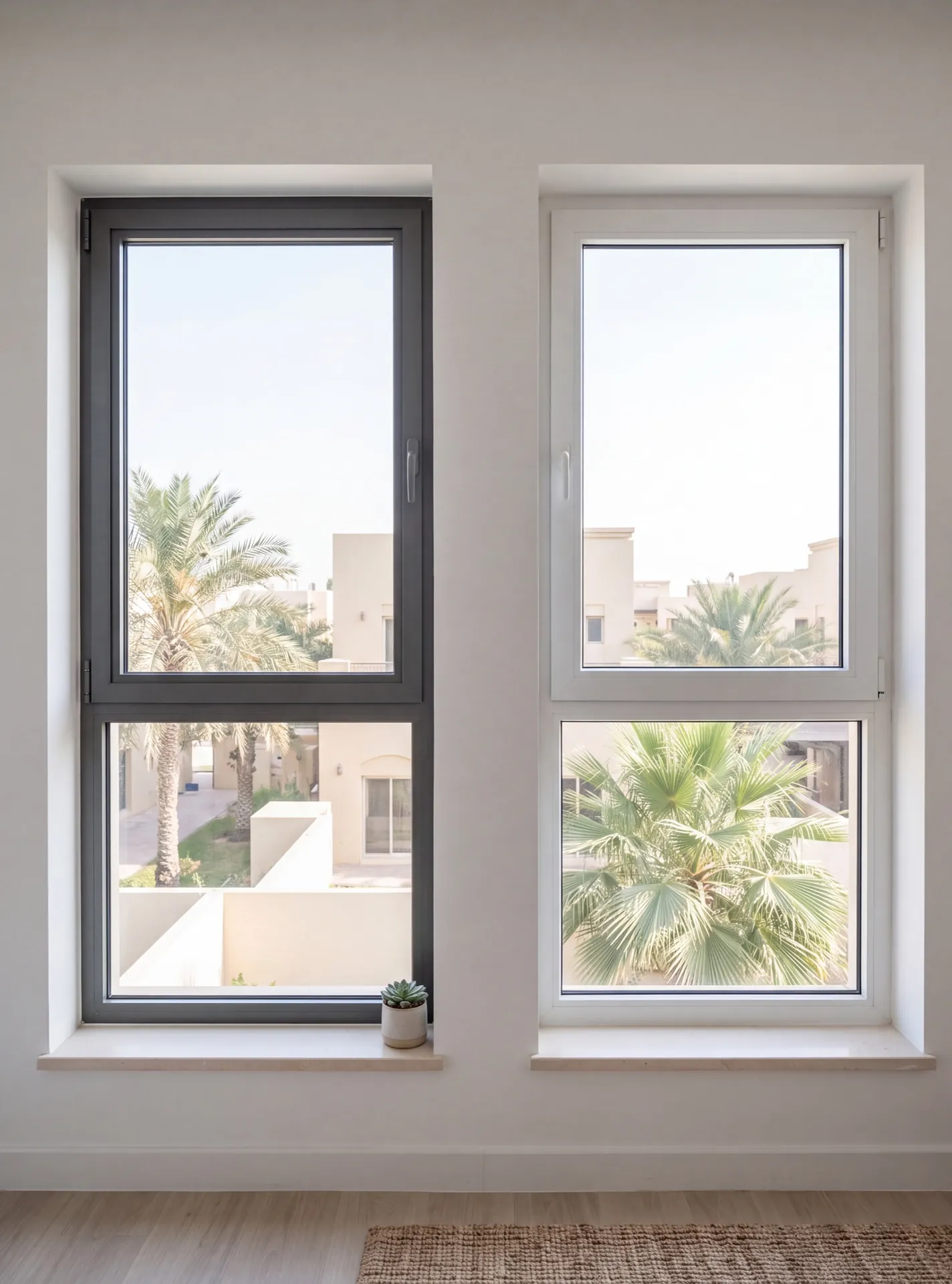
Tilt-and-turn windows
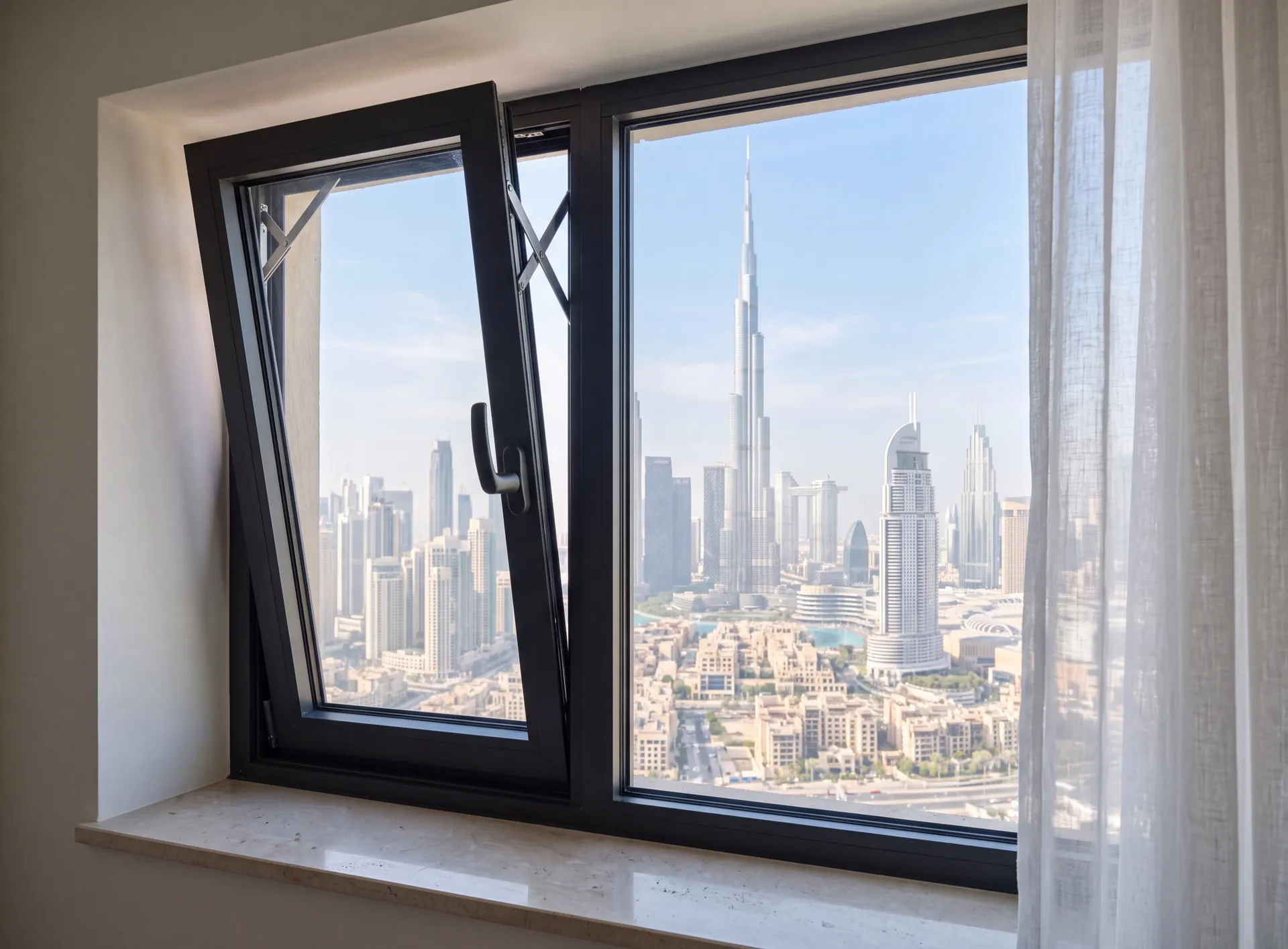
One handle, two positions: turned sideways the sash swings into the room like a door, turned upward it leans in at the head on scissor stays. The tilt position keeps air moving through a bedroom overnight while the gap stays too narrow for a gust to throw balcony dust across the floor. And because the whole sash comes inside, the outer face of the glass is washed from the flat — which is the practical answer high up in a tower, where reaching the facade from outside takes a cradle or rope access.
- tilt or swing positions from one handle
- narrow and fixed night airing gap
- from inside outer pane cleaning
Aluminium windows of any configuration
Choose how it opens and the shape — the model shows how the window works.
How it opens
Window shape
Your choice
Tilt and turn · Standard
nothing opens, so the frame stays slim and the glass takes the whole opening.
the sash swings into the room, so the outer face of the glass is cleaned from inside.
the sash swings out and leaves the sill and the room free.
airing through a gap at the top while the bottom of the sash stays locked.
one handle tilts the sash for airing or swings it fully open for cleaning.
the sash runs along the frame and takes no space inside or outside.
the top light tilts for airing, the glass below stays as it is.
What the hardware decides
-
Single lever
Control
Both positions from one handle
-
Scissor stay
Tilt gear
Holds the head at a set gap
-
Multi-point
Locking
Cams draw the sash in all round
-
Thermal break
Profile
Breaks the heat path through the metal
-
Solar or acoustic
Glazing unit
Picked by floor and orientation
Let's calculate
the cost of glazing
Get a free calculation for your windows — just leave your number, we'll reply on WhatsApp within 15 minutes.

Why choose aluminium windows?
-
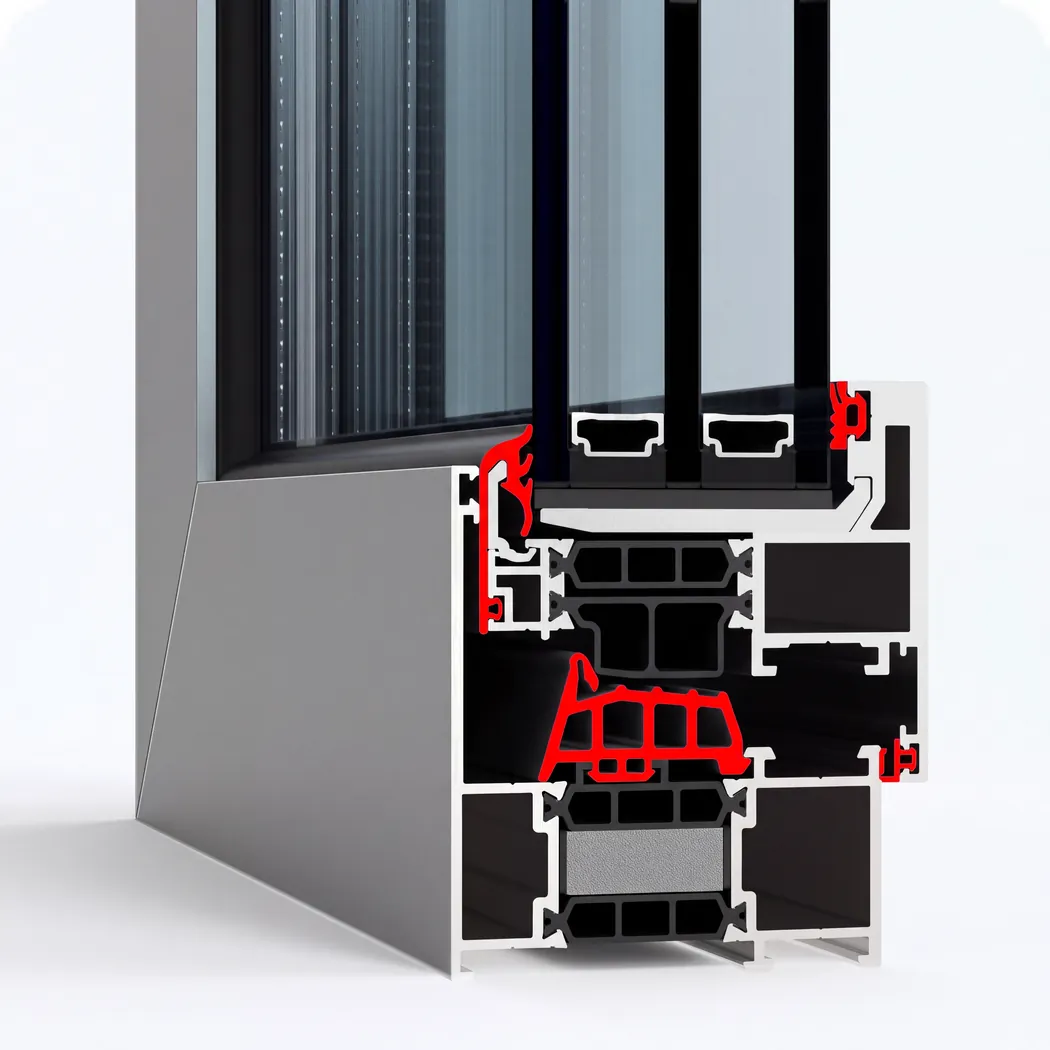
Durable EPDM seals
Three contours of EPDM seals keep the glass off the aluminium and close the gap between sash and frame, so dust, humid salt air and wind-driven rain stay outside.
Learn more -
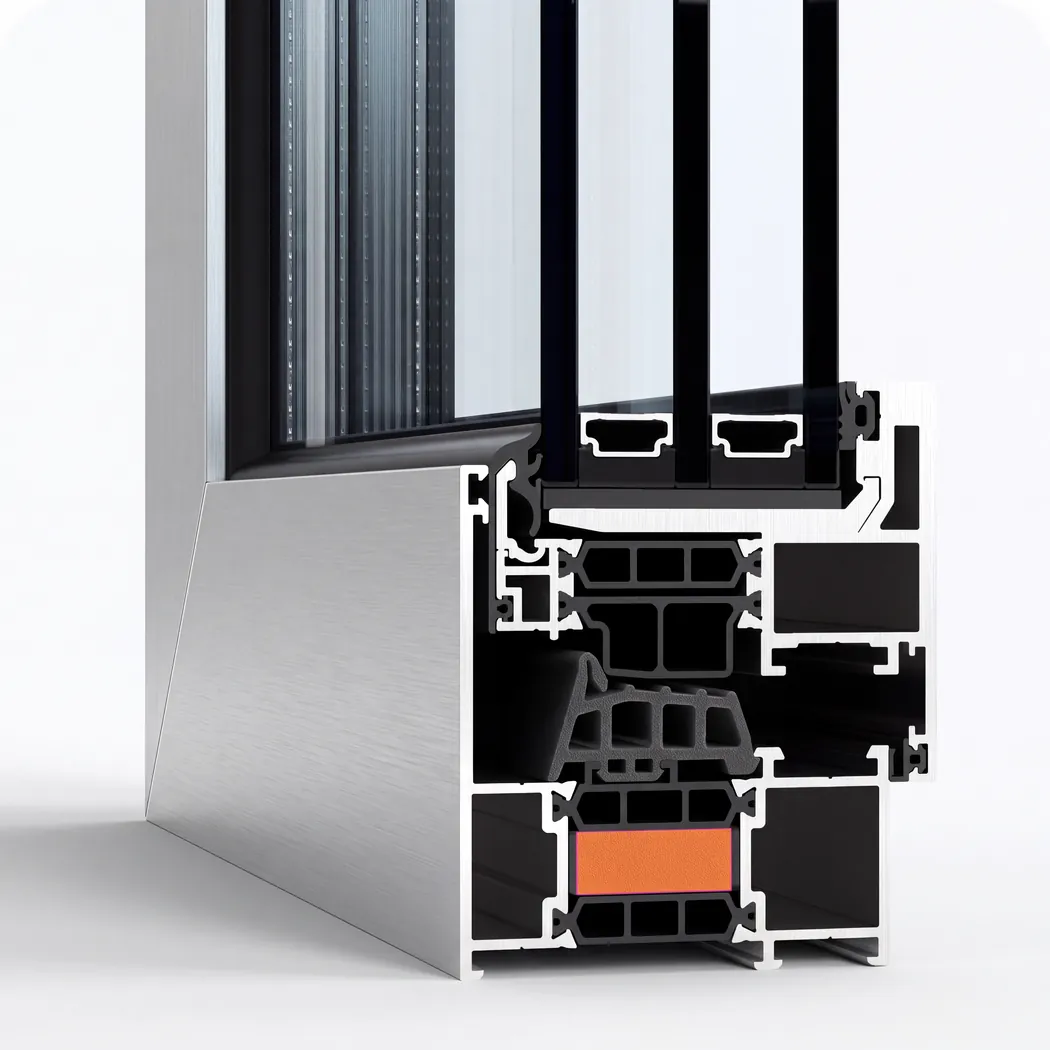
Foamed thermal inserts
Foamed inserts fill the profile chambers and stop air circulating inside them, so less outside heat and street noise passes through the frame into the cooled room.
Learn more -
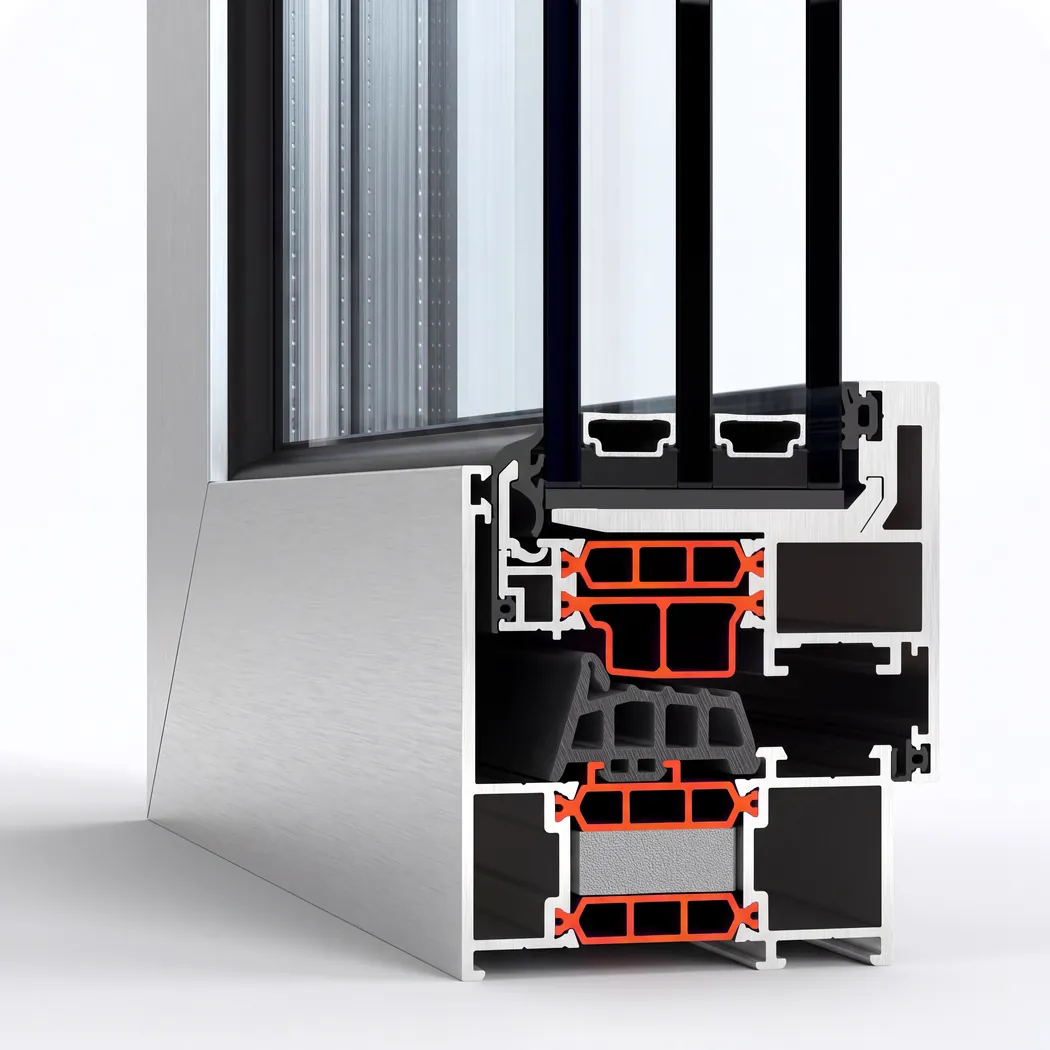
Polyamide thermal breaks
Glass-filled polyamide thermal breaks up to 40 mm wide keep the outer and inner shells apart, so the frame holds its shape and its insulation through a UAE summer.
Learn more -
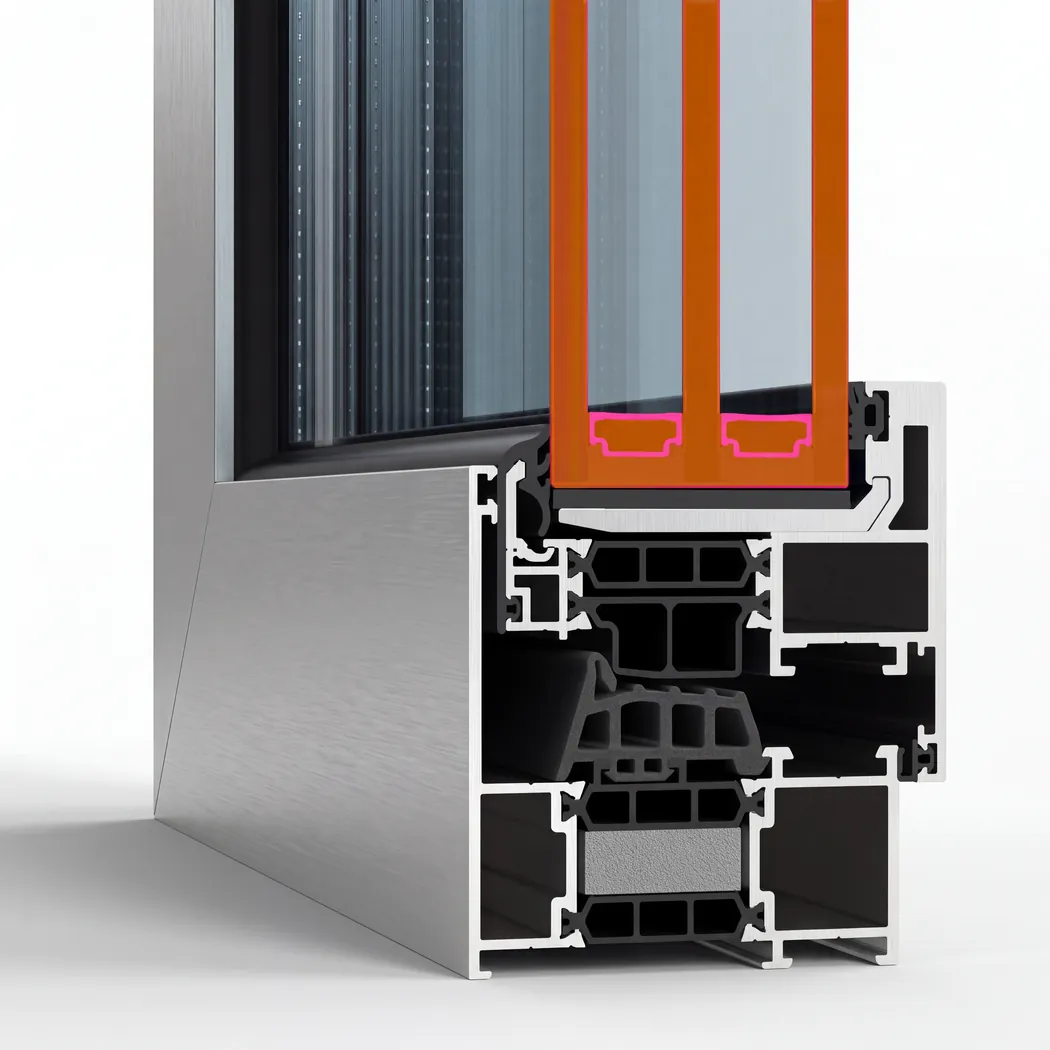
Energy-efficient double glazing
Double glazing up to 60 mm thick puts a sealed gap of still air or gas between the hot street and the cooled room, so less heat crosses the glass into the room.
Learn more
How we set a tilt-and-turn window up
- Site survey and reveal measurement Our engineer comes within 48 hours
- Handle side and reach decided Over a worktop or behind furniture
- Tilt gap set to suit the room Airflow overnight without a slam
- Hardware sized to the sash weight Wider leaves ask for heavier gear
- Profiles cut and glazed in Dubai Three to five weeks from the drawing
- Fitting, sealing and adjustment Cam pressure can be reset as seals settle
Brands we work with
Articles
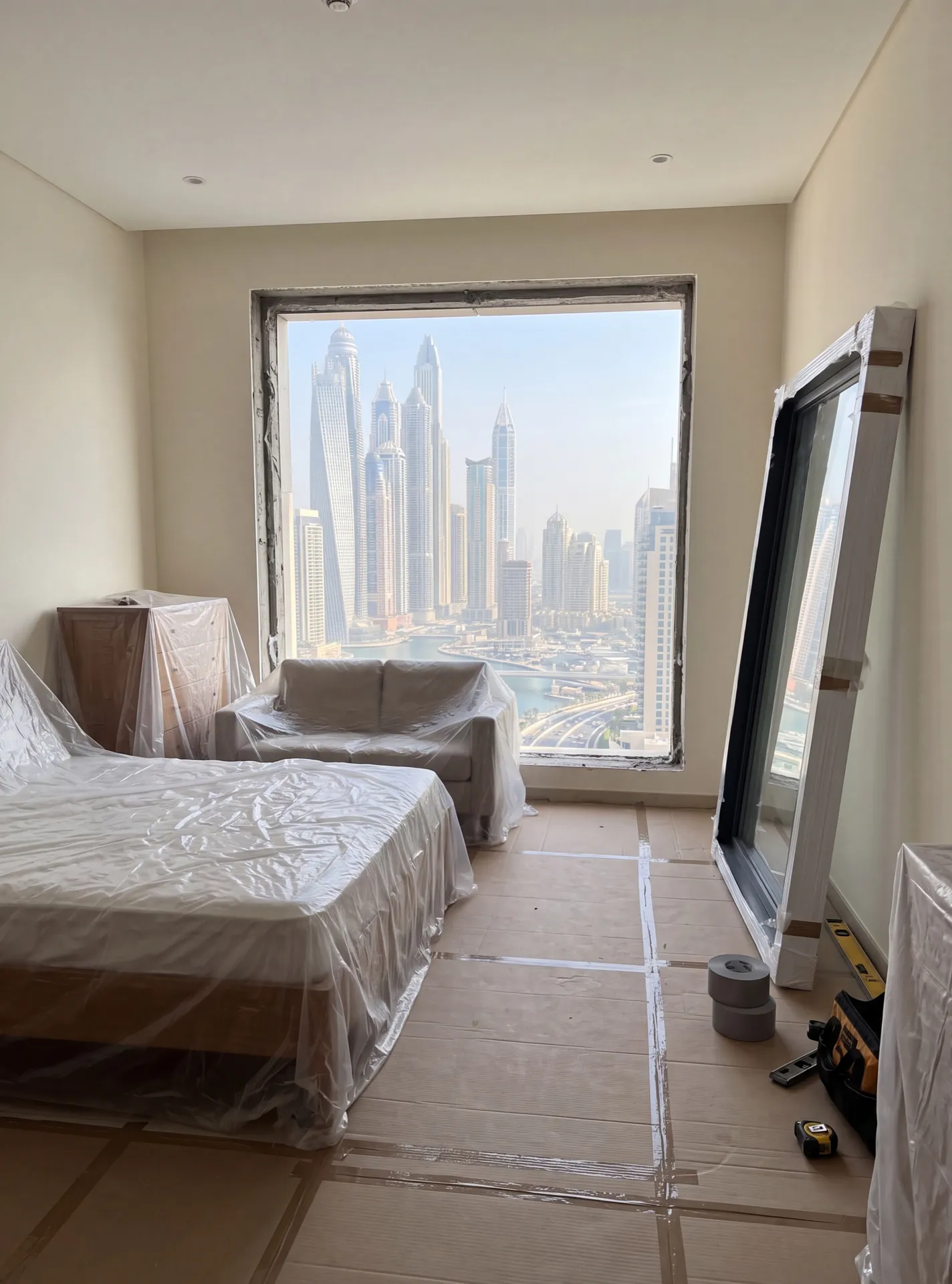
The honest downside
What tilt-and-turn asks of the room
In the turn position the whole sash comes into the room, so it needs the same clear arc as any inward leaf: the curtain track above it, nothing on the sill, no wardrobe or bed head against that wall. A roller blind inside the reveal is the usual casualty — it has to be raised before the sash can tilt or turn.
The tilt position is also easy to forget. A sash left tilted through a July afternoon lets cooled air out at the head and hot air in for as long as nobody notices.
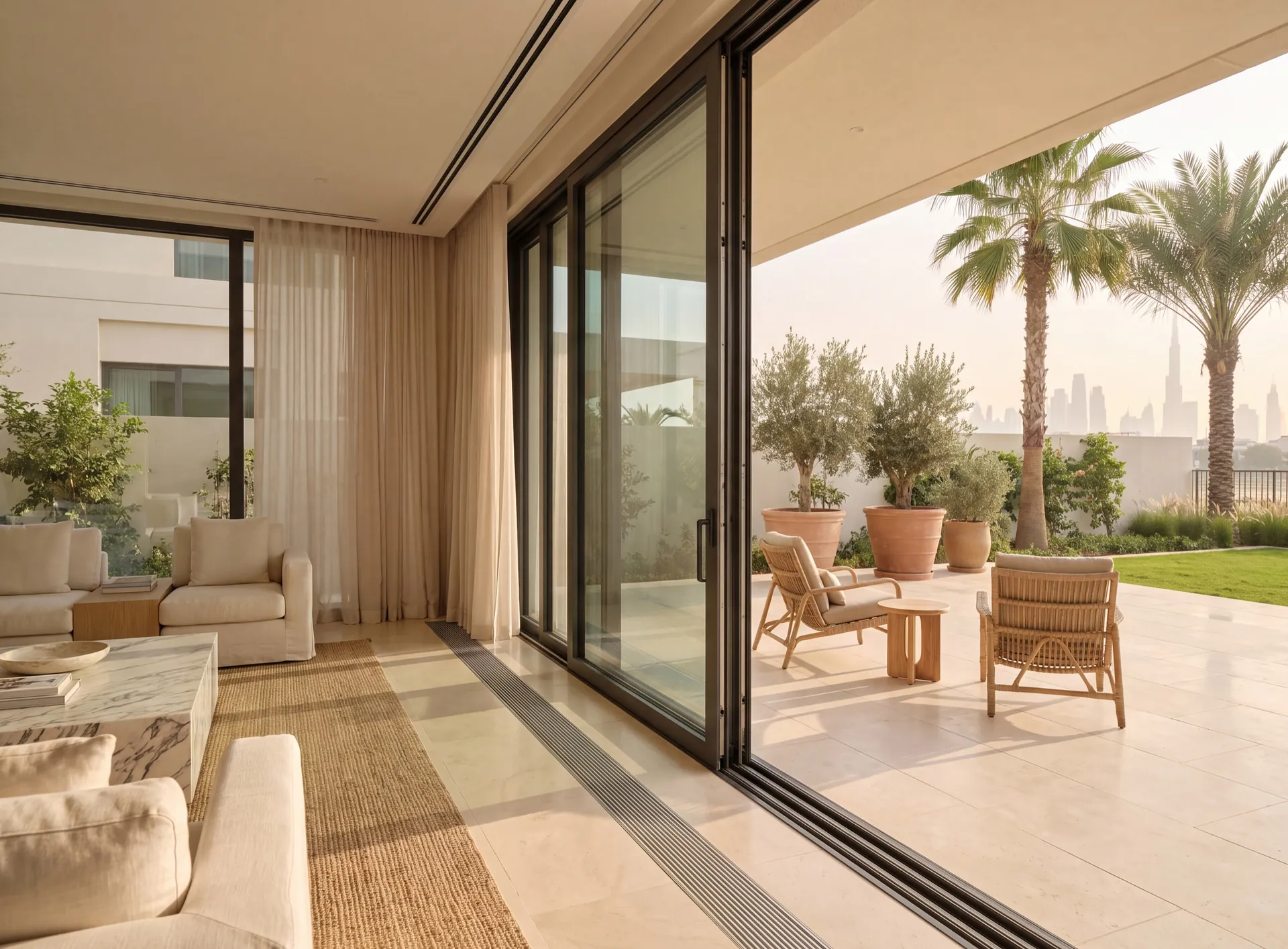
Where there is no floor to give the sash — a wall lined with furniture, a narrow room, a window over a worktop — a sliding window opens without entering the room at all. Tilt-and-turn stays the right answer high in a tower, where cleaning the outer pane from inside and a safe overnight airing gap matter most.
 Consider instead
Sliding windows
Consider instead
Sliding windows
Frequently asked questions
It fixes the gap. The sash leans inward at the head only, so air keeps leaving through the top of the opening all night, and the opening never becomes wide enough for a gust to swing the leaf or to drive balcony dust across the room. The bottom and the sides of the frame stay compressed against their seals — and that is the part a sandstorm loads first.
Yes — it is one of the main reasons to choose this type on a high floor. In the swing position the sash comes fully into the room, so both faces of the glass are within arm's reach from the floor: no cradle, no access from the facade, and nothing that waits on the building's rope-access schedule.
It needs adjusting rather than replacing. The multi-point gear runs on cams that can be turned to change how hard the sash is pulled onto its seals, and fine sand works into the mechanism over a season on an exposed floor. A clean and a cam adjustment is normally the whole job.
Less often. Where the facade is reachable from a garden or a terrace the cleaning argument disappears, and a plain casement does the same work with simpler hardware. Tilt-and-turn earns its place where the window sits high above ground, or in a bedroom that has to breathe overnight with the door closed.
Related pages
Nearby pages and the rest of the catalogue.
- Aluminium-wood windows
- Arched windows
- Bay windows
- Casement windows
- Corner windows
- Custom shapes
- Double-panel windows
- Energy efficient windows
- Fire-rated windows
- Fixed windows
- Floor-to-ceiling windows
- Folding windows
Sections
Company
We are always happy to welcome you at our showroom
Main Office

Dubai — Showroom
The Pinnacle Building, Sheikh Zayed Road, Office 607
Mon–Fri: 9:00 – 18:00
Showroom

Samples to see in person
Profiles, glass units and hardware to see and touch before you choose.
Dubai — Showroom
The Pinnacle Building, Sheikh Zayed Road, Office 607
Get directions 