






Inward-opening windows
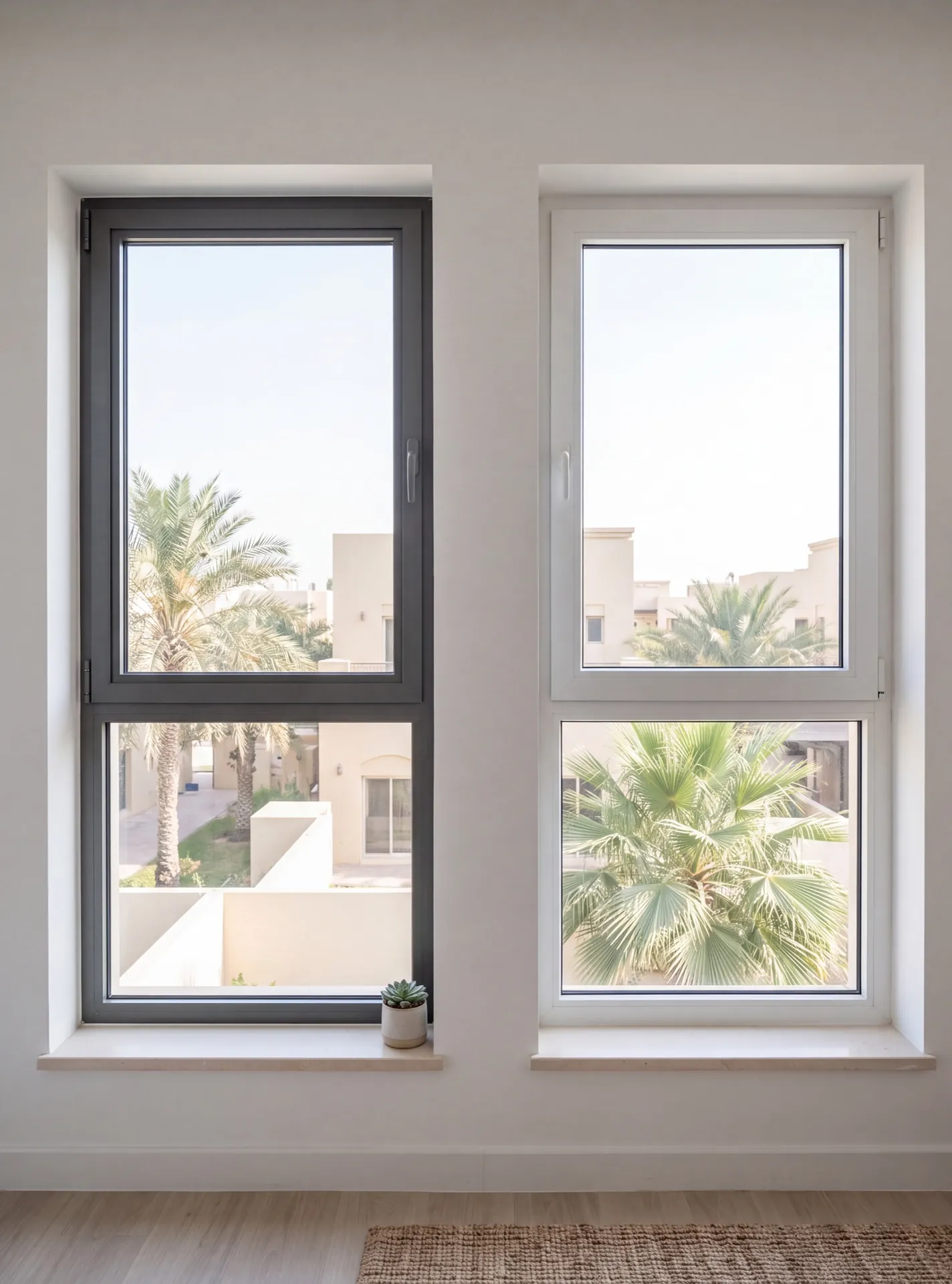
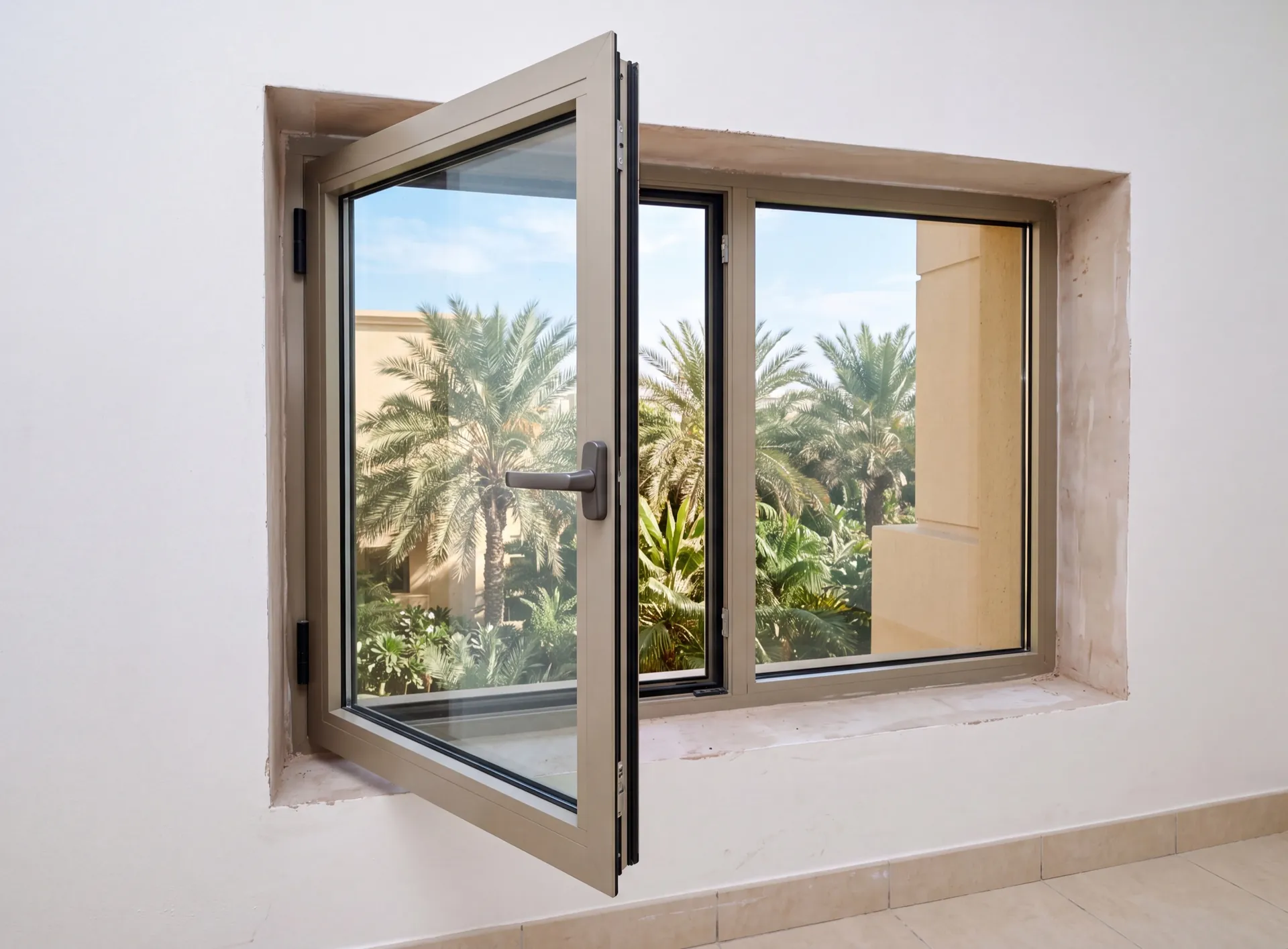
An inward-opening leaf swings into the room, so the room has to have somewhere to put it. The arc lands precisely where curtains hang, where a blind rolls down, where things collect on the sill and where the back of a sofa usually goes — which makes the furniture plan part of the specification rather than an afterthought. What you get for that floor space is the outer face of the glass within reach from indoors, an insect screen that sits outside and never meets the moving leaf, and nothing projecting into air that belongs to a balcony, a walkway or the facade. What you also get is a leaf that a storm pushes the same way it opens, so the seal here is a hardware question rather than a geometric one.
- into the room where the leaf travels
- outside the frame where the screen sits
- the locking points what holds it in a storm
Aluminium windows of any configuration
Choose how it opens and the shape — the model shows how the window works.
How it opens
Window shape
Your choice
Tilt and turn · Standard
nothing opens, so the frame stays slim and the glass takes the whole opening.
the sash swings into the room, so the outer face of the glass is cleaned from inside.
the sash swings out and leaves the sill and the room free.
airing through a gap at the top while the bottom of the sash stays locked.
one handle tilts the sash for airing or swings it fully open for cleaning.
the sash runs along the frame and takes no space inside or outside.
the top light tilts for airing, the glass below stays as it is.
What the leaf lands on inside
-
Into the room
Swing
The arc belongs to the floor plan
-
Above the arc
Curtain track
Or the leaf strikes it every time
-
Spread round the leaf
Locking points
They take the wind, not the rebate
-
Outside the frame
Insect screen
It never meets the moving leaf
-
Chosen at the survey
Handle side
Away from a worktop or a bed head

Let's calculate
the cost of glazing
Get a free calculation for your windows — just leave your number, we'll reply on WhatsApp within 15 minutes.
Advantages of working with us
-

In-house production
Windows, doors and glazed structures are made at our own factory in the UAE. Manufacturing takes 3–5 weeks from the survey, and the dates are written into the contract.
-

Room measurement
After a free consultation, an engineer comes to measure within 48 hours and answers the technical questions on site — openings, profile, glass and hardware.
-

Delivery of products
We deliver with our own transport across Dubai and all Emirates, and the installation date is agreed in advance so the crew arrives with the finished units.
-

Installation on site
A "clean" installation is carried out – all construction debris is removed, and dust and dirt are cleaned. Work can be conducted with or without your presence. The date and time are discussed individually.
-

Guarantee
The structures we make and the installation our crews carry out are covered by one warranty under one contract. The profile system also carries the manufacturer's warranty — up to 20 years, depending on the system.
-

Service
Warranty cases are handled by the same crews that did the installation: send the address and photos, and in most cases we can say before the visit whether it is an adjustment, a gasket or a glass unit.
How an inward-opening window is planned
- Survey taken with the furniture in place Our engineer comes within 48 hours
- The arc drawn on the room plan Curtains, blinds and the sill included
- Hinge side chosen for how you reach it Over a worktop the leaf goes the other way
- Locking points counted for the exposure Here the hardware holds the wind
- Screen and its frame set outside the leaf Drawn together, not fitted around later
- Fitted, sealed and adjusted at handover Compression checked right round the leaf
Brands we work with
Articles


The honest downside
Where an inward-opening leaf causes trouble
An open inward leaf stands in the room at chest and head height. In a walkway, beside a desk or in a child's room, its corner is exactly what people walk into, and it stays there for as long as the window is open.
Fully open, it also leaves the whole opening clear — on an upper floor, a gap a child can climb through unless a restrictor stops it — and a gust can slam the leaf back against a wall or a cupboard door.
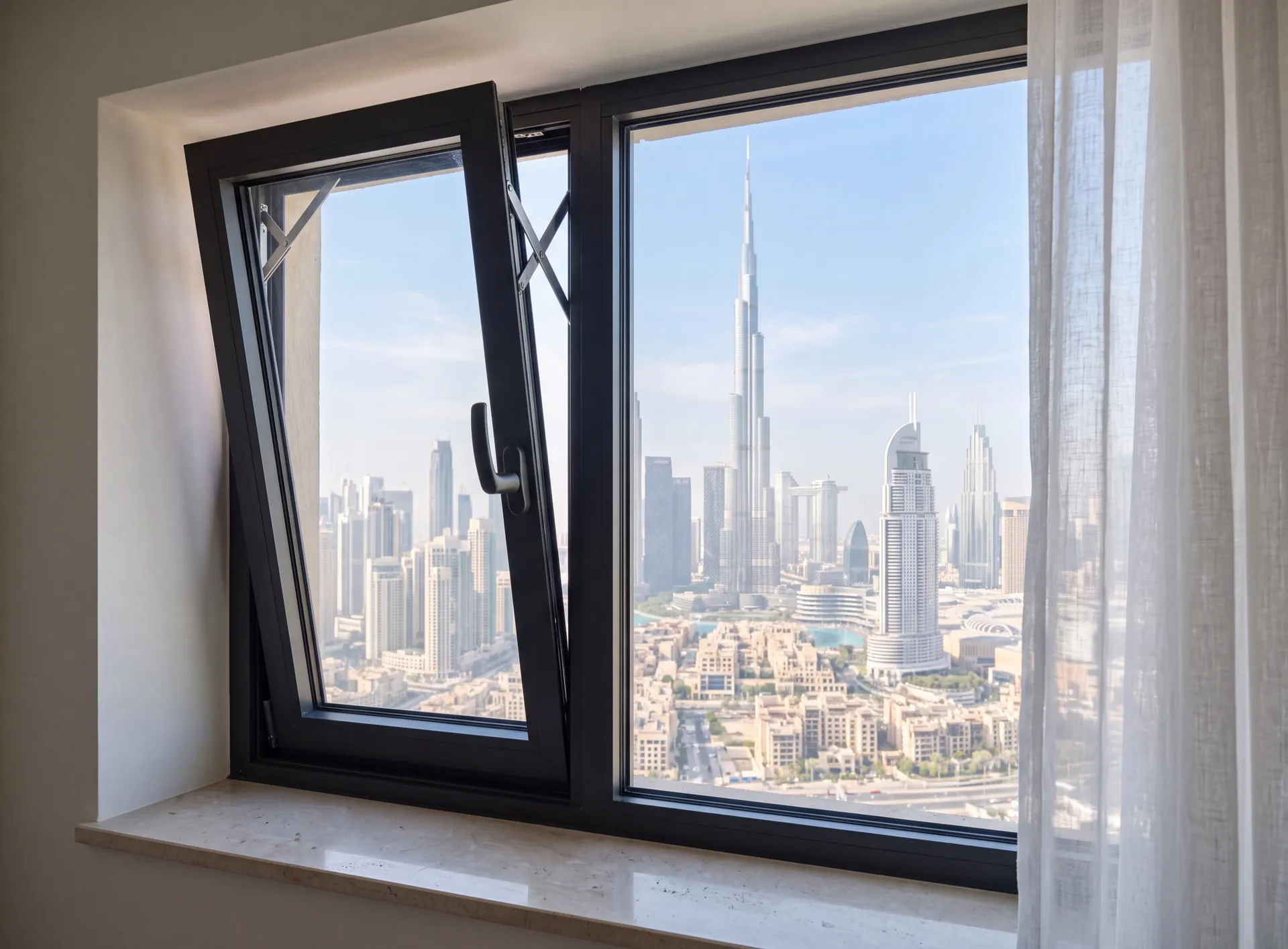
Where the room needs air more often than a wide-open window, a tilt-and-turn sash leans in at the head only, keeping the room clear and the gap too narrow to climb through, and still turns fully inward for cleaning. A plain inward leaf stays the right answer where there is floor to spare and the window is opened mostly to clean it or to air the room quickly.
 Consider instead
Tilt-and-turn windows
Consider instead
Tilt-and-turn windows
Frequently asked questions
A slice of floor and everything standing in it. The curtain track has to clear the head or the leaf catches it on the way in; a roller blind inside the reveal cannot be down while the window is open; whatever lives on the sill has to be moved every time; and a wardrobe or a bed head against that wall makes the window ornamental. None of it is a fault — it is the price of the direction, and it is easy to design around and awkward to discover afterwards. We walk the arc on the room plan at the survey and, where it helps, change the hinge side rather than the window.
The ironmongery, and this is the honest difference between the two directions. An inward leaf is drawn outward onto its gaskets as you close it, so pressure arriving on the outside of the glass pushes it back the way it opens, and there is no frame standing in front of the leaf to receive that push. The locking points spread around the perimeter are what hold it. That makes their number and their spacing part of the specification on an exposed elevation rather than a detail, and it makes the cam pressure something to set and later reset instead of leaving it where the factory left it. An outward-opening leaf gets the opposite arrangement, and we say so when the elevation is a hard one.
In rooms with no spare floor. Over a kitchen worktop, above a bed head, in a narrow bathroom, in a corridor, or anywhere a wardrobe has to stand against the window wall — in all of them the leaf either cannot open or opens into something. The alternative depends on why the room is tight: outward-opening where there is free air on the other side of the wall, a sliding leaf where there is space neither inside nor out, and a fixed light with a small opening beside it where the view matters more than the airflow. We would rather change the type at the survey than hand over a window nobody opens.
A little, and not for the reason people expect. A closed window seals the same either way — that is the gaskets and their compression, not the direction of travel. But an inward leaf brings the outer face of the glass, and everything settled on it since the last shamal, into the room every time it is opened; and the insect screen, which lives outside on this type, catches the fine sand first and holds it exactly where the leaf will pass. It is a wipe rather than a problem, but it is worth knowing before choosing the direction for a bedroom.
Related pages
Nearby pages and the rest of the catalogue.
- Aluminium-wood windows
- Arched windows
- Bay windows
- Casement windows
- Corner windows
- Custom shapes
- Double-panel windows
- Energy efficient windows
- Fire-rated windows
- Fixed windows
- Floor-to-ceiling windows
- Folding windows
Sections
Company
We are always happy to welcome you at our showroom
Main Office

Dubai — Showroom
The Pinnacle Building, Sheikh Zayed Road, Office 607
Mon–Fri: 9:00 – 18:00
Showroom

Samples to see in person
Profiles, glass units and hardware to see and touch before you choose.
Dubai — Showroom
The Pinnacle Building, Sheikh Zayed Road, Office 607
Get directions 