






Top-hung windows
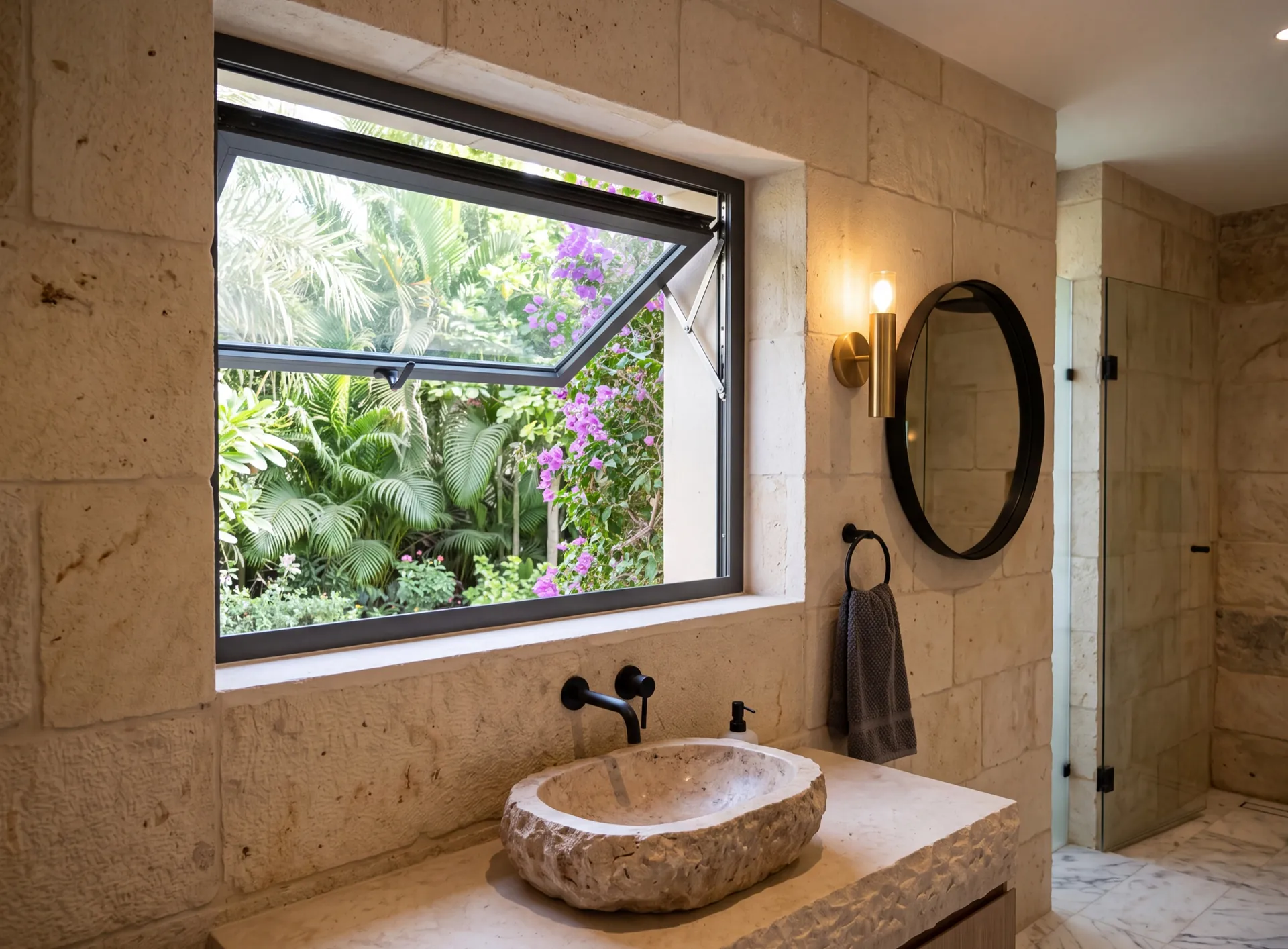
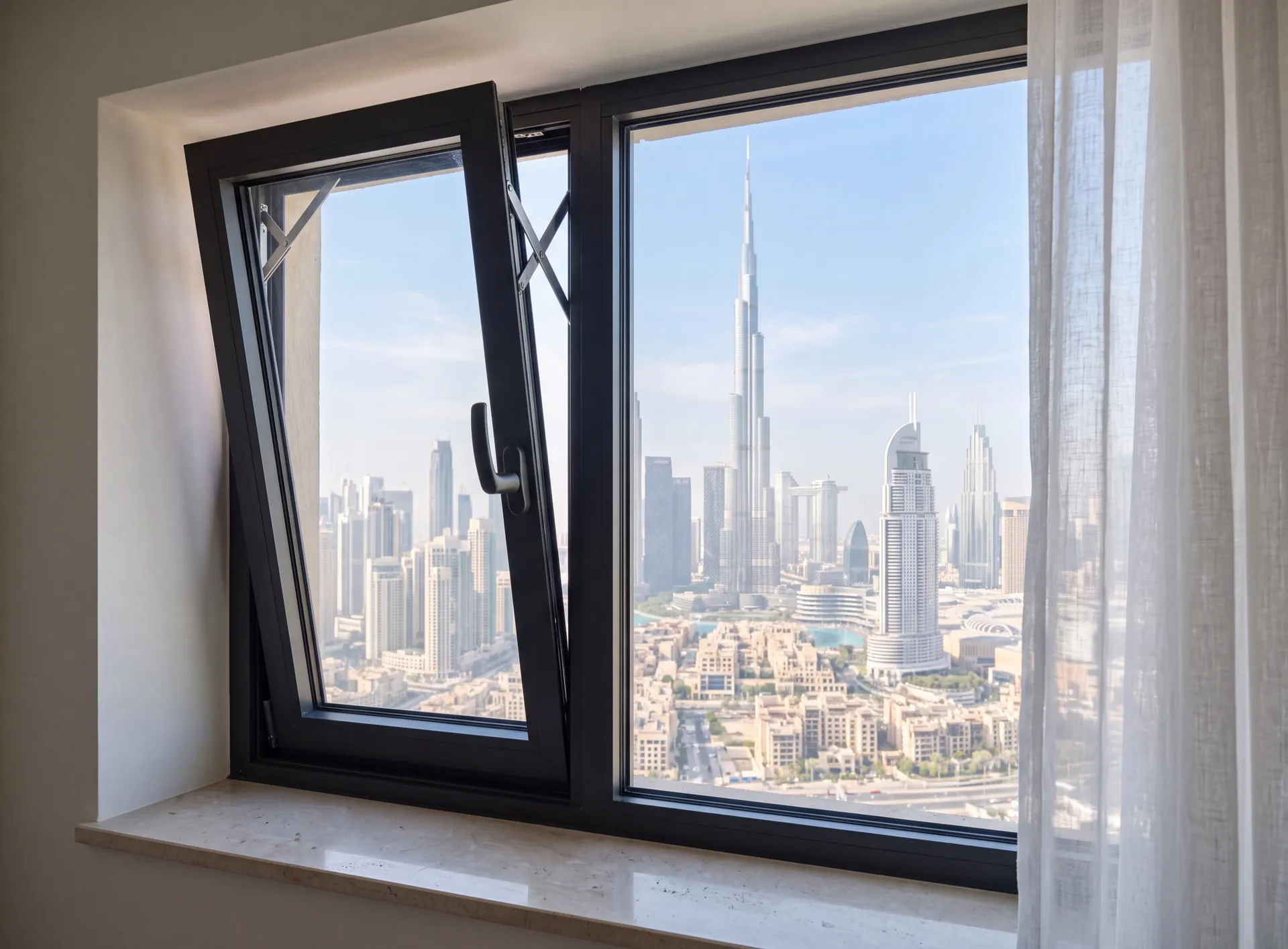
The hinges sit along the head, so the leaf swings outward and downward and the open window becomes a small awning over its own opening. Water arriving on the glass runs down the outer face and drips clear of the reveal instead of over the cill and into the room, which is why this is the type left ajar during a shower, over a shower room, or above a stair nobody wants to climb to shut. Everything else about it follows from the leaf being outside the wall: the stay decides how far it goes and what a gust can do to it, the insect screen has to live on the room side, and there are places a projecting leaf simply must not go.
- along the head where the hinges sit
- over the opening the open leaf
- on the room side the insect screen
What the leaf hanging outside decides
-
Head hinges
Swing
Out at the bottom, down from the top
-
Friction or arm
Stay
Holds the gap against a gust
-
Sheds outward
Rain
Water leaves clear of the cill
-
Room side
Screen
The leaf occupies the outside
-
Compressed, not running
Seals
The leaf is drawn in all round
Let's calculate
the cost of glazing
Get a free calculation for your windows — just leave your number, we'll reply on WhatsApp within 15 minutes.

Why choose aluminium windows?
-
Durable EPDM seals
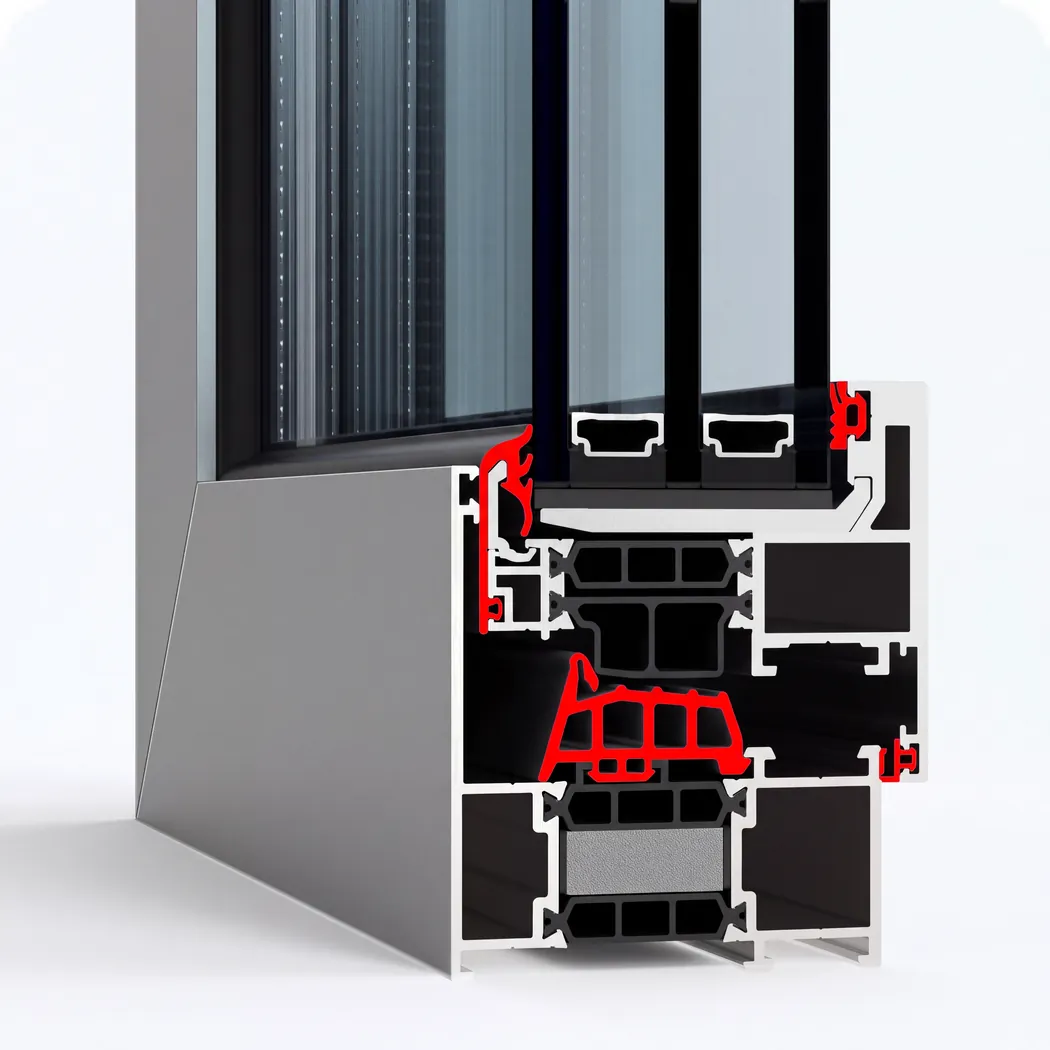
Three contours of EPDM seals keep the glass off the aluminium and close the gap between sash and frame, so dust, humid salt air and wind-driven rain stay outside.
Learn more -
Foamed thermal inserts
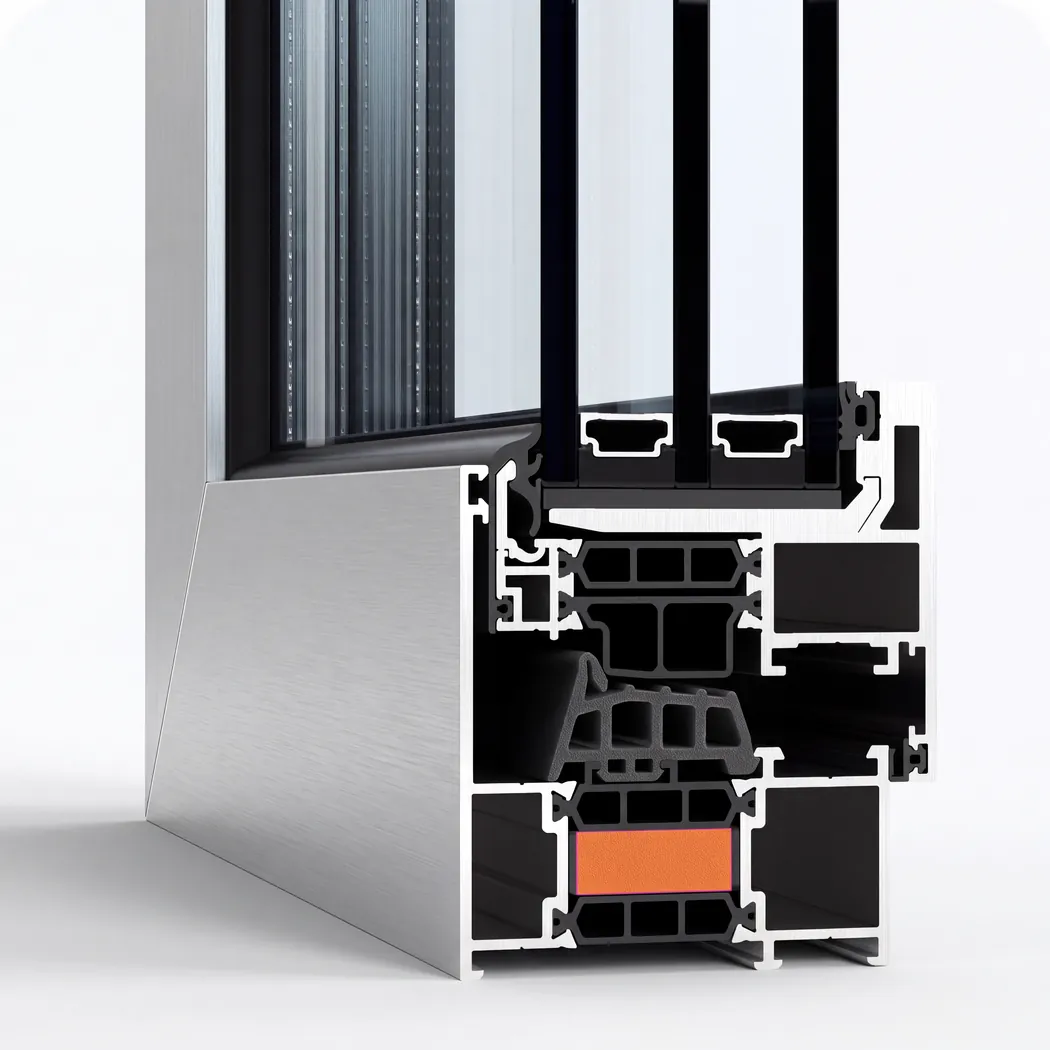
Foamed inserts fill the profile chambers and stop air circulating inside them, so less outside heat and street noise passes through the frame into the cooled room.
Learn more -
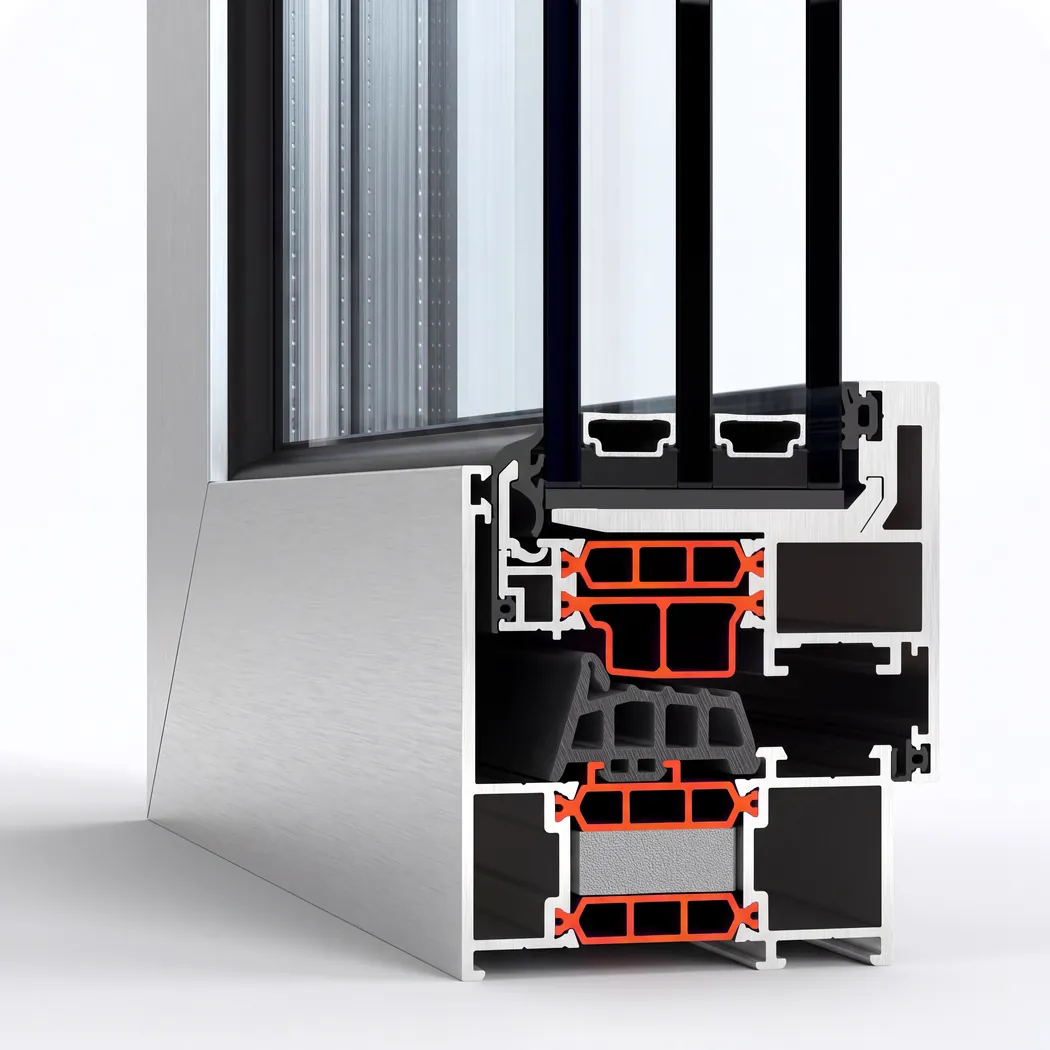
Polyamide thermal breaks
Glass-filled polyamide thermal breaks up to 40 mm wide keep the outer and inner shells apart, so the frame holds its shape and its insulation through a UAE summer.
Learn more -
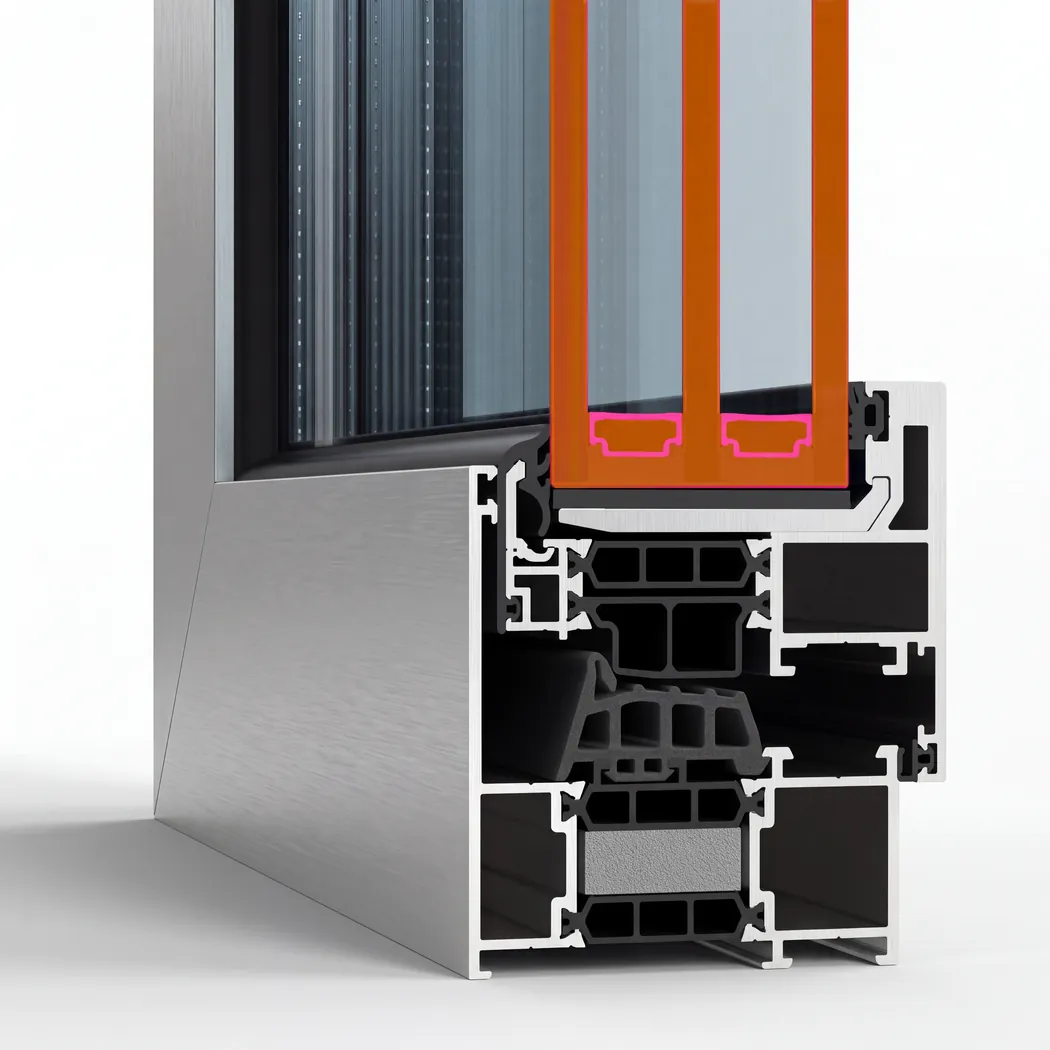
Energy-efficient double glazing
Double glazing up to 60 mm thick puts a sealed gap of still air or gas between the hot street and the cooled room, so less heat crosses the glass into the room.
Learn more
Setting out a top-hung window
- Reveal measured and the arc walked outside Engineer on site within 48 hours
- What passes underneath it checked A path, a terrace seat, a neighbour's leaf
- Stay type chosen for the room A shower room and a stair want different gaps
- Restrictor added where children reach The leaf stops short of the sill line
- Screen planned on the inside face It has to clear the handle and the stay
- Made and hung in our Dubai factory Three to five weeks from the drawing
Brands we work with
Articles

The honest downside
When a top-hung window is too small an answer
The leaf only ever gives a partial gap. It opens at the bottom edge and the sides, the stay holds it to a modest angle, and the warm air gathered under the ceiling has to find its way down to a gap near the sill to leave. For a kitchen after cooking or a bedroom on a still evening, it moves less air than a side-hung sash of the same size.
It is a small window by nature, too: a leaf hinged at the head grows heavy and awkward to push out as it gets taller.
Where a room needs more air or the window is large, a tilt-and-turn sash opens at the head, where the warm air collects, and turns fully inward for cleaning. Top-hung stays the right answer over showers, stairs and worktops, where the leaf has to stay open through a burst of rain.
 Consider instead
Tilt-and-turn windows
Consider instead
Tilt-and-turn windows
Frequently asked questions
That is what the type is for. The leaf leans out over the gap it has just made, so rain landing on the glass runs down the outside and drips beyond the reveal, and the opening underneath stays in the lee of it. The honest limit is wind: rain driven sideways off the sea will still find a small opening whatever hangs over it, so on an exposed elevation we set the stay to a narrower gap rather than pretending the geometry solves everything.
Anywhere the open leaf becomes an obstacle. Over a walkway or a stair landing at head height, above a bench or a lounger on a terrace, beside a door that swings into the same air, and on an elevation reached by a cleaning cradle that has to pass down it. Those are the situations where we move to a sash that stays inside the wall instead.
Through the gap, with an arm — which works on a stair or a kitchen and stops working the moment the window is wide, high or over a drop. Where the pane matters and the position is awkward, the choice is between a hinge that lets the leaf swing far enough to bring the outside within reach, and simply accepting that this window is cleaned from outside with everything else on that elevation. We ask which it is at the survey.
It will push on it, because an open leaf is a small sail held at one edge, and that load ends in the stay. So the stay is chosen from the leaf area rather than from the price list: a friction type that holds anywhere in its travel on smaller lights, a stronger arm on wide ones, and a restrictor where a shamal is going to arrive while nobody is home. A large leaf should not hang on the lightest stay that will physically bolt to it.
Related pages
Nearby pages and the rest of the catalogue.
- Aluminium-wood windows
- Arched windows
- Bay windows
- Casement windows
- Corner windows
- Custom shapes
- Double-panel windows
- Energy efficient windows
- Fire-rated windows
- Fixed windows
- Floor-to-ceiling windows
- Folding windows
Sections
Company
We are always happy to welcome you at our showroom
Main Office

Dubai — Showroom
The Pinnacle Building, Sheikh Zayed Road, Office 607
Mon–Fri: 9:00 – 18:00
Showroom

Samples to see in person
Profiles, glass units and hardware to see and touch before you choose.
Dubai — Showroom
The Pinnacle Building, Sheikh Zayed Road, Office 607
Get directions 