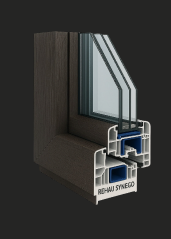


The disruption people brace for is noise, and the noise is over quickly. What actually decides whether a fortnight in the house is bearable is duller than that: which room is opened when, where the dust is allowed to travel, and what got moved out before the crew arrived.
One room at a time
A replacement in an occupied home runs as a series of small jobs rather than one large one. A room is prepared, its openings are done, it is cleaned and handed back, and only then does the next room start. That is slower on paper than opening the whole elevation at once, and it is the only way a family keeps a place to sleep, a working kitchen and somewhere to shut the door and take a call.
The order is worth agreeing at the survey rather than on the first morning. Bedrooms usually go early, so that nobody spends a fortnight worrying about where they will sleep at the end of it, and the room you actually work in tends to be sequenced around whatever you cannot reschedule. Kitchens and bathrooms are their own conversation, because a room with fitted units and tiling around the frame takes longer to prepare and to make good afterwards.
Villas and apartments split at this point. In a villa the crew can often work an elevation at a time, and the family simply keeps to the other side of the house. In a tower the sequence is dictated as much by the building as by you — the lift slot, the approved hours, the route through the lobby — so the plan is made with the management office rather than around the kitchen table.
Dust, and what actually protects the furniture
The dusty part is short and specific: cutting out the old frame and drilling the new fixings. What it produces is fine masonry dust, and fine dust does not settle politely in the room that made it. It rides the airflow along a corridor, and it finds the inside of wardrobes, the top of a curtain rail and the fabric of a sofa that somebody kindly covered with a sheet.
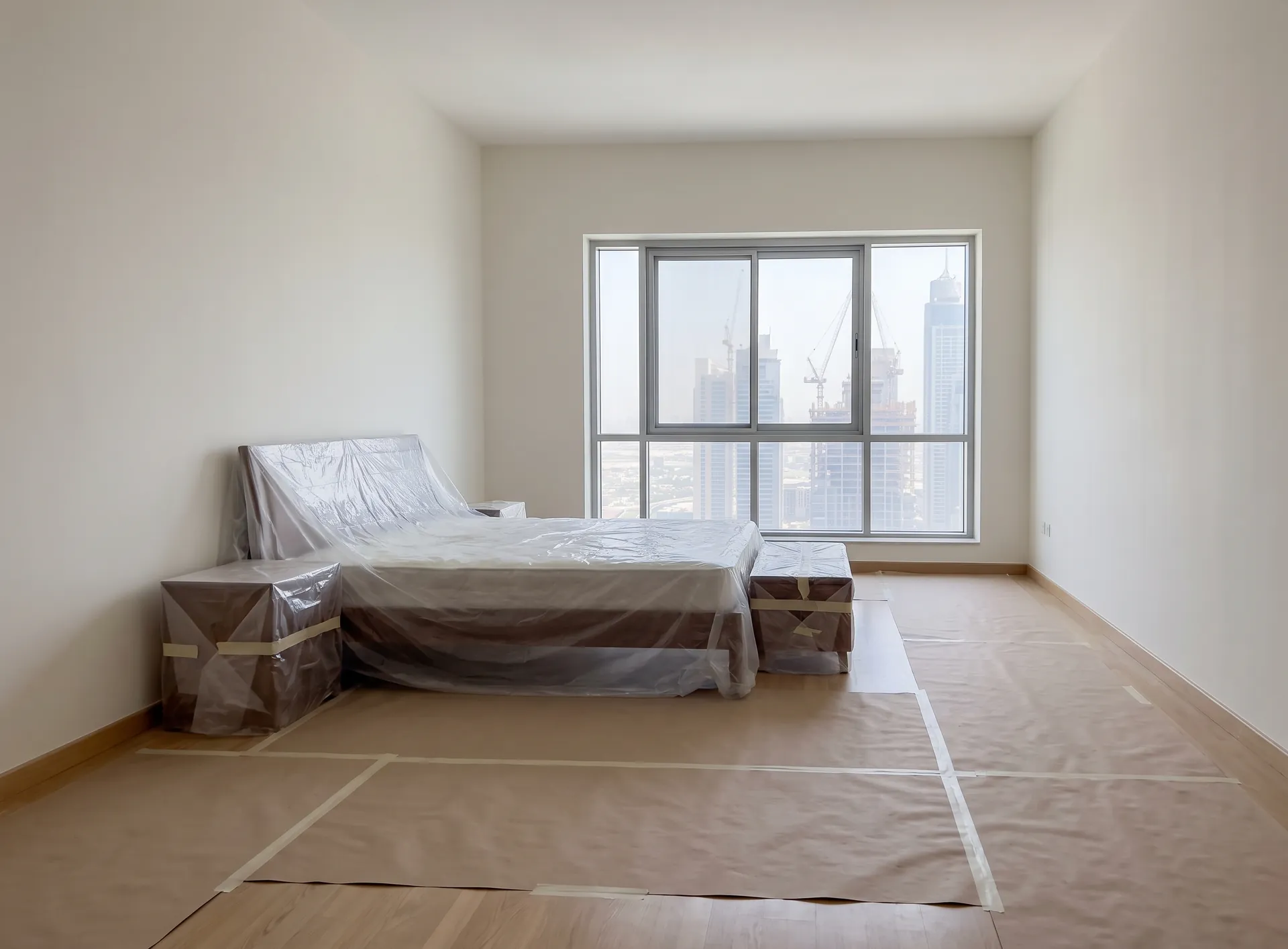
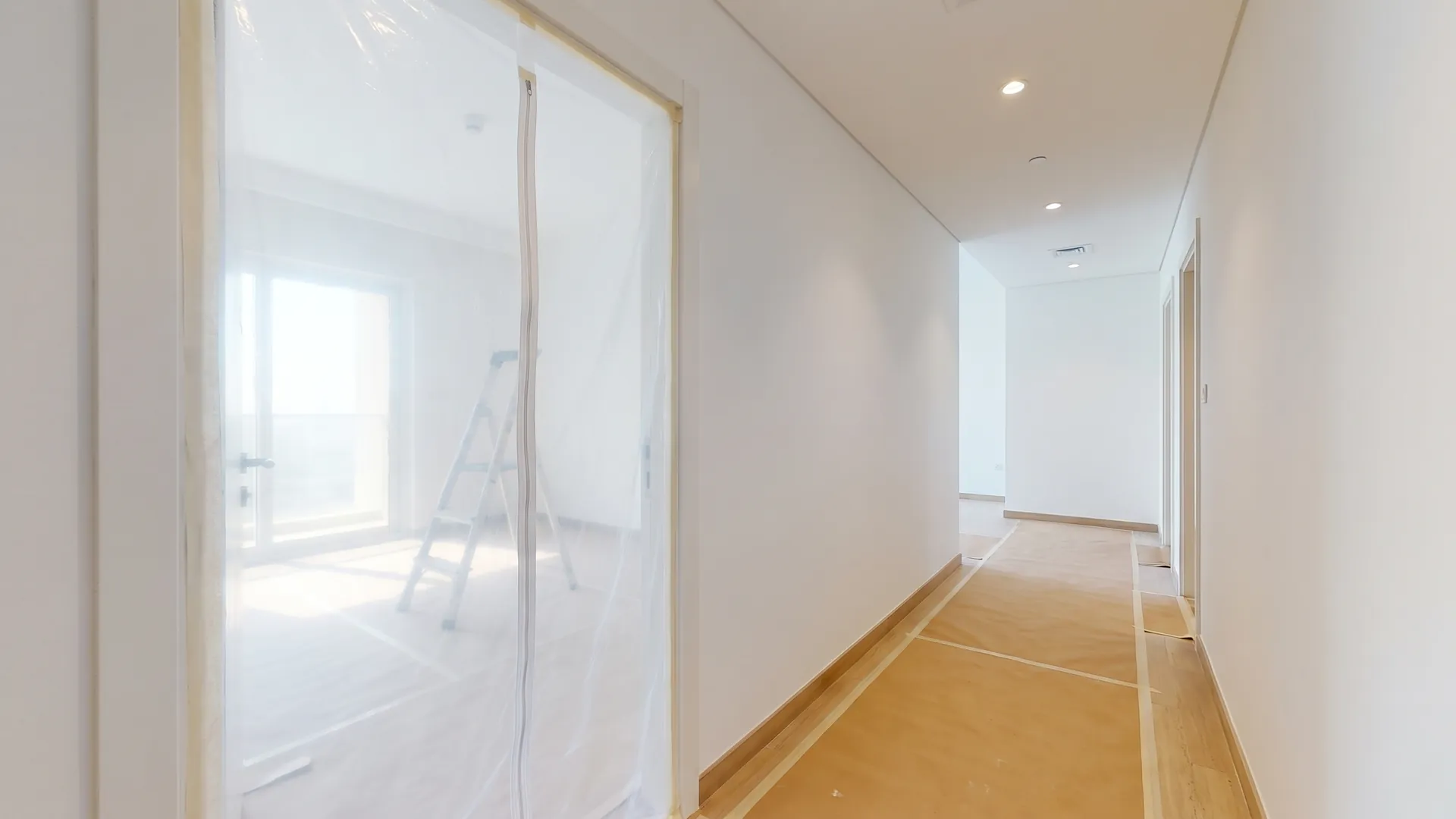
Which is why soft furnishings leave the room rather than get covered. Anything upholstered, anything with an open weave, anything electronic — those go out. What stays is pulled to the centre, away from the working wall, and sheeted properly, with the floor protected along the whole route the crew walks, not just under the window. The doorway is closed off with a screen so the rest of the home stays out of it, and the air conditioning to that room is switched off before the cutting starts, because a running unit will happily distribute the dust for you.
Expect one thorough clean at the end of each room rather than a spotless site at every moment. A room is swept and wiped before it is handed back, and glass is cleaned at handover — but the honest version is that a household living alongside the work will find dust in one or two places for a few days afterwards.
How long an opening actually stands open
From the moment the old frame comes out to the moment the new one is fixed and sealed is a single working day for a normal opening, and an opening is never left open overnight. That rule is what makes the whole thing liveable: at the end of the day the wall is a wall again, the room can be locked, and a sandstorm or a night of driven rain is somebody else's problem.
It also governs how many openings are started. A crew opens what it can certainly close, which is why you will see one window out and the next one still intact rather than a whole room stripped at nine in the morning. If the weather turns, or something behind the old frame needs repair before a new one can be fixed to it, that opening is closed temporarily and the stage waits until the work can resume.
Above ground level there is a second reason for the same discipline. Temporary edge protection goes up before the old unit comes out, everything loose is tethered, and work stops if the wind gets beyond what the method statement allows — so a high-floor opening is planned to be short, not merely supervised.

Noise, and the hours you are allowed to make it
The loud stages are cutting the old frame free and drilling for fixings, and neither lasts long in any one opening. Everything either side of them — setting the frame, sealing, hanging sashes, glazing, adjusting — is quiet enough to hold a conversation next door. It is worth knowing that, because people plan their whole week around a noise that occupies a fraction of it.
When those stages may happen is not our decision. Communities and owners' associations publish their own permitted hours for noisy work, and they are usually tighter than the general rules for the emirate; many restrict weekends, and hours are commonly adjusted during Ramadan. The management office will tell you exactly what applies to your building or community, and we build the programme around it rather than asking neighbours to absorb it. In a tower those hours are part of the approved method statement, so there is no negotiating them on the day.
If something in your week genuinely cannot move — an infant who sleeps in the afternoon, a recurring call you cannot take from a cafe — say so at the survey. Noisy stages can be scheduled around a fixed point far more easily than the whole job can be paused around it.
What to have ready before the crew arrives
Clear the window itself first. Curtains, blinds, rails and pelmets come down, the sill is emptied, and anything fixed to or through the old frame — a security grille, an air-conditioning bracket, a satellite arm, a cat flap in a balcony door — is flagged in advance, because those are the discoveries that cost a morning. Then clear a working strip in front of the opening and pull the rest of the room back.
Then think about the route and the household. Somewhere for packaging to go and a parking place for the van; a lift key or an access card where the building needs one; pets shut safely in a room nobody is working in, since a screened doorway is not a closed one to a determined cat. Valuables, glassware and anything fragile leave the room entirely rather than getting covered.
Last, nominate one person to be reachable during the working day. Most of what comes up mid-job is small — which way a handle should face, whether a sill can be trimmed, where a drainage outlet is least visible — and a quick answer keeps the room moving. Without it the crew either guesses or waits, and neither is what you want.
Nothing on this list is expensive; it is all decided before anyone arrives. Agree the order of the rooms and the route in at the survey, empty the rooms of soft furnishings rather than covering them, check the permitted hours with your management office, and name someone who can answer a question by phone. Do those four things and a window replacement in an occupied home is a series of quiet days with one loud hour in each of them.