

There are five finishes worth knowing, and they are not interchangeable. Fluted glass distorts through vertical ribs. Frosted glass scatters light evenly. Textured glass carries a rolled-in pattern. Tinted glass changes the colour of what passes through. Stained and laminated-colour glass makes an image of the light itself. Choose by how much privacy the room needs and how much light it can spare.
Fluted and reeded glass
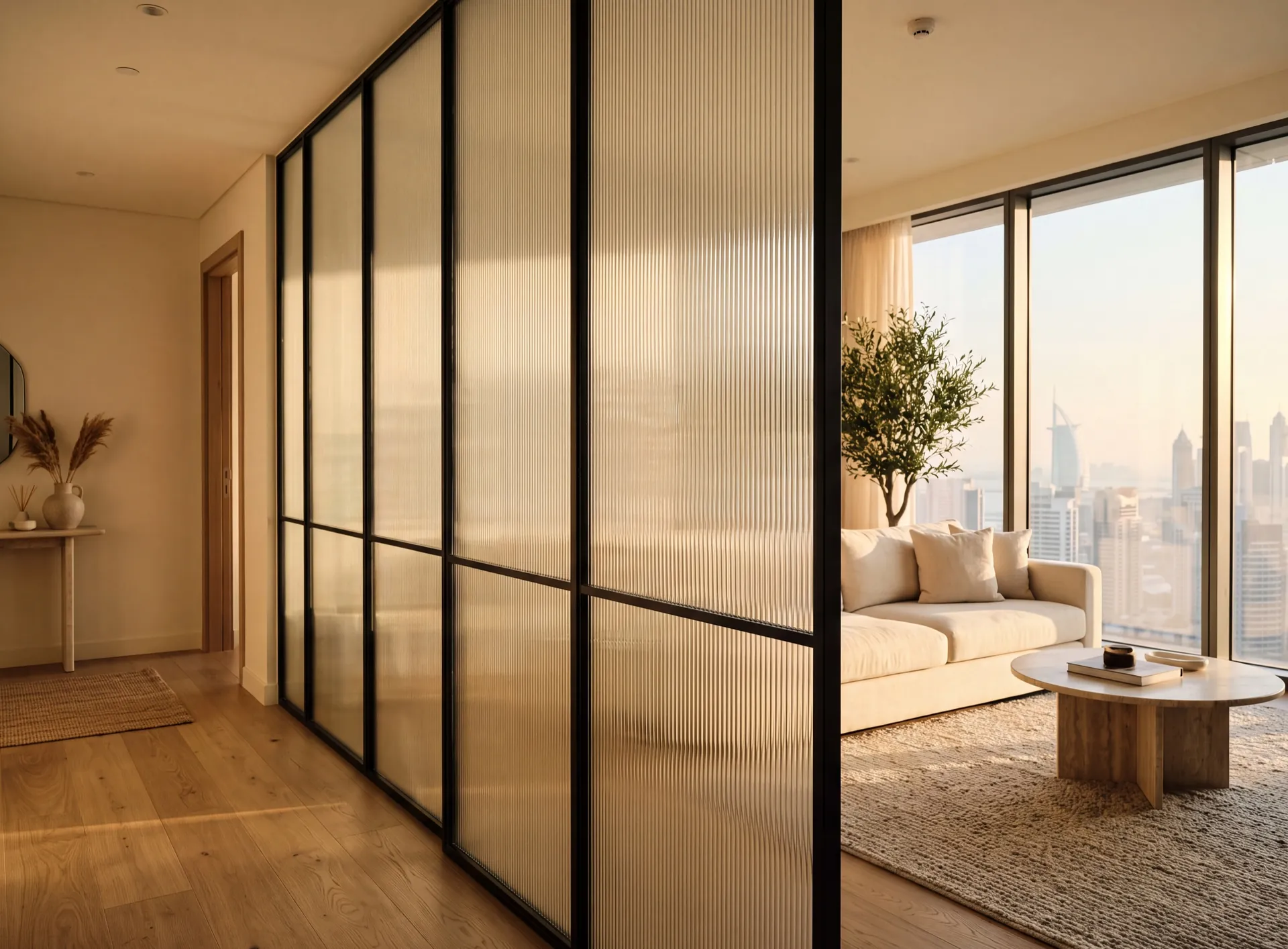
The finish of the moment, and deservedly so. Vertical ribs bend the light so shapes behind become soft columns of colour rather than recognisable figures. It reads as warm and tactile rather than clinical, and it works particularly well against low afternoon sun, which the ribs break into a repeated glow.
In an apartment its best use is a partition between a hallway and a living room, or around a home office carved out of an open plan. You keep the daylight reaching the corridor and lose the sense of a corridor entirely.
One practical note: the ribs run in one direction, and that direction matters. Vertical ribs stretch a space upward and are the usual choice; horizontal ones widen it and are far less common indoors. Decide it against the actual wall, not on a sample held flat.
Frosted and acid-etched glass
Frosting scatters light in every direction, so it gives complete visual privacy while keeping the room bright. Acid etching produces a smooth, even, slightly velvety surface; sandblasting is coarser and shows fingerprints more readily, which matters on a door.
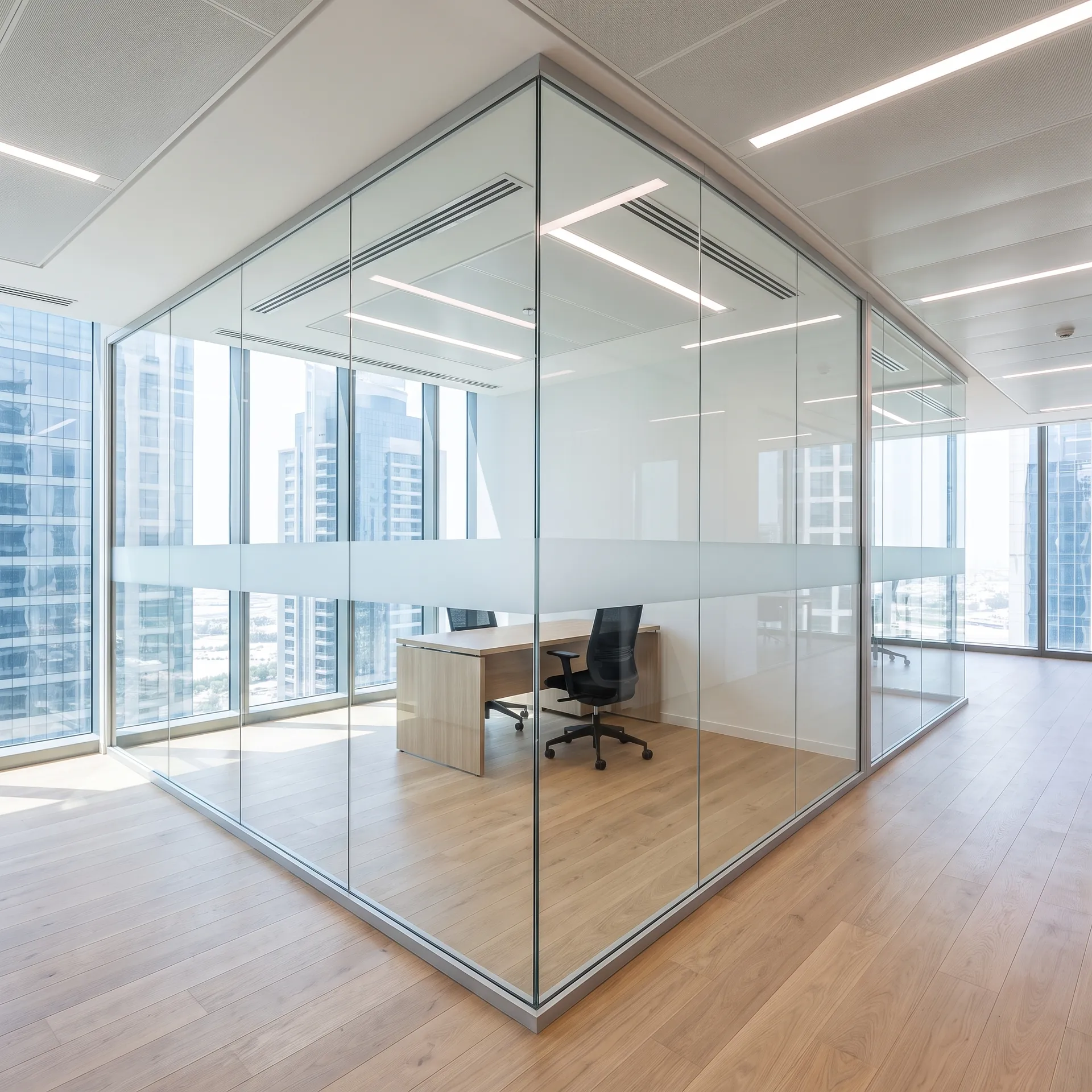
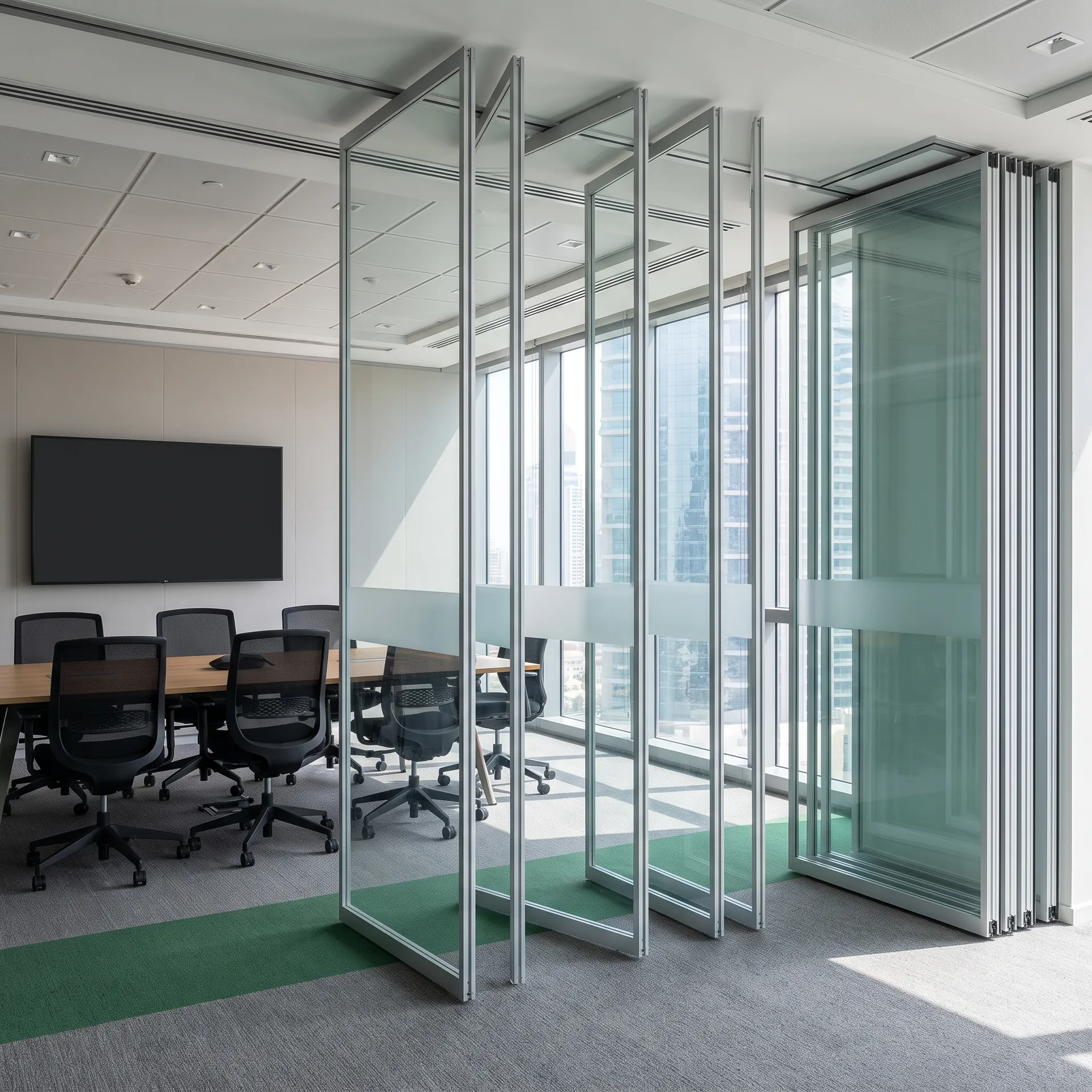
It is the standard answer for bathroom and ensuite doors, for a glazed door into a bedroom, and for the lower portion of a partition where you want light high and privacy low. Partial frosting — a band at eye level, or a gradient — is a useful middle setting that people forget exists.
Frosted glass shows marks. In a household with children, a door with a frosted lower panel will be cleaned often, and a smooth etched finish is much easier to keep looking right than a rough blasted one.
Textured, tinted and mirrored
Textured glass carries a pattern rolled into it during manufacture — rain, ripple, cross-hatch and a dozen others. It is more assertive than fluting and can date faster, so it is best used in small areas: a single door panel, a screen beside a stair, a cabinet front.
Tinted glass colours what passes through it. Bronze and grey are the safe choices indoors and sit well with the warm stone and timber common in villas here. Strong colours are wonderful in the right scheme and difficult to live with in the wrong one, and they change the colour of everything in the room behind them.
Mirrored and antique-mirrored panels belong to the same family and do the opposite job: instead of passing light, they double it. In a windowless dining area or a narrow hallway, a mirrored panel on one wall is often more effective than any lighting change.
Stained and coloured laminated glass
Traditional stained glass — pieces of coloured glass held in lead — still has a place, most often over an entrance or as a feature panel where the light is strong and direct. It is a craft product, priced accordingly, and it works best when it has real sun behind it, which is the one resource this city has in abundance.
The modern equivalent is colour laminated into a safety glass: a coloured or printed interlayer bonded between two panes. It gives the effect with none of the fragility, it is safe where people walk, and it can carry a photographic or geometric design rather than only leaded shapes.
For a contemporary Dubai interior, the laminated route is usually the better fit — it survives cleaning, it meets safety requirements without argument, and it can be made in panel sizes that leaded work cannot.
The safety part, which is not optional
Glass in doors, beside doors, and in any full-height partition people can walk into has to be safety glass — laminated or toughened, and laminated wherever the panel is overhead or where staying in one piece after breaking matters. This is not a premium upgrade; it is the baseline for anything in a circulation route.
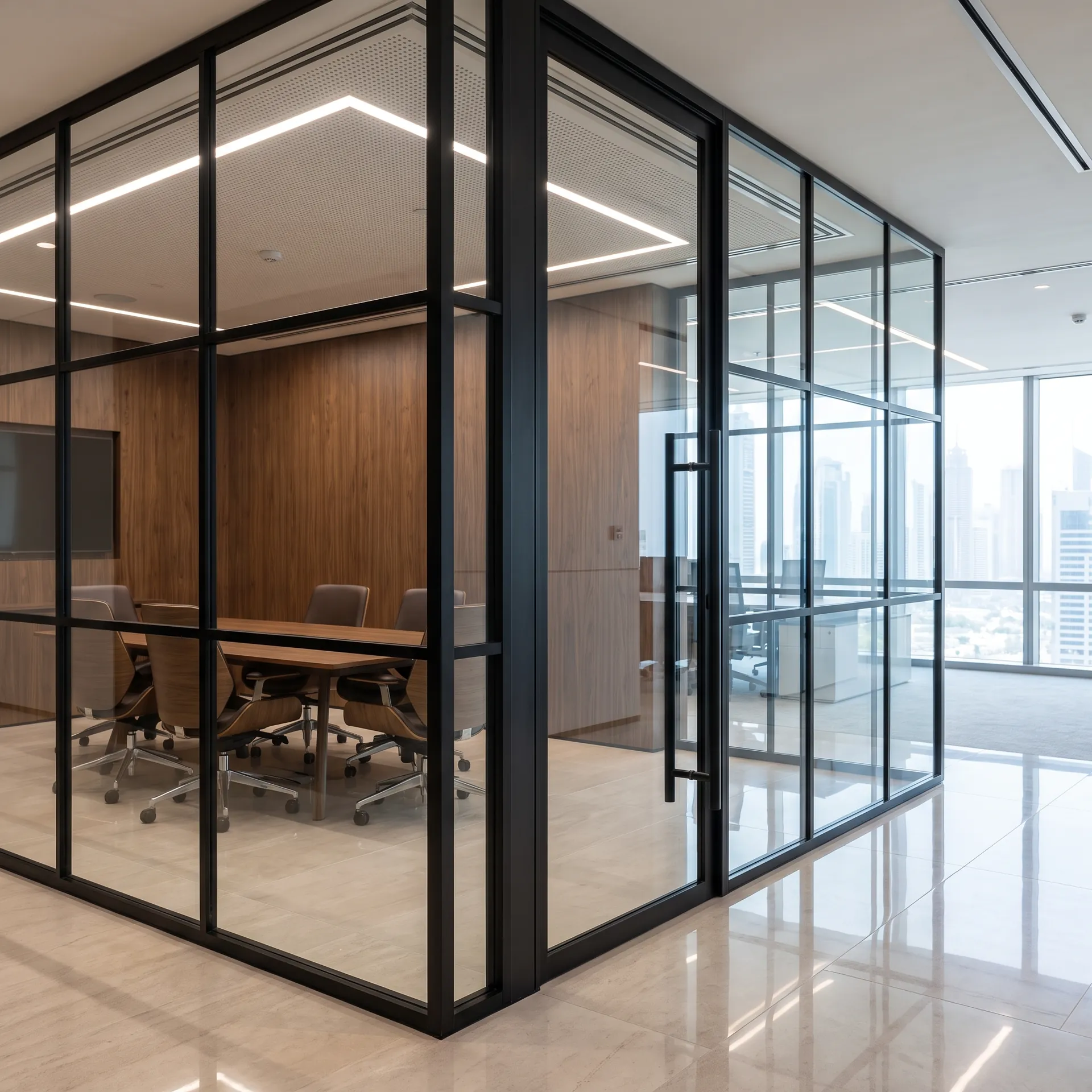
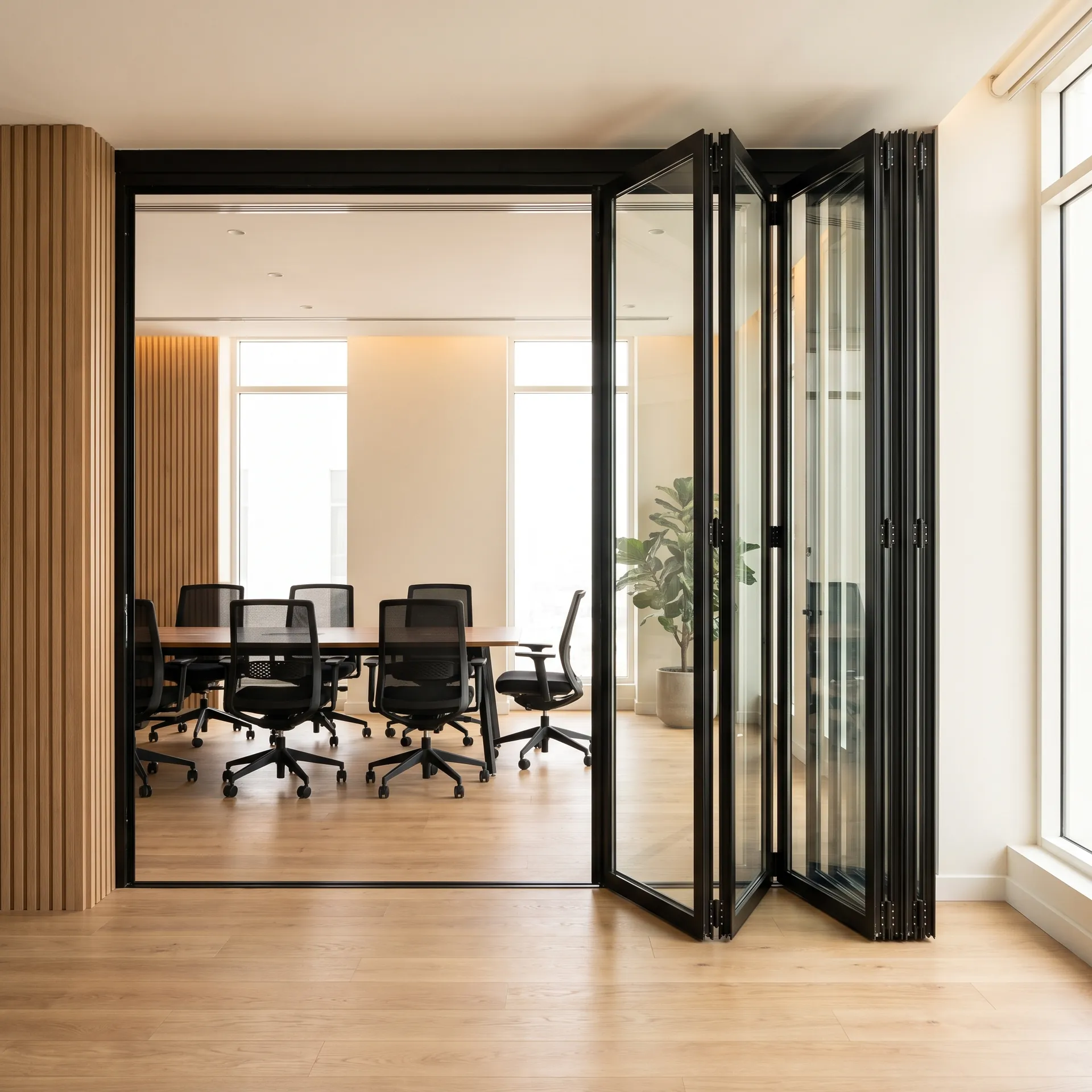
Large panels also need to be visible. A perfectly clear full-height partition is a hazard, which is one of the quiet arguments for decorative finishes: fluting, frosting or a manifestation band makes the glass legible as an object, so people do not walk into it.
Finally, weight and access. Decorative panels are often thicker than people expect, and getting a large one into a finished apartment through a lift and a hallway is a real constraint. It is worth checking the route before agreeing a panel size — a partition that cannot be delivered in one piece has to be designed with a joint, and that joint is a design decision rather than an accident.
Start from the room, not the sample. Ask how much privacy the space needs and how much daylight it can afford to scatter; that answer usually names the finish for you, and the rest is choosing a texture you will still like in five years.