

Three routes are open on an aluminium window — powder coating, anodising and a wood-effect finish — and each gives you a different kind of colour. What follows is not a comparison of the three so much as the set of decisions around whichever one you pick, because those are what the finish is judged on later.
You are choosing a specification, not a swatch
Powder coating puts the whole colour range on the table, in gloss, matt or textured versions, and can be touched in after a knock. Anodising thickens and seals the metal's own oxide skin, which gives a narrow palette of metallic tones and a surface with no film to lift. A wood-effect finish prints a timber grain over a powder-coated base. Those are three different products, and the first thing to settle is which of them you are actually buying.
Underneath the shade sits a second decision that gets far less attention: the class of the finish, meaning the pre-treatment of the metal and the coating specification chosen for how exposed the elevation is. A seaward wall and a shaded courtyard want different answers even in the same colour, and this is the part a quote should state in writing rather than imply.
The third is who applies it and when. Frame and sash going through the same line in one run is what makes a window read as one colour rather than as two similar ones, and it is worth confirming that the coating happens as part of manufacture rather than being subcontracted after the sections are cut.
Why some colours hold their depth and others go flat
Colour is pigment, and pigments do not all respond to ultraviolet the same way. Neutrals — the greys, blacks, whites and bronzes that most of this country's architecture uses — are the least demanding and the most predictable over time. Deep saturated shades, particularly strong reds and some brilliant blues and greens, ask more of the coating specification, and on a sunlit elevation they are where a difference between a standard and a high-exposure system shows up first.
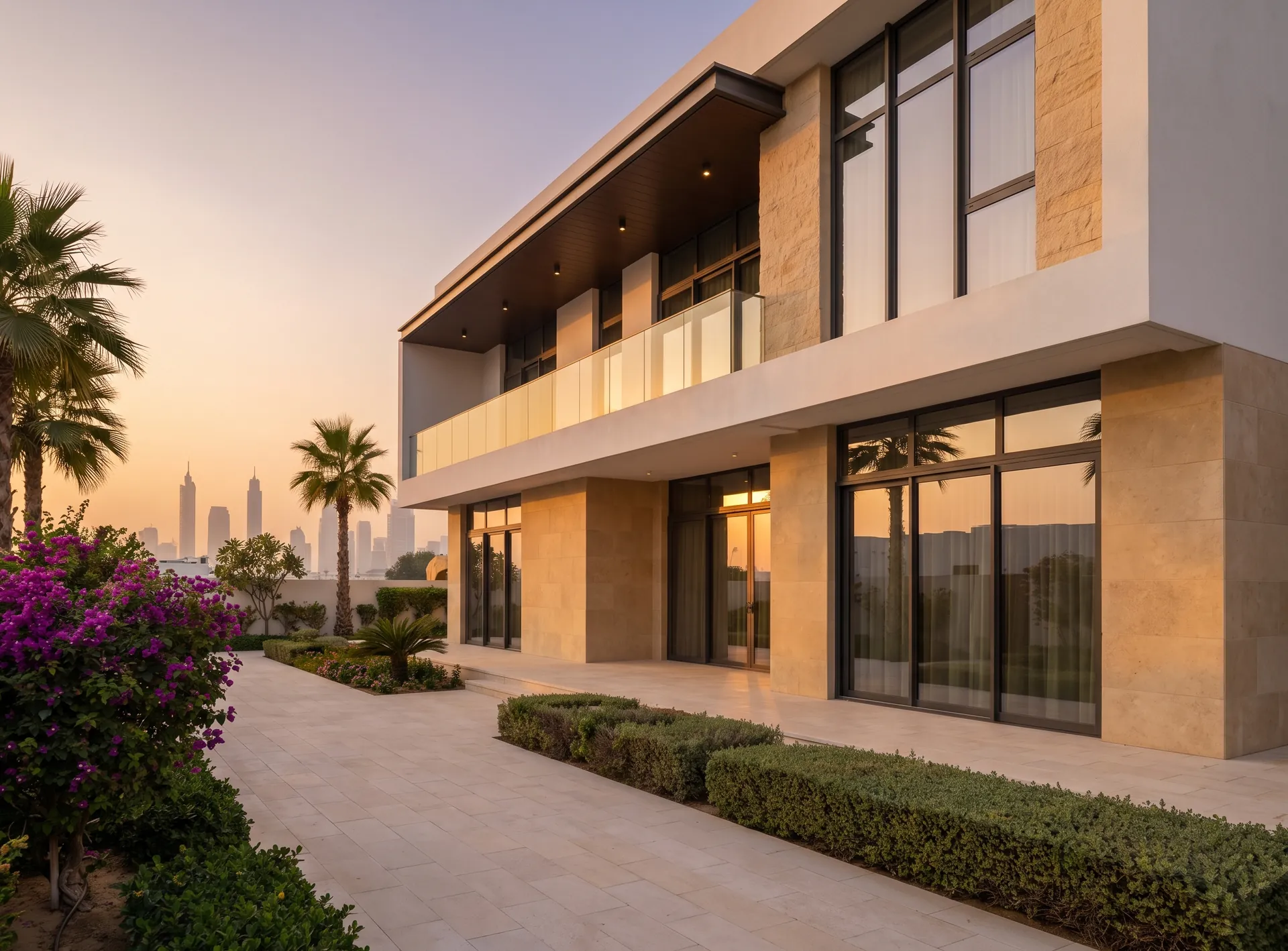
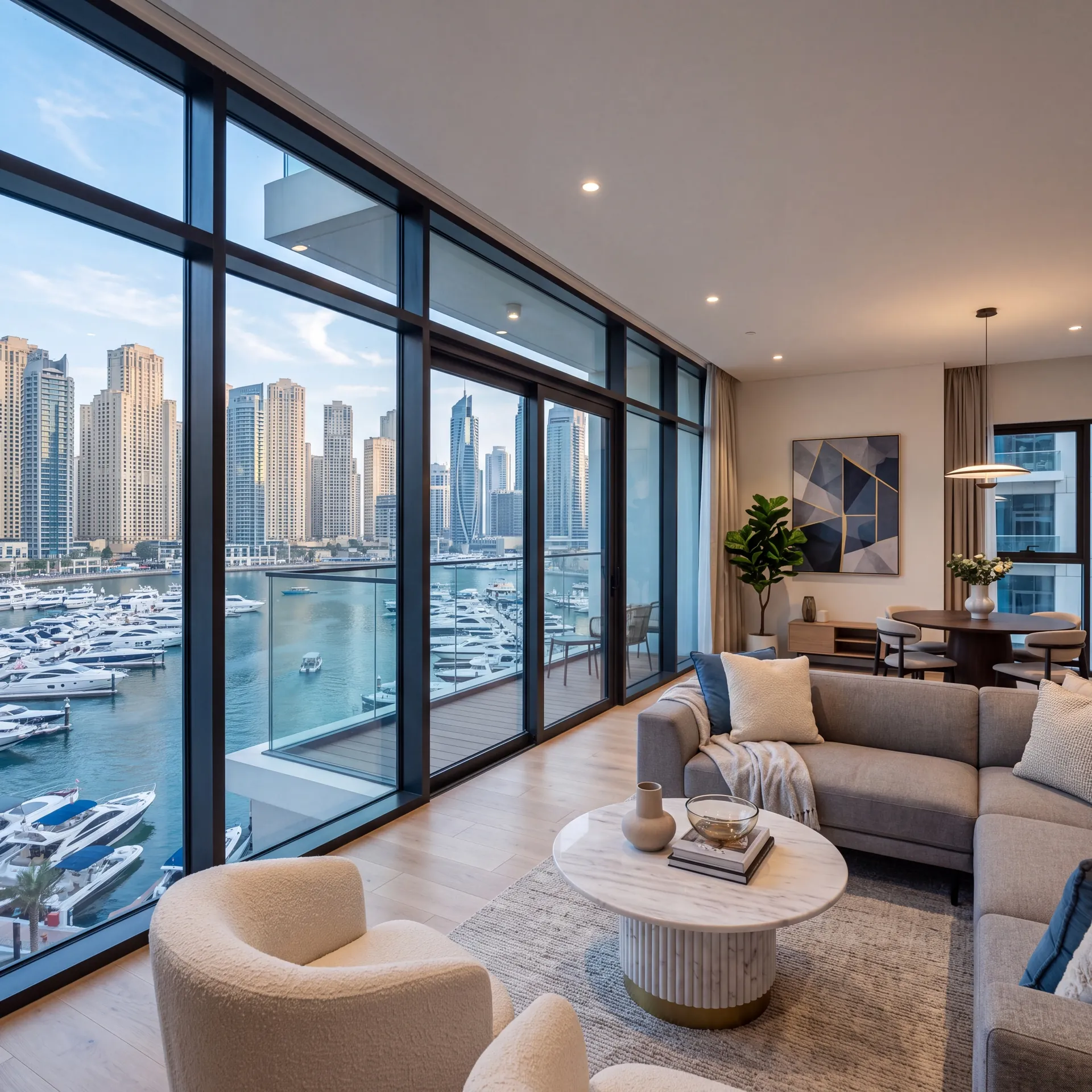
The surface finish changes what ageing looks like. A high gloss reads as a mirror and shows the loss of depth early, because gloss is the first thing to go. A matt or fine-textured surface hides handling marks, small scratches and the general grubbiness of a building far better, which is a large part of why so much of the region's glazing is specified in textured dark greys and blacks. It is a practical choice as much as an aesthetic one.
It is also worth expecting the elevations to age at different rates. A west face gets a different dose of sun than a north one, so a house finished on one day will not be perfectly uniform after years, and a single frame replaced later and coated in a fresh batch can look newer than its neighbours. That is normal, and it is an argument for coating a whole elevation together rather than window by window.
Dark frames in a UAE summer
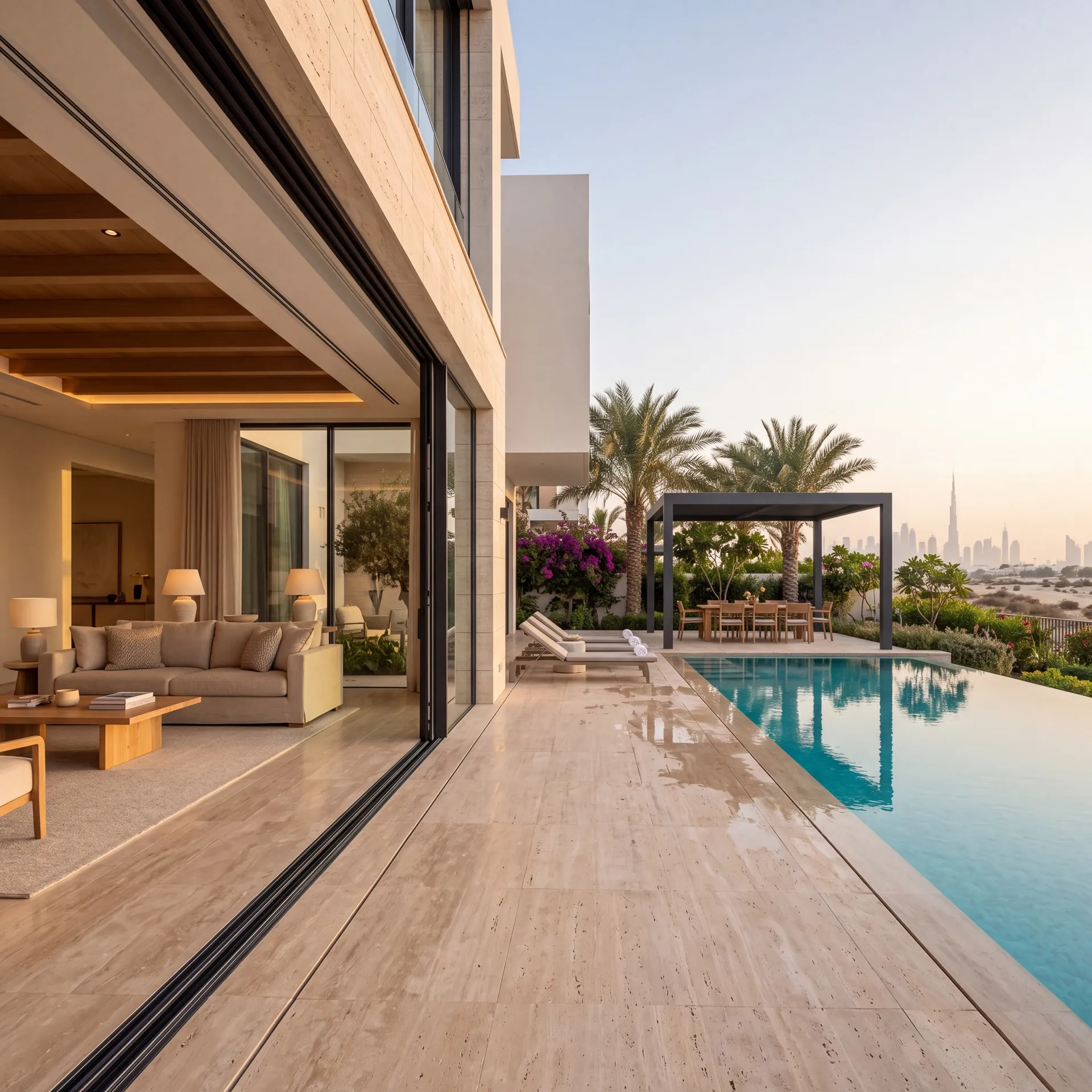
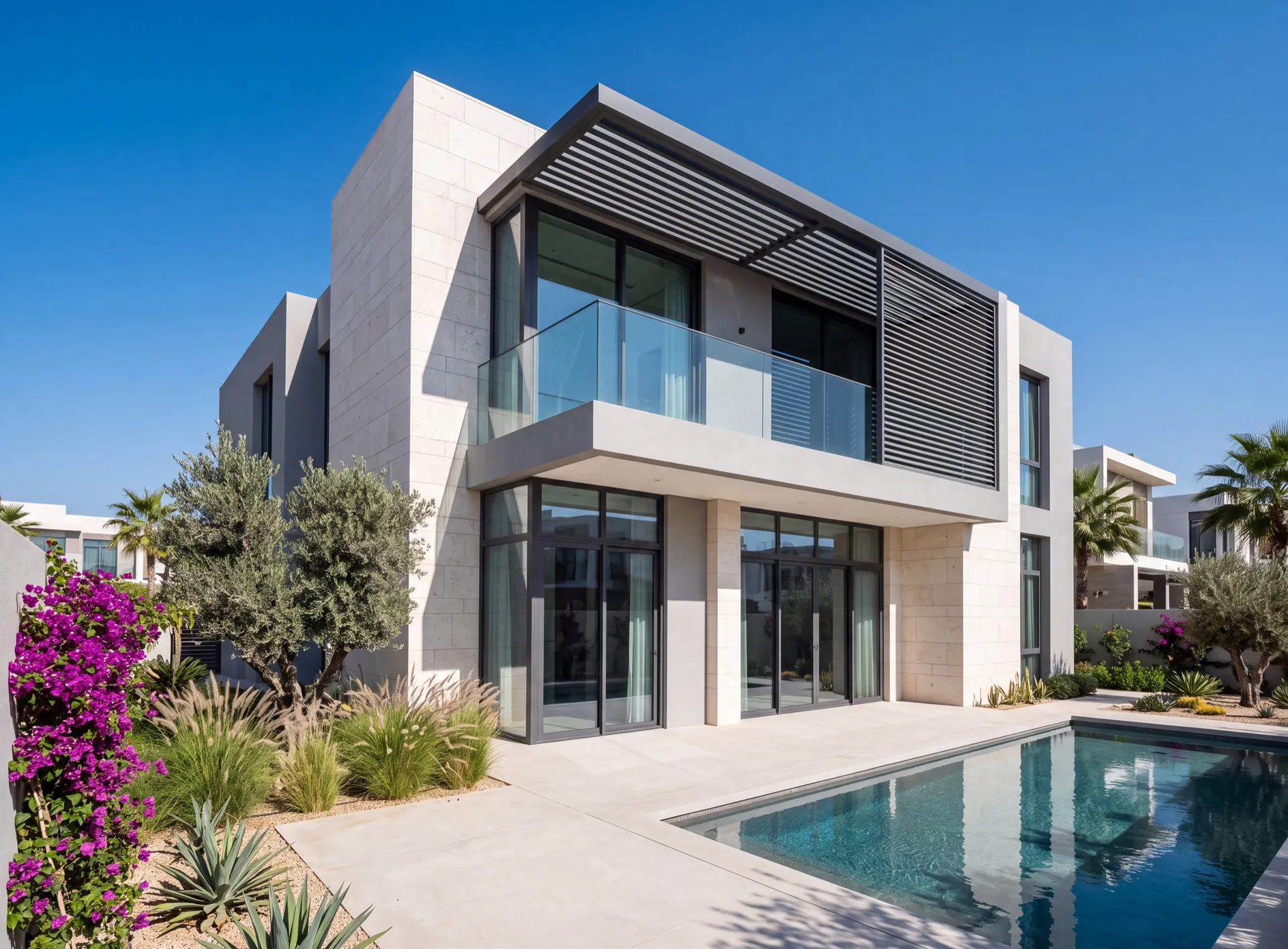
A dark surface absorbs more of the sunlight that lands on it than a pale one, so a black or anthracite frame on a west elevation runs hot in the afternoon in a way a white one does not. That is not a reason to avoid dark frames, which are the dominant look here for good reasons, but it is a reason to design for it rather than around it.
Aluminium grows as it warms and shrinks as it cools, and long sections move more than short ones. A hot dark profile therefore works its joints and its gaskets harder through a daily cycle than a cooler pale one, which is why the system's own allowance for movement and the quality of the corner assembly matter more on dark elevations. It is also why a very long run of dark glazing is drawn with that movement in mind rather than treated as one continuous piece.
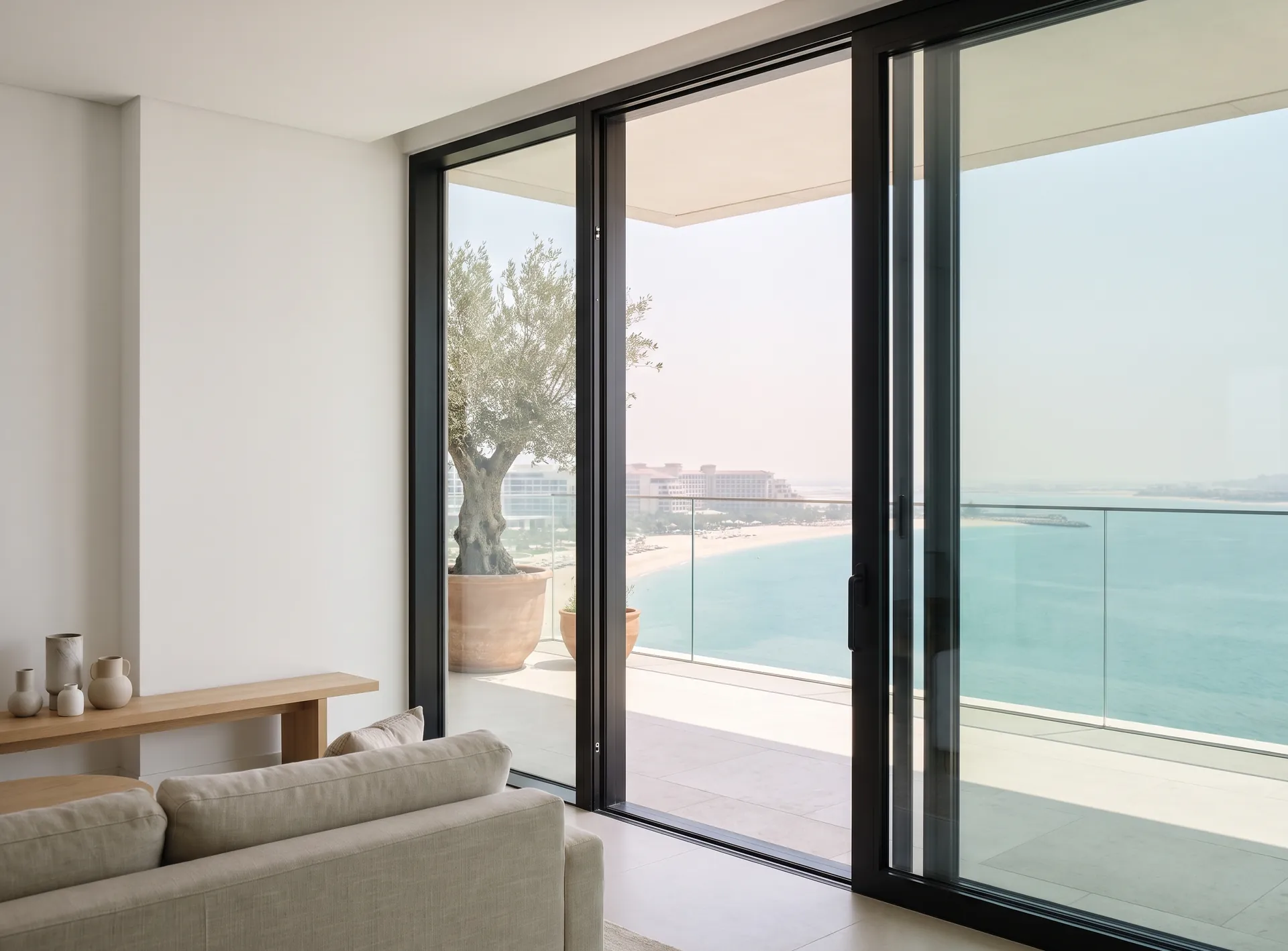
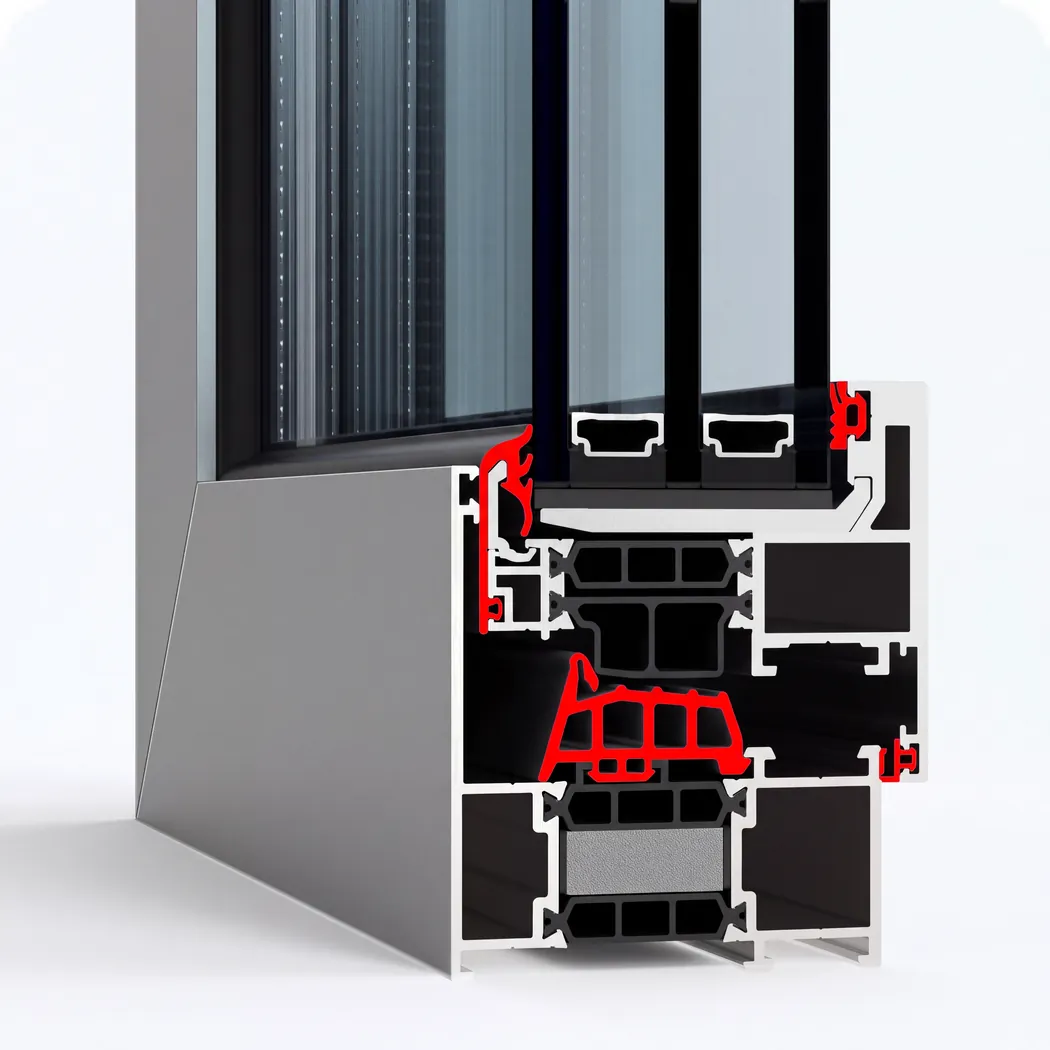
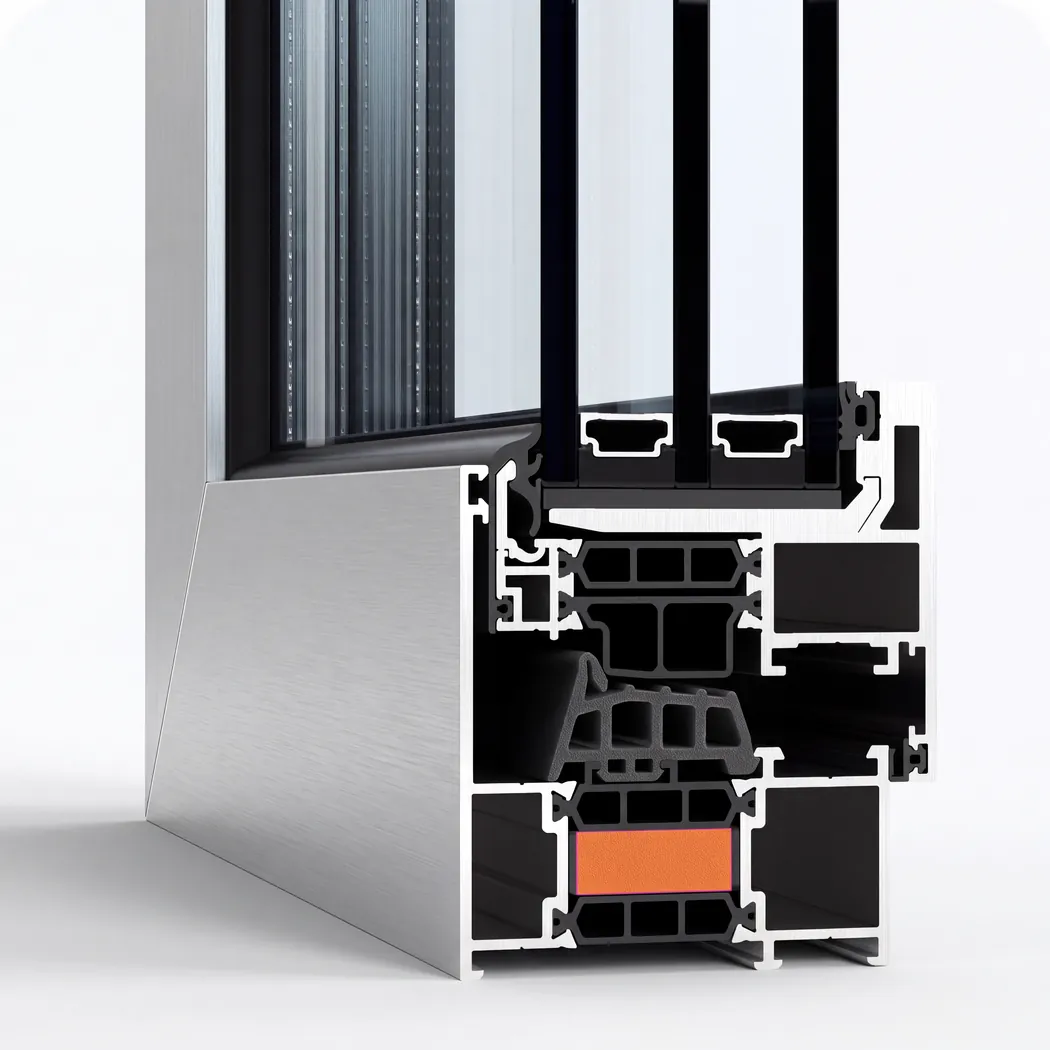
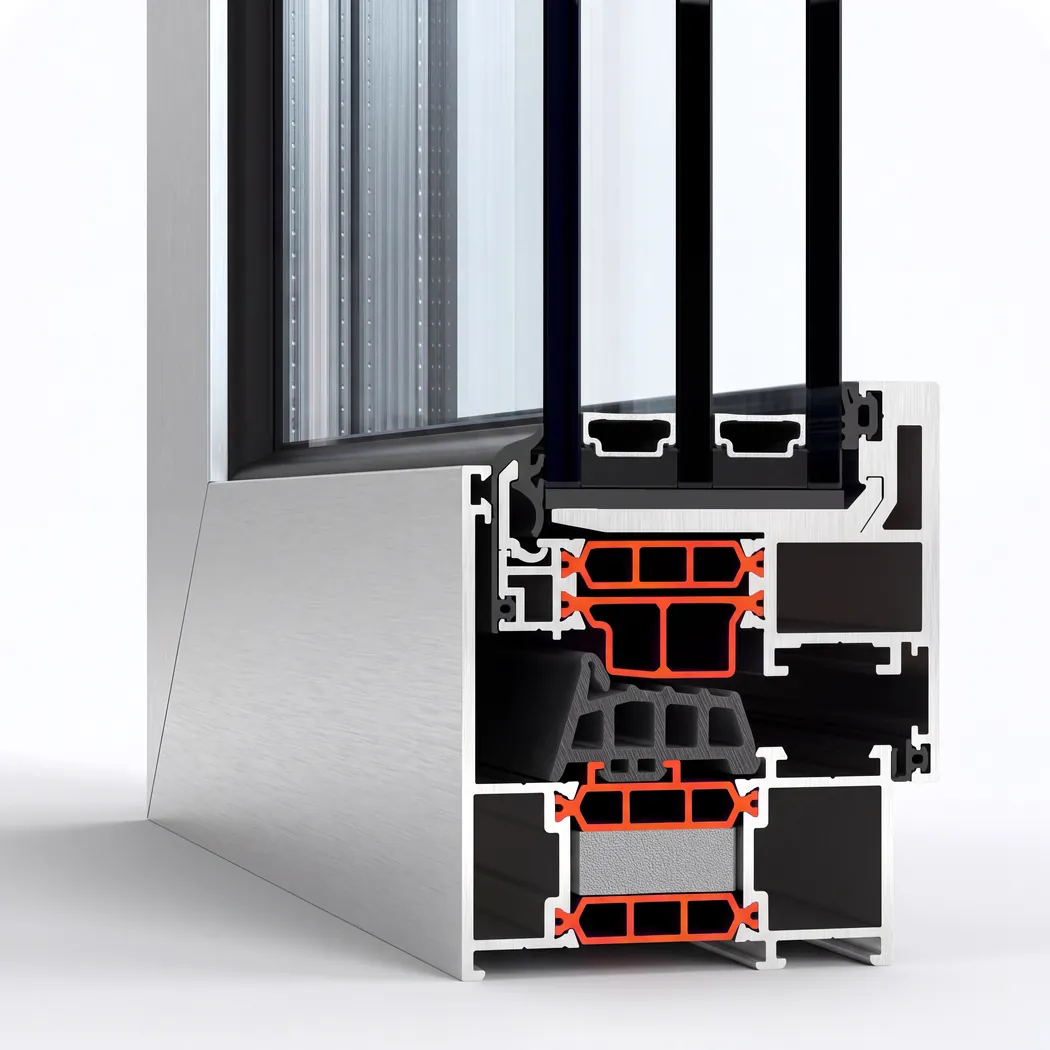
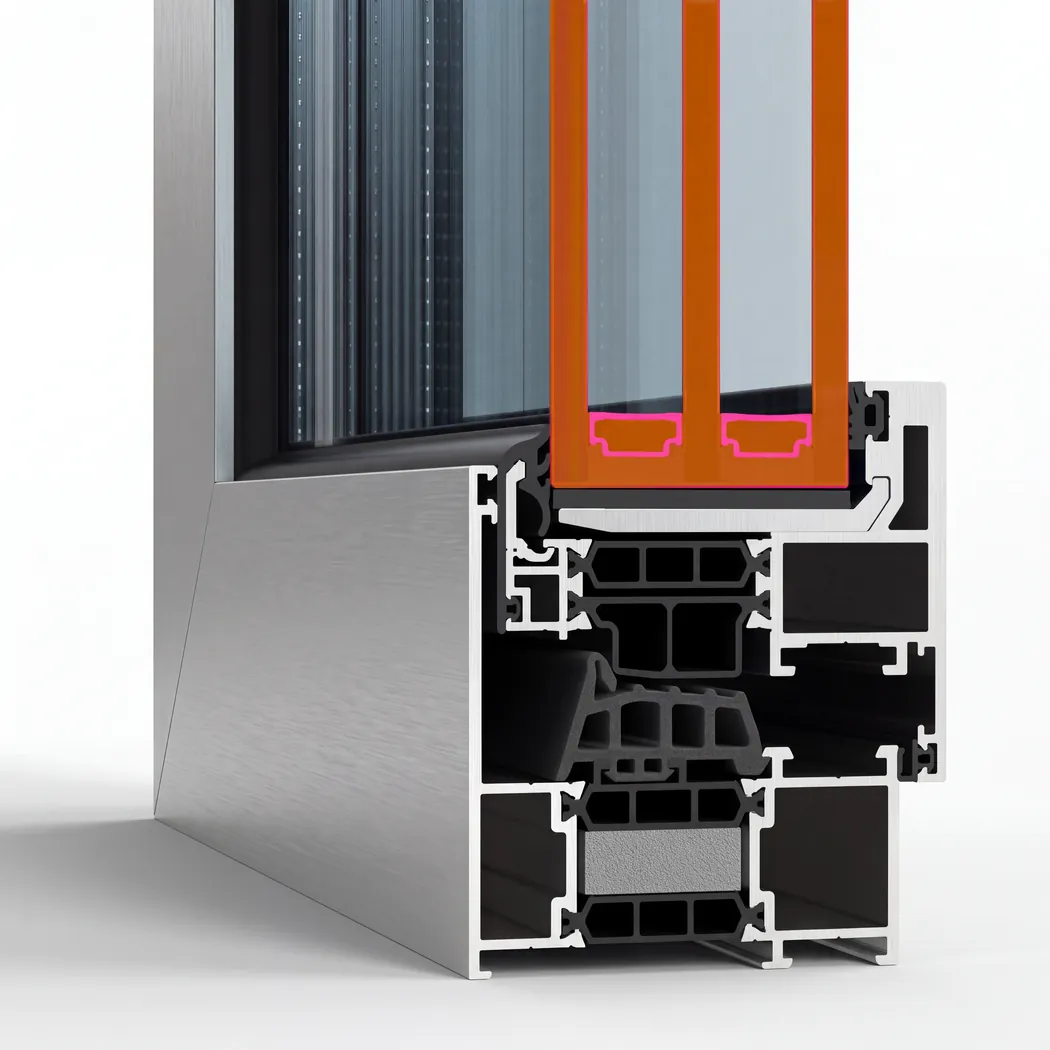
A thermally broken frame helps here in a way that is easy to miss. Because the outer and inner shells are separated by an insulating barrier, the outer half can get as hot as it likes without dragging the inner half up with it, so the part you touch stays reasonable and the frame does not become one more source of heat in the room. Two-tone finishing takes the same idea further: a dark shade outside where the architecture wants it, a lighter one inside where the room does.
Two-tone, wood effect and what happens at the edges
Two-tone is available on most thermally broken systems and is one of the few options that costs little and solves something real. The elevation gets the colour the building wants; the interior gets the colour the room wants; and the barrier between the shells makes the two independent anyway. Where an owner is torn between a dark facade and a light interior, this is usually the answer rather than a compromise shade.
A wood-effect finish is a timber grain printed over the coating, and it should be judged as a print. Inside the house, and on sheltered elevations, it does what it promises and keeps a timber look without any of timber's upkeep. On a fully exposed west or seaward face it is being asked to do the hardest job on the building, and that is a conversation to have honestly before it is specified rather than after.
With any of the three routes, the questions worth asking are about edges and details rather than faces. What happens at a cut end, where the section was machined after coating. How the finish behaves around hardware, where fixings pass through it. And whether the visible face of the sash, the frame and any add-on trim were all finished in the same run — because mismatches show at the joints long before they show in the middle of a length.
Approving a colour so it is still the colour you chose
A printed chart and a screen are both lying to you, in different directions. The only reliable approval is a sprayed sample of the actual finish, held against the building, outdoors, in daylight — and ideally looked at twice: once in the hard light of the middle of the day and once in the low warm light of late afternoon, because a grey that is elegant at five o'clock can be flat at noon.
Where the job is matching frames that already exist, take the sample to them rather than the other way round. Anodised finishes in particular vary a little between production batches, so an exact match to an old bronze frame is a matter of choosing the closest run rather than quoting a code; and where a whole elevation is being done, ordering it in a single batch avoids the problem entirely.
Then record it. The finish route, the colour reference, the gloss level or the anodised tone, and which parts were coated together are four lines that belong in the property file next to the approved drawing. Years later, when one sash is damaged or one elevation is extended, that record is the difference between a matching replacement and a visibly newer window.
Keeping the finish you paid for
The coating is the sacrificial layer of the whole window and it is destroyed by cleaning far more often than by weather. Rinse before wiping, so the film of dust floats off instead of being dragged across the surface. Wash with a mild detergent and a soft cloth. Keep blades, scrapers, abrasive pads, solvents and acidic cement removers away from it entirely, and keep a pressure lance away from the perimeter and the gaskets.
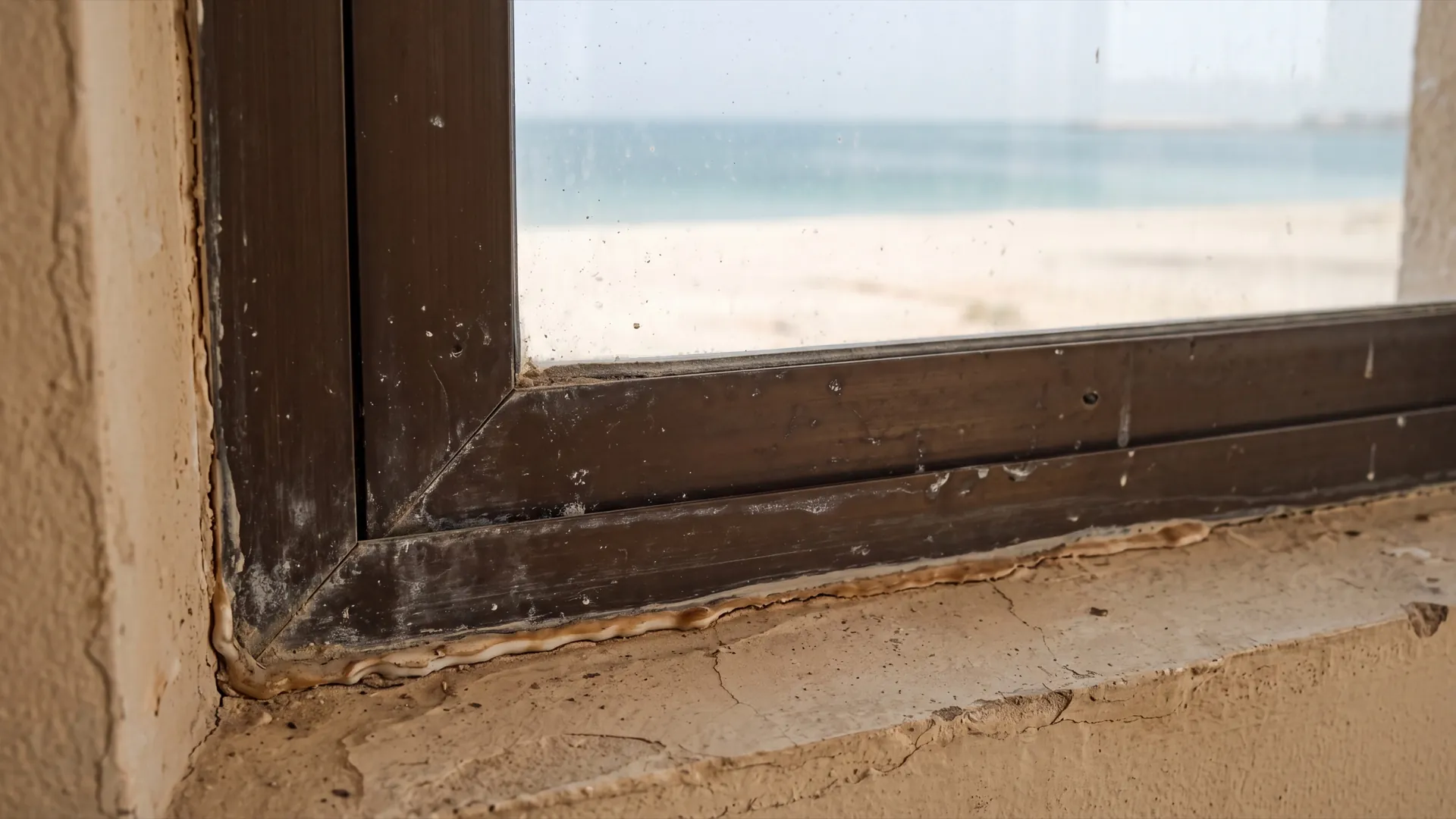
Near the sea, add a plain fresh-water rinse of the frames to the routine even when nothing looks dirty, because salt that has dried on the surface goes on working. Look once a year at cut edges, at fixings and at any place the coating has been chipped through to bright metal, since that is where corrosion starts rather than in the middle of a face. A powder-coated frame can be touched in there; anodising cannot, because the oxide is the finish rather than a layer on it.
One small thing catches a surprising number of new buildings: protective film left on through a UAE summer bakes onto the profile and becomes difficult to remove without attacking what is underneath. It stays on while other trades are working around the window and comes off before the sun has had months at it, and that timing is worth agreeing rather than assuming.
Pick the finish route first and the shade second, and let how exposed the elevation is set the coating class rather than the other way round. Favour neutrals and a matt or textured surface if you want the building to age quietly; expect dark frames to run hot and specify a thermally broken system and honest two-tone rather than fighting it; judge the colour on a sprayed sample against the building in daylight; and write down the reference, the route and the batch. Everything after that is cleaning it without abrasives and rinsing the salt off.