

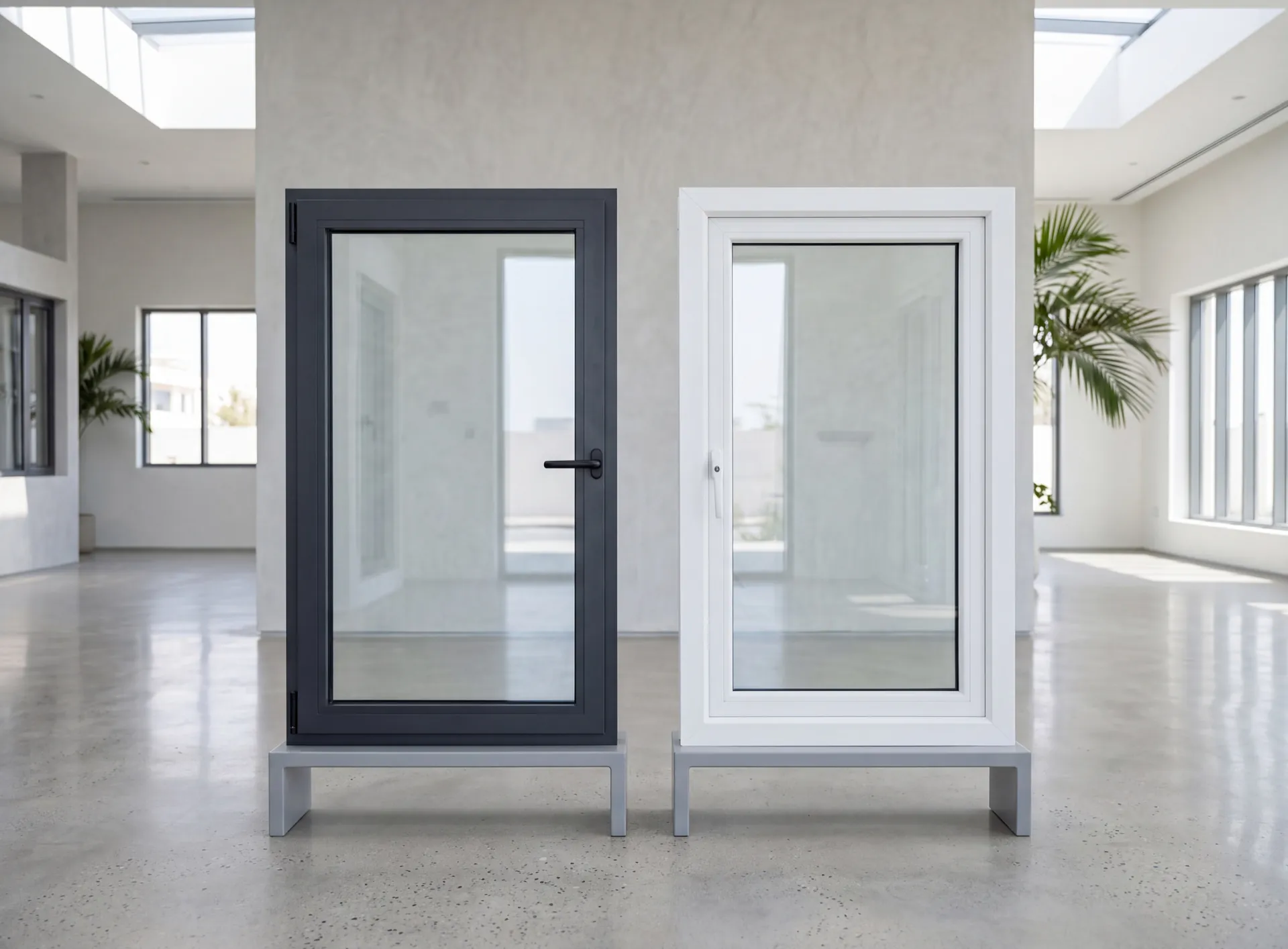
We supply aluminium systems and uPVC systems, and we have no reason to talk you out of either. What follows is the comparison as an engineer would make it: what each material is physically good at, what it is bad at, and which of those properties your particular opening will actually notice.
What the two materials are, underneath the colour
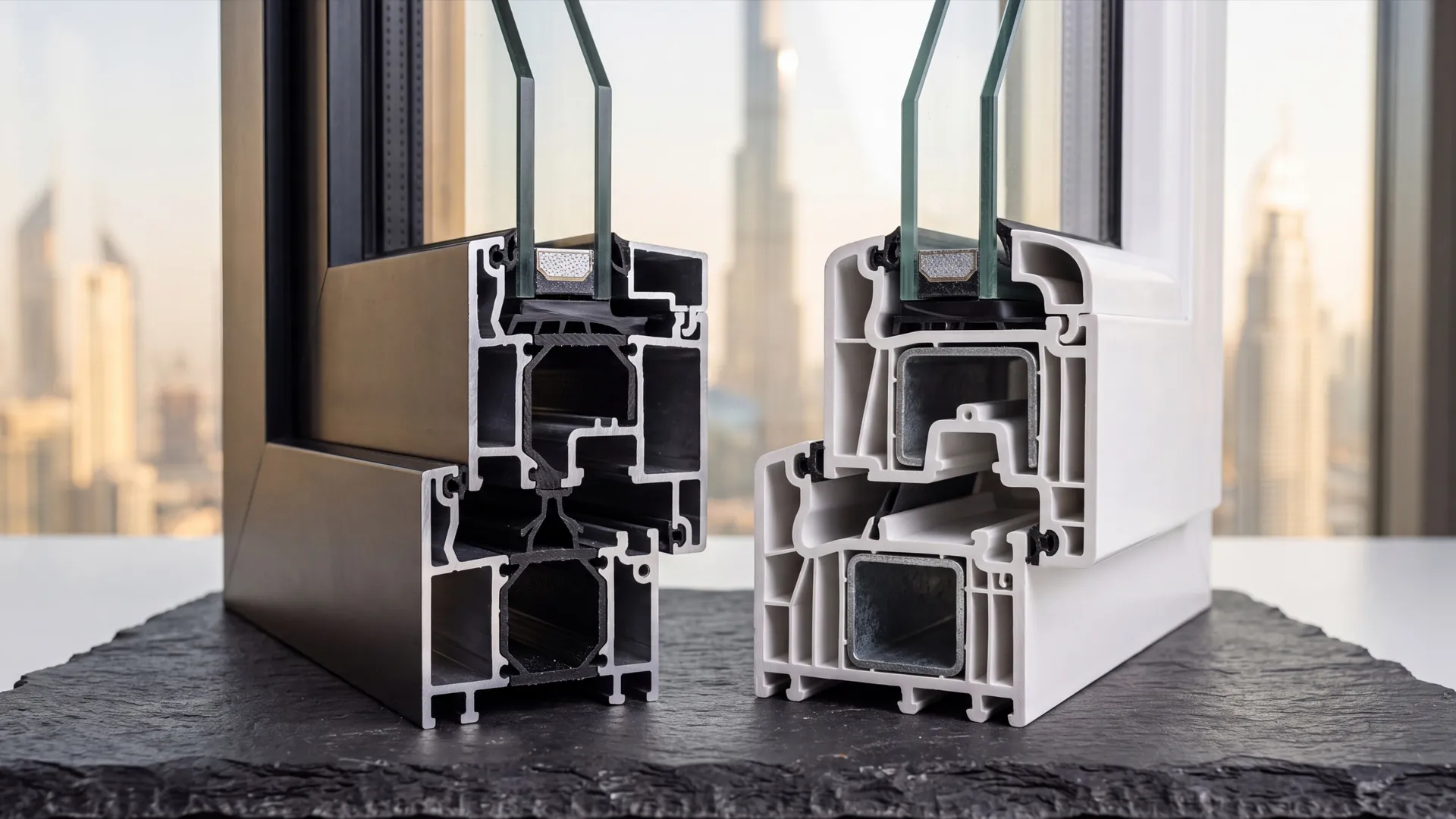
An aluminium window is extruded alloy: stiff, strong for its weight, dimensionally stable, and an excellent conductor of heat — which is the one property you do not want in a window. That is what the thermal break solves. A polyamide bar is locked between the outer shell of the profile and the inner one, so the metal facing the sun and the metal facing your room are no longer the same piece of metal.
A uPVC window is a hollow multi-chamber profile of rigid plastic. The chambers and the material itself insulate well without any help, but the plastic is soft compared with aluminium, so anything structural — a large sash, a wide frame, a door leaf — carries a galvanised steel reinforcement threaded down the inside of the chamber. In effect a uPVC frame is a good insulator wrapped around a modest steel skeleton, while an aluminium frame is a strong section that has had insulation engineered into it.
That difference explains almost everything else. It sets how wide a sash can be before it sags, how slim a frame can look, how the profile behaves on a hot day, and what happens to each after years of ultraviolet light.
How each behaves in a UAE summer
Both materials expand in the heat; plastic simply does more of it, and a long dark uPVC section on a west elevation moves noticeably between the middle of the afternoon and the middle of the night. Systems are designed with that movement in mind, but it is why large uPVC units are drawn conservatively here and why dark finishes on uPVC are specified with more care than they would be in Europe. Aluminium moves too, and far less, which is one reason it can be trusted with big spans in a climate like this.
Ultraviolet light is the second test. Rigid PVC from a serious systems house is stabilised against it, and the profiles we fit are chosen on that basis; the yellowed, chalky, brittle frames you occasionally see in this country are almost always unbranded profile bought on price alone. Aluminium is indifferent to ultraviolet, and its exposure question is the coating instead: powder coat chalks slowly on a hard elevation and can be recoated, while anodising is grown into the metal and has no film to lift, which is why it is the usual specification near salt air.
Neither material is troubled by the humidity, and neither rots or needs painting. Where both are equally vulnerable is the parts you never think about: gaskets harden in direct sun long before any profile ages, and drainage channels silt up with blown sand. That maintenance is the same conversation whichever material you choose.
Where uPVC quietly wins
Noise is the strongest case for it. Sound comes through a window by two routes — the glass, and every gap around it — and a chambered plastic frame with multiple sealing lines is a genuinely good stopper on the second route. Put an acoustic glass build into a well-sealed uPVC frame in a bedroom facing a busy road, and you have solved the problem people usually try to solve by buying a more expensive frame material.
Heat at the frame is the second. The profile itself is a poor conductor, so a uPVC frame starts ahead of aluminium before either has a thermal break fitted; on the modest openings where the frame is a meaningful share of the whole window, that counts for something. And the third case is simply cost: for an ordinary rectangular opening, uPVC is the less expensive way to arrive at a tight, well-insulated, quiet window, which frees budget for better glass — usually a better trade than a better frame.
So uPVC belongs in bedrooms and studies on a noisy street, in bathrooms, stores, staff rooms and utility spaces, and across whole apartments whose openings are ordinary in size and whose problem is traffic rather than wind.
Where only aluminium will do
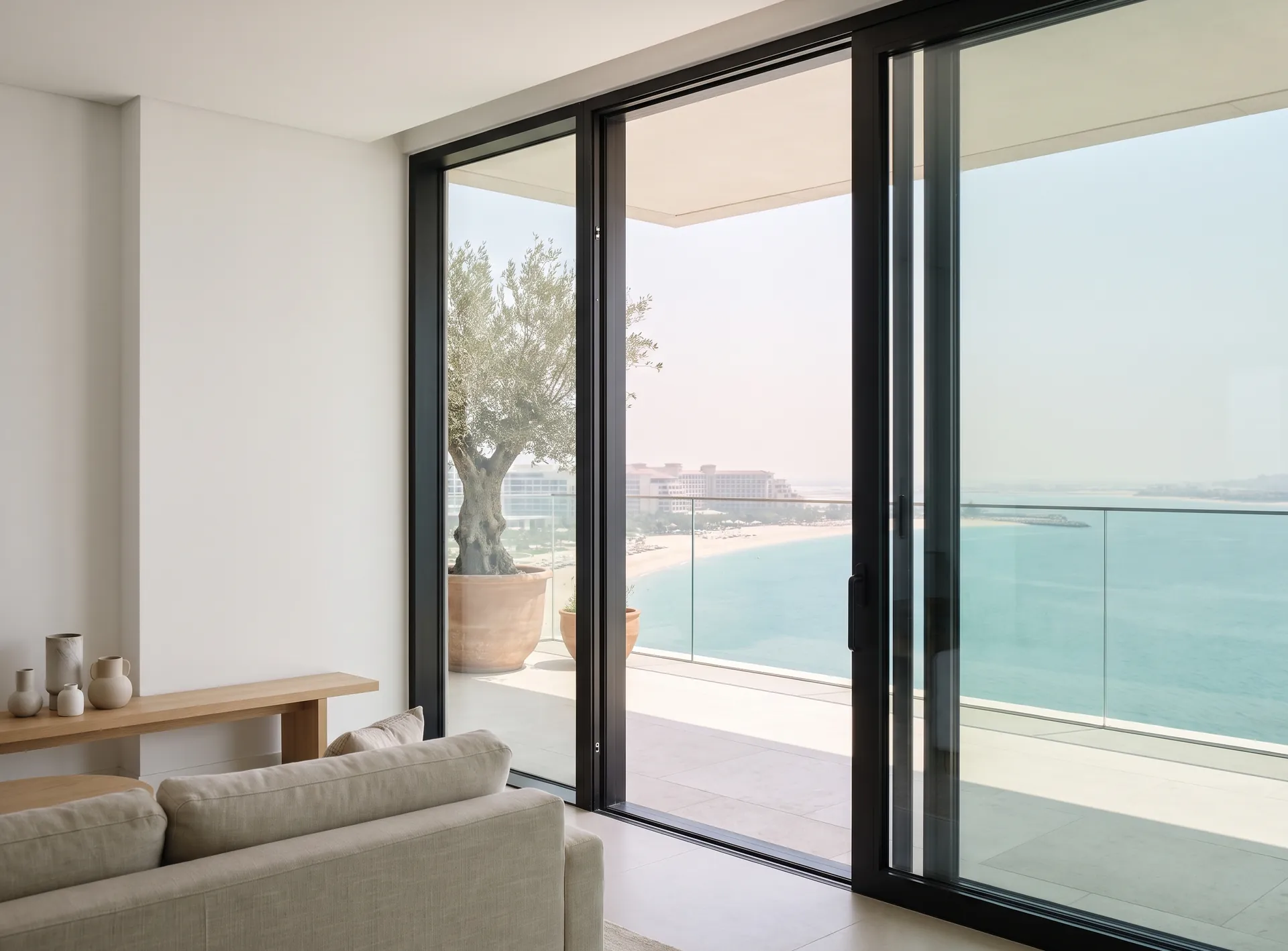
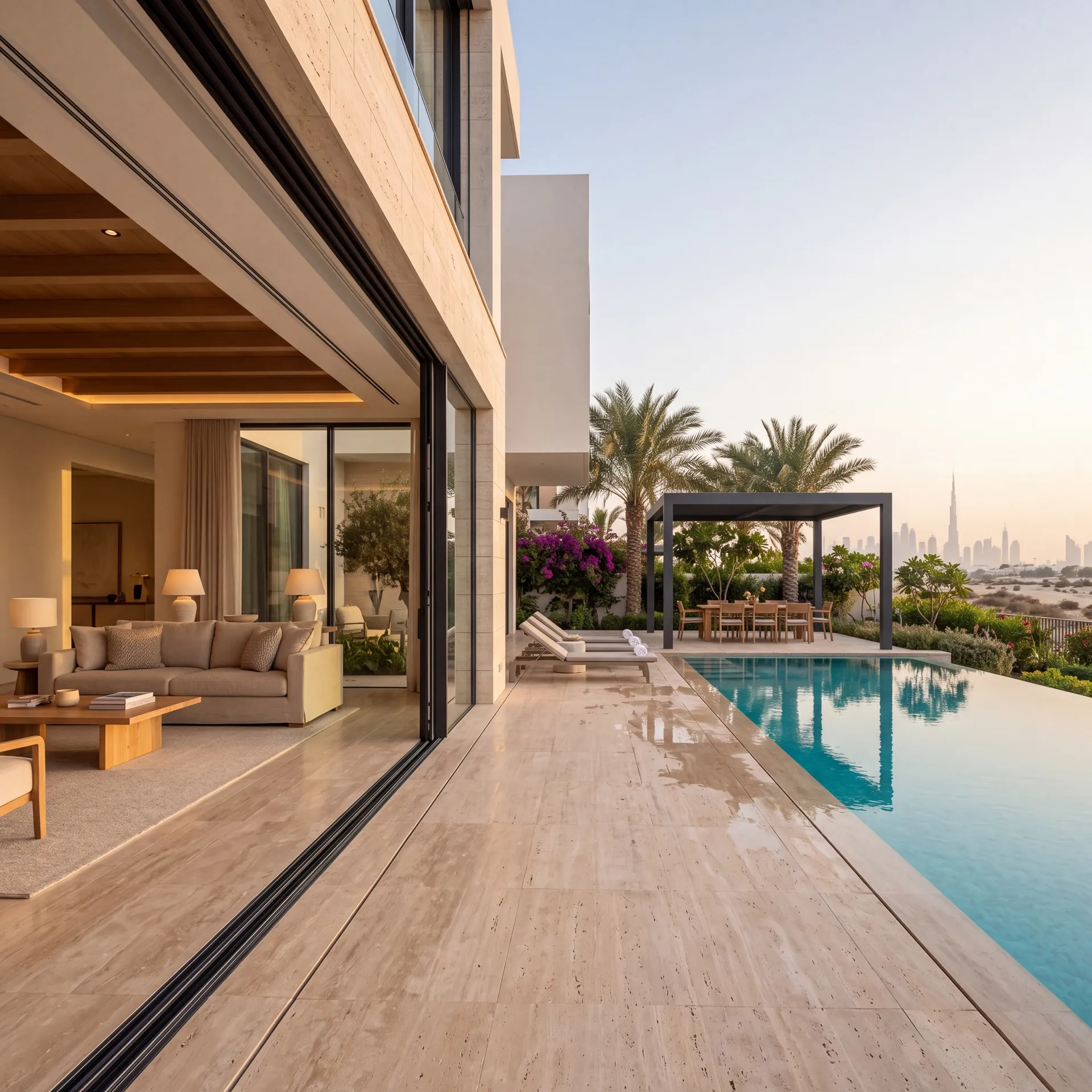
Anything large. A wide lift-and-slide door onto a terrace, a floor-to-ceiling field of glass, a run of panoramic panes with as little frame as the view can tolerate — these are strength questions, and strength is what aluminium has. The same load that would need a bulky plastic section with steel down the middle is held by a slim aluminium one, which is also why aluminium windows look the way architects here draw them.
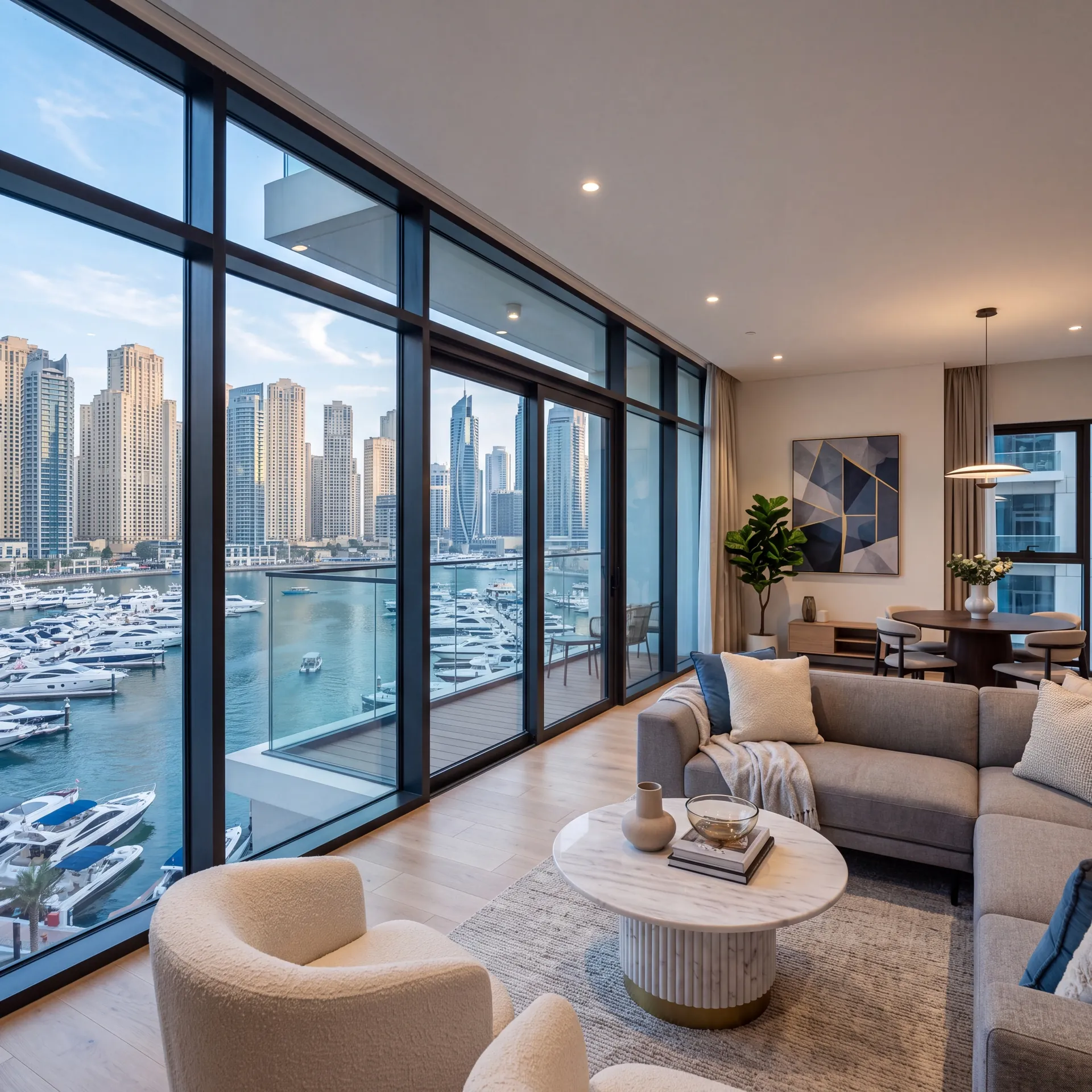
Height is the second case. Wind pressure grows with the floor you are standing on, and a tower apartment's glazing is engineered to a figure taken at that height rather than at street level. Once panes are big and pressures are high, a plastic frame runs out of section long before an aluminium one does. Add the doors that are opened dozens of times a day, the fire-rated and facade systems, and the shopfronts, and the list of things that are simply not built in uPVC gets long.
There is also a compliance answer that has nothing to do with physics. Many communities and developers fix the external appearance of a building — the colour and often the frame material — and towers commonly do the same. Where that applies, the material has already been chosen for you, and the honest job is to make the best window inside that constraint.
What actually goes into a villa and into a flat
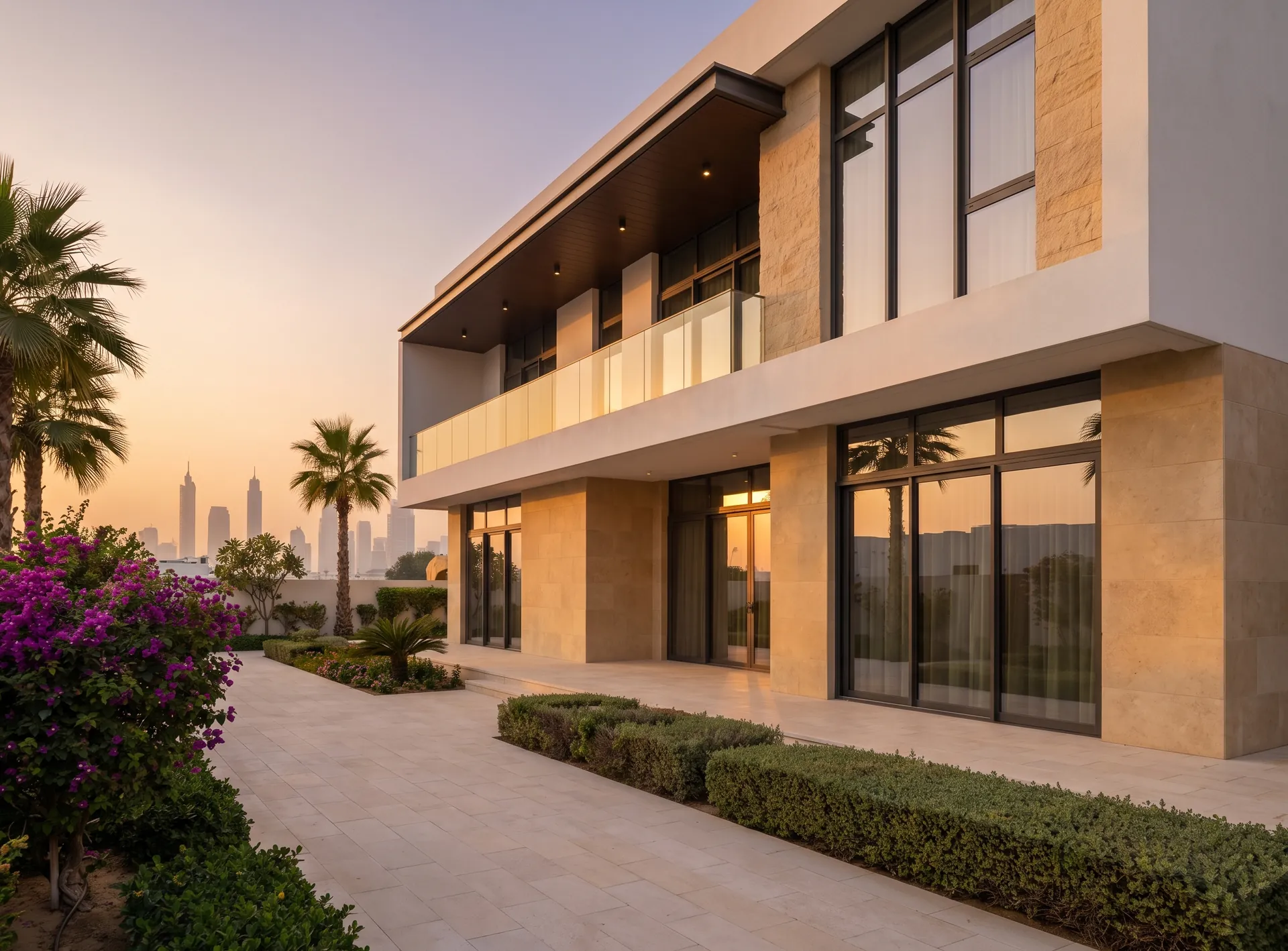
Villas are mostly aluminium, and not out of snobbery. The openings are the widest we make, the terrace and pool doors have to slide smoothly under their own weight, the majlis usually wants slim frames and large panes, and the elevation has to read as one thing rather than as a patchwork. Where uPVC turns up on a villa it is behind the scenes — bathrooms, stores, a staff room, a laundry — and it turns up because it is the right answer for those openings, not because the budget ran out.
Apartments split. If the tower fixes the external appearance, the decision is made and the interesting choices move to the glass and the hardware. If it does not, the deciding question is what the flat is actually fighting: a motorway, a flight path or a busy junction points at a well-sealed uPVC frame with an acoustic unit, while a floor-to-ceiling elevation, a high floor or a wide balcony slider points at aluminium regardless of the noise.
Plenty of properties end up with both, which is normal and not a compromise. What matters when they do is that the split is decided on the drawing — this opening in that system — rather than discovered later, and that the colour is held consistent across anything you can see from the street.
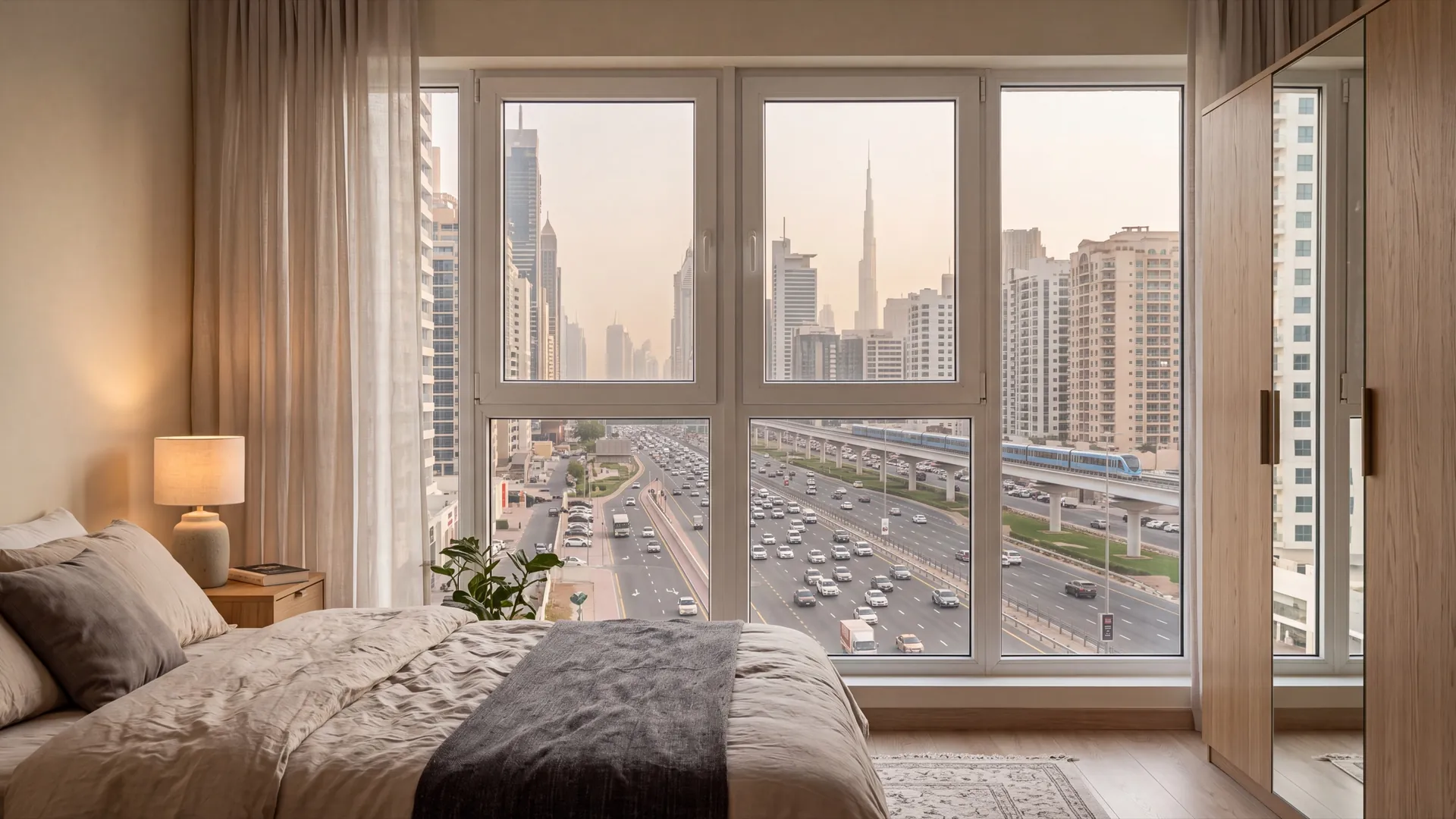
Choose by the opening rather than by the material. If the window is large, high, structural or has to look slim, it is aluminium and there is no real argument. If it is an ordinary rectangle whose problem is traffic noise or a hot afternoon, uPVC does the job well and leaves money for better glass. Everything else — how well it seals, how long the hardware lasts, whether it still closes properly a few years from now — is decided by the system you buy and the crew who fit it, not by whether the frame is metal or plastic.