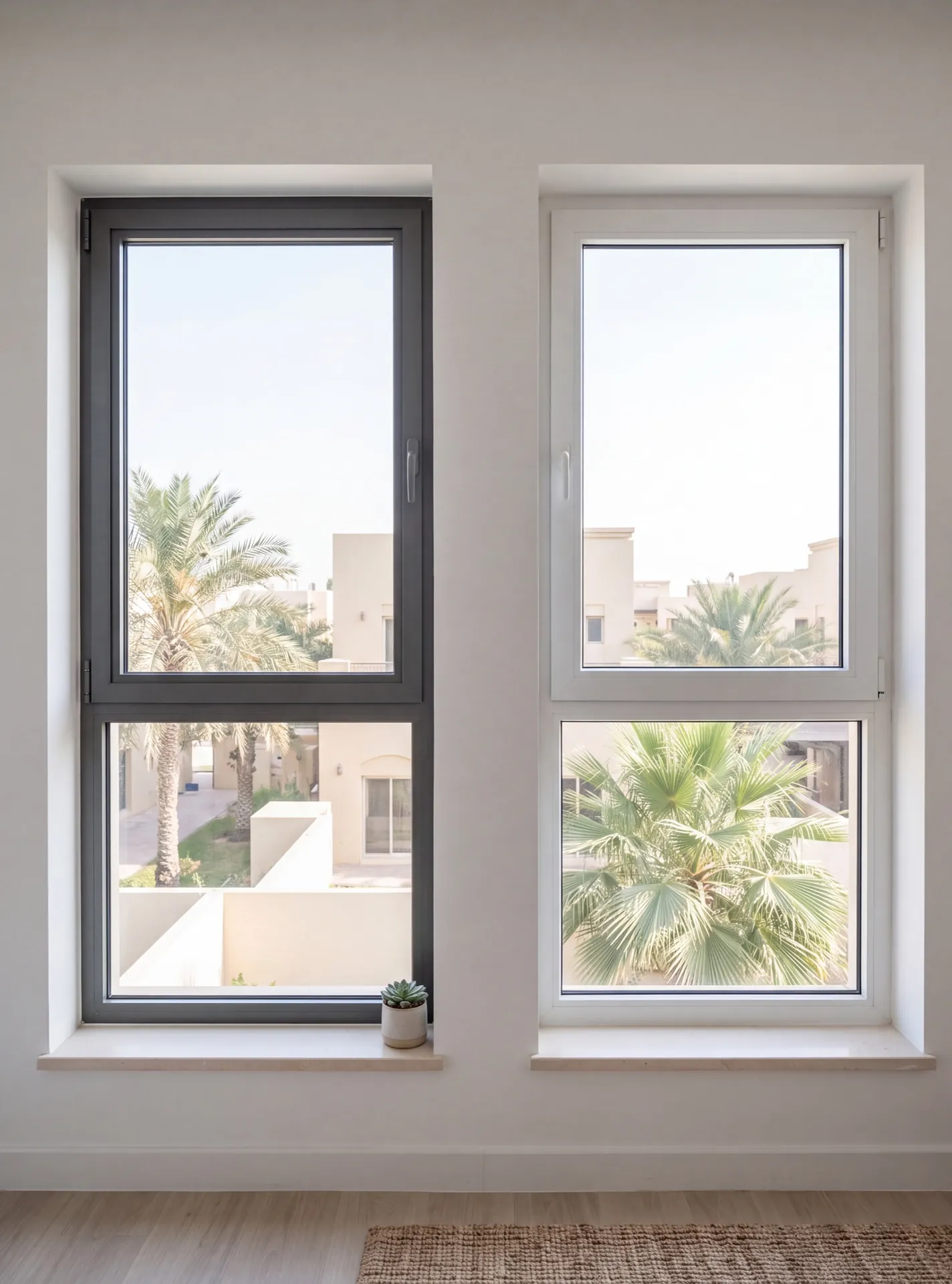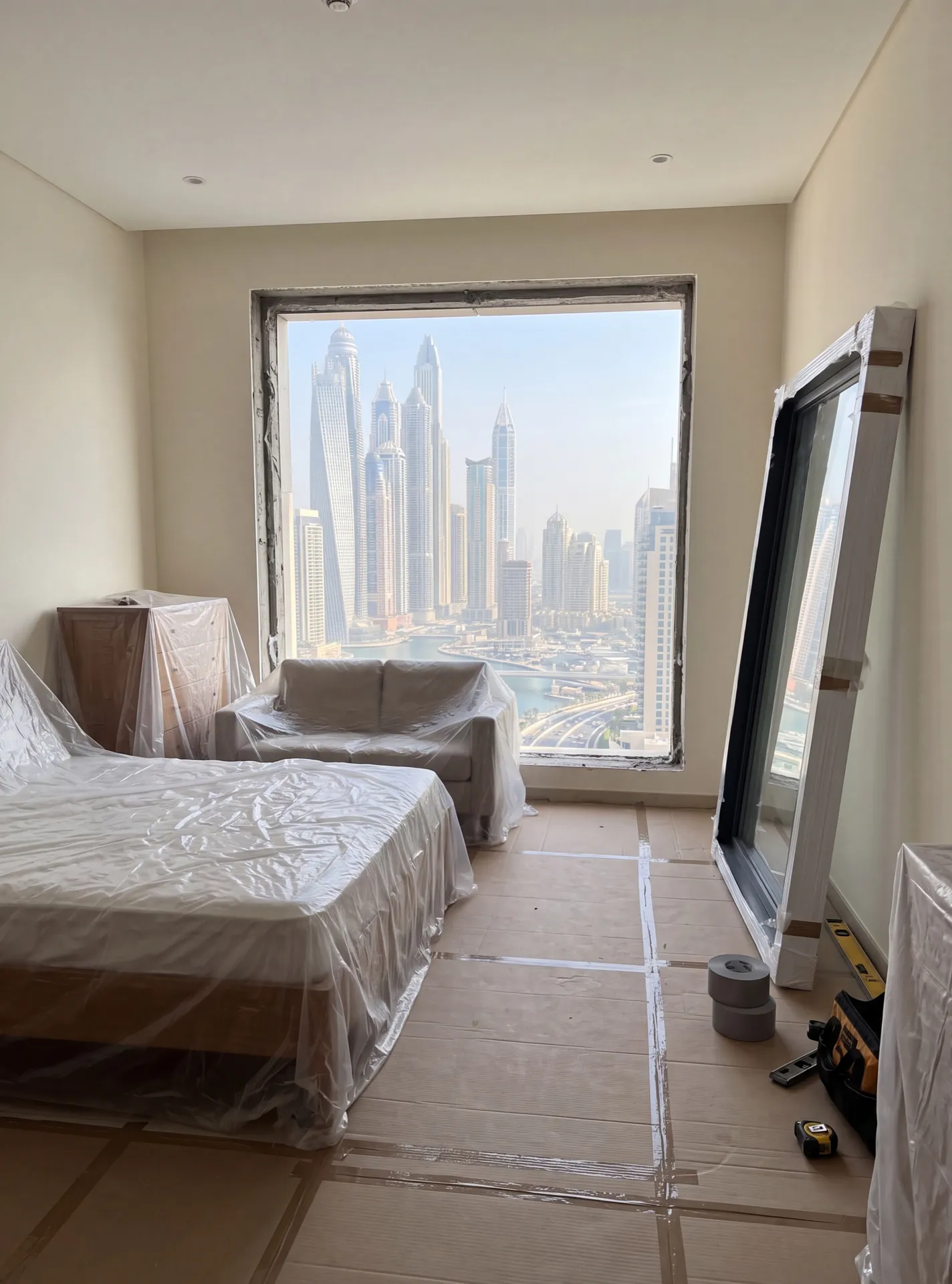


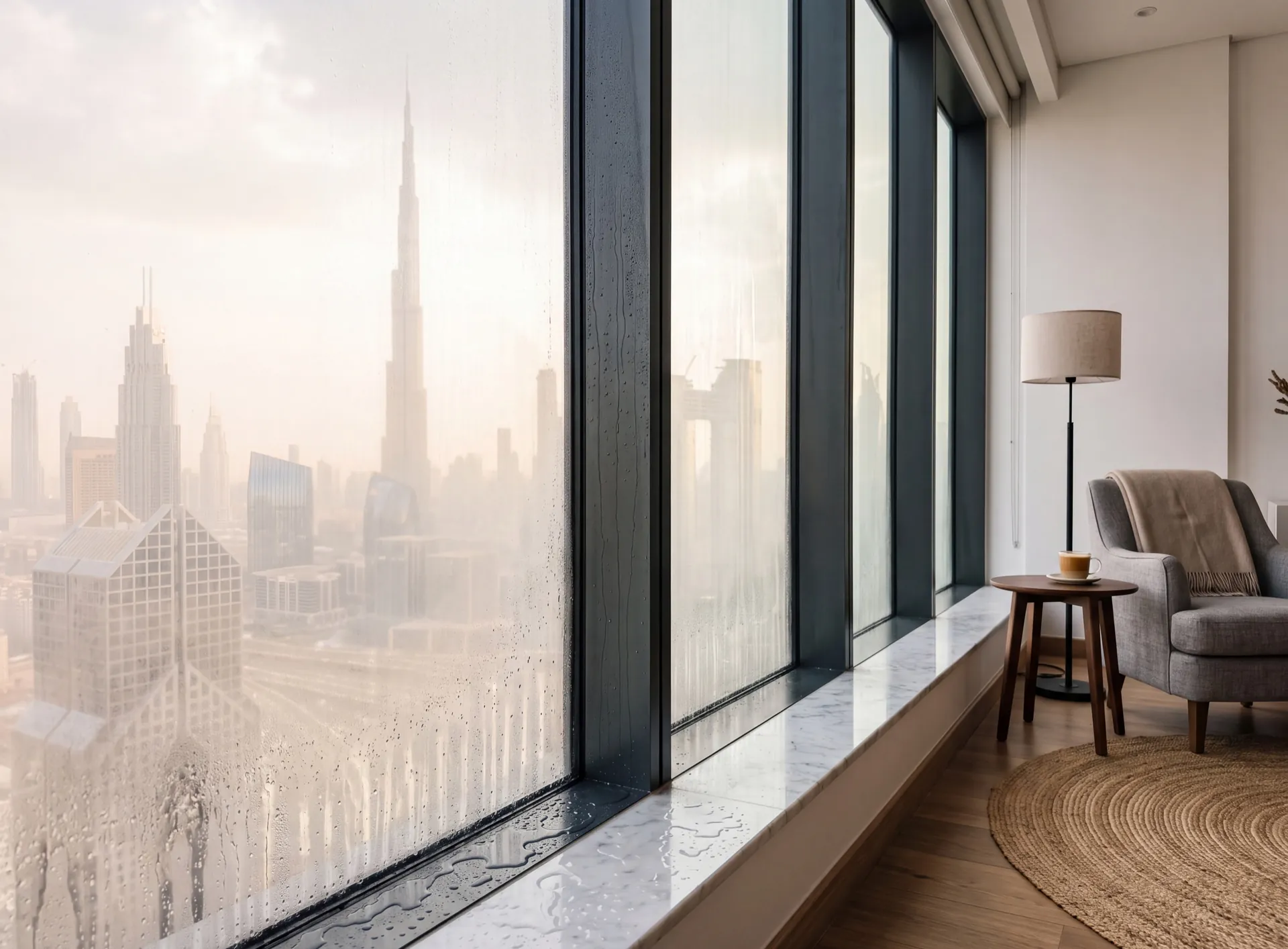
Condensation needs two things together: air carrying moisture, and something cold enough to make it let go. A flat in this country supplies both without being asked. Knowing which of the two is easier to attack in your particular room is the whole of the fix.
Where the water comes from when it never rains
UAE air is wet for most of the year, and it enters the flat every time a door opens onto a corridor or a balcony, every time the lift lobby breathes, and continuously through whatever gaps the front door and the windows leave. A tower flat is not a sealed vessel; it is a leaky one being cooled, and the leak is bringing in the raw material.
The household adds the rest. Cooking without the extractor running, long showers with the bathroom door open, laundry hung indoors because the balcony is too hot for it, a bank of plants, a full majlis on a Friday evening — each of those puts moisture into the air of a flat that has nowhere obvious to send it. Nothing on that list is a mistake. It only becomes visible when the room offers somewhere for the moisture to collect.
That is why the same flat can be dry in February and streaming in August with no change to the windows. The occupants have not changed their habits; the outside air has changed, and with it the amount of water arriving through every opening and every hour of the day.
The air conditioning is the dehumidifier, and it can be doing it badly
A split unit or a fan coil dries the air as a side effect of cooling it: room air is drawn across a cold coil, the moisture in it condenses on the fins and runs away down the drain. That only happens while the coil is genuinely cold and the air is spending time against it, which is why how the system runs matters more than how powerful it is.
The pattern that leaves a flat cold and wet is short bursts. A system that is generously sized, set very low and pushed to full fan speed reaches the thermostat setting quickly, shuts down, and starts again — plenty of cooling, very little drying, because the coil never runs long enough to strip much water out. A slightly warmer setting held steadily, with the fan on a lower speed and longer run times, often leaves a room that feels drier and, oddly, more comfortable at the same time.
Two mechanical faults are worth ruling out before blaming anything else: a blocked condensate drain, which leaves the tray standing full and re-evaporating into the supply air, and a filter so loaded that airflow across the coil has collapsed. Both are cheap to check and both quietly turn a dehumidifier back into a humidifier.
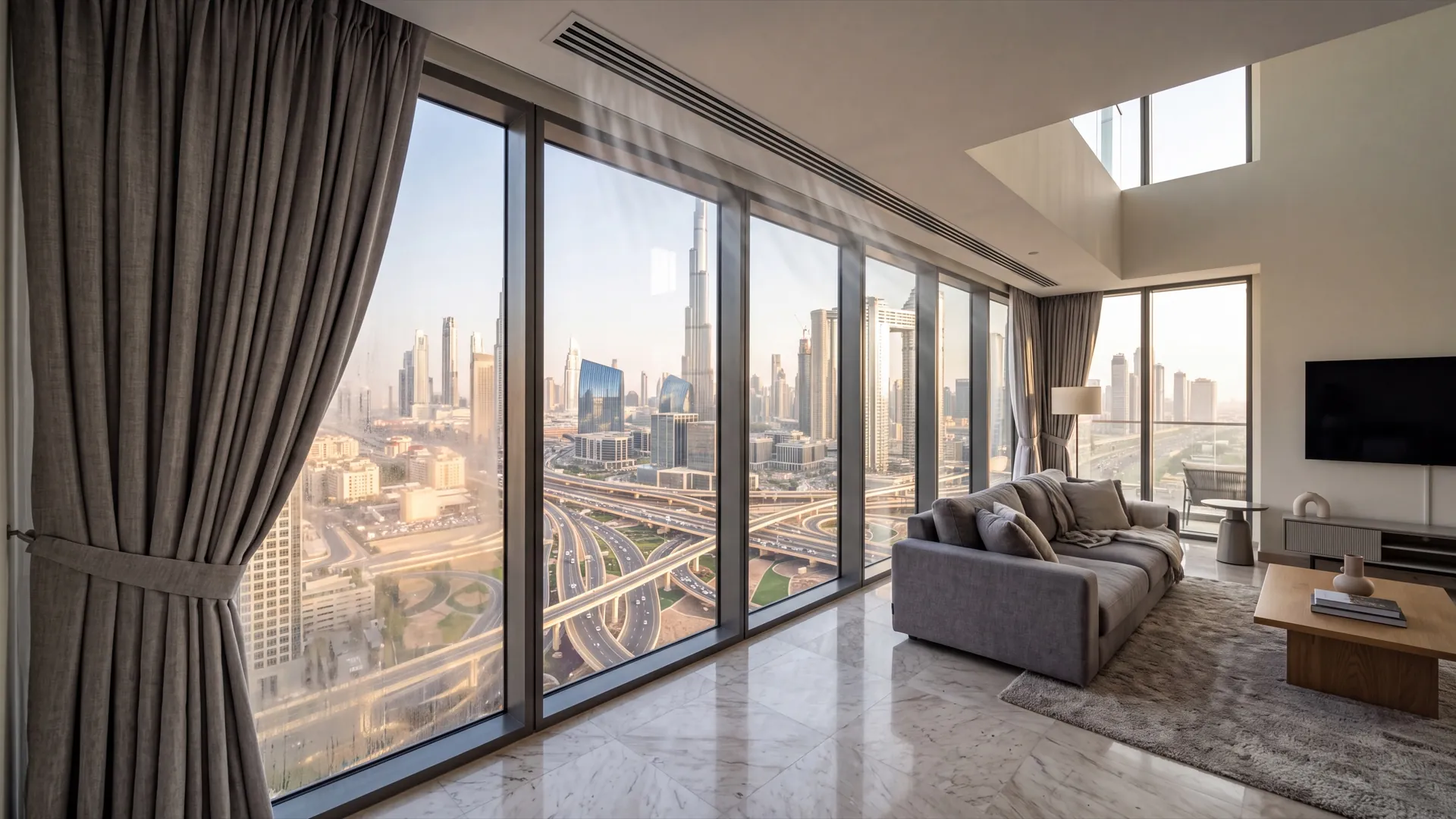
Which surfaces sweat first, and why it is rarely the middle of the pane
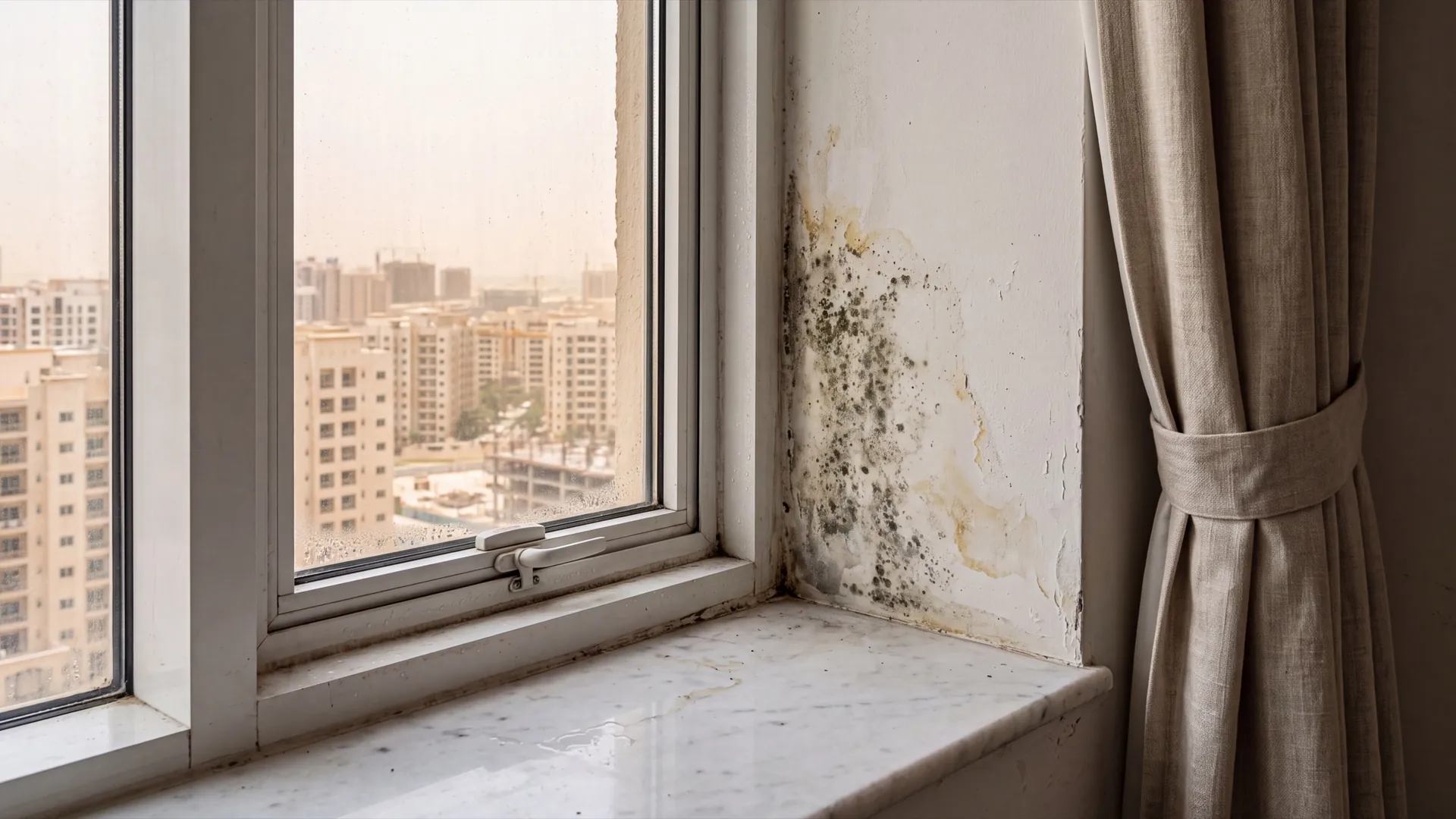
Water appears wherever the surface is coldest and the air least disturbed. On a window that means the perimeter — the frame, the corner of the glass, the marble sill — long before it means the centre of the pane. But the window is only the most visible candidate, and in a cooled flat it is not always the coldest thing in the room.
The other places to look are the ceiling around a diffuser, where the metal collar and the plaster around it run cold; the inside face of an external wall behind a wardrobe pushed flat against it; the back of a heavy curtain drawn tight to the glass; and any surface fed cold by a chilled water pipe running through a ceiling void or a riser. Each of those combines a cold surface with air that is not moving, which is the recipe.
That pattern is also the diagnosis. Water spread evenly across every room during a humid week is a humidity problem and belongs to the household. Water confined to one wall, one corner or one elevation while the rest of the flat is dry is a cold spot, and cold spots have causes that can be found: a bridge straight through a frame with no thermal break, a gap in the insulation, a duct or pipe running where nobody expected it.
Haze sealed inside the glass is a different fault entirely
One case does not belong in this conversation at all. If the cloudiness sits between the two panes of a sealed unit, where no cloth reaches it, nothing about ventilation, cooling or curtains will change it — the edge seal has failed and the cavity is no longer dry. Ventilating the room harder simply means watching a component that has already gone.
Everything else here assumes water you can actually touch: on the room face of the glass, on the frame, on the sill, on plaster. That is the kind that responds to how the flat is run and how the window is built.
What to change, in the order that pays
Start with the moisture, because it costs nothing. Run the kitchen extractor while cooking and leave it going afterwards; run the bathroom fan through the shower and beyond it; stop drying laundry in a closed bedroom; keep the balcony door shut on humid days rather than open for air. Then give the cold surfaces some air movement: pull wardrobes a finger's width off external walls, leave a gap between heavy curtains and the glass, and turn the diffuser louvres so the supply is not blowing straight down a wall or along a window.
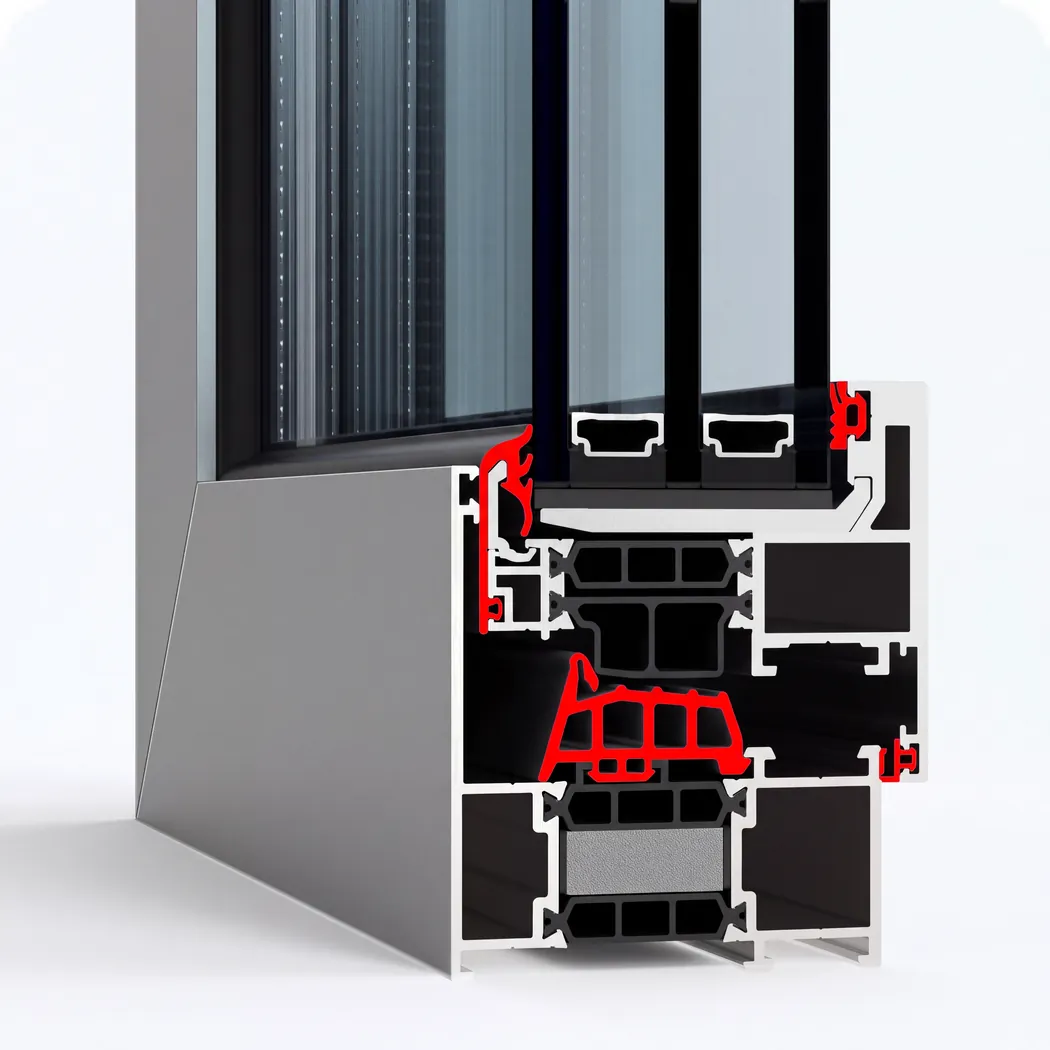
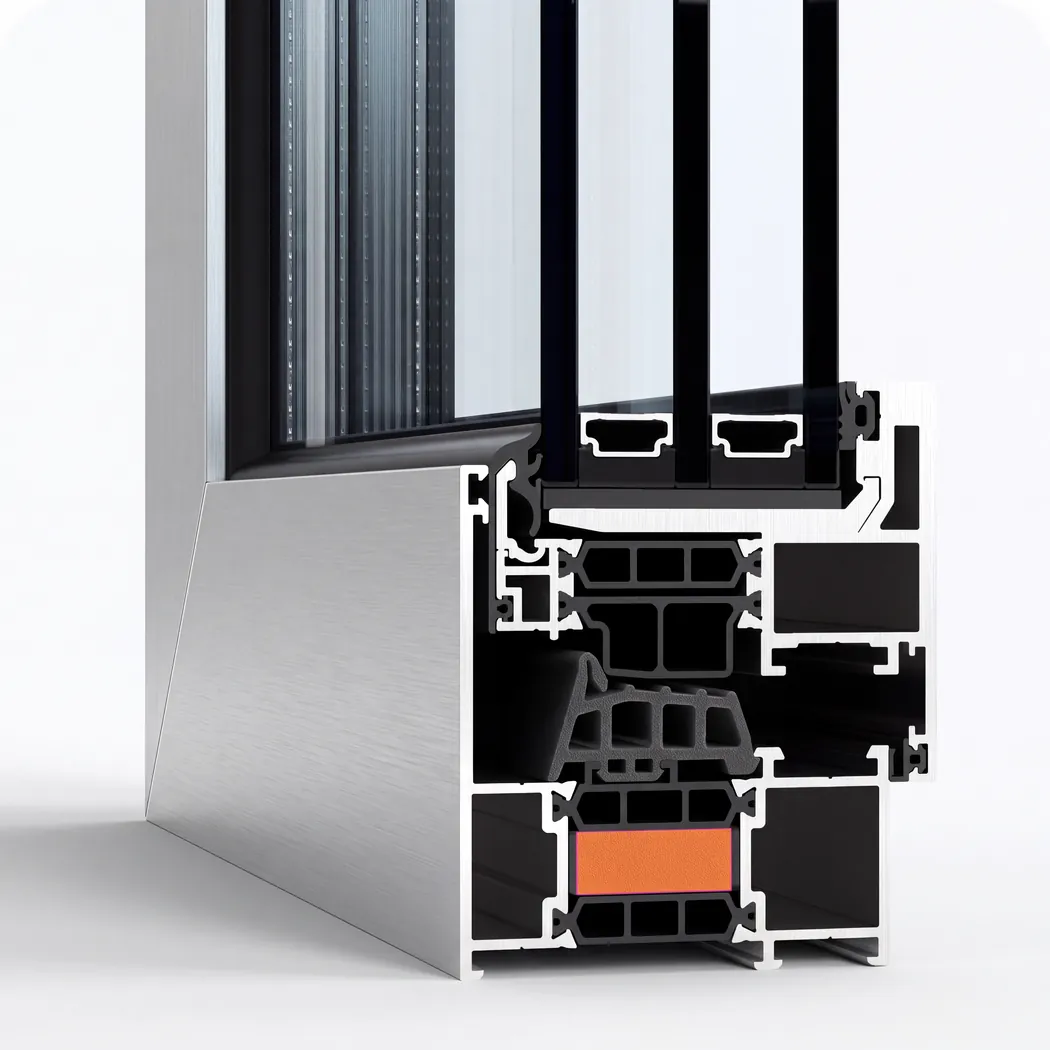
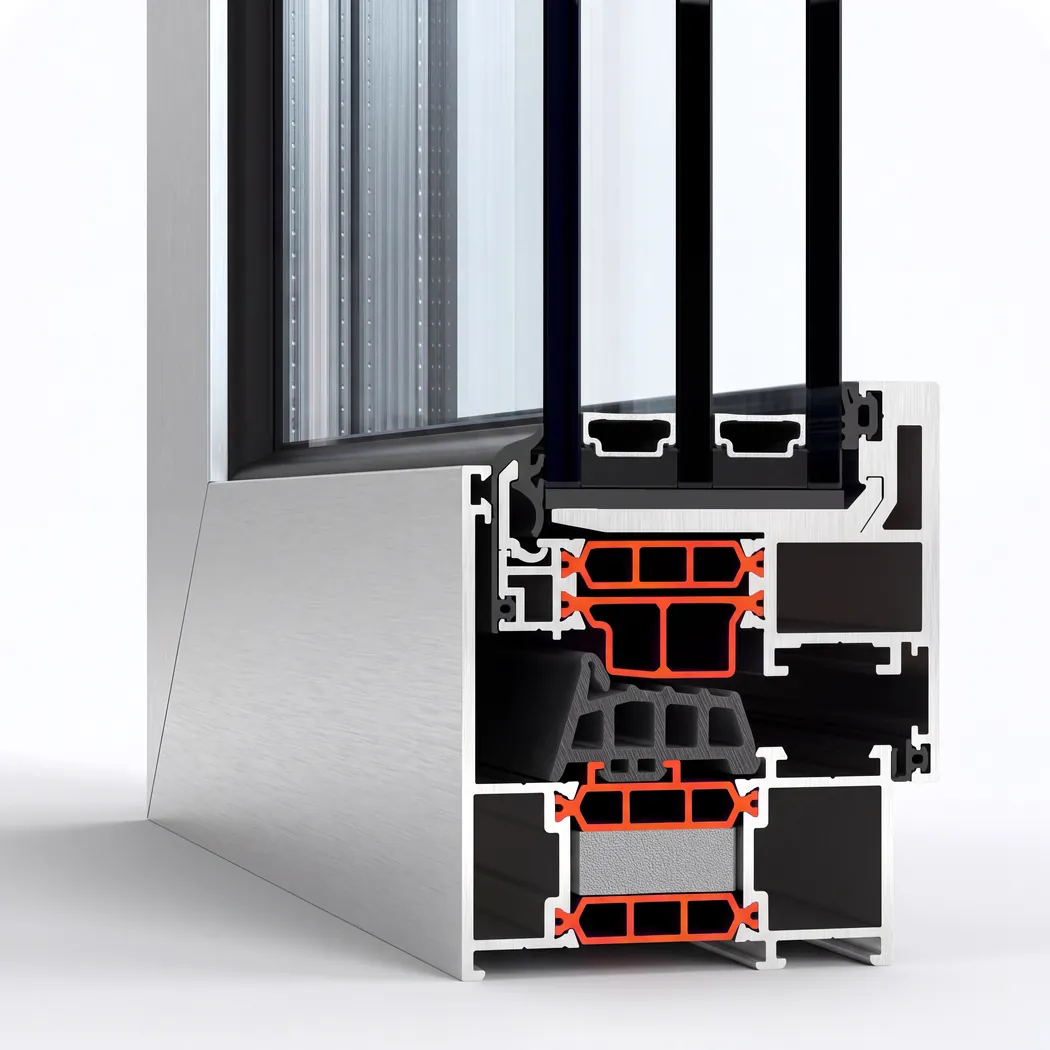
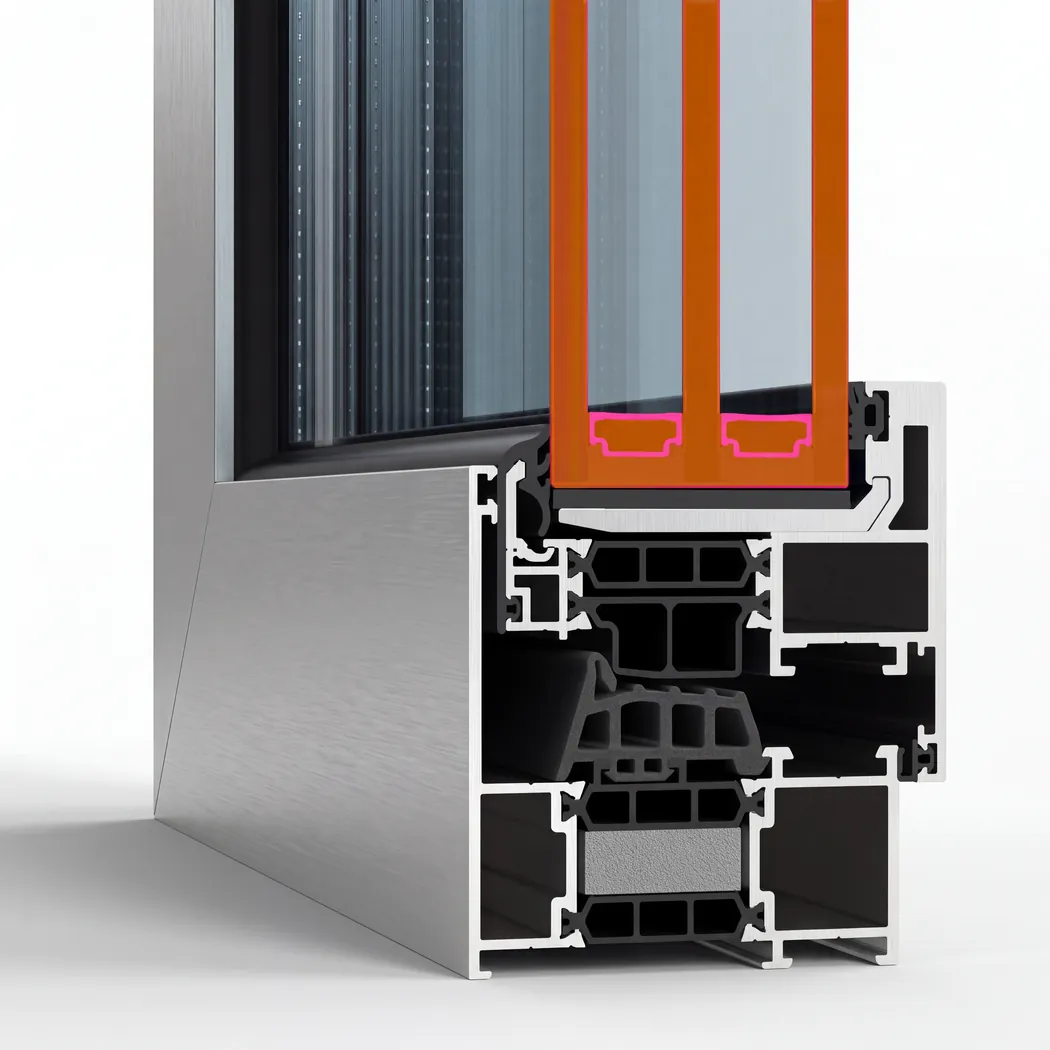
Then look at the surfaces themselves. An aluminium frame with no thermal break carries the chilled inside temperature straight through the metal, so the profile runs colder than the room and beads up first; an insulating barrier between the inner and outer halves of the section stops that. The same logic applies at the edge of the glazing unit, where the spacer bridging the two panes sets the temperature of exactly the strip where misting starts. A sash that no longer presses evenly on its gasket is worth checking too, because it is letting humid outside air in continuously.
Some cases are not yours to fix. A chilled water pipe sweating above a plasterboard ceiling, a riser dripping into a wall, a diffuser positioned so it blows onto a column — those are building faults, and the evidence for them is water appearing in the same place regardless of the weather or of anything the household does. Photograph it, note when it appears, and take it to the management office rather than buying another dehumidifier.
Condensation is arithmetic between two quantities: how much moisture the air is carrying and how cold the coldest surface in the room is. In a UAE summer the first is largely set for you, so most of the practical ground lies in the second — air movement where surfaces are cold, cooling that runs long and steady enough to actually dry the air, and frames and glazing units that do not run colder than the room around them. Water in the same spot week after week, unmoved by any of that, is not housekeeping; it is a cold bridge waiting to be found.