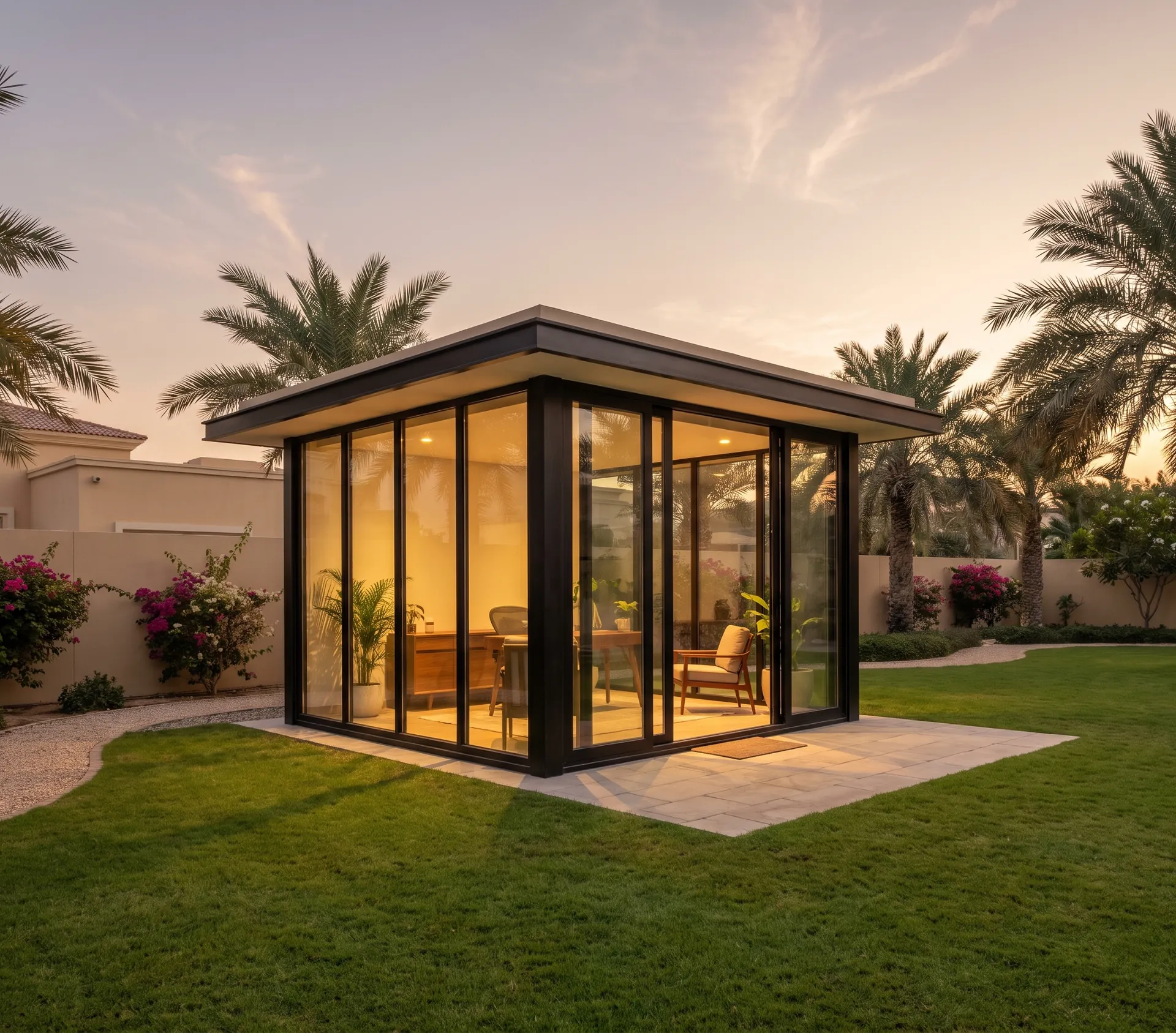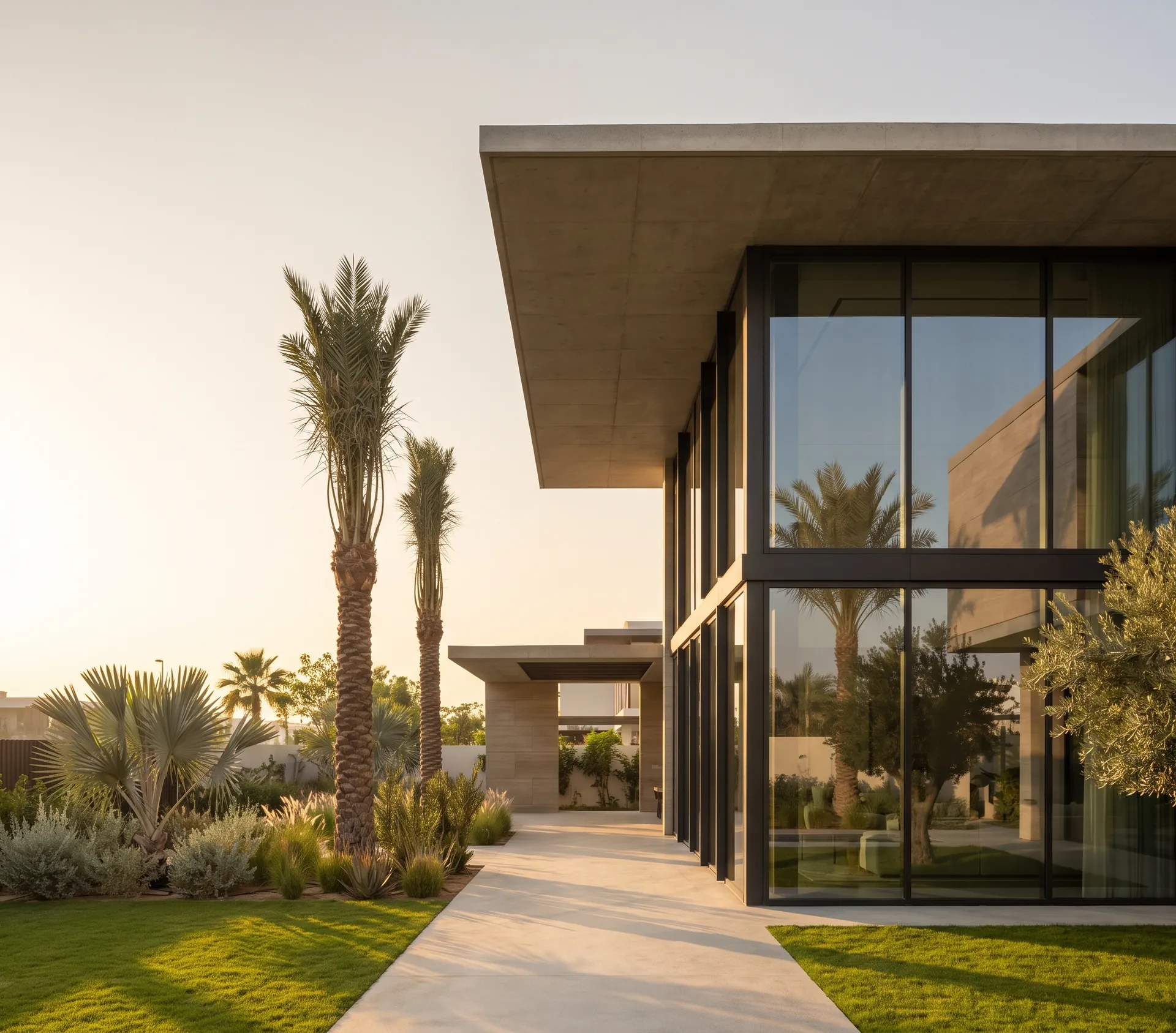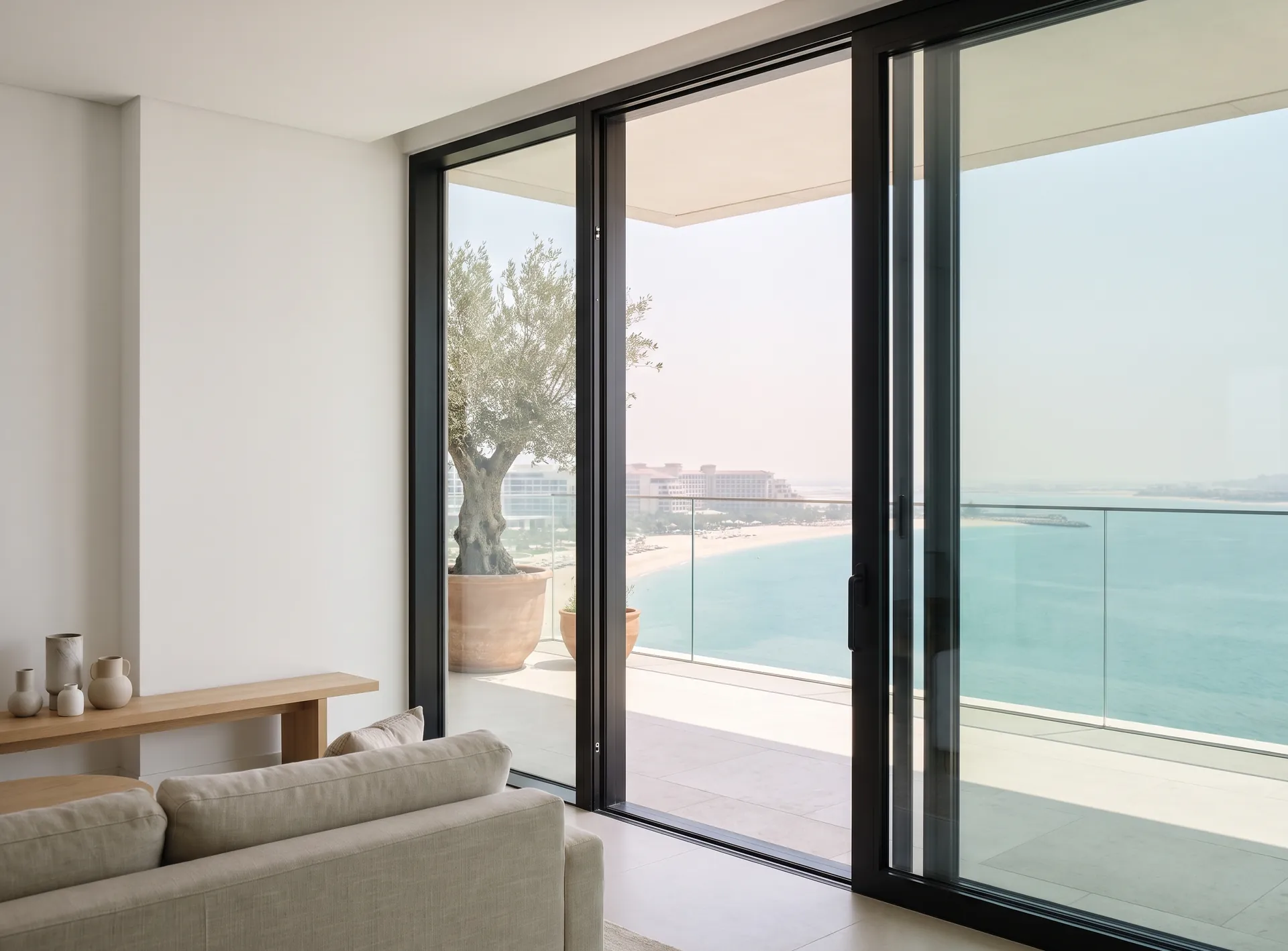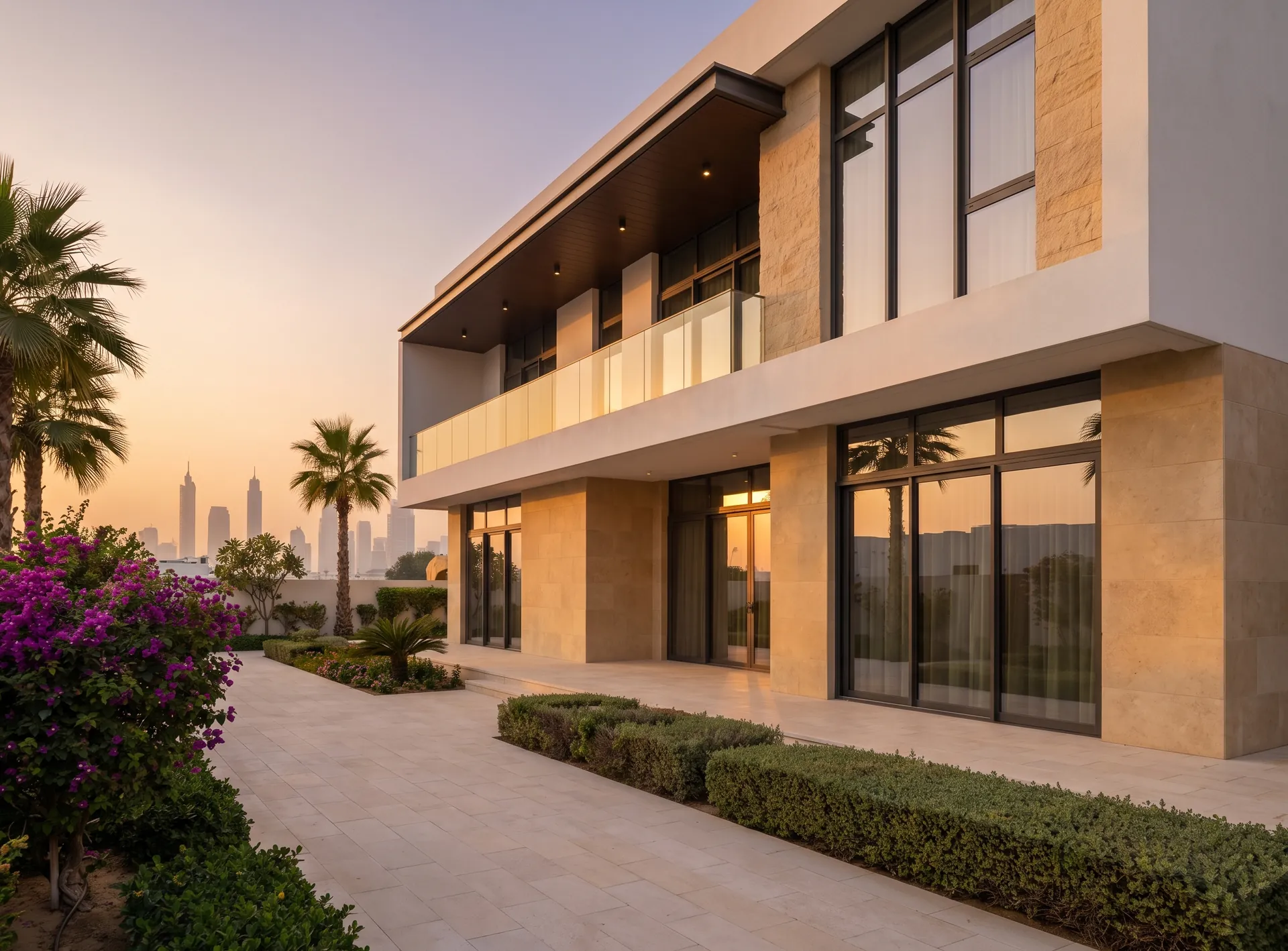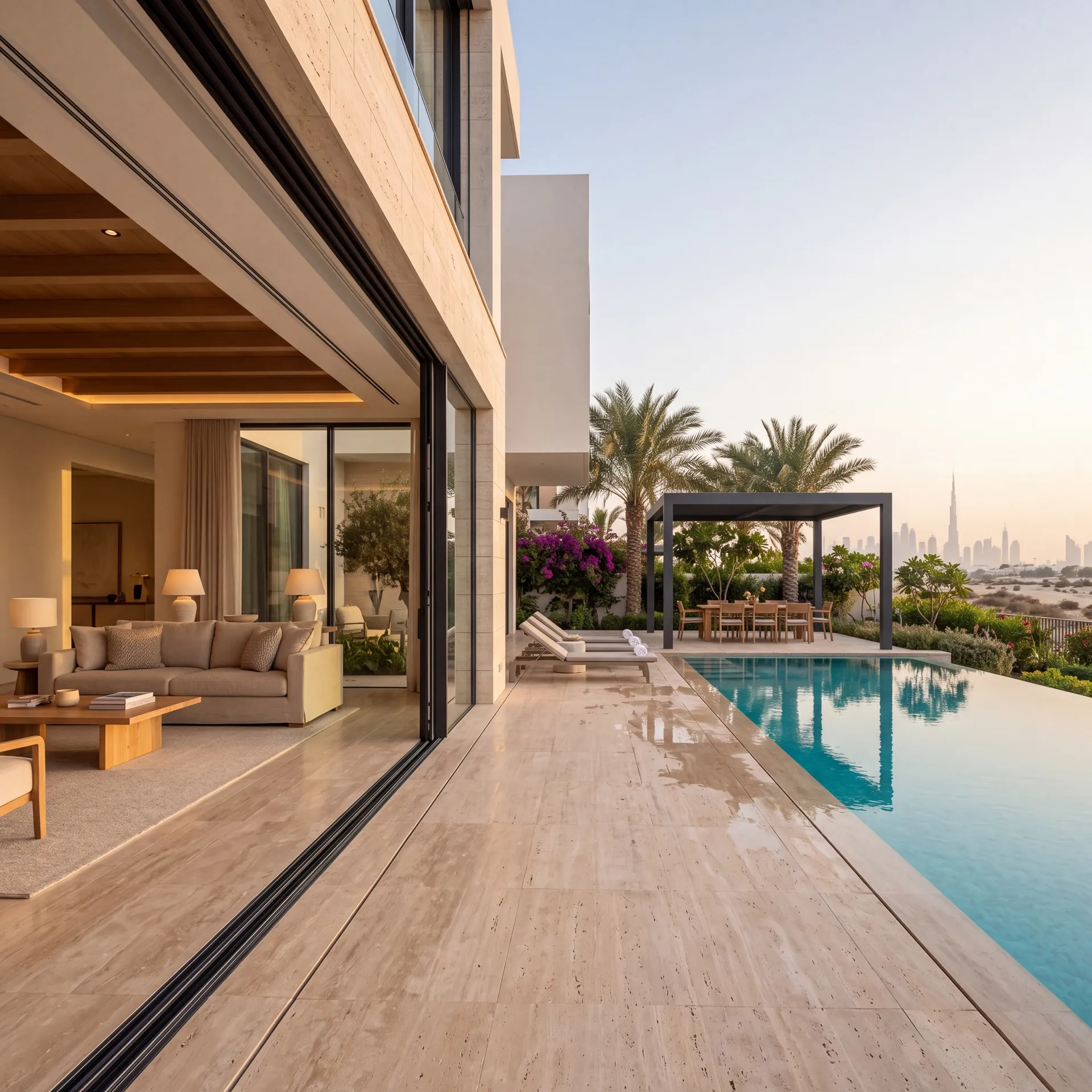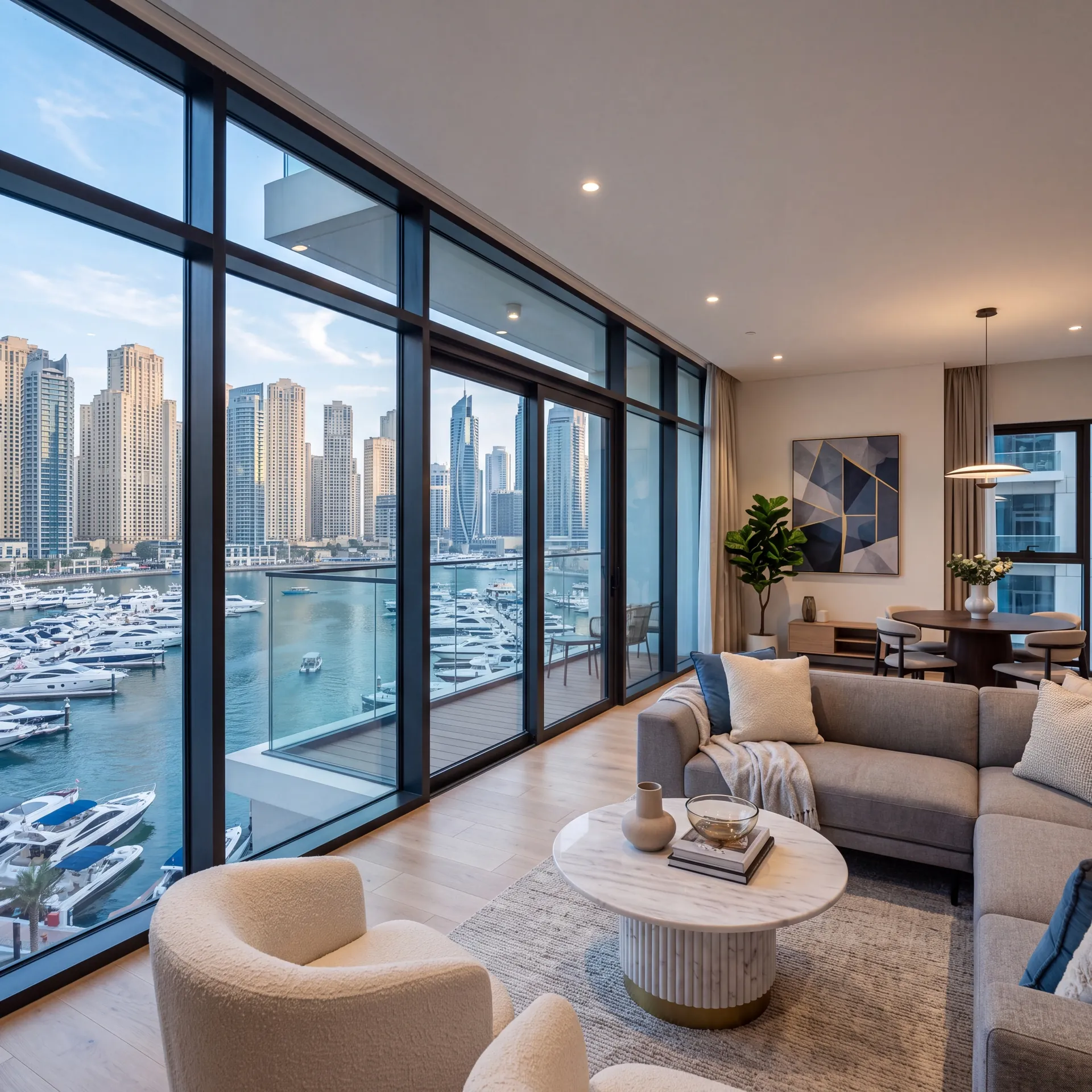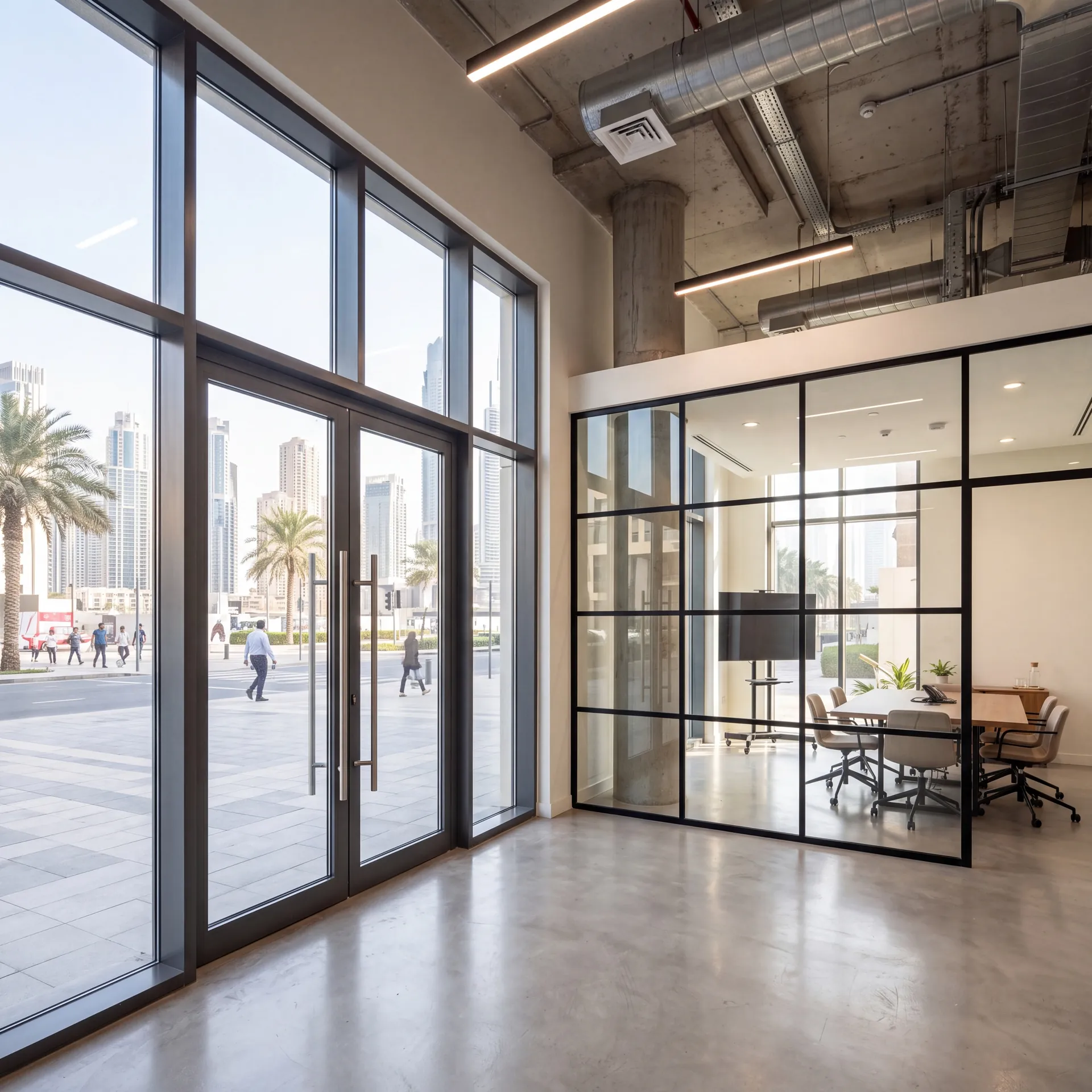


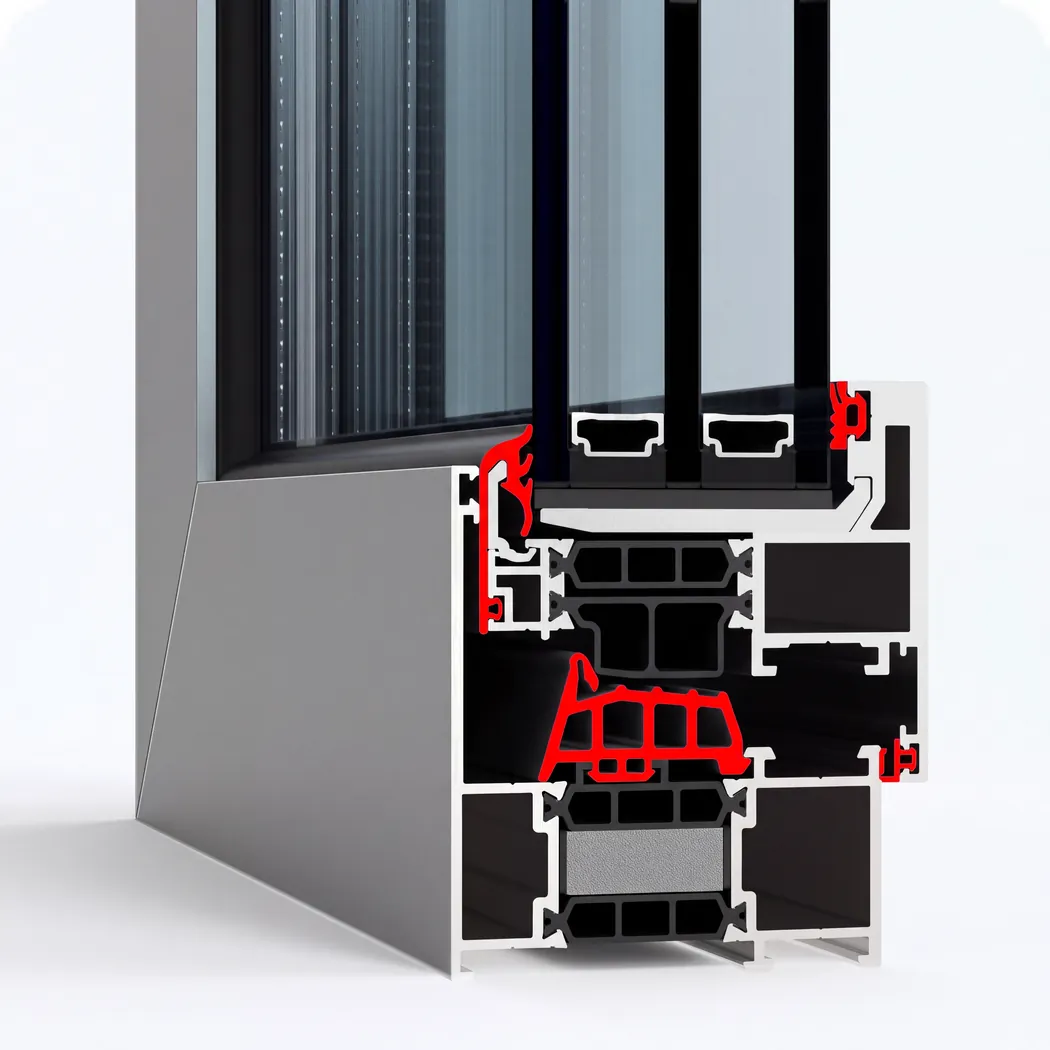
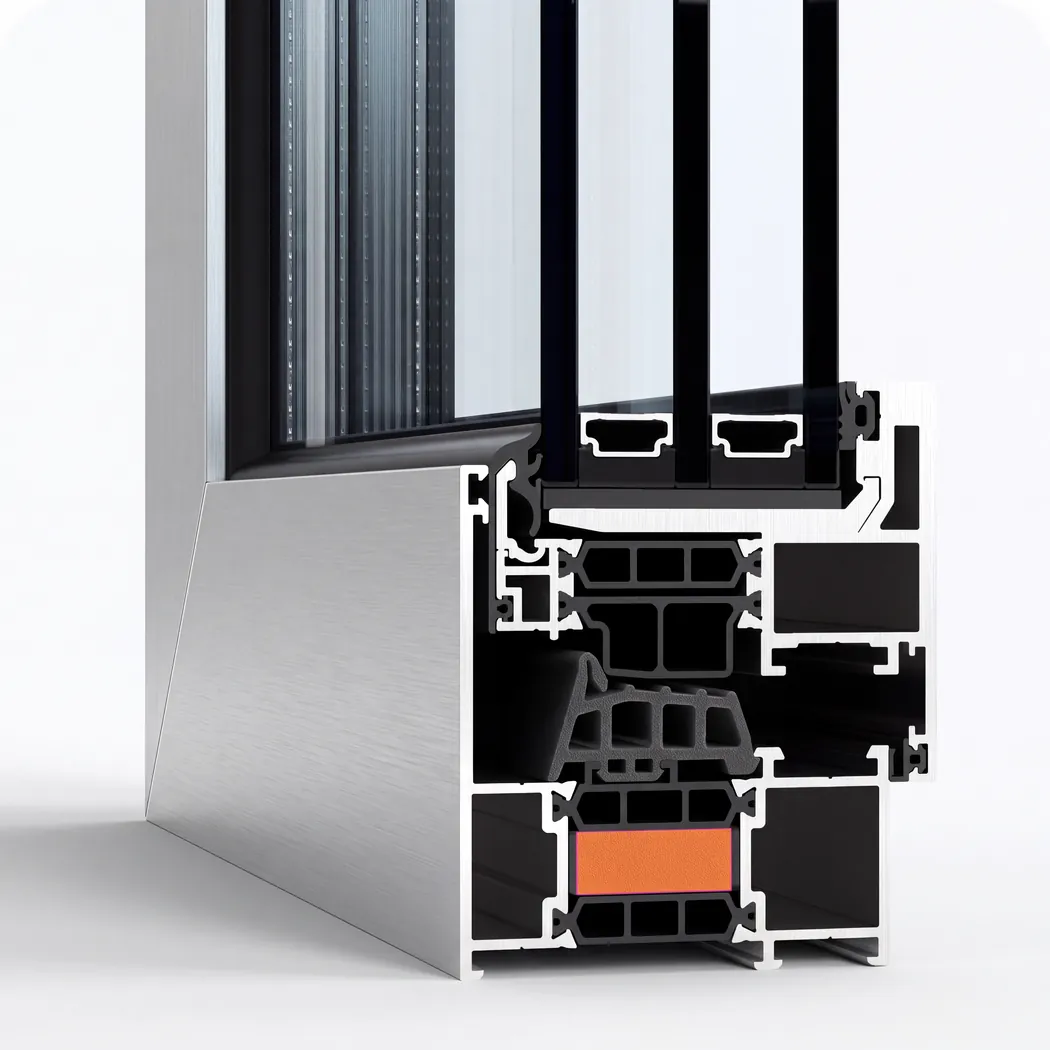
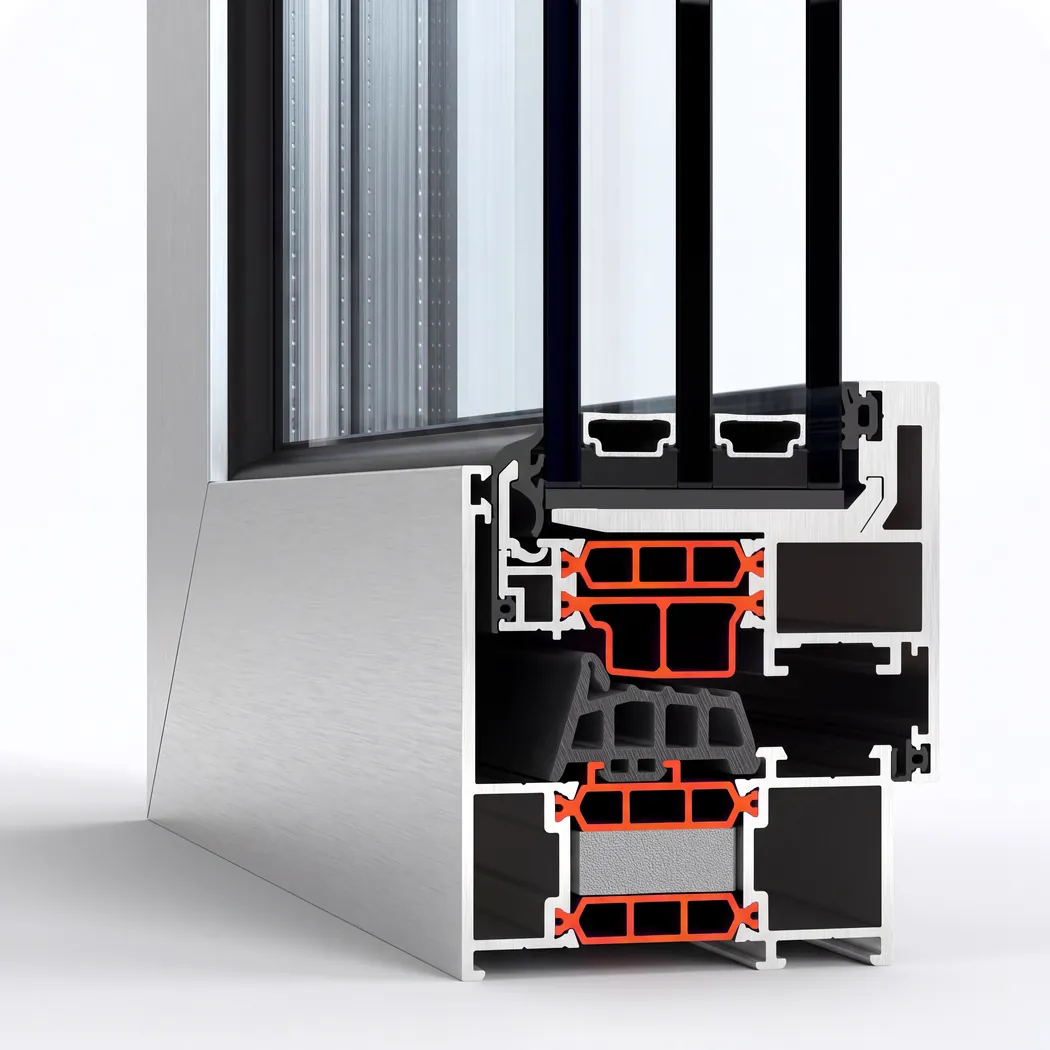
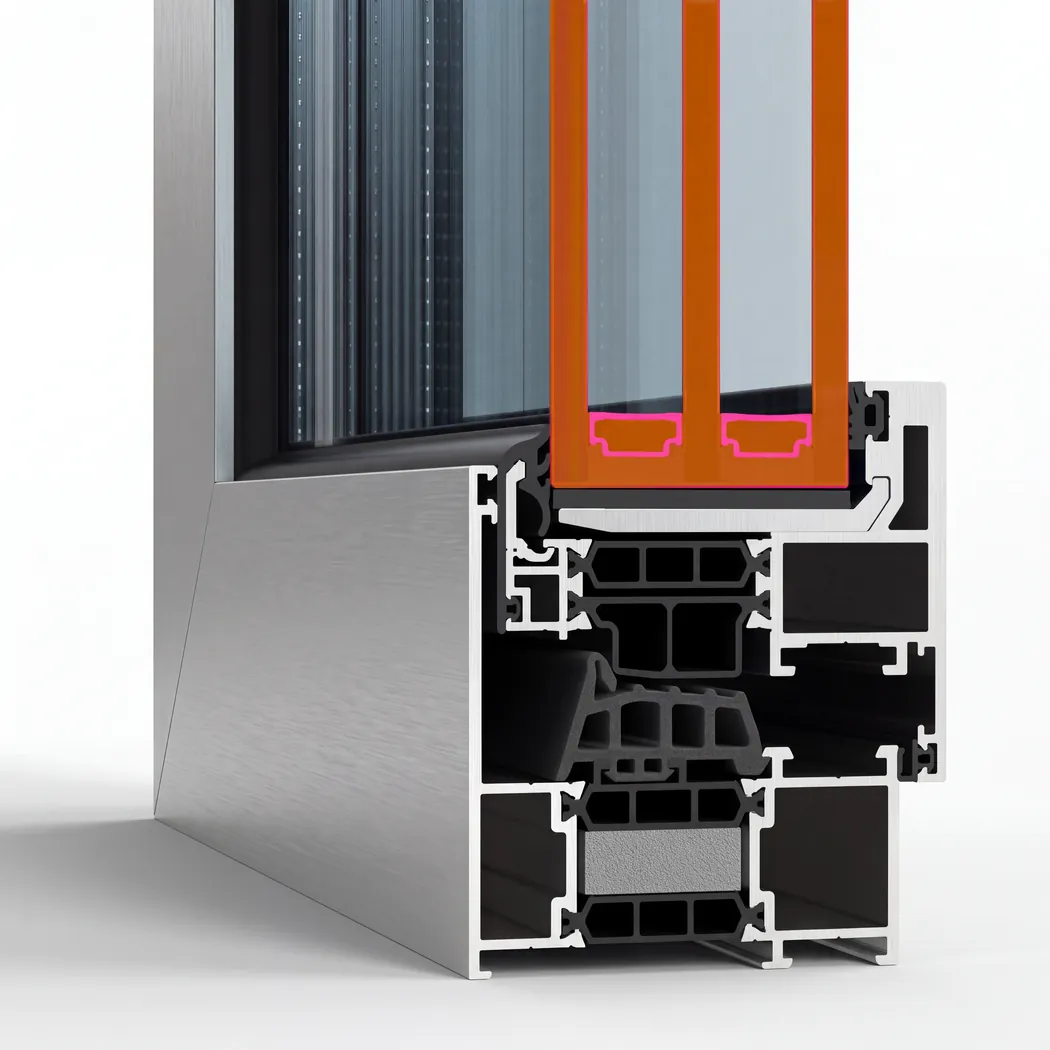
The short answer: a thermal break is an insulating strip built into an aluminium profile so that the outer part of the frame and the inner part never touch metal to metal. Heat arriving on the outside has no continuous metal path to travel along, so far less of it reaches the room. Everything below is why that matters here specifically, and how to check what you already have.
Why aluminium needs the break in the first place
Aluminium is a structural gift and a thermal liability at the same time. It is light, it holds a slim sightline, it does not warp, and in this climate it does not care about ultraviolet the way plastic does. That is why almost every large opening in the UAE is aluminium. The problem is that the same metal moves heat readily: a solid aluminium frame in direct sun becomes, in effect, a strip of hot metal passing that heat into the room all afternoon.
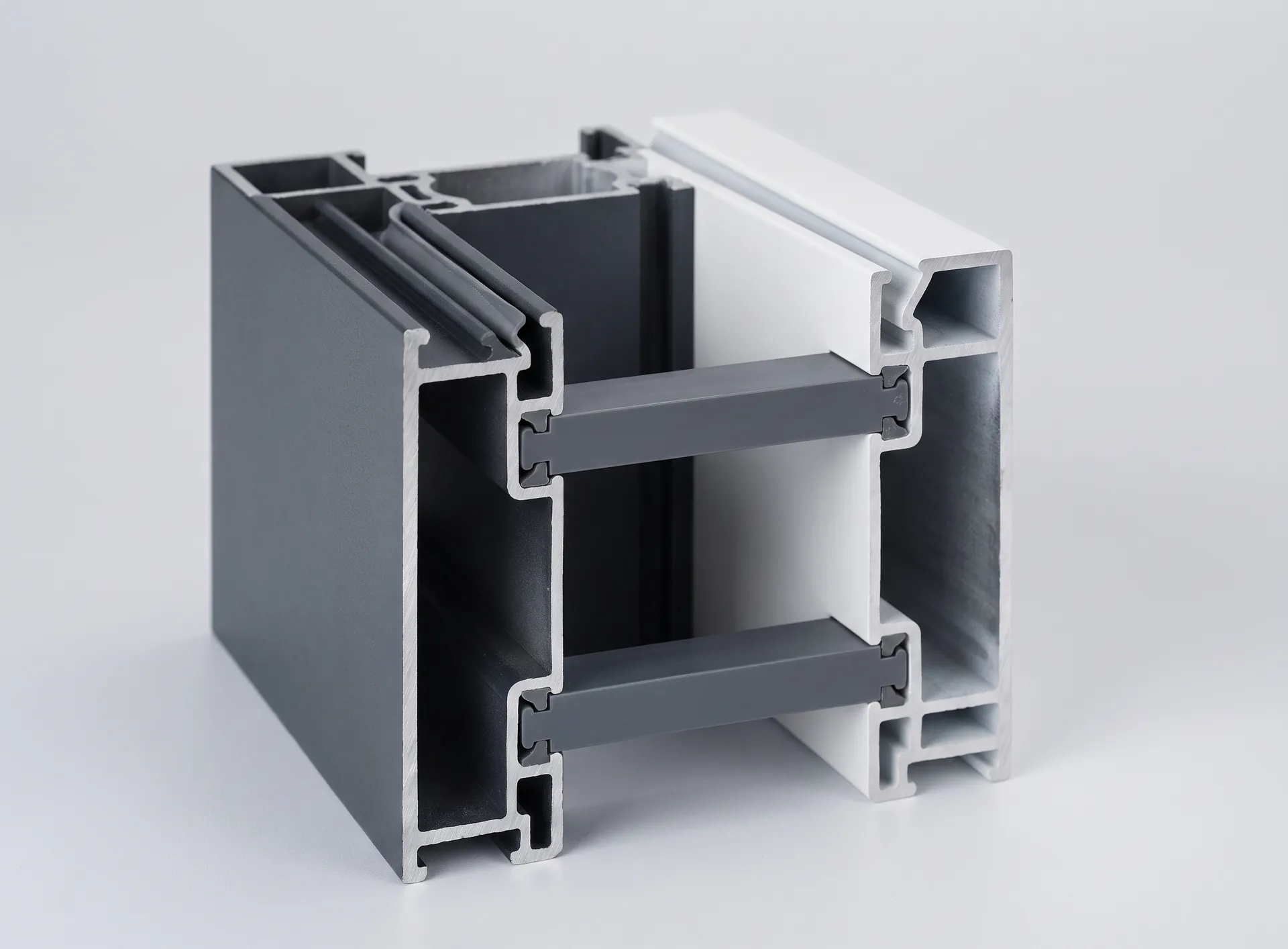
A thermal break solves it mechanically rather than chemically. Two separate aluminium sections are joined by strips of polyamide — a tough engineering plastic — which are rolled into channels in both halves and then locked in place. The result is one profile that behaves structurally like a single piece and thermally like two, because the only bridge between them is a material that conducts heat poorly.
In Dubai the point is keeping heat out, not in
Most explanations of thermal breaks were written for cold countries, where the concern is warmth escaping. Read here, that framing quietly misleads. On this coast the flow runs the other way for most of the year: the outside face of the frame is hot, the room behind it is cooled, and the frame is the shortcut between them.
That reversal has a visible consequence. When a conducting frame is chilled from the inside while humid air sits against it, moisture condenses on the metal — which is why some apartments show water beading on frames and sills rather than on the glass. A broken frame keeps the inner half nearer to room temperature, so it stays above the point where that happens as easily.
It also changes what you feel standing near a window. With a solid frame, the air by the glazing is noticeably warmer than the middle of the room, and the air conditioning runs to fight it. With a broken frame, that difference narrows, and the useful floor area of the room grows: the sofa can sit by the window instead of away from it.
How to tell whether your own windows have one
Open the sash and look at the edge of the frame where the leaf meets the outer section. On a thermally broken profile you will usually see a strip of a different colour and material — commonly dark grey or black — running the length of the section between two pieces of aluminium. On a solid profile, the metal is continuous.
The second clue is the colour on the two faces. Broken profiles allow the outer and inner halves to be finished differently, so a frame that is anthracite outside and white inside is almost certainly broken; a single-piece profile cannot easily do that.
The third is thickness. Broken sections are deeper than their solid equivalents, because the strip and its two channels have to fit somewhere. If a replacement quote keeps the same slim sightline you have now and also promises a thermal break, it is worth asking which section is being used and how it manages both.
Where the money actually goes
A thermally broken system costs more than a solid one, and honest advice is that the difference is not uniform across a home. On a west-facing wall of glass that takes the afternoon sun, the break is doing real work every day and pays for itself in comfort long before it does in running cost. On a small window in a shaded courtyard, the same upgrade is mostly buying you a rounder specification.
We do not publish a percentage saved on cooling, and you should be sceptical of anyone who does without seeing your building. The saving depends on orientation, glass, shading, how many hours the room is cooled and what the frame area is relative to the glass. It is a real effect measured on the job, not a number that can be printed in advance.
The practical route is to decide per elevation rather than per house. Put the specification where the sun is, and let the sheltered openings take a simpler section.
What it does not do
A thermal break is not soundproofing. Noise is handled by the glass build, the seals and the way the sash closes, and a broken frame with thin single glazing will still let the road in. The two upgrades often travel together because both come with better sections and better gaskets, but they are separate problems with separate answers.
It is also not a substitute for the glass itself. Most of a window is glass, so most of the heat arriving through a window arrives through the glass. The frame is the part people forget, not the main event: a broken frame with plain clear glass is a half-finished job, and so is high-performance glass sitting in a solid frame.
If you take one thing from this: aluminium is the right material for large openings here, and the thermal break is what makes it behave. Check the edge of your sash for a strip of dark plastic between two pieces of metal — that single look tells you which kind of frame you are living with.