



Take the symptoms one at a time. Most have a single common cause here, and a good proportion of them are cleared in twenty minutes with a vacuum and a soft brush. The ones that are not are worth identifying correctly, because a door left grinding on damaged rollers eventually damages the track it runs on — and replacing a track is a different order of job from replacing rollers.
It has become heavy, or it grinds
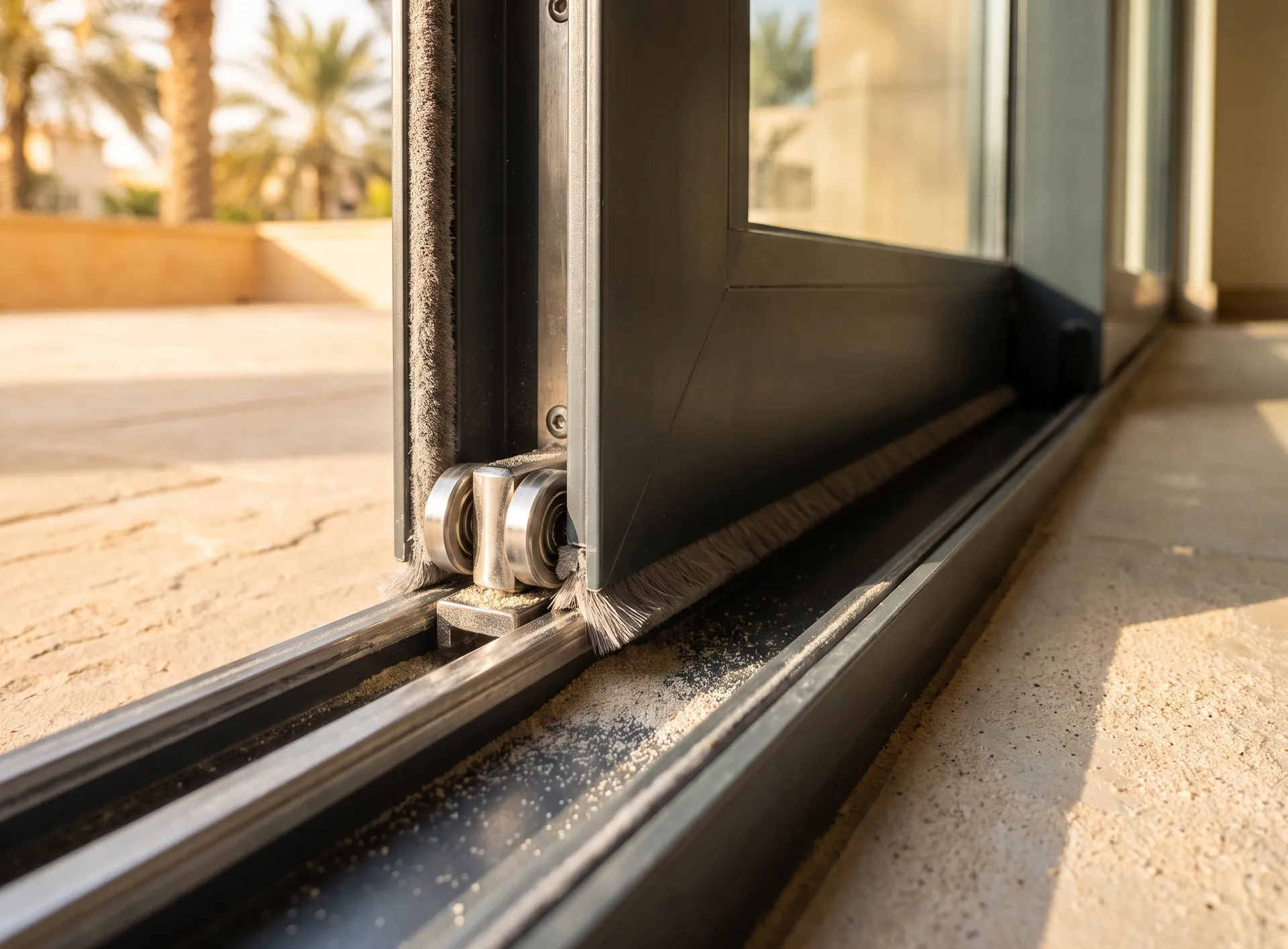
This is the classic, and the cause is almost always fine sand packed into the bottom channel. The rollers then run on grit rather than on metal, which both increases the effort and slowly cuts flats into the wheels. A door that has grown heavy over months is describing exactly this process.
The fix is mechanical and simple. Vacuum the channel along its whole length, including the section hidden under the parked leaf, then run a soft brush along it and vacuum again. Wipe the rail with a dry cloth. Do not oil it: oil turns the next dust into paste and makes the problem worse rather than better. If anything is used, it should be a dry lubricant.
If the door is still heavy after a thorough clean, the rollers have already worn. At that point the wheels are the fix, and continuing to use it is what turns a roller job into a track job.
It catches at one point, or drags on the bottom
A door that runs freely for most of its travel and binds in one place is usually out of level rather than dirty. Sliding leaves carry adjusters on the roller carriages — normally a screw at each end behind a small cap — and turning them raises or lowers that corner.
Getting this right is a matter of small movements and patience: a quarter turn at a time, checking the gap along the top and bottom edges as you go. The target is an even gap along the whole length rather than a particular measurement.
If the adjusters are already at the end of their travel, something has moved beyond them. On large sliding doors that usually means the frame has settled or the leaf has dropped on a worn carriage, and it needs looking at rather than adjusting further.
Dust or hot air gets in when it is shut
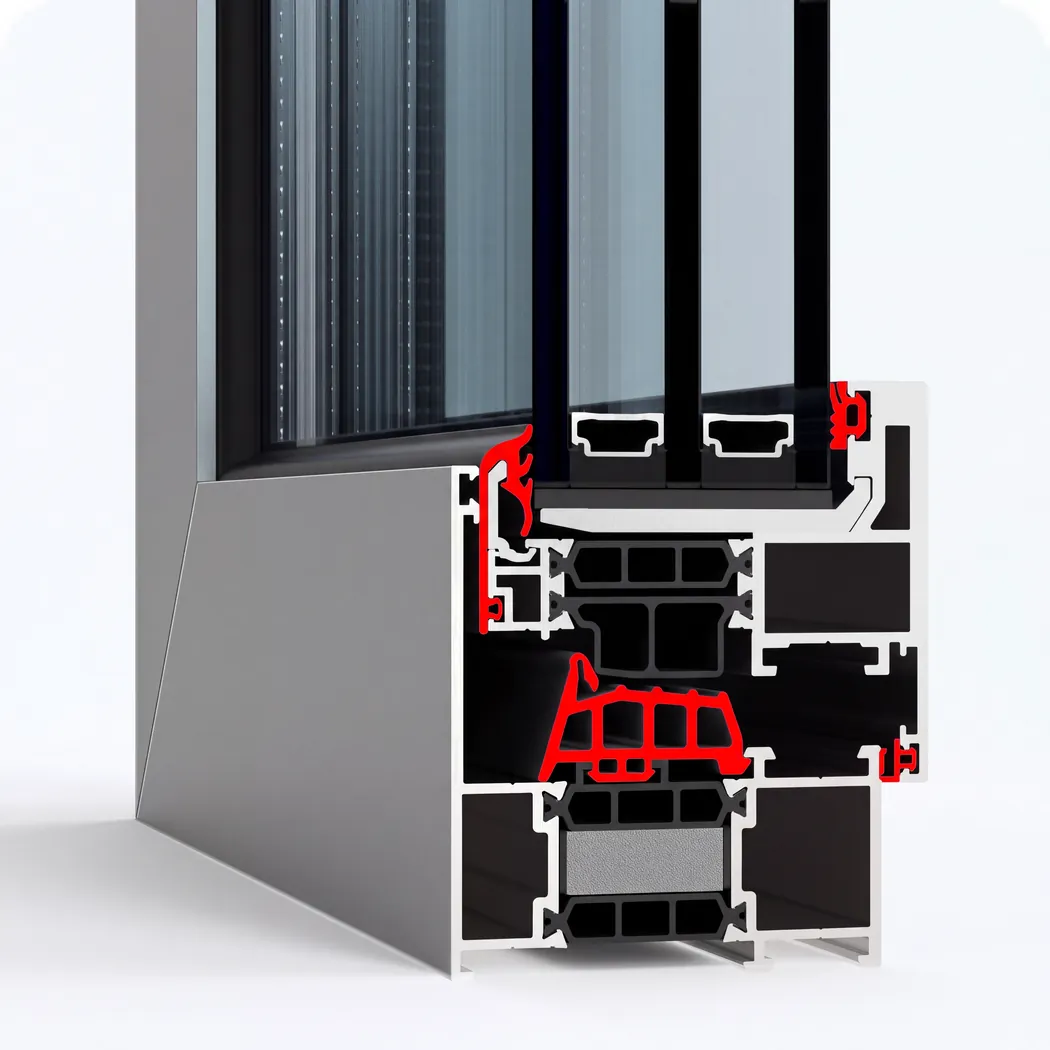
Sliding doors seal with brush pile along the meeting edges and around the leaf, and that pile wears. When it does, the door still closes and locks but no longer excludes anything, which shows up as a line of dust on the floor inside after a windy spell.
Brush seals are a consumable and are replaced rather than repaired. They slide into a groove in the profile and the job is straightforward once the correct size and pile height are identified — which is why it is worth photographing the existing seal and the frame section before ordering.
If dust is entering with the door shut and the seals look sound, check whether the leaf is closing fully against the jamb. A door that has dropped slightly meets the frame at an angle, so the pile touches at the top and not at the bottom.
It rattles, or the lock no longer engages
Rattle in wind means the leaf is not being pulled tight against its seals. On a sliding door that is usually the lock or the keeps being out of alignment, so the hook engages but does not draw the leaf in fully.
A lock that has become stiff, or that needs the door lifted to engage, is saying the same thing in a different way: the leaf and the keep are no longer at the same height. That is an adjustment at the rollers, not a fault in the lock, and replacing the lock without correcting the alignment leaves you in the same place a month later.
Where a multi-point lock is fitted, the cams should engage evenly along the height of the leaf. If one engages and another does not, the door has twisted — which is a survey rather than a self-fix.
Condensation, misting and glass problems
Misting on the inside face of the glass in a cooled room is condensation from humid air meeting a chilled surface, and it is about the room rather than the door. Misting between the panes is different: it means the sealed unit has failed and the glass needs replacing, though the frame usually stays.
Water pooling in the track after rain is normal up to a point — the track has weep holes to let it out. Water sitting there for days means the weeps are blocked, and blocked weeps are the fastest route to a corroded track and stained paving. Clearing them takes a minute and belongs in the same visit as vacuuming the channel.
What is worth doing routinely
Twice a year on an ordinary opening, and after every significant dust storm on an exposed one: vacuum the track, brush and vacuum again, wipe the rail dry, check the weep holes, and run the door end to end listening for a change in sound. That single routine prevents most of what appears above.
The one thing to avoid is oil in the track. It is the most common well-meant mistake, it feels like an improvement for about a week, and it converts loose dust into an abrasive paste that shortens the life of the rollers considerably.
Clean the track before concluding anything. A door that is heavy, catching or rattling is usually describing sand, alignment or worn brush pile — three cheap problems. Only when a properly cleaned door is still hard to move are you looking at rollers, and that is the point to have it seen rather than forced.