

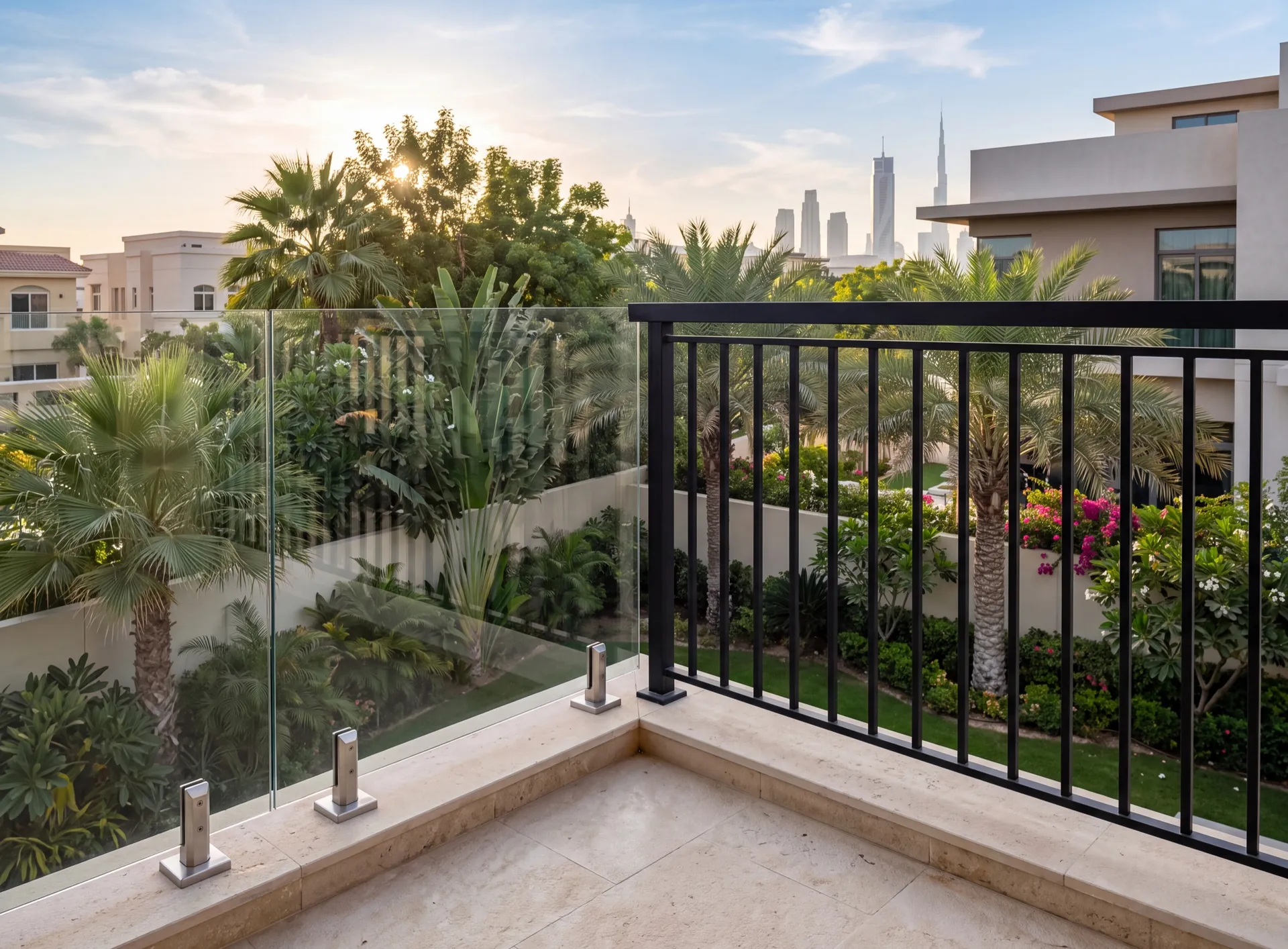
Both do the same structural job: they stop people falling. Everything else about the choice is about what you see through the barrier, what the wind and sun do to the space behind it, and how often somebody has to clean it. Those three questions have different answers on a sea-facing terrace, a pool edge and a first-floor balcony of the same villa.
What you actually see
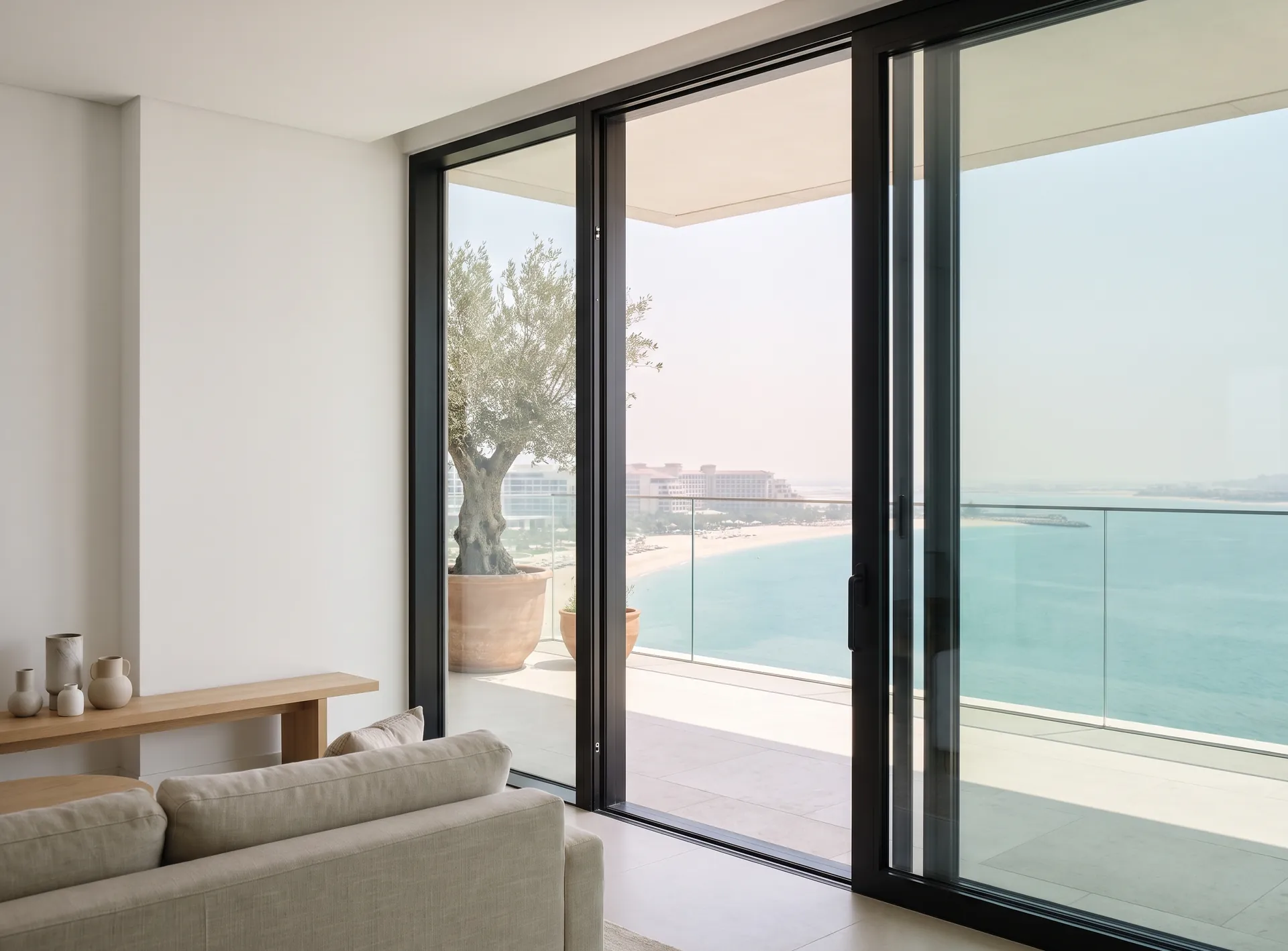
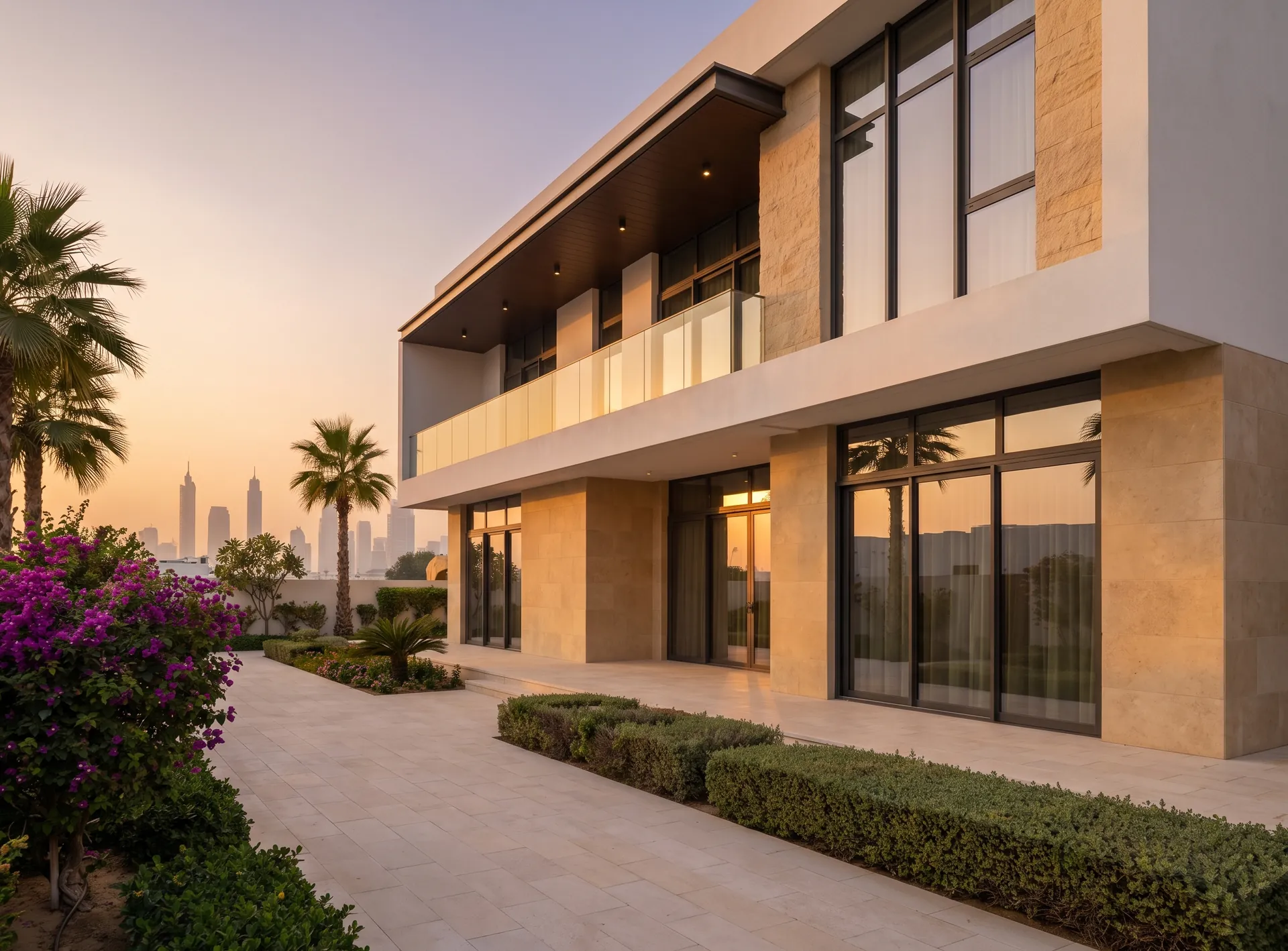
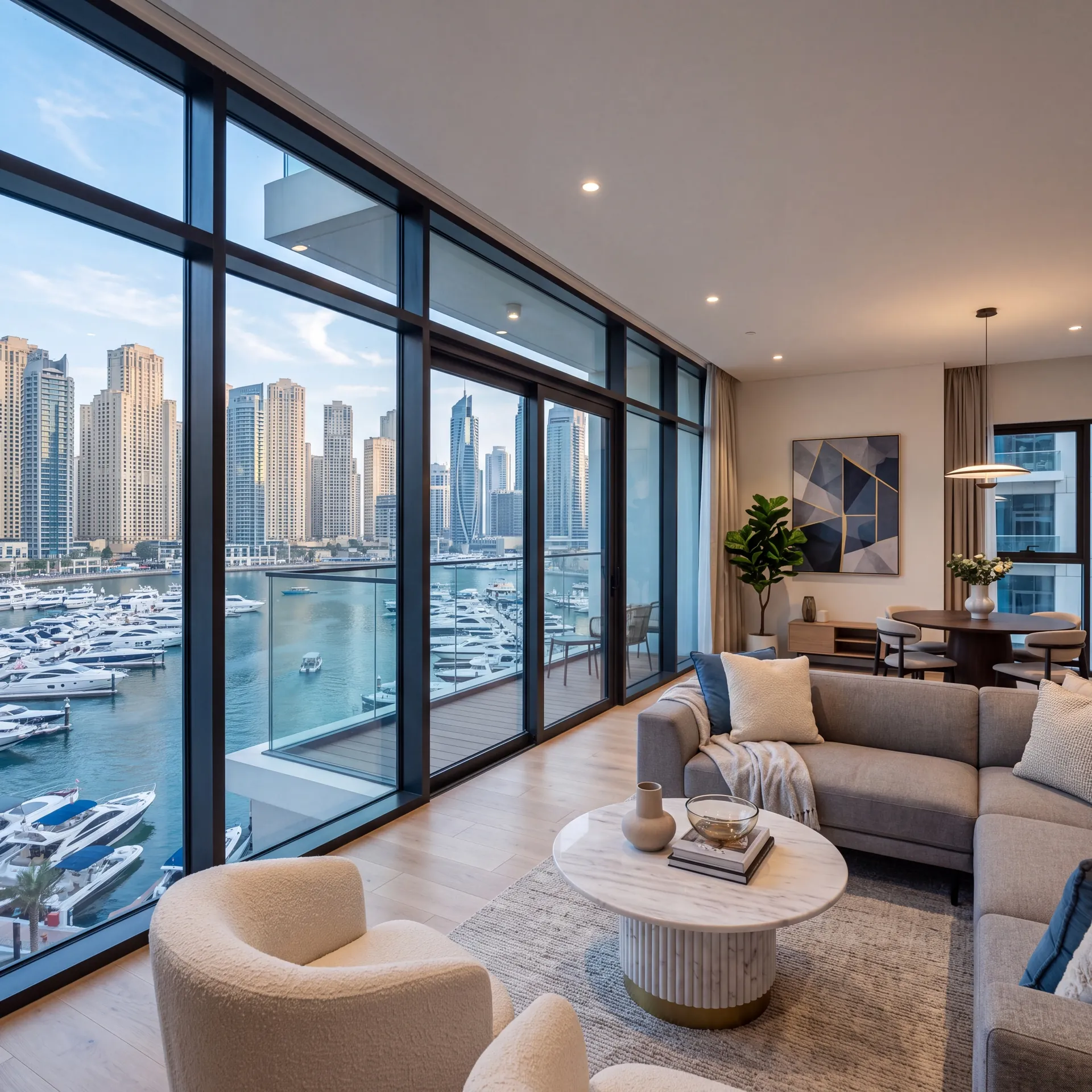
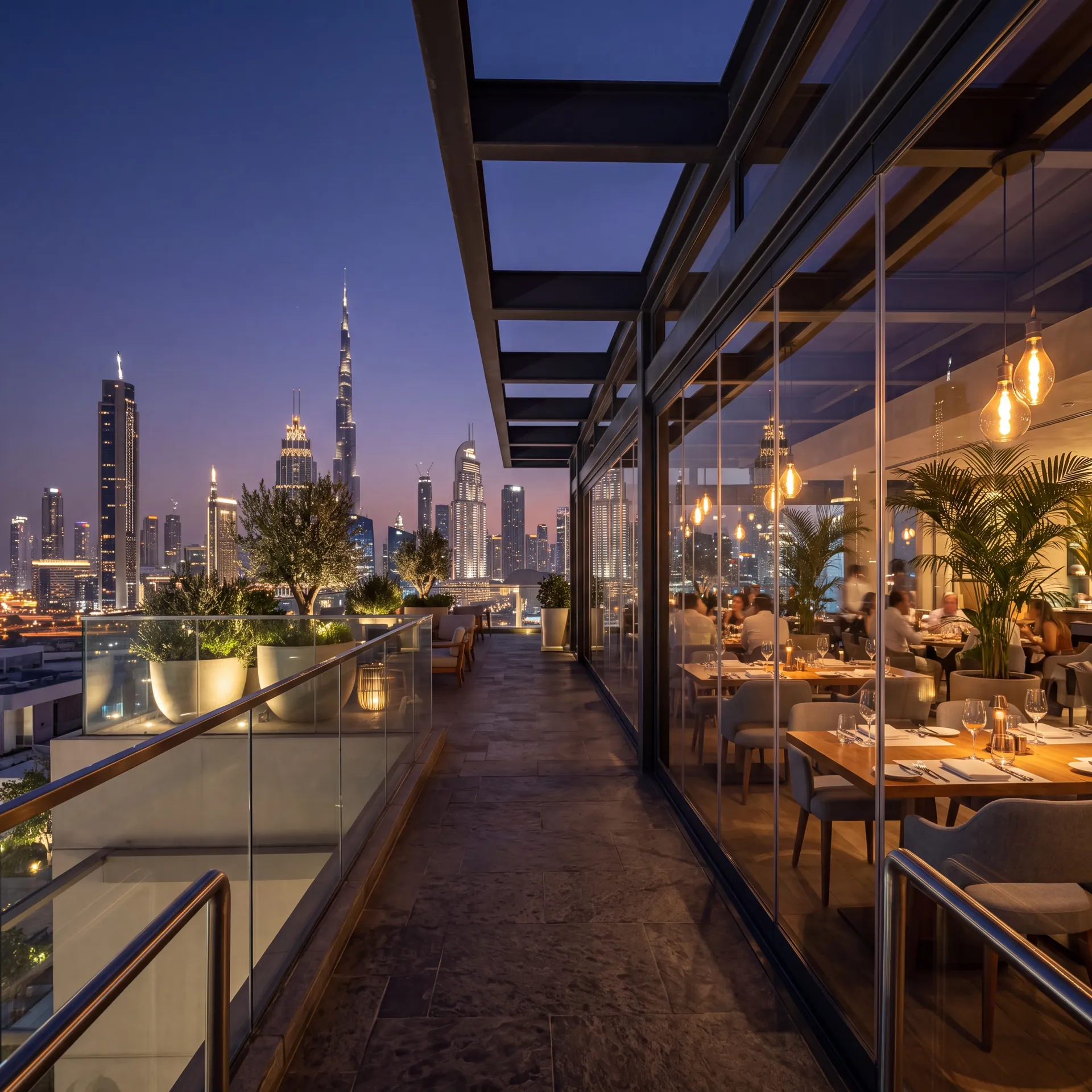
This is the reason glass gets specified, and it is a good one. On a terrace with a view — the sea, a golf course, the skyline — a frameless glass balustrade removes the barrier from the picture. Seated, the difference is dramatic: a metal railing crosses your eyeline at exactly the height where the view is, and glass does not.
Where there is no view, that advantage evaporates. A balcony overlooking a boundary wall and a neighbour's roof gains nothing from perfect transparency, and this is where owners sometimes spend on glass out of habit.
Metal offers something glass cannot: partial screening. Closely spaced vertical bars, a perforated panel or a slatted infill give privacy from the side while keeping the space open — useful on a balcony overlooked by the villa next door, which in most Dubai communities is every balcony.
Cleaning, honestly
Glass shows everything. Fine dust settles on it after any windy day, rain leaves streaks, and near the coast salt spray dries into marks that need more than water. A large glass balustrade is a standing cleaning commitment, and it looks poor between cleans in a way metal does not.
Metal hides dust well, particularly in mid and dark tones. It still needs rinsing, but the interval before it looks neglected is much longer. For an owner who is away for parts of the year, or a villa without regular help, that difference matters more than any specification detail.
The counter-argument is that metal has more surfaces. A railing with many bars takes longer to clean properly than a single sheet of glass — it is simply that it can be left longer before it needs to be.
Wind, heat and the space behind the barrier
A solid glass balustrade blocks wind, which is pleasant on an exposed terrace and less so on a still evening when a breeze would be welcome. It also traps heat: a glazed balcony in full sun becomes noticeably warmer than an open one, because the air cannot move through.
An open metal railing lets air pass. On a west-facing terrace here that airflow is worth real comfort in the evening, and it is an argument that rarely appears in a showroom conversation.
There is also glare. Glass reflects low sun, and a large balustrade facing west can throw light into the room behind it at exactly the wrong time of day. It is not a reason to avoid glass, but it is worth thinking about on that particular elevation.
Safety and what each does when things go wrong
Both types meet the same height and gap requirements when specified properly, and the developer or community usually sets those. The difference is in behaviour rather than compliance.
Correctly specified balustrade glass is laminated, so a broken panel cracks and stays in place rather than disappearing. That is exactly the property you want in a barrier, and it is why plain toughened glass is the wrong specification for this job.
Metal railings raise a different question: what the infill looks like. Horizontal bars form a ladder, which is a real consideration in a home with young children. Vertical bars at a compliant spacing do not, and that is the reason vertical infill is the norm rather than a style preference.
Neither material fails suddenly if it is fixed properly. What fails is the fixing, which brings us to the last point.
What ages in this climate
For glass, the glass is fine and the hardware is the question. Spigots, base channels and handrail fittings are stainless, and the grade has to match the exposure — near the sea, a marine grade rather than the standard one, or you will see brown speckling within a few years.
For metal, the finish is the question. Powder-coated aluminium is the sensible default here: it does not rust, and the coating carries the colour. Steel needs to be galvanised properly and then coated, and every drilled hole and cut end made after galvanising is a place corrosion can start.
In both cases the honest summary is the same: the material chosen matters less than whether the fixings and the finish were specified for a coastal, high-ultraviolet environment. That is the line in a quote worth reading twice.
The answer most villas arrive at
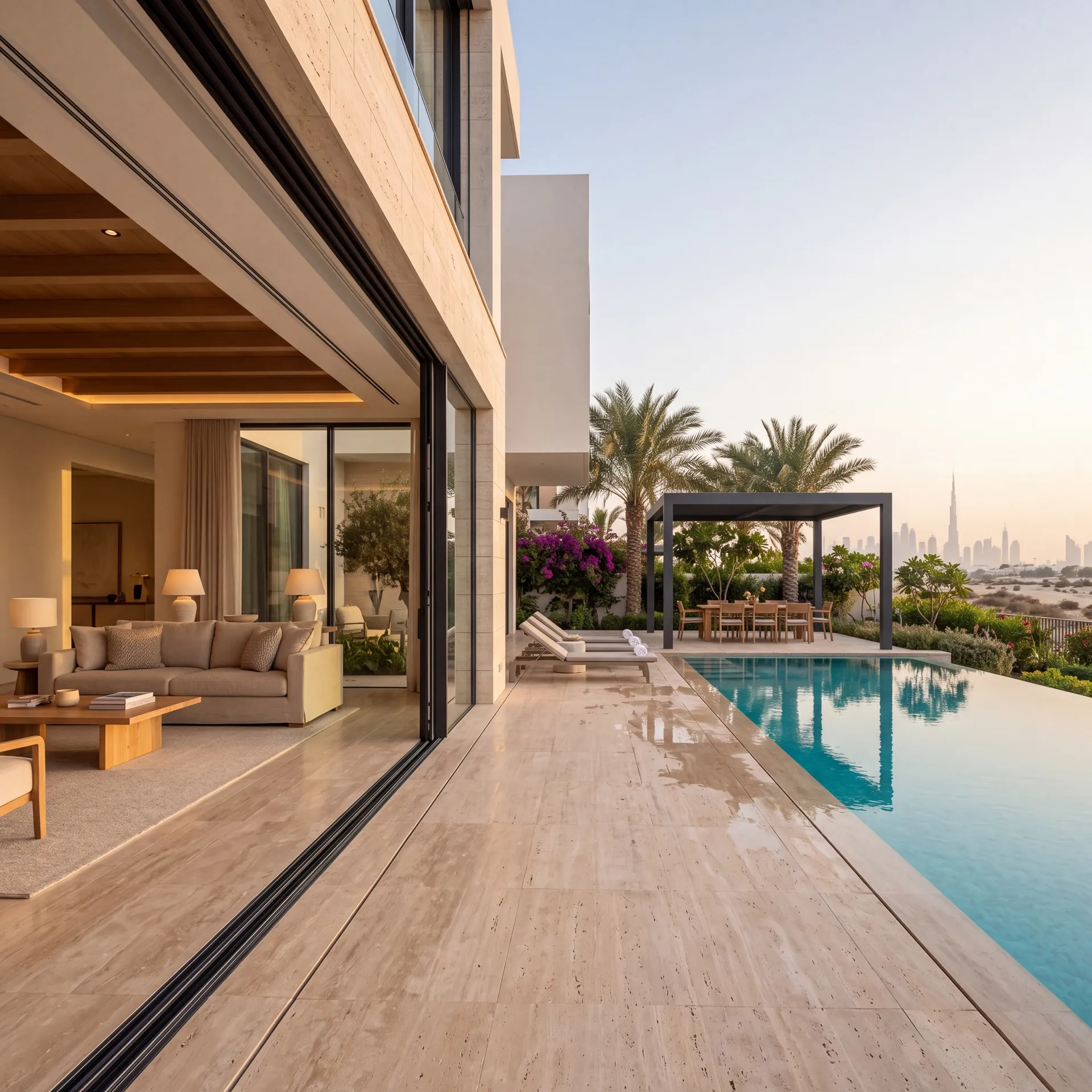
Glass where there is something to look at and somebody to keep it clean — the main terrace, the pool edge, the sea-facing balcony. Metal where the view is a wall, where privacy from a neighbour matters, or where airflow is worth more than transparency.
Mixing them is not a compromise and does not look untidy when it is done deliberately, with a shared handrail detail or a consistent metal colour tying the two together. The photograph at the top of this article is exactly that: two systems meeting at a corner, each doing the job it is better at.
Choose per edge, not per house. Ask what the barrier looks out on, who will clean it, and whether the space behind it needs air more than it needs shelter. Then spend the saved money on the right stainless grade and the right coating, because that is what decides how either one looks in five years.