






Pocket sliding doors
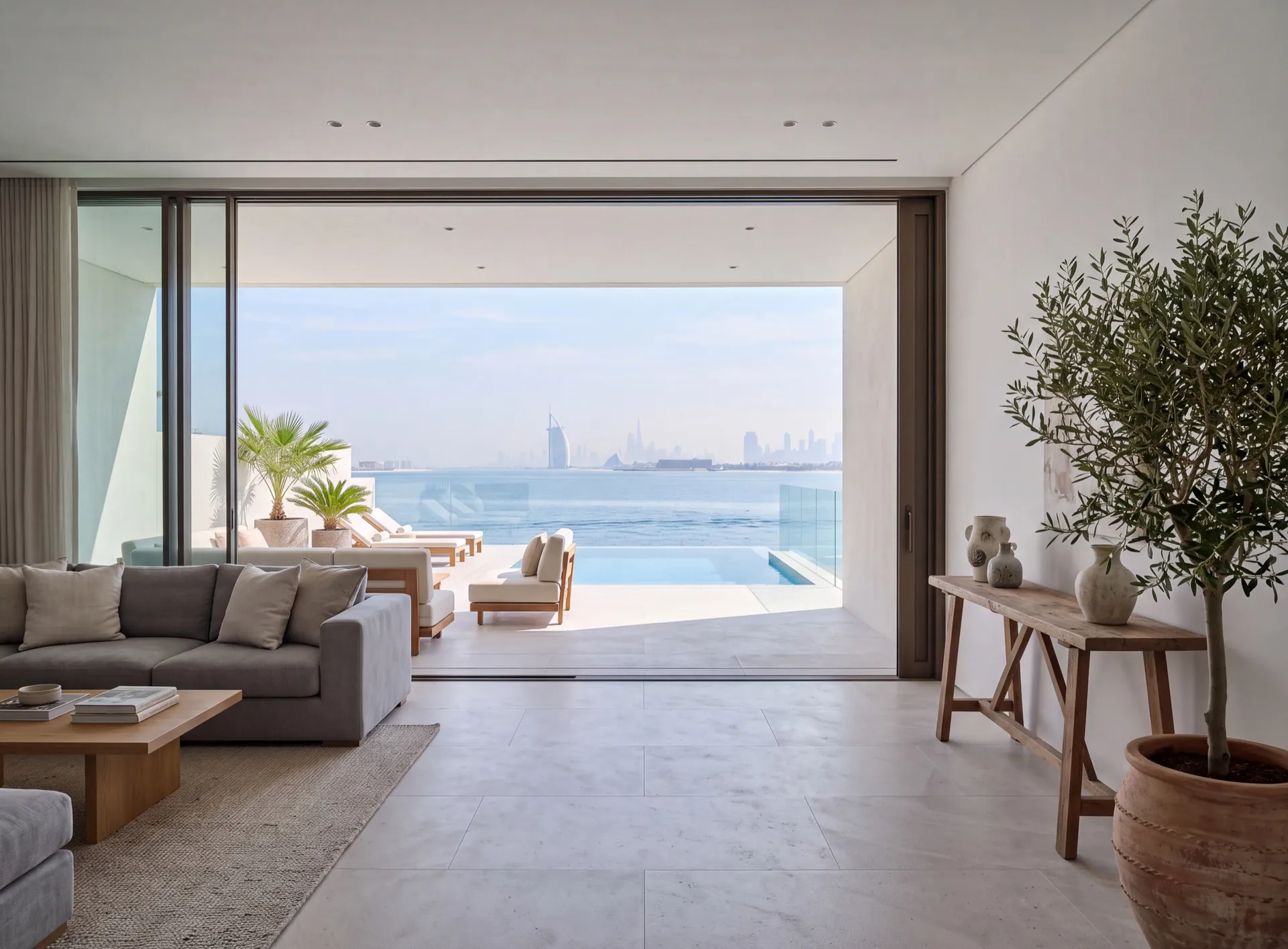
A pocket door runs sideways like any slider, but it does not stop in front of the glass beside it — it keeps going, into a cavity built inside the wall, until nothing of it is left in the opening but a slim jamb. That single difference moves the whole job from the door schedule to the building. The cavity has to be framed while the wall is being built, it has to be empty of everything a wall normally carries, and something has to span above it. Get that agreed early and the opening genuinely disappears. Ask for it once the wall is plastered and the honest answers are all expensive.
- into a wall cavity where the leaf goes
- framed with the wall the pocket
- nothing inside it services and fixings
What a pocket asks of the building
-
Cassette or void
Pocket
Framed before the wall is closed
-
Leaf plus clearance
Cavity width
Glass must never touch a side
-
Kept out entirely
Services
No conduit, no pipe, no socket
-
Spans both
Head support
The pocket and the opening together
-
Removable jamb
Getting back in
The leaf has to come out again
Let's calculate
the cost of glazing
Get a free calculation for your windows — just leave your number, we'll reply on WhatsApp within 15 minutes.

We produce
Curtain walls, structural and semi-structural glazing, ventilated and cassette facades. The system carries its own weight and the wind load of a tall building, and the glass line stays unbroken across the elevation.
Canopies, balustrades, railings and pool fencing, where glass is carried by an aluminium or steel frame. The load goes through the metal, the glass stays transparent.
Frameless glazing, spider systems, skylights and roof lanterns — everything built so the frame disappears and only the glass is read.
Office and glass partitions, sliding and smart-glass systems. They divide a floor without walls: light passes through, noise does not.
Glazed structures with a fire-resistance rating for escape routes and openings between fire compartments.
Priced per project
 Glazed facade
Curtain wall
Glass floors
Stair railings
Glass fences
Glass canopies
Skylights
Glass partitions
Fire-resistant glazing
Glazed facade
Curtain wall
Glass floors
Stair railings
Glass fences
Glass canopies
Skylights
Glass partitions
Fire-resistant glazing
Getting a pocket right
- Pocket agreed while walls are still drawn It belongs to the builder, not the door
- Cavity set out from leaf and glazing Thickness plus room to run
- Electrical and mechanical routes diverted Nothing may cross the void
- Support over the opening confirmed The wall above still has to be carried
- Finished floor level fixed before making The track is set to it, once
- Leaf hung, run in and access left So the next visit does not need a chisel
Brands we work with
Articles

The honest downside
When a pocket door costs more than it gives
A pocket belongs to the wall, not to the door. In a finished room it means taking the wall down and rebuilding it with support over the opening, or building a stud wall in front, and either way the switches, sockets and thermostat on that stretch have to move.
Once built, that stretch of wall can carry no pipe, socket or screw — no television, mirror or shelf. A leaf that runs into a cavity also seals less tightly than one closing against a frame, so a pocket is weaker at holding back sound, dust and cooled air.
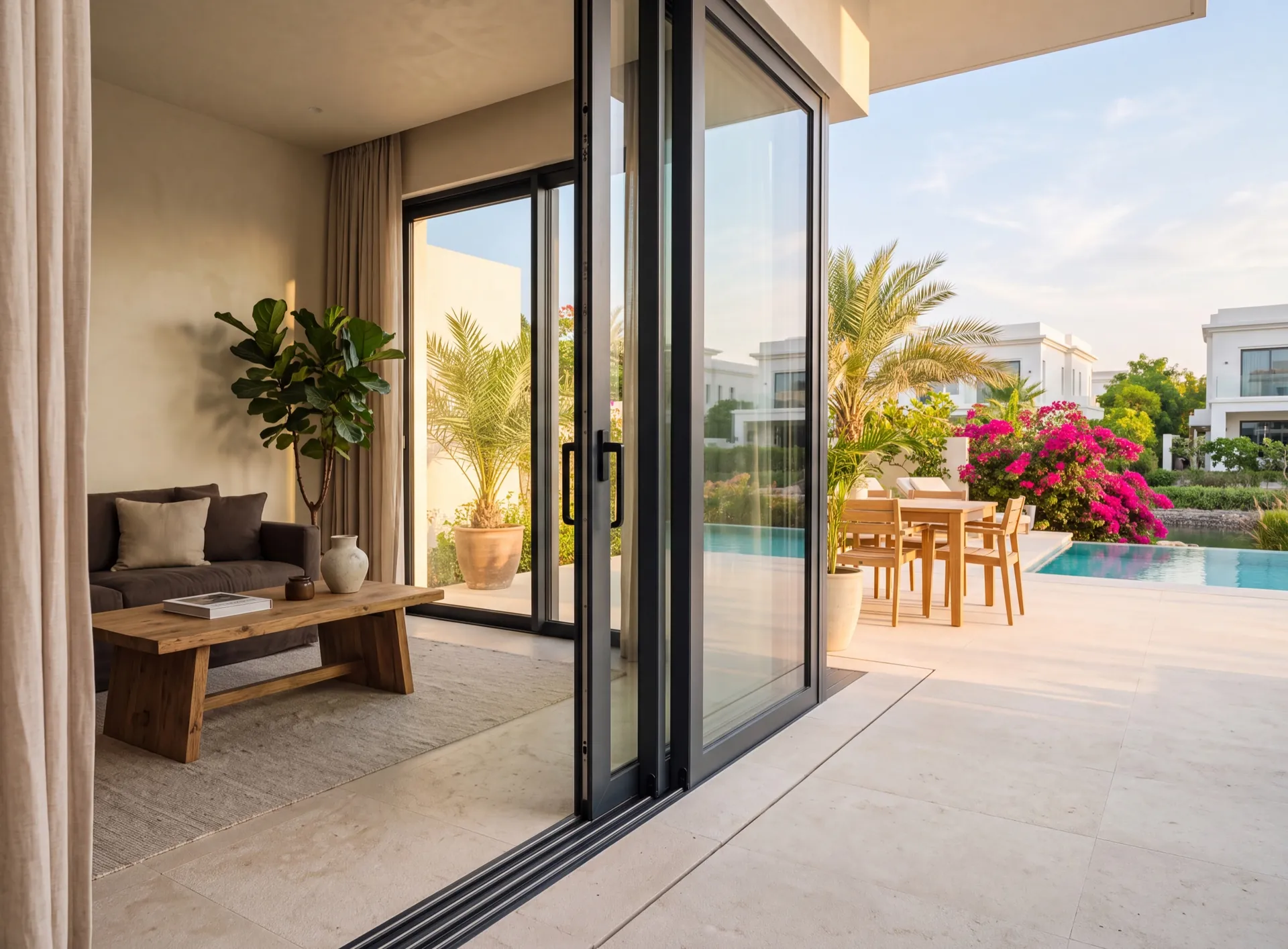
Where the walls are already finished, or the wall beside the opening has other work to do, a sliding door parked behind a fixed pane keeps most of the effect with no building work. A pocket door remains the right choice in a new build or a full fit-out, where the cavity is planned with the wall.
 Consider instead
Sliding doors
Consider instead
Sliding doors
Frequently asked questions
By where the leaf ends up. An ordinary slider parks its leaf alongside the pane next to it, in the same plane, so the glass you moved is still standing there in the opening and you are looking through two thicknesses at that end. A pocket takes the leaf out of the opening altogether. Standing in the room with it open you see a reveal and a floor track, and nothing else — which is the reason people accept the building work that makes it possible.
Sometimes, and rarely for the right price. Chasing a cavity out of finished blockwork means taking the wall down and rebuilding it with support over the opening, which is a structural job with a plasterer and a decorator behind it. The alternative is a stud wall built in front of the existing one across that whole run, which loses you that depth of room and moves every switch, socket and thermostat on it. Where neither is welcome, a slider parking behind a fixed pane gets most of the effect for none of the disruption, and we will say so.
Anything at all. No conduit crossing it, no water pipe, no drain, no socket box on either face, and no fixing driven into that stretch of wall afterwards — which is the part owners discover later, when a television or a mirror is due to be hung exactly where the leaf lives. It is worth marking the pocket on the as-built drawing and agreeing the finish on that panel, because a wall with a door inside it is a wall nobody can drill.
That depends entirely on what was detailed at the start. With a removable head cover and a demountable jamb the leaf is lifted off its carriers and drawn back out of the cavity, the running gear is changed, and the same trims go back. Without them, reaching a carriage means opening the wall. We draw that way out into the detail at the design stage, because grit and settlement are ordinary here and a door that cannot be serviced is a door that gets replaced.
Related pages
Nearby pages and the rest of the catalogue.
- Apartment doors
- Automatic doors
- Balcony doors
- Bi-fold doors
- Black doors
- Bronze doors
- Brown doors
- Corner sliding doors
- Double-leaf doors
- Entrance doors
- Fire-rated doors
- French doors
Sections
Company
We are always happy to welcome you at our showroom
Main Office

Dubai — Showroom
The Pinnacle Building, Sheikh Zayed Road, Office 607
Mon–Fri: 9:00 – 18:00
Showroom

Samples to see in person
Profiles, glass units and hardware to see and touch before you choose.
Dubai — Showroom
The Pinnacle Building, Sheikh Zayed Road, Office 607
Get directions 