Skip to content
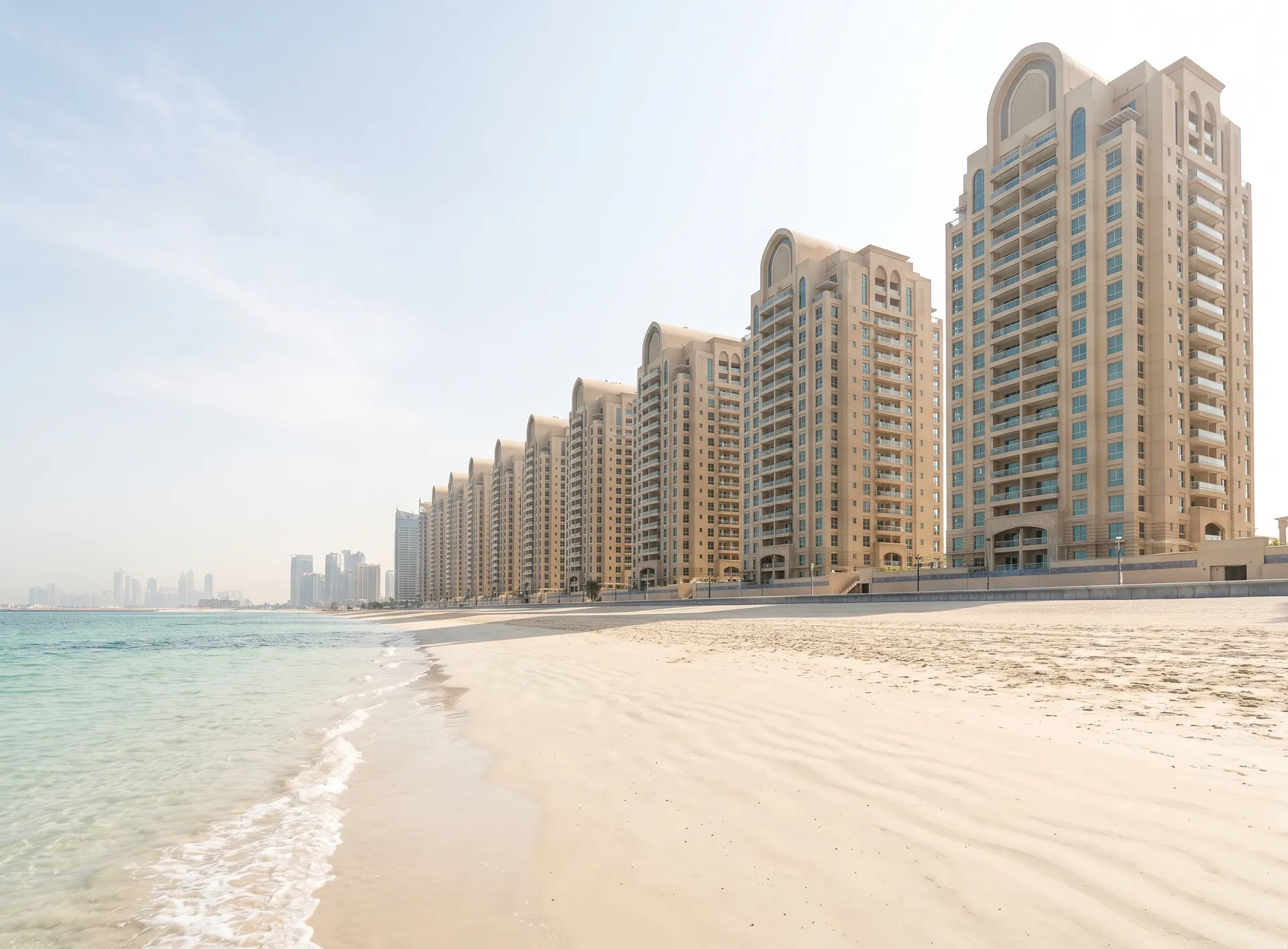
Beachfront residential towers of JBR standing directly behind open sand and shallow surf
  • BEACHFRONT TOWERS
  • SALT AND SAND

Windows in JBR

JBR is the front row. There is nothing between the seaward glass and the sea, so the window has two separate enemies: salt, which arrives as spray suspended in the onshore breeze, and sand, which is carried up off the beach as dry grit. They ruin different parts of it — one goes after the finish and everything steel that holds the window together, the other grinds into sliding tracks and blocks the drainage that keeps water out. The result is that the beach elevation and the street elevation of the same flat are specified as two different windows, and the only thing nobody will trade away is the view.

  • first line distance to the water
  • anodised usual seaward finish
  • coated, not tinted how heat is cut
Request a quote

What the beach does to a window

  • Salt-laden air

    What reaches the frame

    Carried up on the onshore breeze

  • Anodising

    Seaward finish

    Powder coat on the street side

  • Stainless

    Fixings and hardware

    Chosen with the finish, not after it

  • Cleared drainage

    Sliding track

    Sand settles where water leaves

  • Neutral coating

    Glazing

    Heat cut without greying the sea

Let's calculate
the cost of glazing

Get a free calculation for your windows — just leave your number, we'll reply on WhatsApp within 15 minutes.

Branded Aluminum Windows UAE service car on a Dubai seafront road

Why choose aluminium windows?

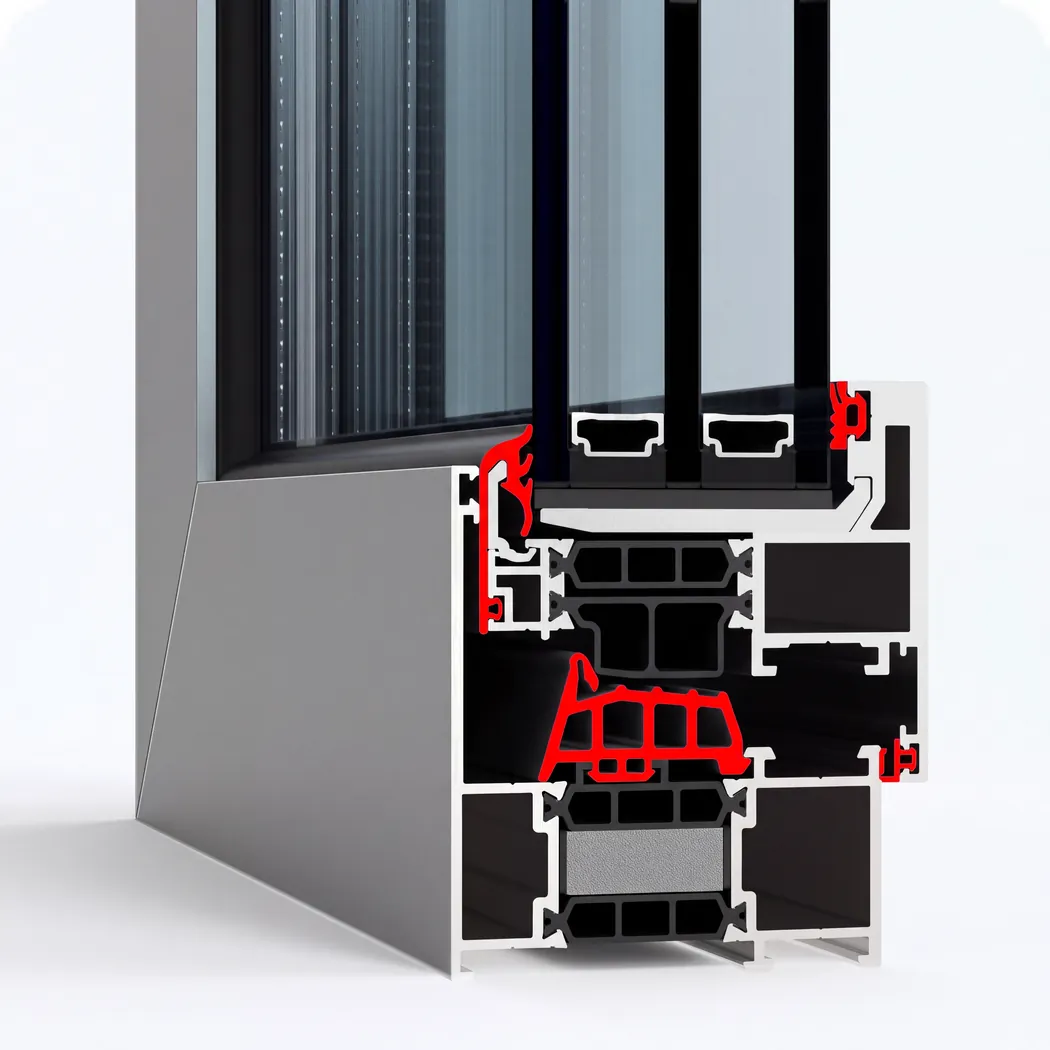
  • Aluminium window profile cross-section with three EPDM seal contours highlighted in red

    Durable EPDM seals

    Three contours of EPDM seals keep the glass off the aluminium and close the gap between sash and frame, so dust, humid salt air and wind-driven rain stay outside.

    Learn more
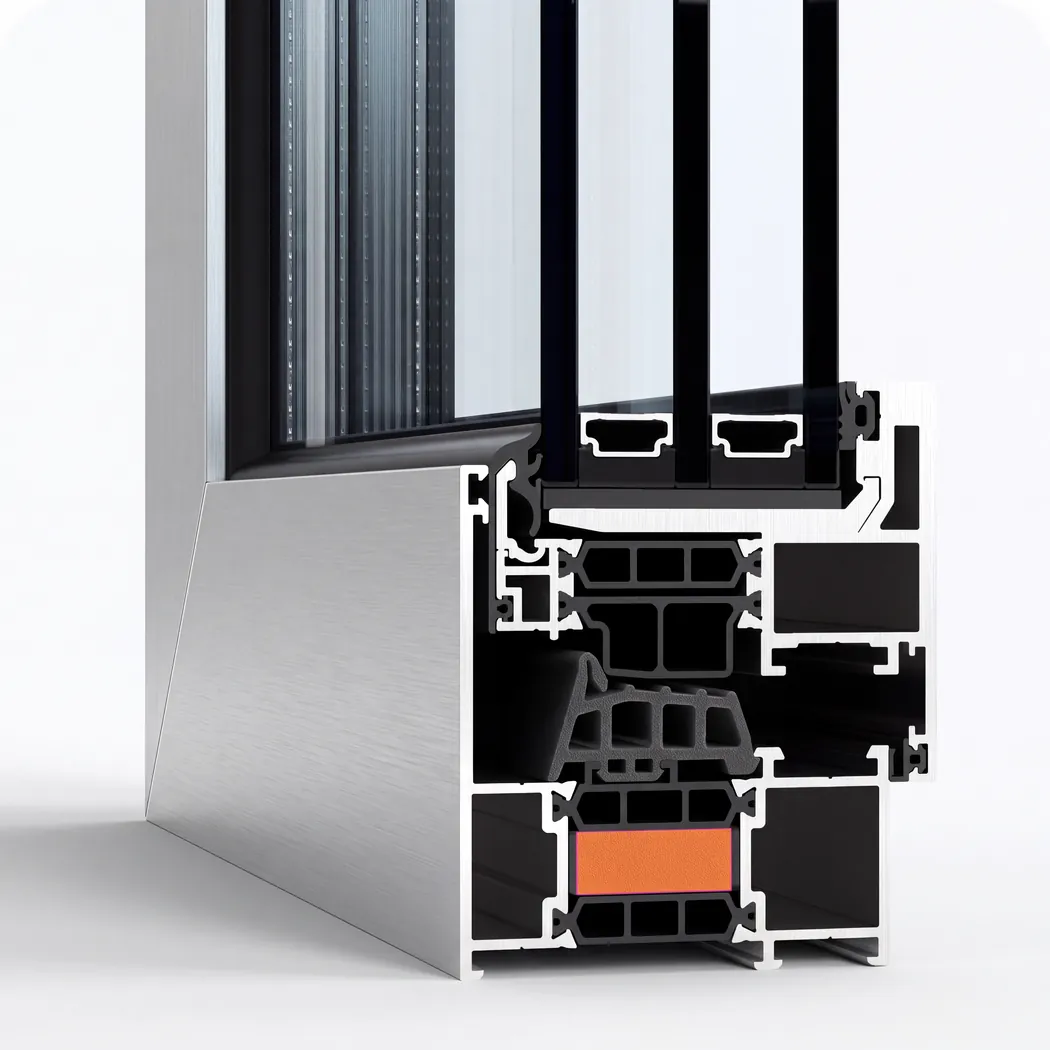
  • Aluminium window profile cross-section with a foamed thermal insert highlighted

    Foamed thermal inserts

    Foamed inserts fill the profile chambers and stop air circulating inside them, so less outside heat and street noise passes through the frame into the cooled room.

    Learn more
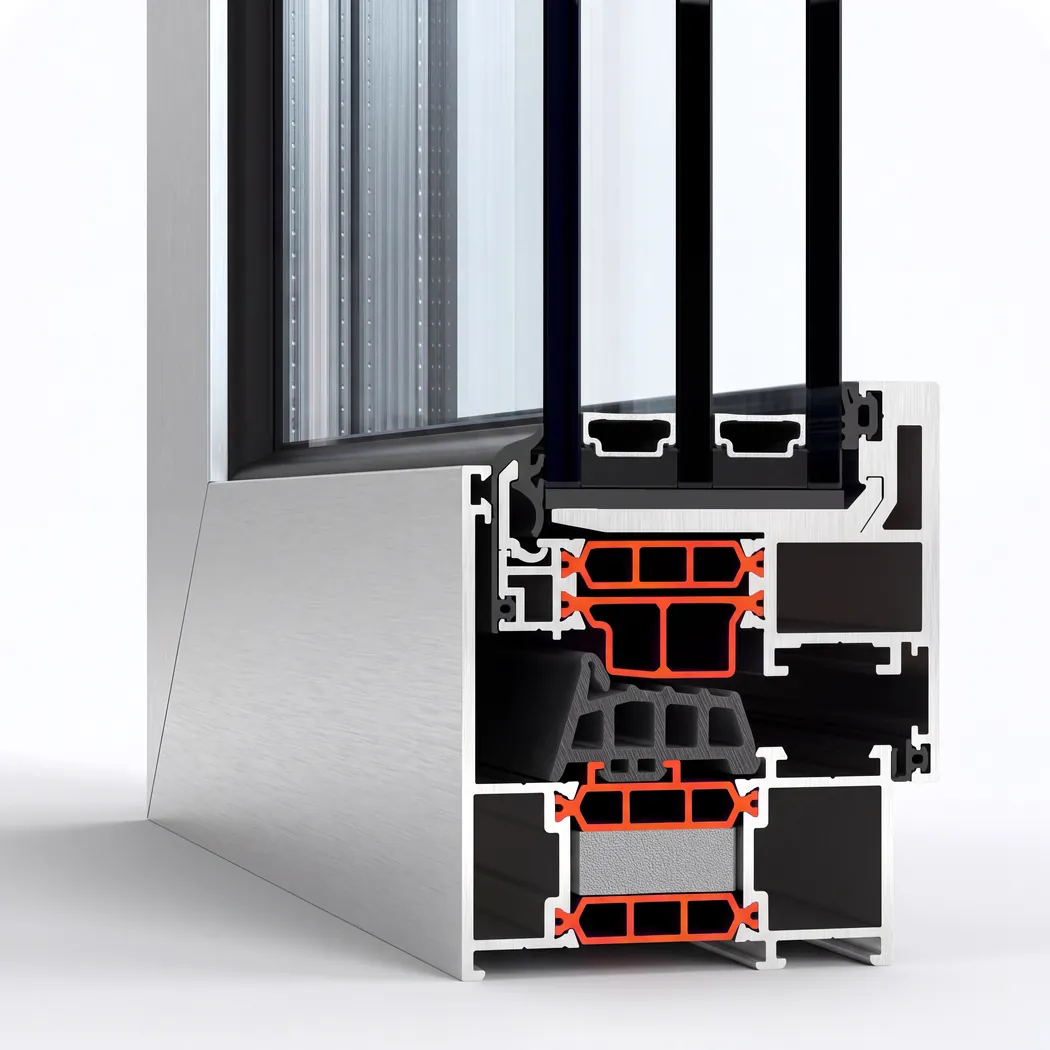
  • Aluminium window profile cross-section with polyamide thermal breaks highlighted

    Polyamide thermal breaks

    Glass-filled polyamide thermal breaks up to 40 mm wide keep the outer and inner shells apart, so the frame holds its shape and its insulation through a UAE summer.

    Learn more
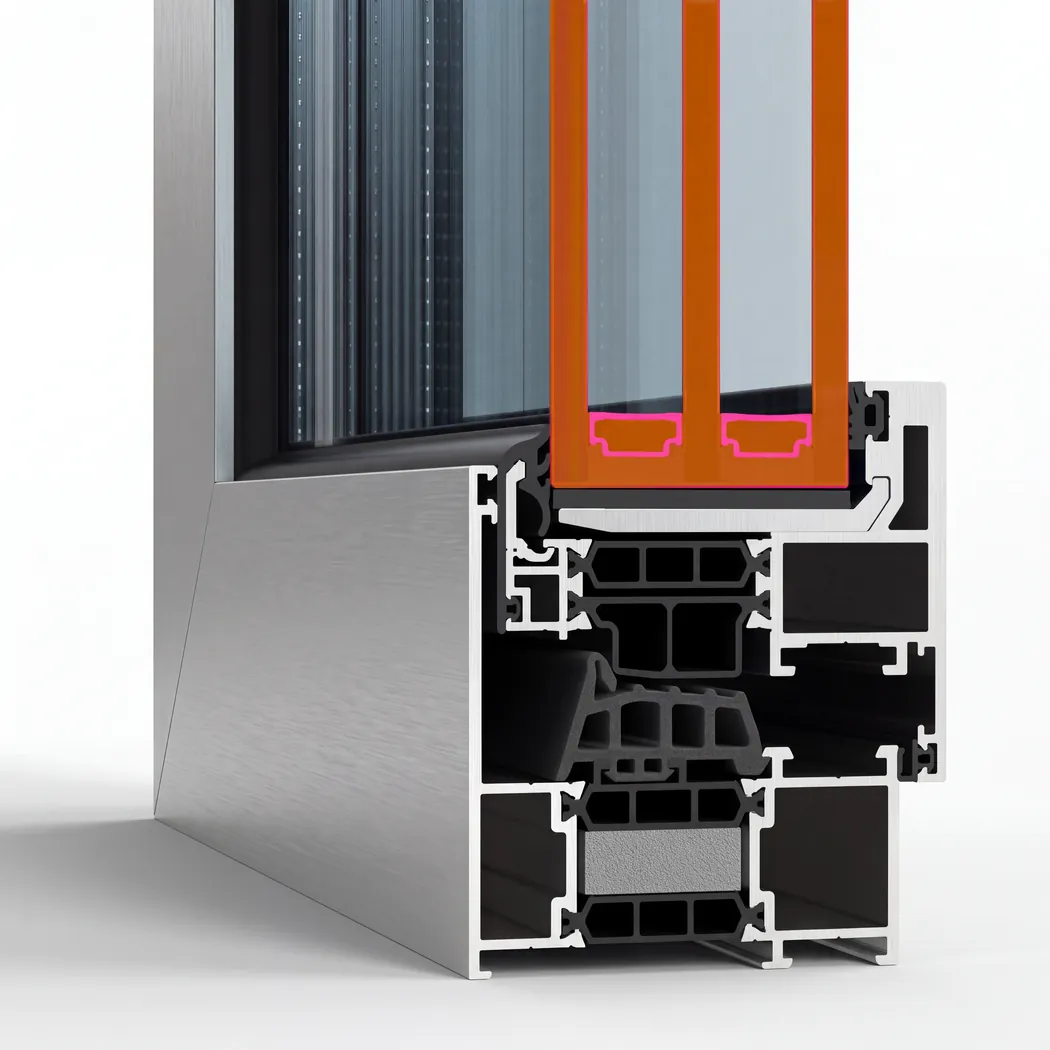
  • Aluminium window profile with an energy-efficient double glazing unit highlighted

    Energy-efficient double glazing

    Double glazing up to 60 mm thick puts a sealed gap of still air or gas between the hot street and the cooled room, so less heat crosses the glass into the room.

    Learn more

How a JBR flat is specified

  • Survey taken elevation by elevation Beach and street openings assessed apart
  • Finish decided by exposure Anodising where the spray actually lands
  • Fixings and hardware matched to the finish So the frame does not fail at a screw
  • Track profile and brush seals chosen for sand Cleanable, with drainage that can be cleared
  • Manufacturing in our Dubai factory A marine specification takes the same lead time
  • Tracks, drainage and seals set at handover Shown to you before the crew leaves

Partitions

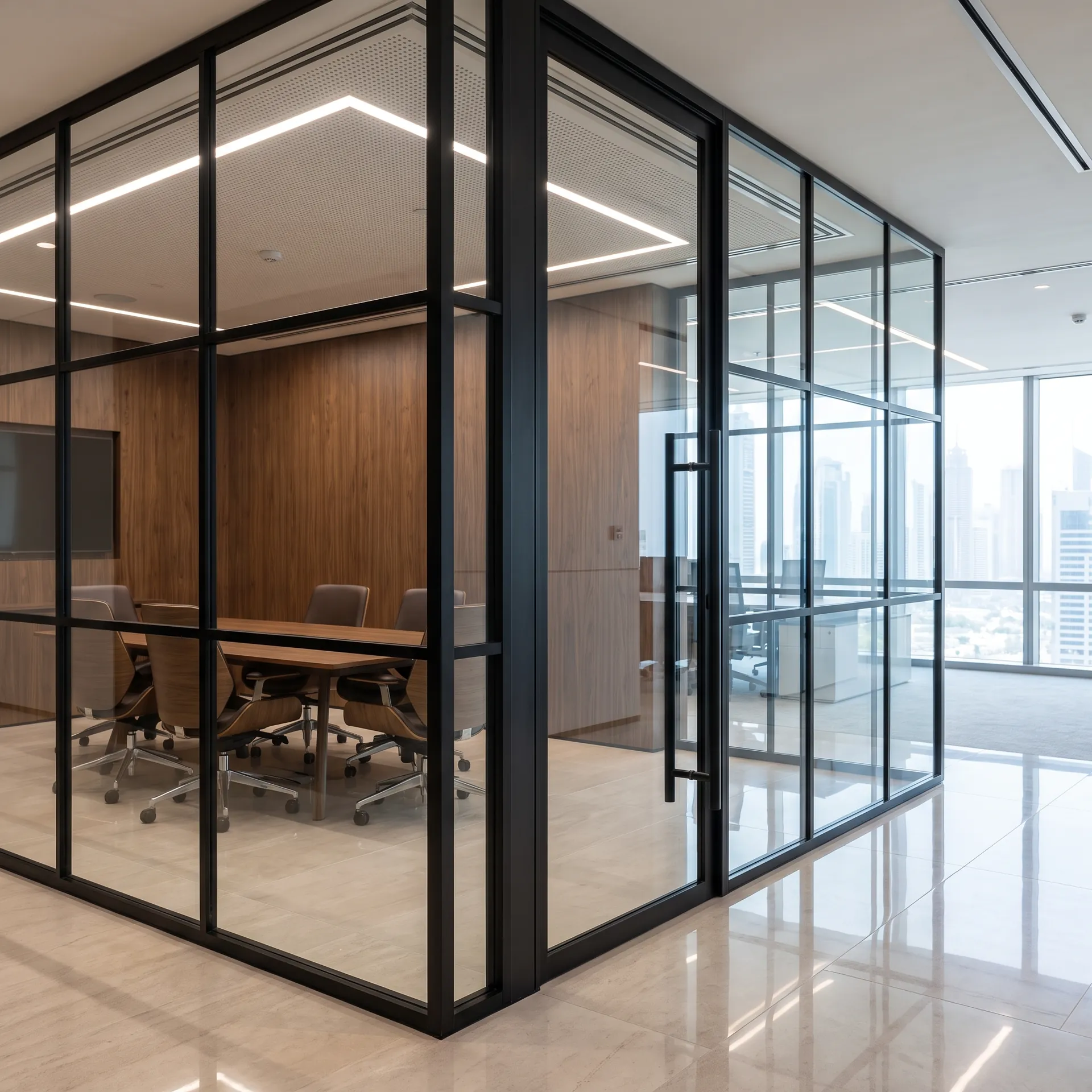
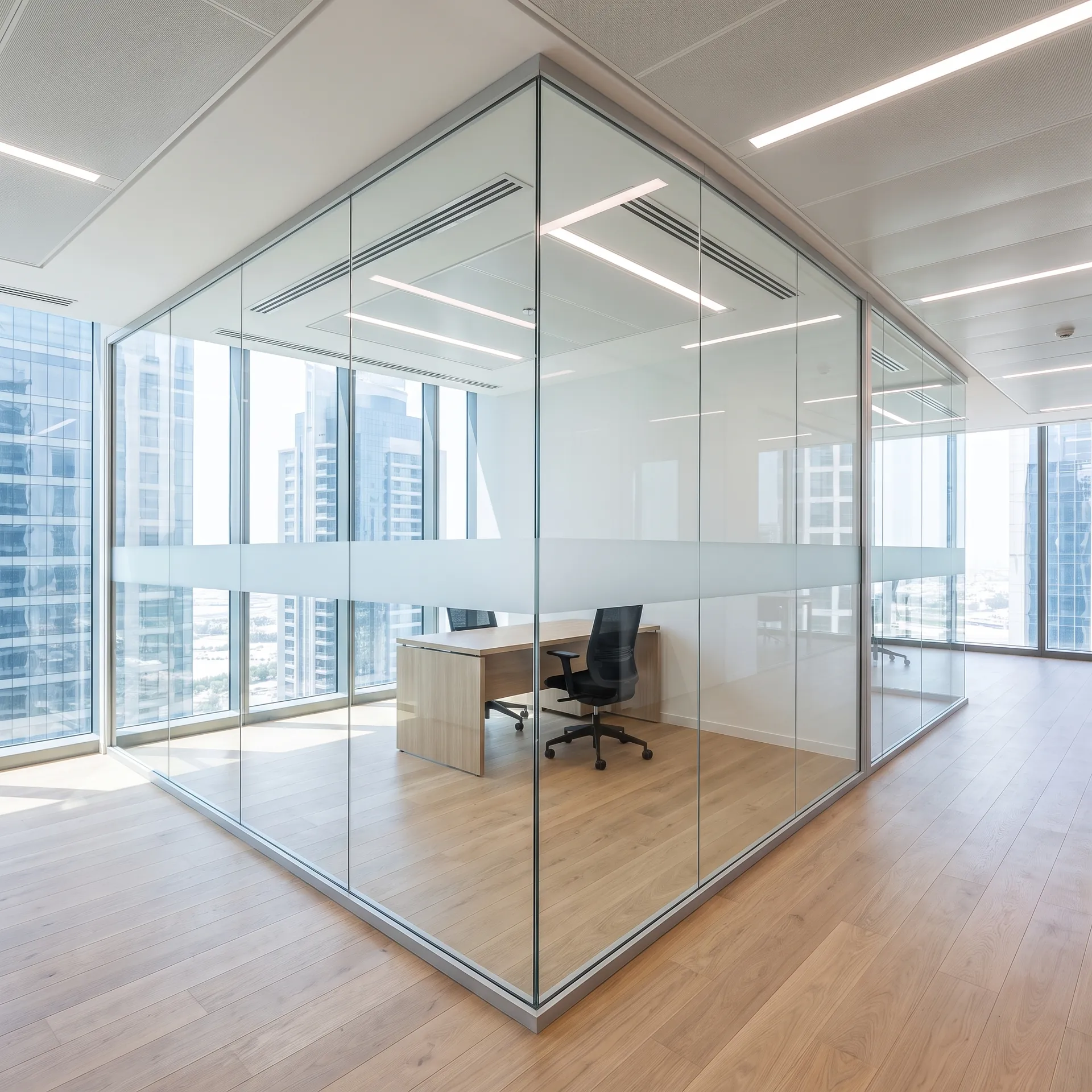
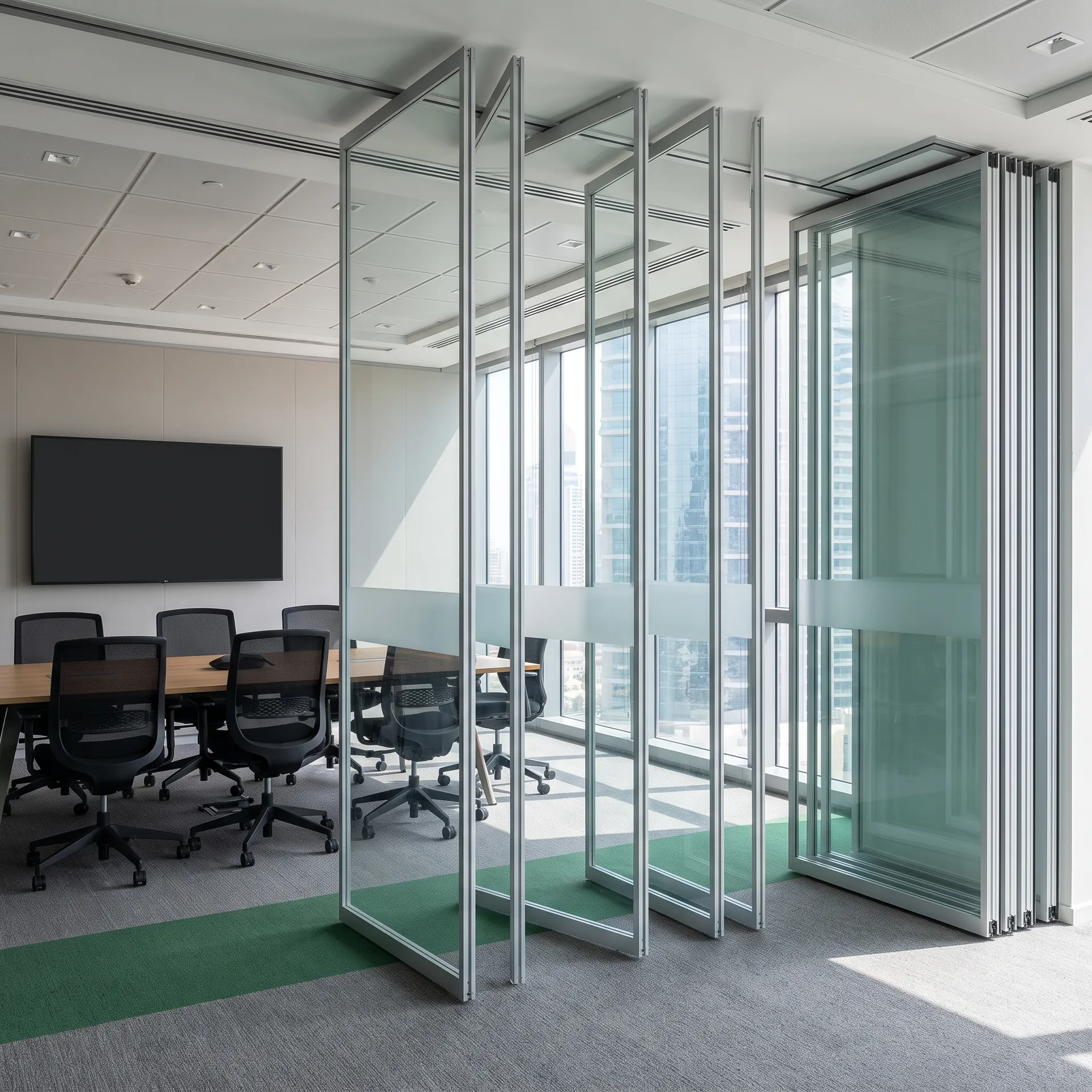
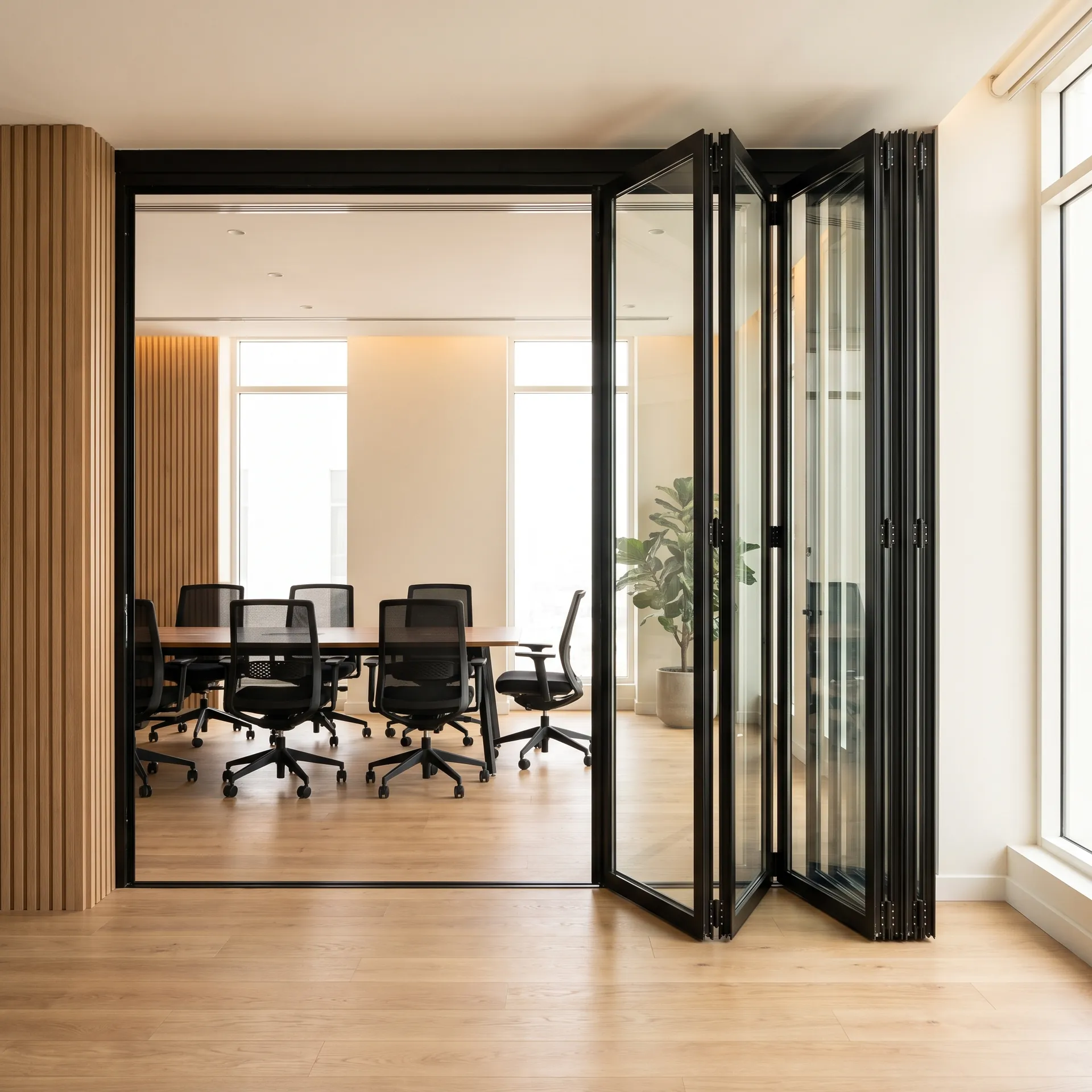
Office partitions made of aluminium profiles are a simple, quick, and cost-effective way to organise efficient zoning within a large space, while maintaining interior unity.

Frequently asked questions

It does. Wind carries fine spray up the face of the building, and on the front row there is nothing in the way to strip it out of the air first. You see it on the seaward side as a film on the glass and as salt sitting in the frame drainage and around the fixings. That is not a reason to over-specify the whole flat, though — the street-facing openings live in a far easier environment, and giving both the same marine treatment mostly just costs money.

Splitting the flat is normal here, and the survey decides where the line falls. What matters is exposure rather than the compass: an opening looking straight down the beach with nothing in front of it is treated as marine — anodised frame, stainless fixings, drainage you can actually clear — while a window onto an internal corridor, a courtyard or the street behind the building lives in ordinary city air and takes a standard powder-coated frame. The interesting cases are corner rooms and recessed balconies, where a returning wall shelters one sash and leaves the one beside it fully exposed. Those we settle on site rather than on the plan.

Because sand does not stay on the beach. Fine grit blows up onto the balcony, settles in the bottom track and turns the rollers into a grinding tool, and the same grit blocks the slots that let rainwater and washing water out of the track. The cure is a track profile that can actually be cleaned, rollers rated properly for the weight of the leaf, and brush seals that keep most of it out in the first place.

It should not. The heat is turned back by a coating on an inner surface of the glazing unit rather than by dyeing the glass, so the water keeps its colour and the sky does not go grey or bronze. What does change the view is a heavy reflective mirror finish, which is why we keep those for office towers and specify the neutral coatings for rooms that look at the sea.

We are always happy to welcome you at our showroom

Main Office

Dubai — Showroom

The Pinnacle Building, Sheikh Zayed Road, Office 607

Mon–Fri: 9:00 – 18:00
+971 50 220 6913

Showroom

Samples to see in person

Profiles, glass units and hardware to see and touch before you choose.

Dubai — Showroom The Pinnacle Building, Sheikh Zayed Road, Office 607
Get directions