Skip to content
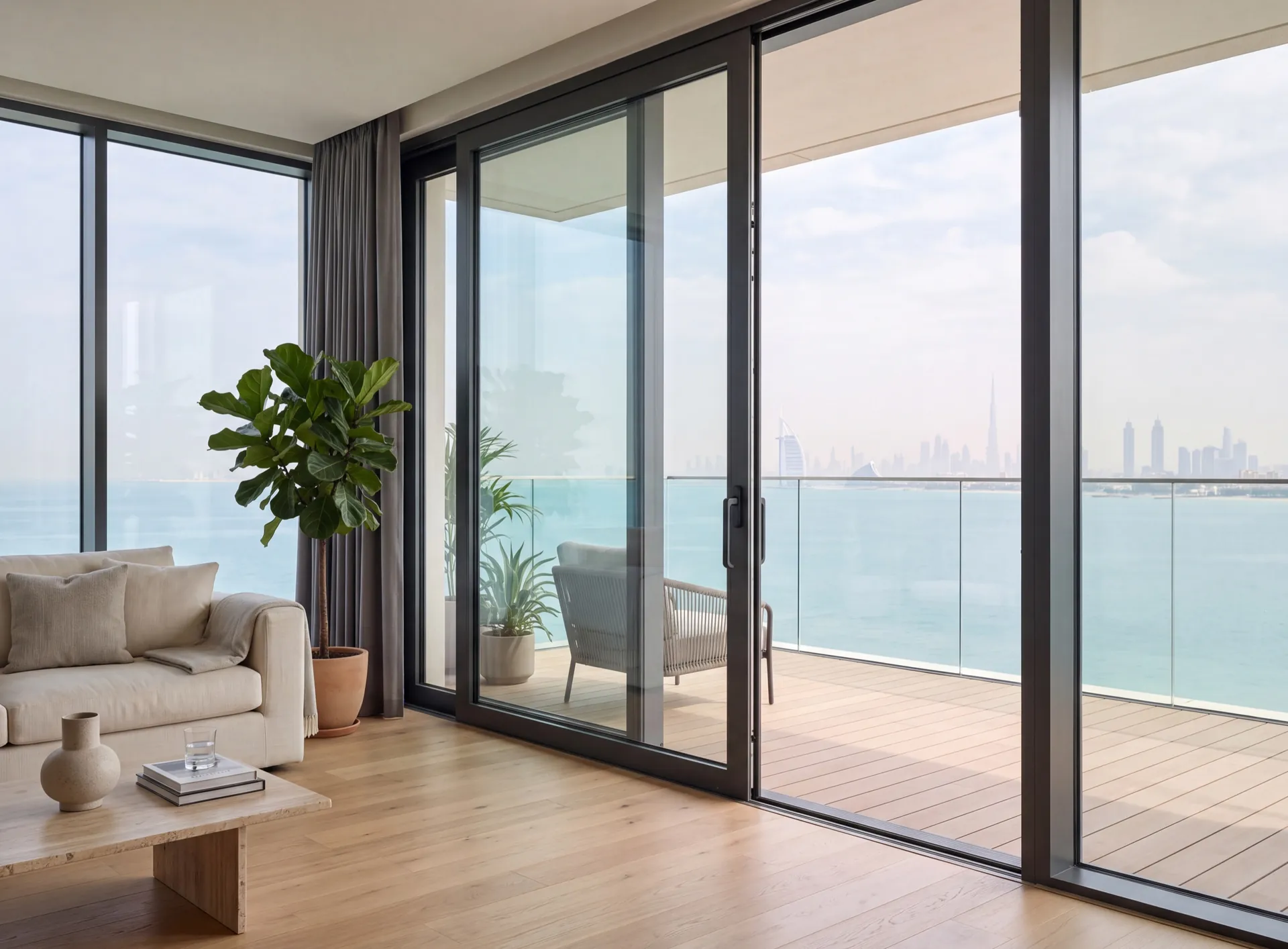
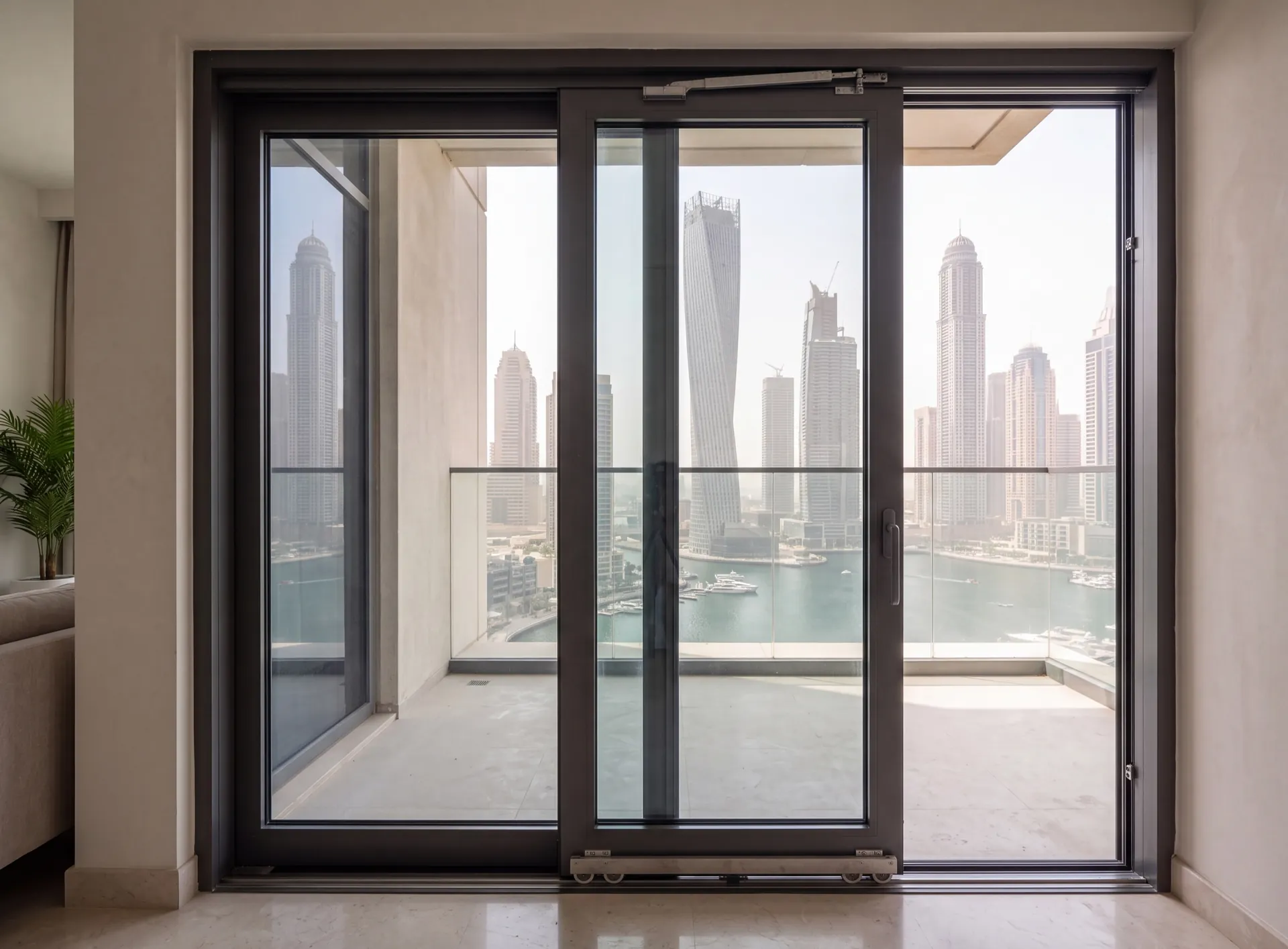
Aluminium parallel slide door in a Dubai apartment with the leaf standing clear of the frame on its gear, part way along the track onto a balcony
  • SEALS LIKE A HINGED LEAF
  • PARKS LIKE A SLIDER

Parallel slide doors

A parallel slide door does not start by going sideways. Turn the handle and the leaf steps straight out of the opening, away from the seals it was pressed into, staying square to the frame as it comes; only then does it roll along its track. Closing runs the sequence backwards — the leaf travels back to the opening and then draws in against the frame all the way round. That order is the entire point of the system. A conventional slider passes its leaf across the frame and can do no more than wipe against brushes on the way past; a leaf that arrives square and is then pulled in can squeeze a gasket on the head, both jambs and the sill, the way a hinged leaf does, while still parking flat against the wall instead of swinging into the room.

  • out, then along how the leaf moves
  • head, jambs and sill where the gasket is squeezed
  • the gear, not the wall what caps the leaf size
Request a quote

The gear that walks a leaf out of its frame

  • Swinging arms

    Fittings

    They carry the leaf clear of the frame

  • Squeezed, not wiped

    Gaskets

    Contact all the way round the leaf

  • Top and bottom together

    Travel

    The leaf never stops being square

  • A held gap

    Vent position

    Air with the leaf still on its gear

  • Weight and width

    Limits

    Both are set by the hardware maker

Let's calculate
the cost of glazing

Get a free calculation for your windows — just leave your number, we'll reply on WhatsApp within 15 minutes.

Branded Aluminum Windows UAE service car on a Dubai seafront road

Why choose aluminium windows?

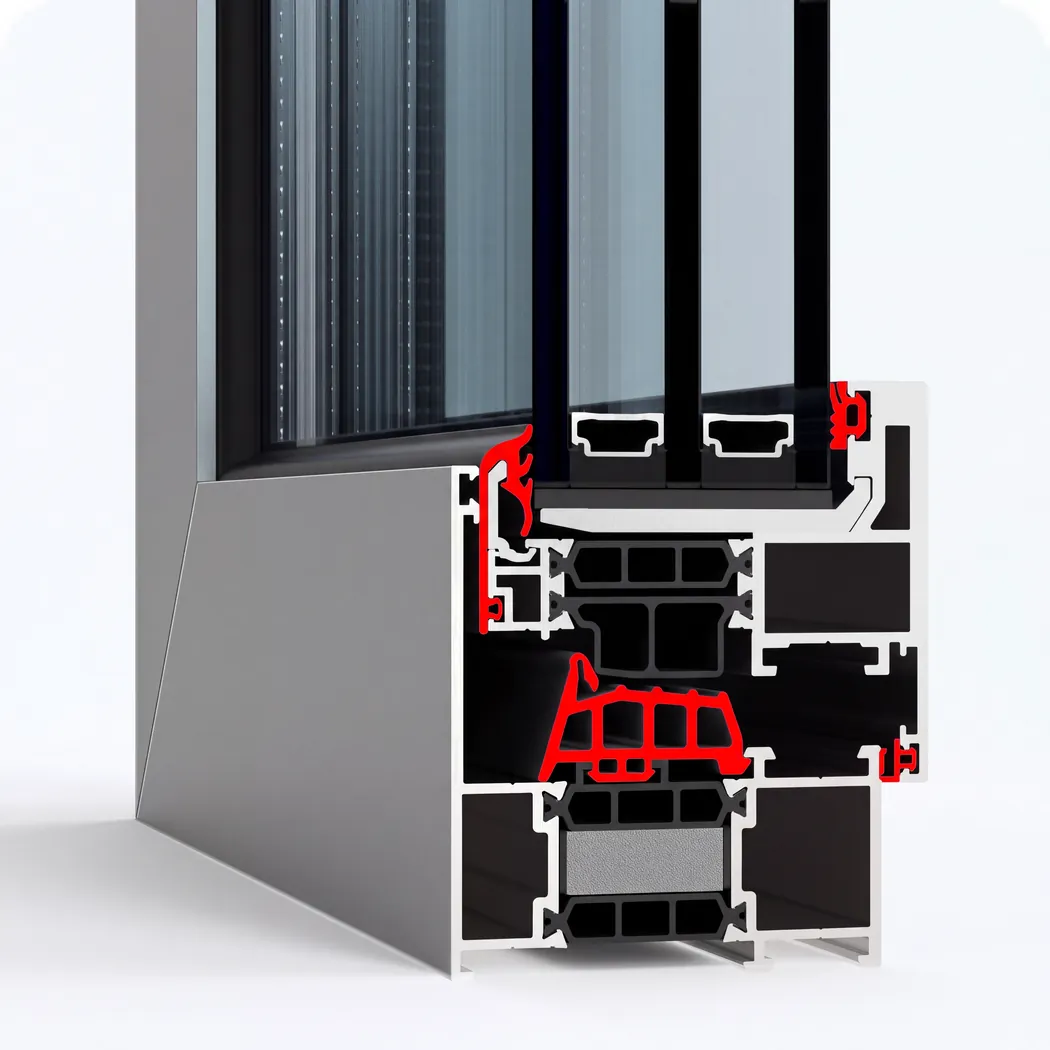
  • Aluminium window profile cross-section with three EPDM seal contours highlighted in red

    Durable EPDM seals

    Three contours of EPDM seals keep the glass off the aluminium and close the gap between sash and frame, so dust, humid salt air and wind-driven rain stay outside.

    Learn more
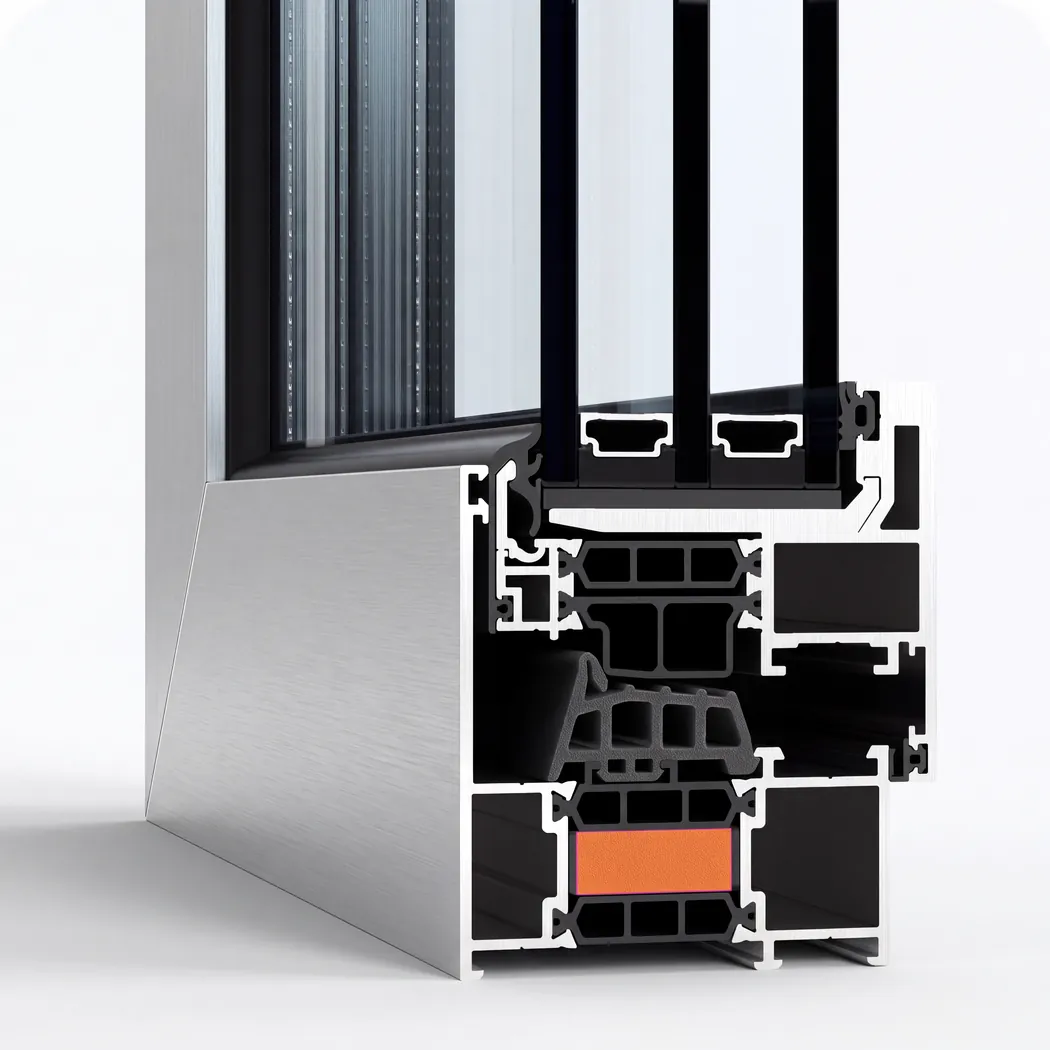
  • Aluminium window profile cross-section with a foamed thermal insert highlighted

    Foamed thermal inserts

    Foamed inserts fill the profile chambers and stop air circulating inside them, so less outside heat and street noise passes through the frame into the cooled room.

    Learn more
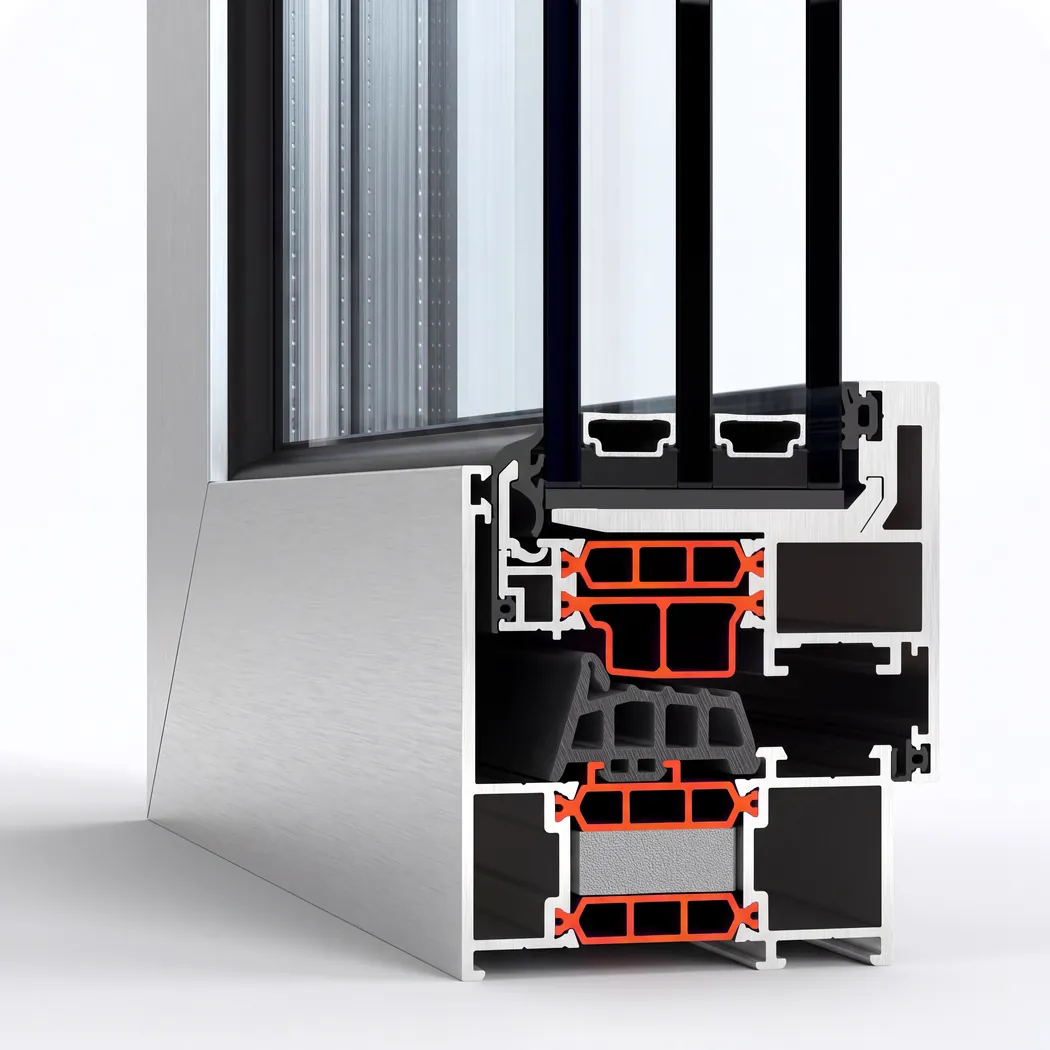
  • Aluminium window profile cross-section with polyamide thermal breaks highlighted

    Polyamide thermal breaks

    Glass-filled polyamide thermal breaks up to 40 mm wide keep the outer and inner shells apart, so the frame holds its shape and its insulation through a UAE summer.

    Learn more
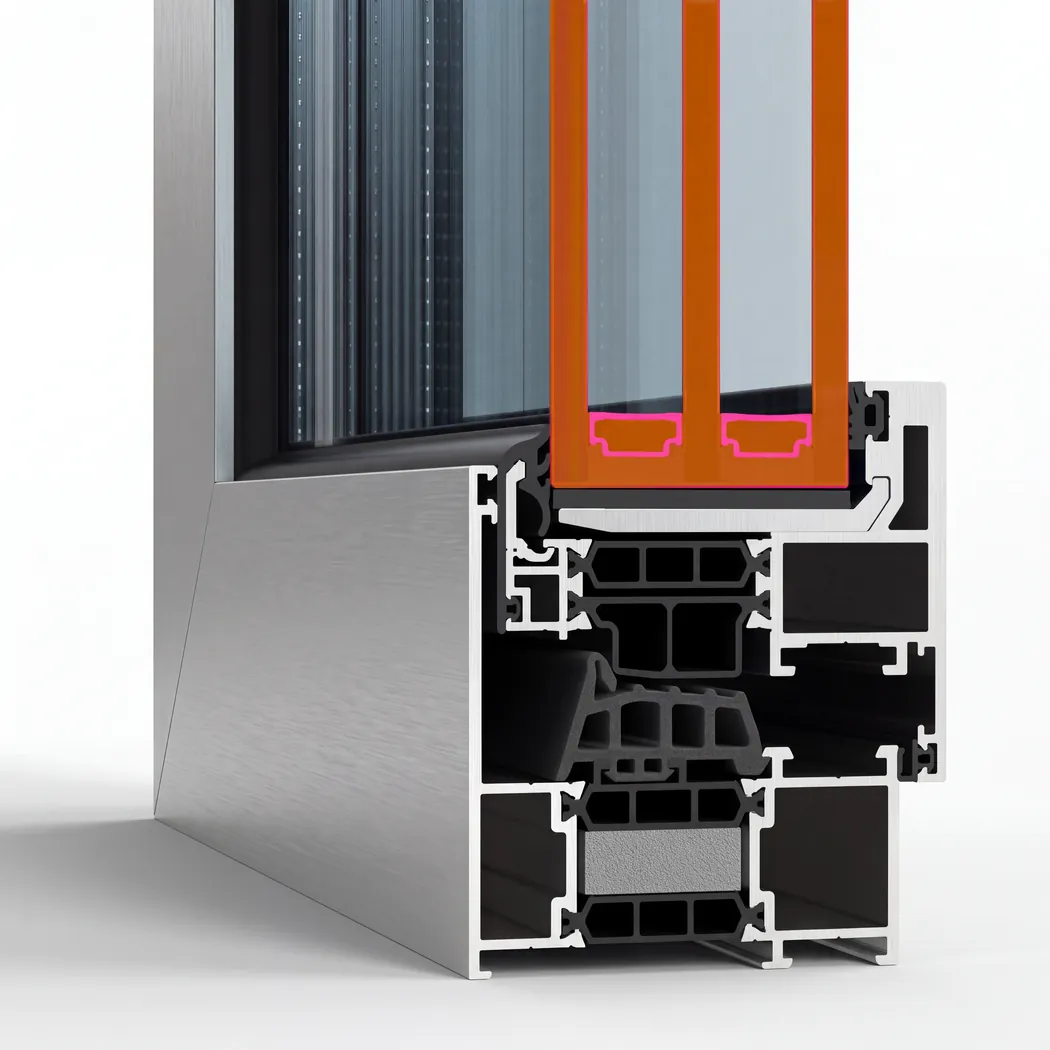
  • Aluminium window profile with an energy-efficient double glazing unit highlighted

    Energy-efficient double glazing

    Double glazing up to 60 mm thick puts a sealed gap of still air or gas between the hot street and the cooled room, so less heat crosses the glass into the room.

    Learn more

What we settle before a parallel slide is drawn

  • Leaf size checked against the hardware limit The gear decides this, not the opening
  • Clear depth in front of the frame confirmed The leaf needs room to step outward
  • Parking side agreed with the room layout The leaf ends up in front of a wall
  • Insect screen resolved at the same time It has to clear a leaf that moves outward
  • Sill drawn together with the drainage The seal sits above the water route
  • Gear adjusted with the leaf hung Even contact all round is the only test

Partitions

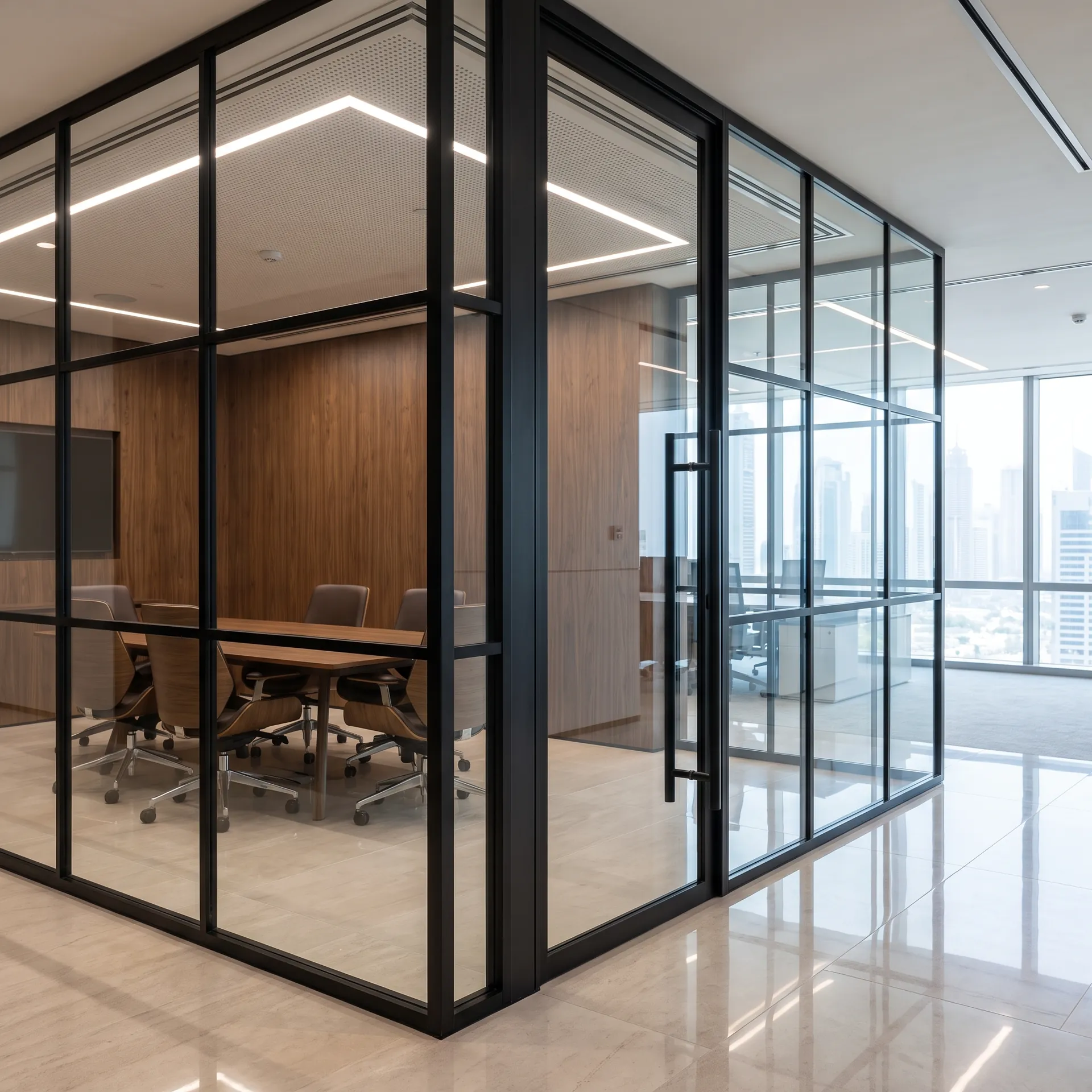
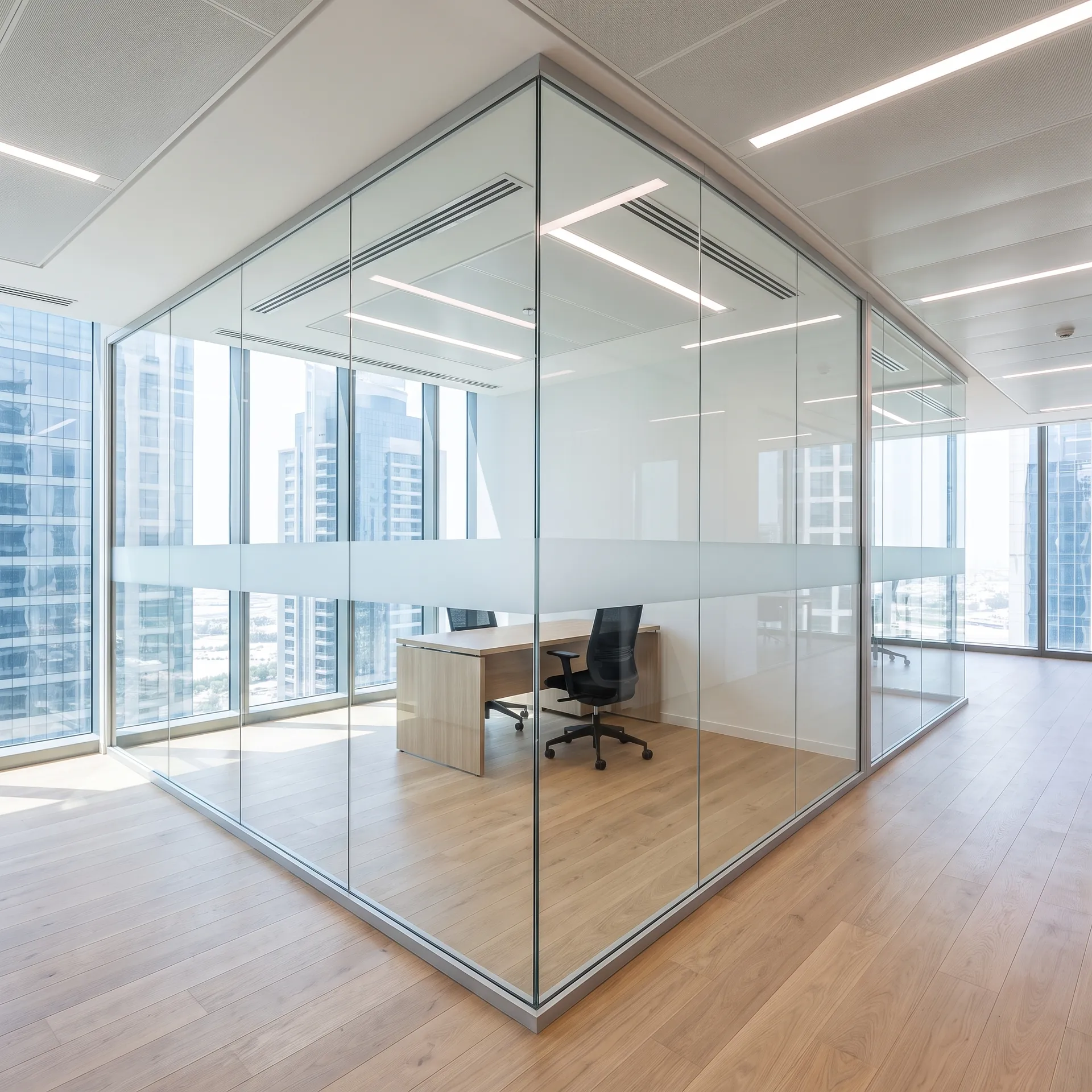
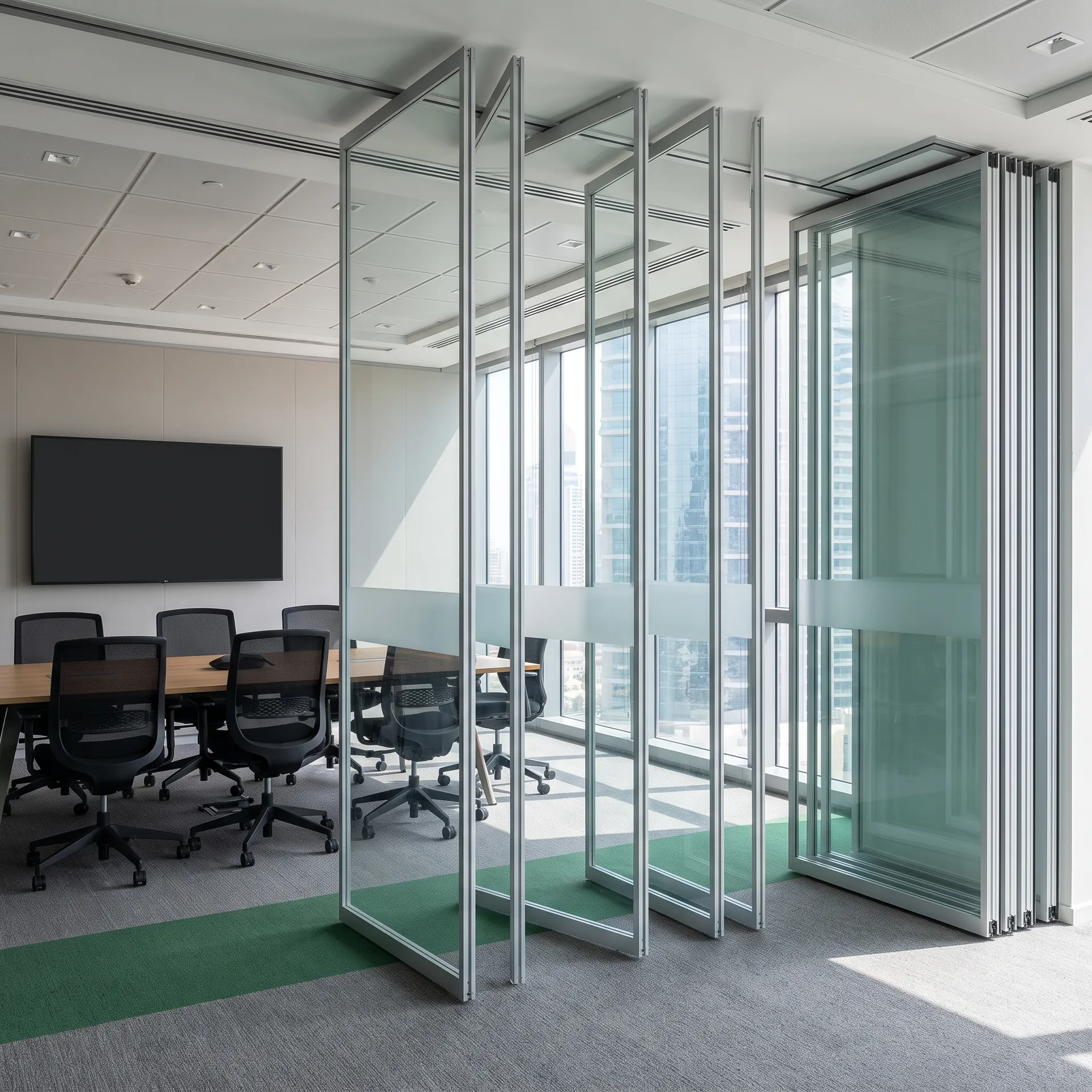
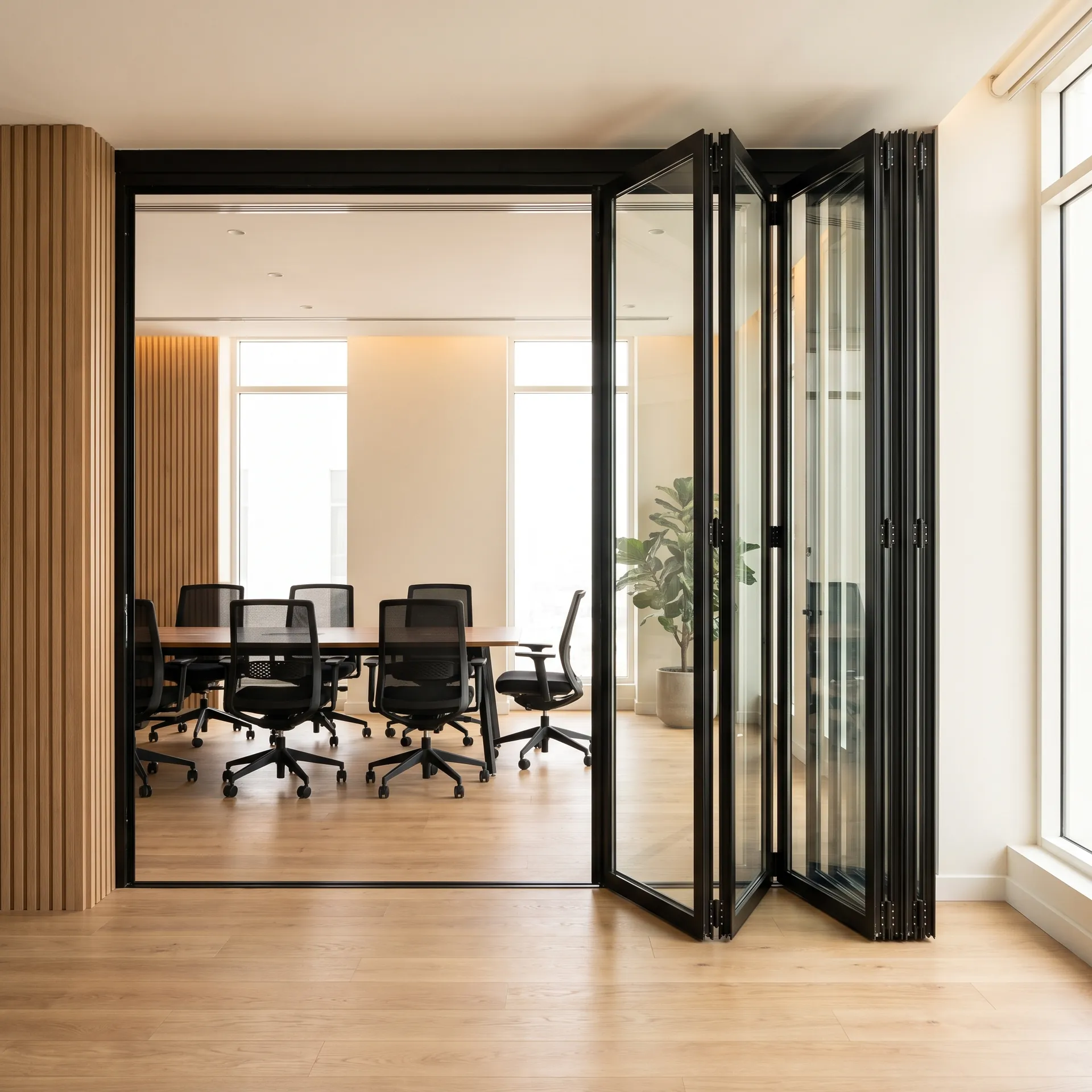
Office partitions made of aluminium profiles are a simple, quick, and cost-effective way to organise efficient zoning within a large space, while maintaining interior unity.

The honest downside

Where a parallel slide is the wrong tool

The gear that walks the leaf out of its frame also caps how big that leaf can be. For part of every cycle the leaf hangs clear of the frame on its arms, so the hardware maker's weight and width limits apply, and a wide opening soon becomes several leaves side by side.

The leaf also needs room in front of the frame to step out, which complicates insect screens and anything placed close to the glass, and the handle sequence — out, along, then in — takes longer than simply sliding a leaf.

Where the leaves are genuinely large and heavy, a lift-and-slide door lets the leaf's own weight press the seal and handles far bigger panes. A parallel slide remains the right answer for ordinary-sized openings on high floors, where a firm seal at the head matters against wind-driven dust and a hinged leaf would eat the room.

Consider instead Lift-and-slide doors

Frequently asked questions

The handle drives rails at the top and the bottom of the leaf, and those rails swing a set of arms that push the leaf horizontally out of the plane of the frame. Both ends move by the same amount at the same moment, which is why the leaf stays parallel to the wall the whole time and where the system gets its name. Once it is clear, its weight is on carriages and it rolls like any slider. Turn the handle the other way at the end of the run and the arms draw it back in, so the last movement the leaf makes before it stops is inward, against the seals.

By the direction the leaf travels to reach its seal. A lift-and-slide goes vertically: the handle raises it off a gasket that lies along the sill, and it is the mass of the leaf coming back down that presses the seal home. A parallel slide goes horizontally into the frame, so the pressure comes from the gear rather than from gravity and it is applied to the head and the jambs as firmly as to the sill. The practical consequence is a division of labour. Weight helps a lift-and-slide, so it takes the very large leaves; a parallel slide seals the top of the door as hard as the bottom, which is what you want when the wind is driving dust horizontally at a high floor.

Because for part of every cycle the whole leaf is cantilevered off the fittings, standing clear of the frame with nothing under it but the arms and the carriages, and it has to stay square while it is there. That loads the gear in a way a plain slider never does, so the manufacturer publishes a limit in terms of weight and width together, and width bites first — a tall narrow leaf is easier for the system than a short wide one of the same area. Where the brief needs a wider opening than the gear allows, the honest answers are more leaves side by side or a different mechanism, not a set of fittings pushed past what it was tested to.

In rooms of ordinary size that are cooled hard and open onto weather: apartment balconies on high floors, bedrooms behind a terrace, anywhere a hinged leaf would eat the furniture layout but a brush-sealed slider would let the afternoon in around the top of the door. The vent position is the other reason people choose it — a held gap for air, with the leaf still captive on its gear rather than pushed ajar. On a broad villa terrace, where the brief is a wall that opens, it is the wrong tool and we will say so: that job belongs to a folding, panoramic or lift-and-slide set.

We are always happy to welcome you at our showroom

Main Office

Dubai — Showroom

The Pinnacle Building, Sheikh Zayed Road, Office 607

Mon–Fri: 9:00 – 18:00
+971 50 220 6913

Showroom

Samples to see in person

Profiles, glass units and hardware to see and touch before you choose.

Dubai — Showroom The Pinnacle Building, Sheikh Zayed Road, Office 607
Get directions