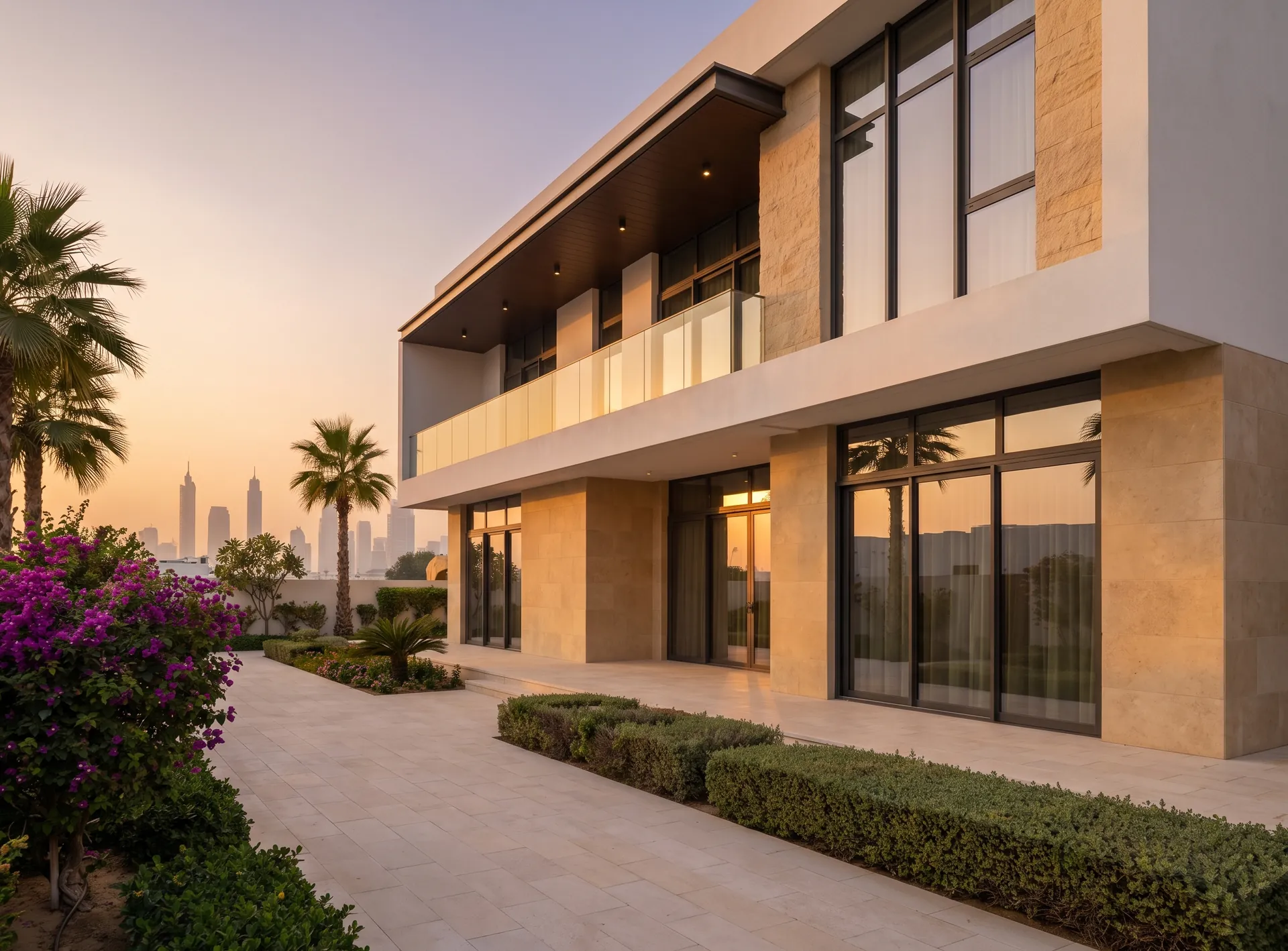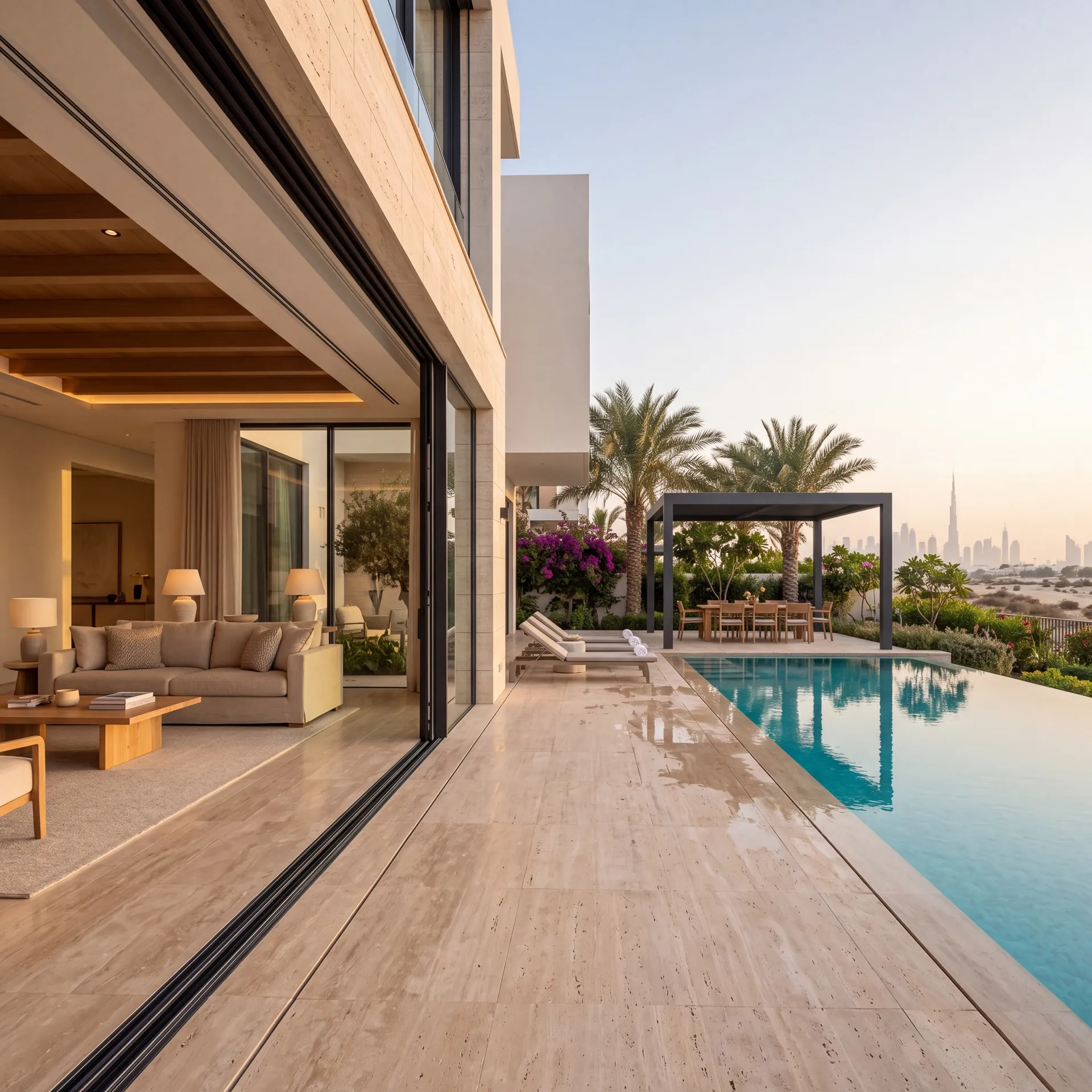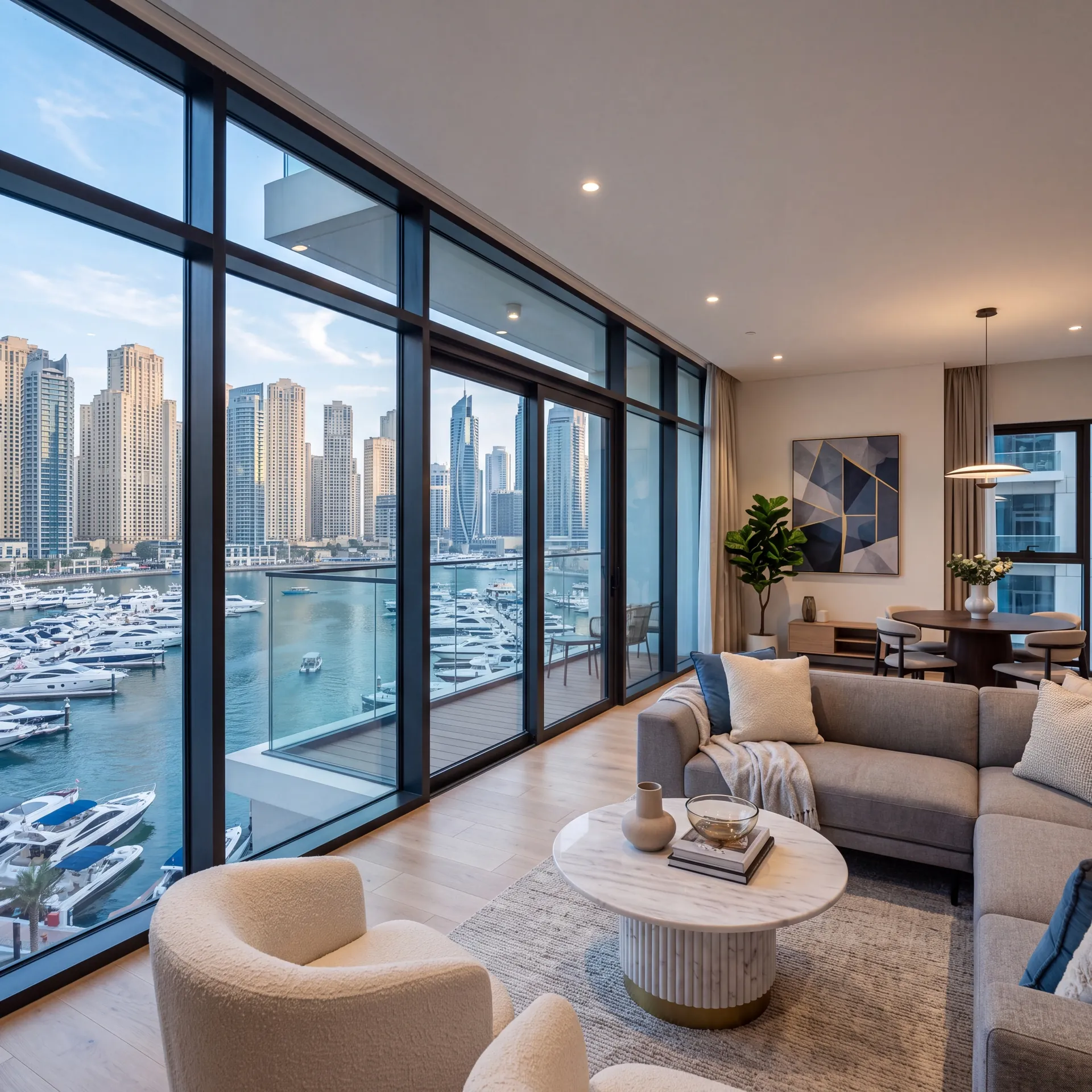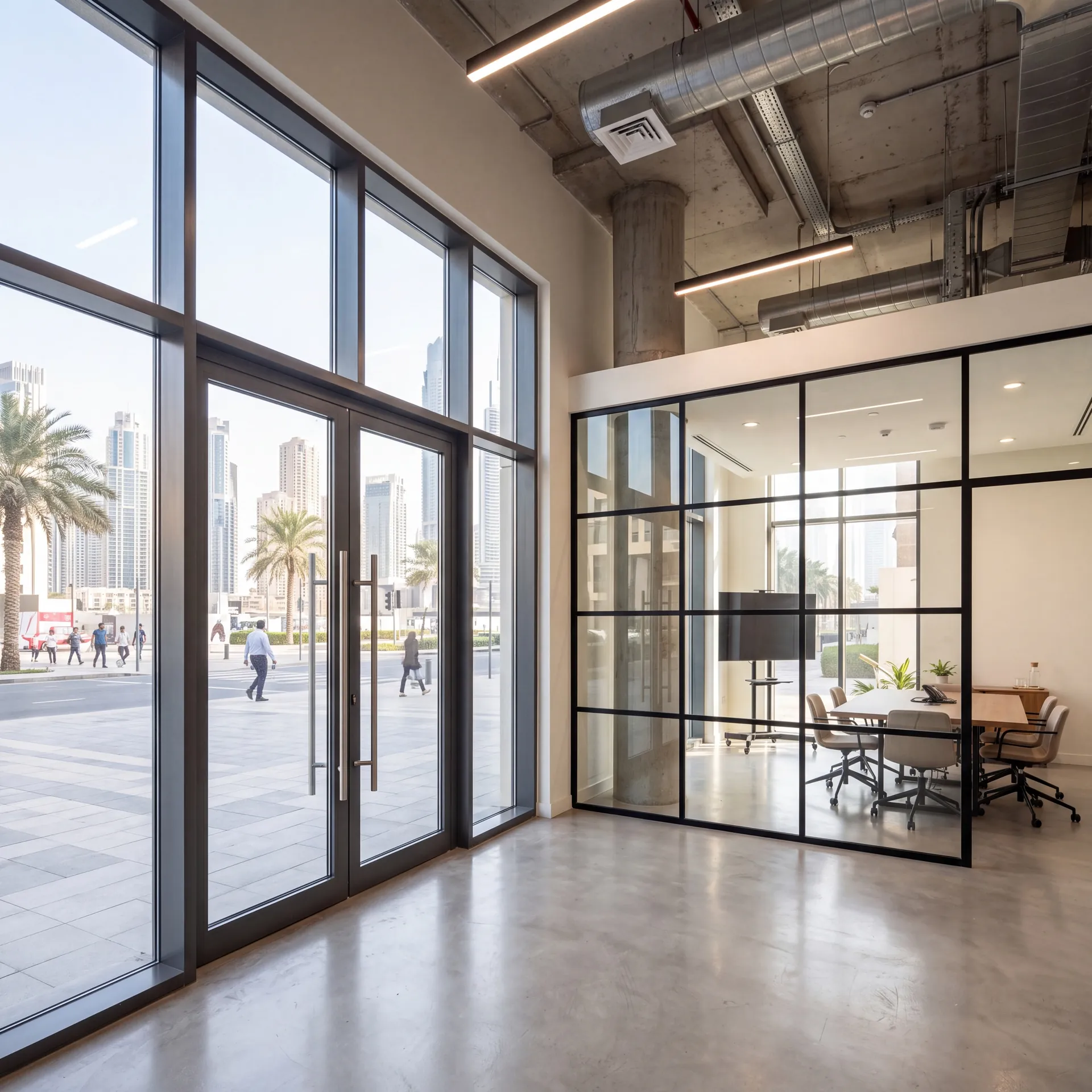


A window is a frame, a piece of glass, a set of gaskets and a handful of moving metal parts, and the climate here picks on the last two. Understanding which agent goes after which part explains why an expensive window can be tired in a few seasons on one address and untouched on another a short drive inland.
Sand is an abrasive, and it lives in the moving parts
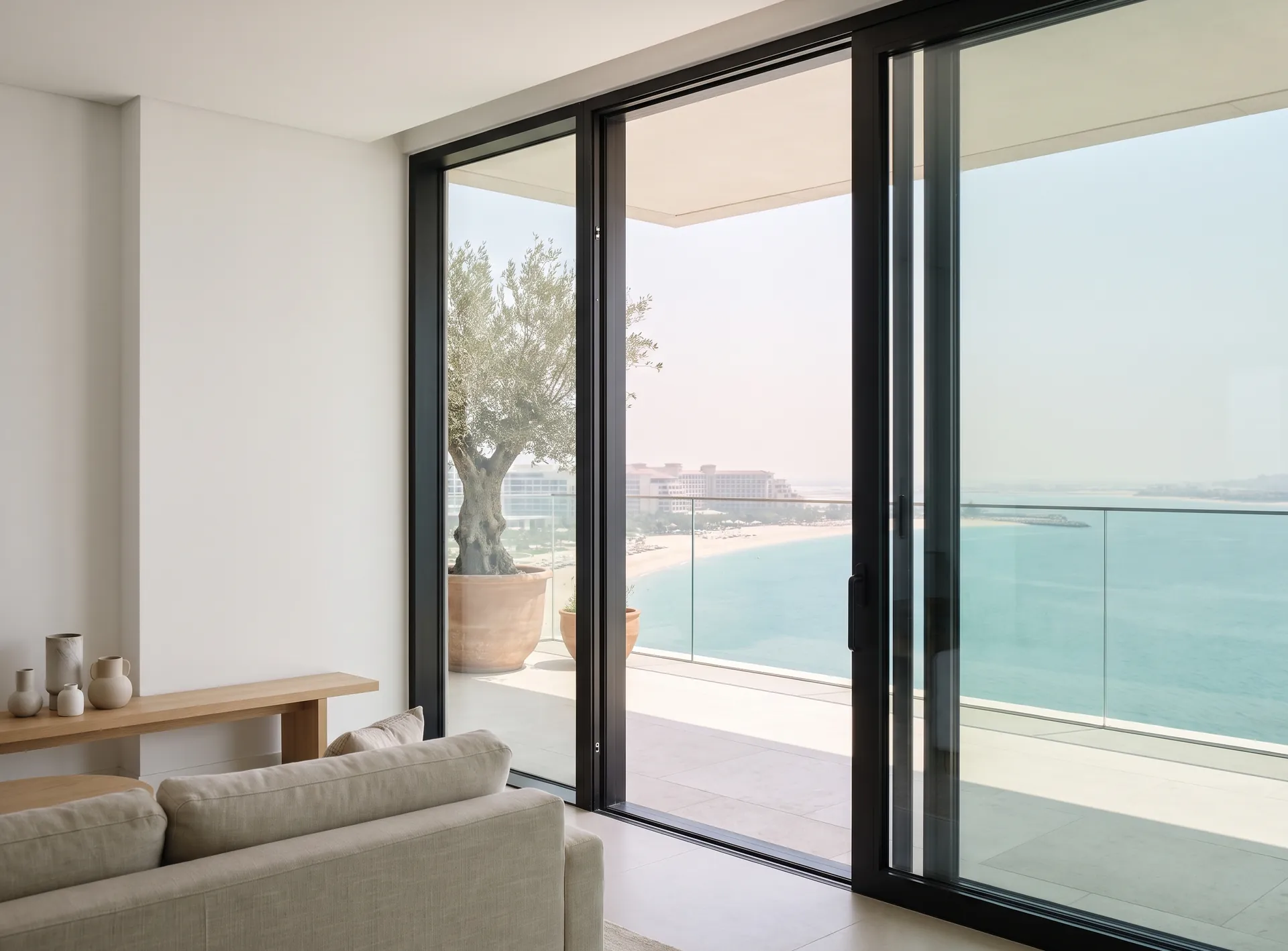
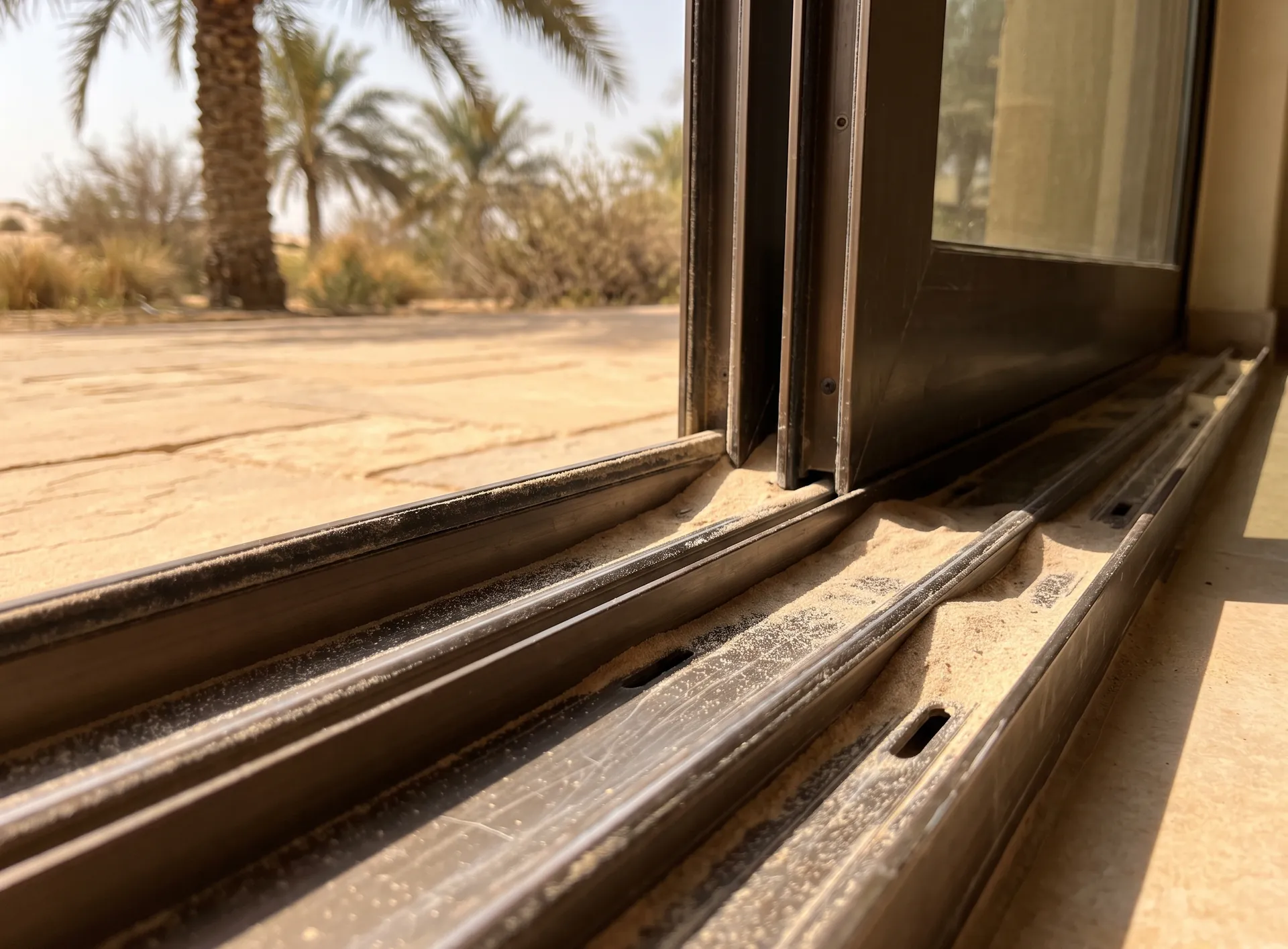
Desert sand is largely quartz, and quartz is harder than an anodised surface and very much harder than a paint film. Once it is in a track or a groove it stops being dirt and starts being a grinding compound, worked back and forth under load every time a sliding door is opened. That is why the wear on a sliding system shows up first at the bottom track and at the rollers, long before anything else on the window looks its age.
The sequence is fairly predictable. The door starts to feel gritty, then heavy, then it needs a shove at one point in its travel. The rollers pick up flats, the lip of the track burrs over, and the burr then chews the roller faster than the sand did. Left alone, what began as a housekeeping job becomes a hardware replacement, and on a large terrace leaf that is not a small one.
Gaskets take the same treatment more quietly. Grit works into the groove behind the rubber and lifts it slightly off its seat, so the seal stops being compressed evenly. The sash still closes and locks, which is why nobody suspects anything, but fine dust now settles on the inside sill after a storm and the road outside sounds closer than it used to.

Salt air and the parts nobody looks at
Aluminium protects itself with a thin oxide film, and chloride is what breaks that film down locally. The result is not the even rusting of steel but pitting: small isolated craters, often under a white powdery bloom, that appear where salt has been able to sit undisturbed on damp metal. On the first line of the coast, salt arrives on the air whether or not anyone opens a window, and morning humidity keeps it wet enough to work.
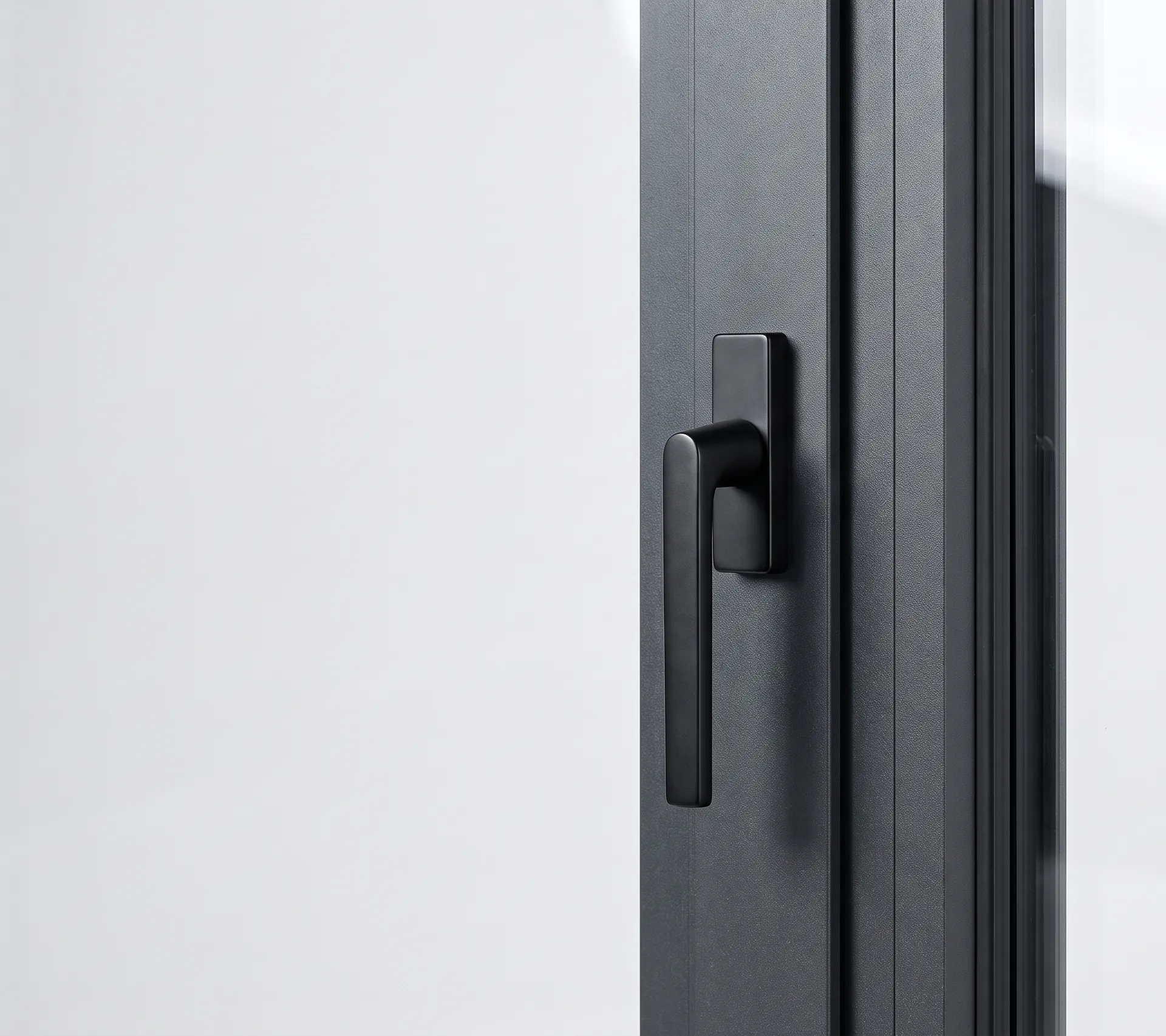
The frame is rarely the casualty. What goes first is the ironmongery — screws, hinge pins, roller spindles, the working parts inside a handle — because those are where dissimilar metals sit in contact and where a coating cannot reach. Two metals touching in damp salty air make a small battery, and the less noble one dissolves; put an ordinary steel screw into an aluminium profile by the sea and it will either seize or take the aluminium around it with it.
That is a specification matter rather than a maintenance one, and it is settled before anything is made: fixings and hardware chosen for marine exposure, dissimilar metals isolated where they must meet, and drainage arranged so nothing on the window is left standing wet. It is also the cheapest thing on the whole job to get right and among the most expensive to correct afterwards.
First line: anodising or powder coating
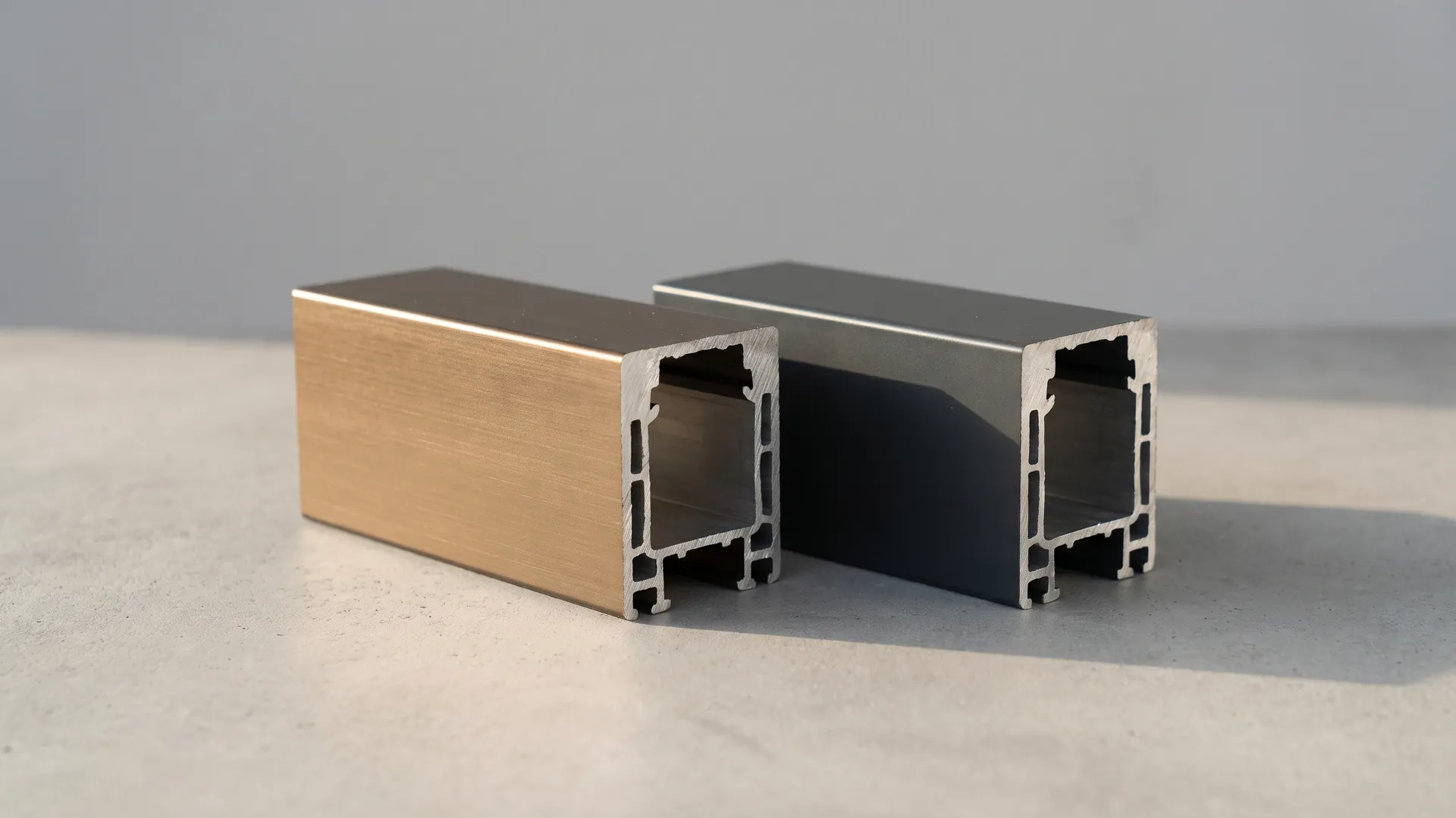
On a building in sight of the water, anodising is the more forgiving answer. It is not a layer applied to the aluminium but an oxide grown into it, thickened and sealed, so there is no film with an edge that salt and ultraviolet can get under and lift. Powder coating is a paint film bonded to the metal, and on an exposed western elevation a film has an edge, a thickness and a colour that the sun works on.
That does not make powder coating the wrong choice, because the trade is one of colour against exposure. Anodising gives metallic tones — bronze, champagne, natural — and cannot be touched up if it is damaged, since the oxide is the finish. Powder coating gives the whole colour range, any matt or textured version of it, and can be repaired locally after a knock. What it needs on the coast is the pre-treatment and coating specification meant for that exposure rather than the standard inland one, and that is a question to put to the fabricator in writing.
The visible failures look different, which helps when judging an existing building. A powder coat that was under-specified goes chalky and loses depth of colour, usually on the sun-facing elevations first, and you can take some of it off on a dry cloth. Anodising does not chalk; where it fails it fails locally, as a pit or a scratch through to bright metal. Seeing one pattern rather than the other tells you which conversation to have.
How often to service, and what servicing means
By exposure and by season rather than by a fixed interval. A villa on the first line with sliding doors onto a terrace needs looking at far more often than a north-facing flat several streets inland, and both need looking at after a serious shamal rather than at some anniversary in the calendar.
The routine itself is short. Brush and vacuum the tracks and the drainage slots — not blow them, which drives the grit further in. Rinse coastal frames with fresh water, because salt left on the metal is hygroscopic and pulls moisture back out of the night air to keep itself working. Run a finger along the gaskets: healthy rubber springs back, spent rubber stays dented and feels dry and chalky. Check that each sash still compresses evenly along its whole contour rather than only at the handle.
One thing not to do is grease a gritty track. Oil and grease turn loose sand into a lapping paste that stays exactly where it will do most harm, and a track that has been greased for a season is usually worse than one left dry. Clean first, and use a dry lubricant if anything at all. Everything on this list is a homeowner's job until a gasket has gone hard, a roller has flatted or a fixing has seized, at which point it is parts rather than housekeeping.
Sand attacks the moving parts and the grooves; salt attacks the fixings and any finish with an edge to get under. Neither is stopped by buying a heavier frame. What holds up on an exposed elevation is a finish specified for that exposure, hardware and fixings chosen for salt air, drainage that keeps water off the metal, and a short cleaning routine repeated after every storm rather than a thorough one done once a decade.