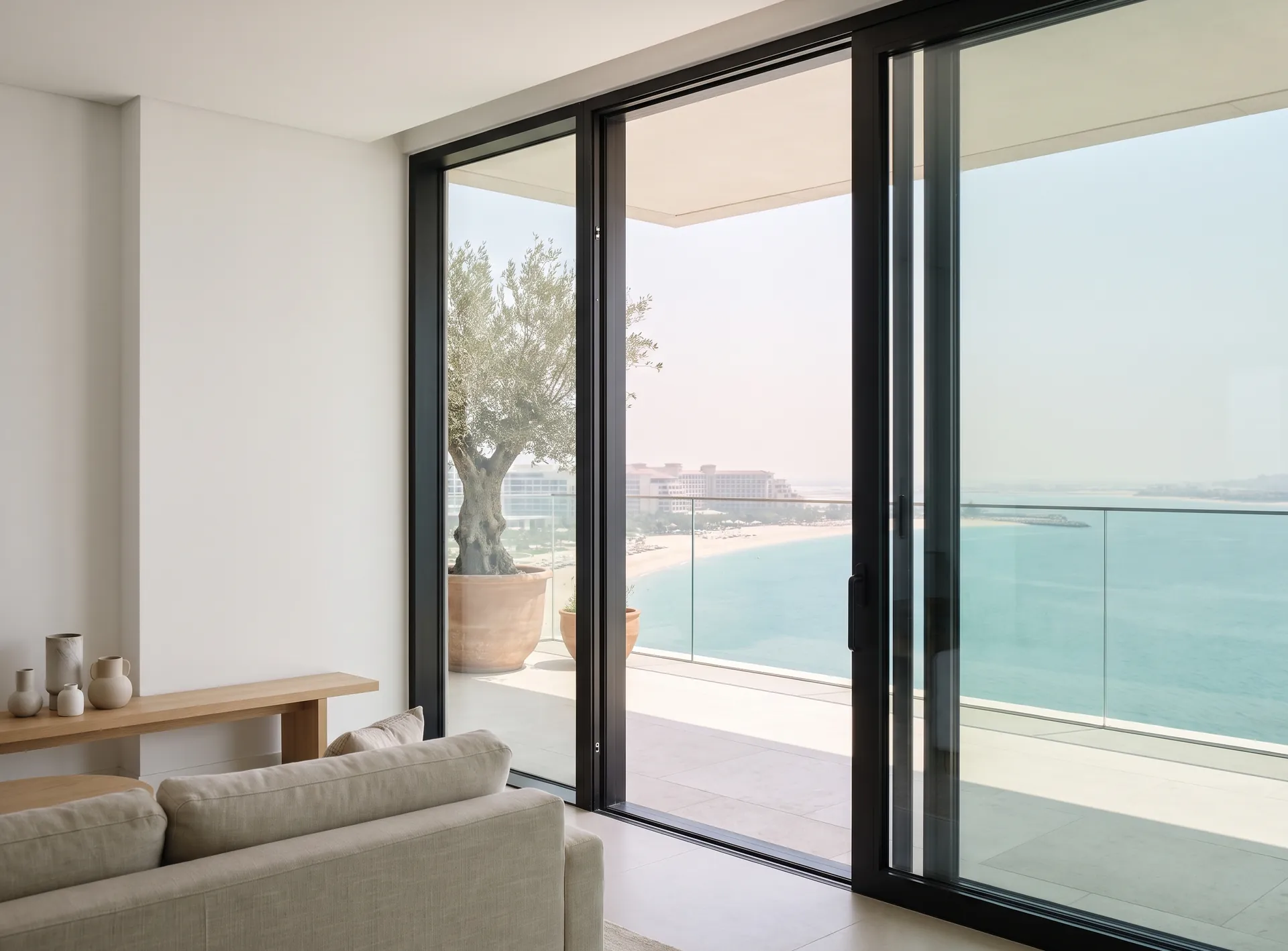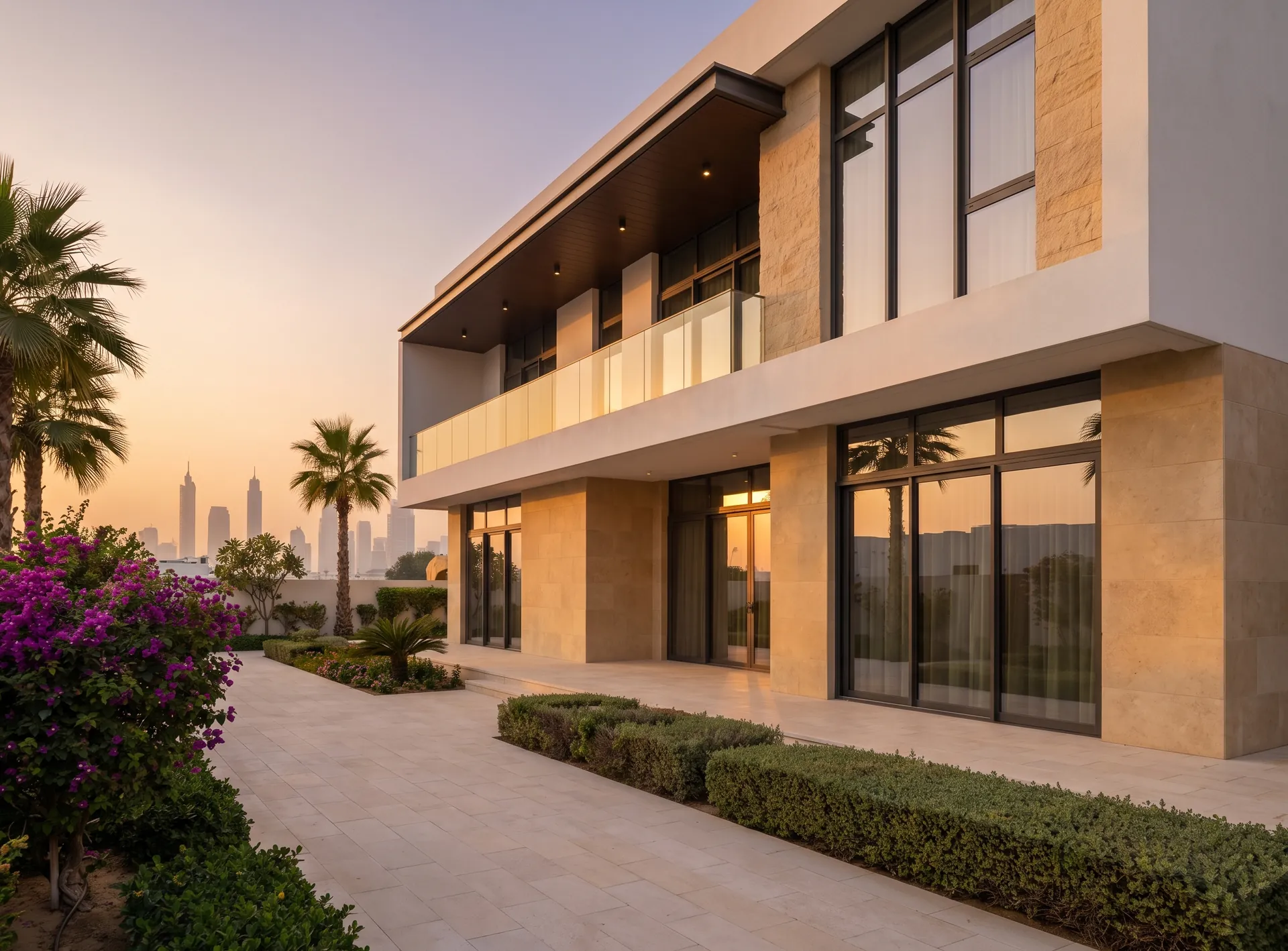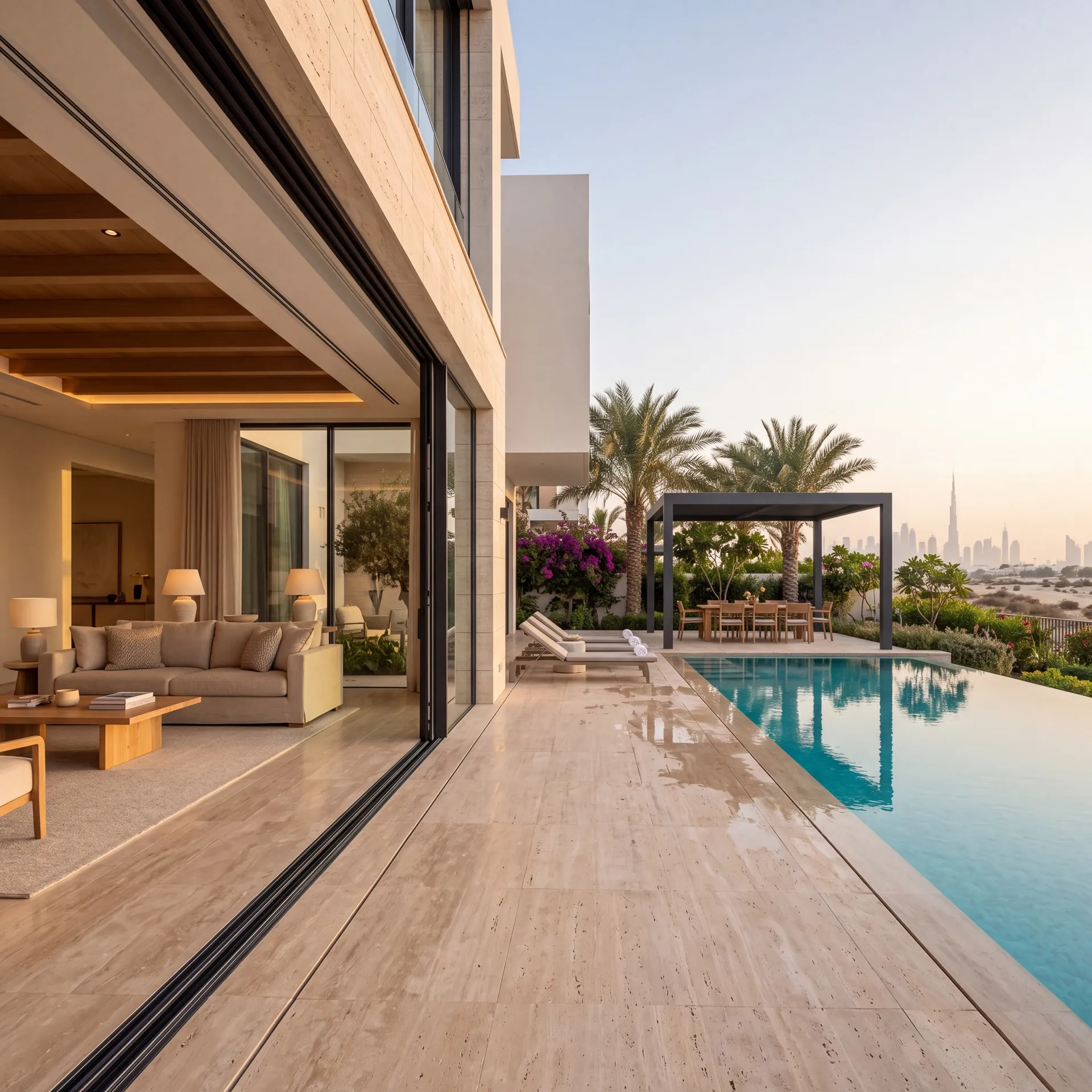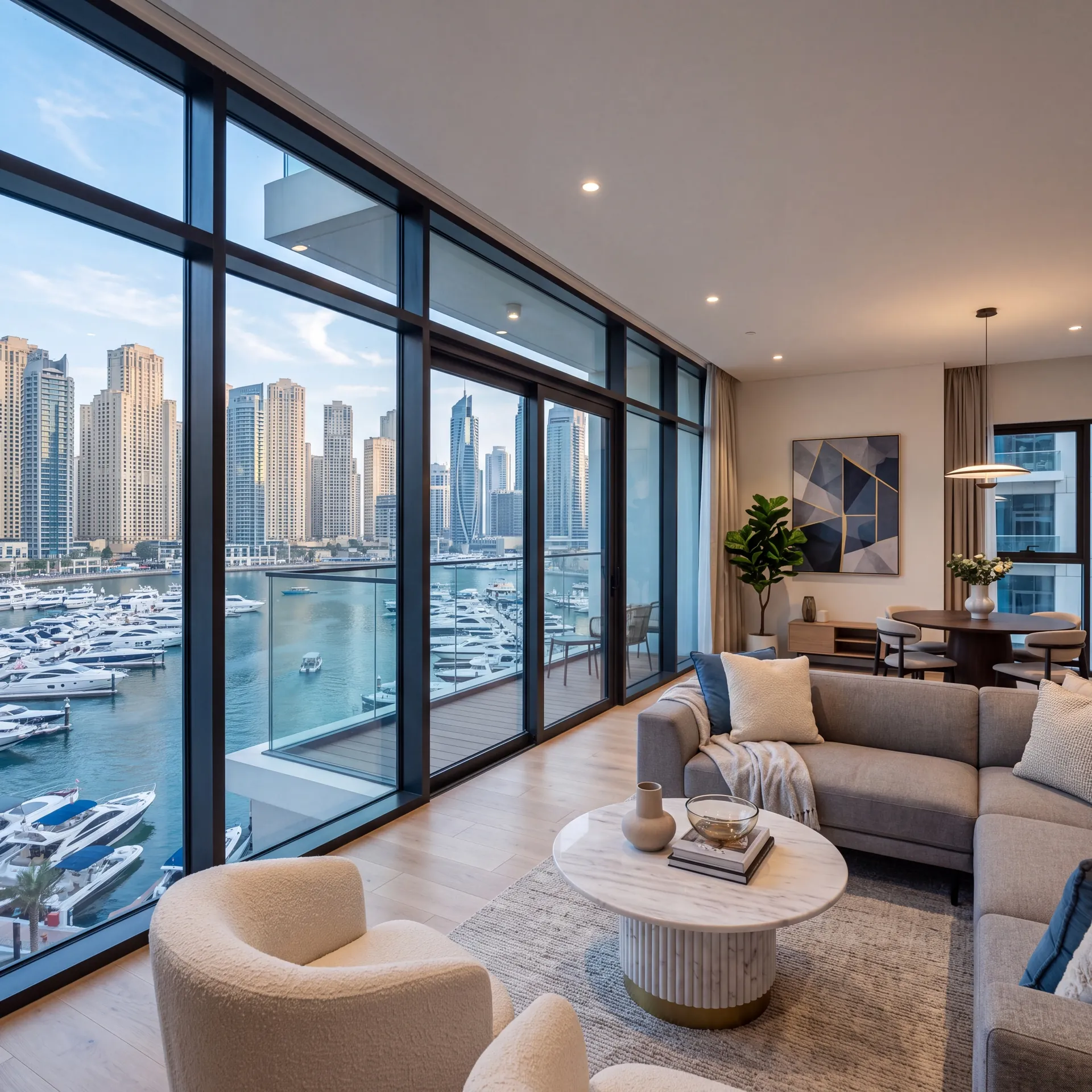




There are no figures in this article, and that is deliberate: glazing is priced per opening, so a single rate would be wrong for almost everyone reading it. What can be explained is the structure — the six things a quote is actually made of, in roughly the order they move it.
Area, and how many of the panes open
Glass area sets the baseline, but the count of opening sashes is what pushes a quote up within the same area. A fixed pane is a frame, a seal and a piece of glass. An opening sash is all of that plus hinges or rollers, a locking mechanism, a handle, a second set of gaskets and a heavier section to carry the moving leaf — and every one of those parts is bought, machined and later serviced.
This is also the easiest place to save without regretting it. Most rooms are ventilated perfectly well by one good opening sash; the rest of the wall can be fixed glass carrying the view for considerably less. The other lever is shape. A rectangle is cut and assembled on the same jigs as everything else, while an arch, a rake or a corner unit adds drawing, setting out and cutting time before a single component is bought.
The glazing unit
On a large window the glass is often the single biggest line in the quote, and it varies more than anything else in it. A plain sealed unit sits at one end. Add a solar-control coating, laid on at the glass works and usually sealed inside the unit, laminate one or both leaves for safety, make the two panes deliberately unequal in thickness for noise, thicken the glass because the pane is large or high up, and you have moved a long way from where you started — while the frame around it has not changed at all.
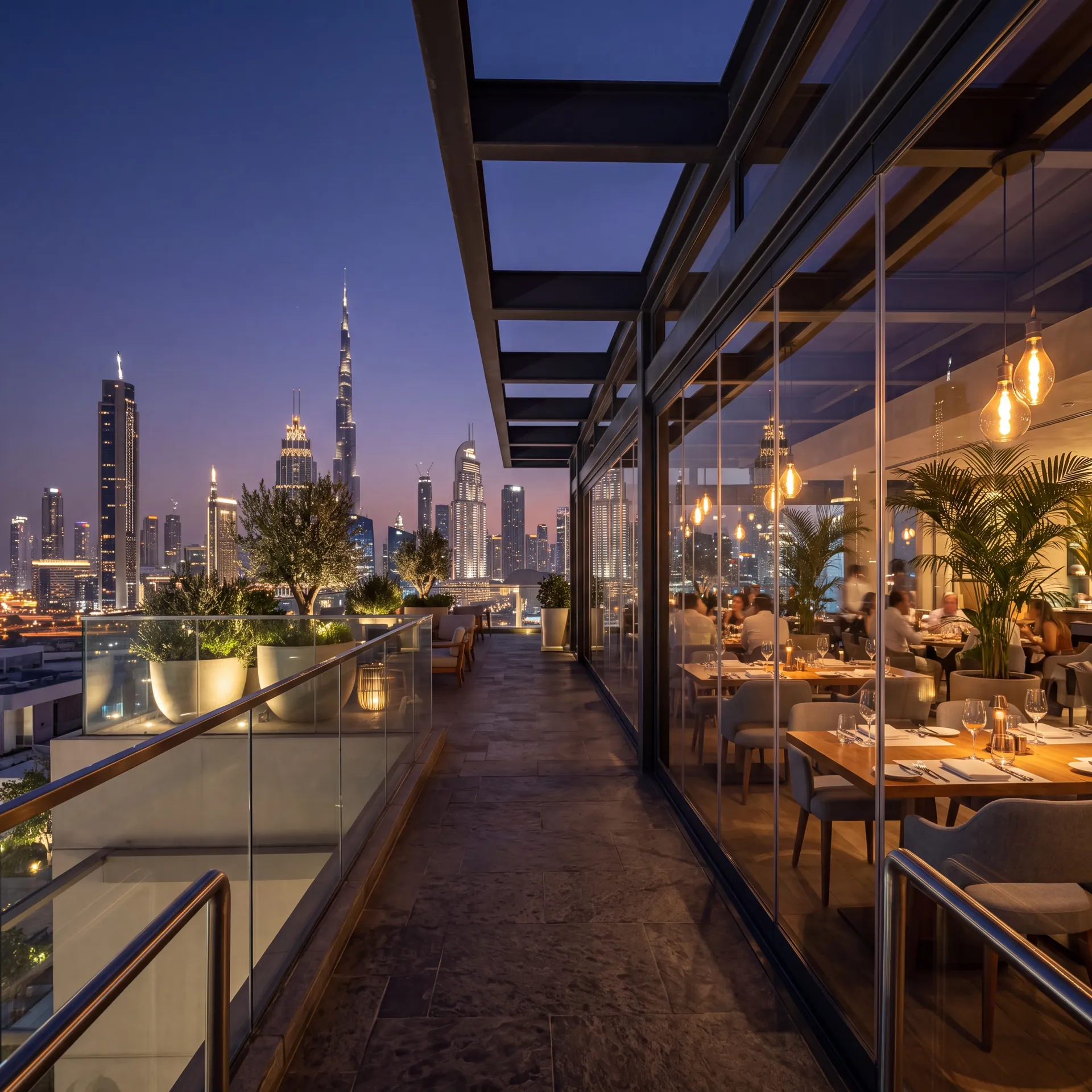
None of that is upselling; it is orientation. A west elevation taking the full afternoon sun and a shaded north one both have to meet the Dubai Building Code's limits for glass, but above that minimum they do not need the same build, and specifying them identically means either paying for performance the north side did not need or living with a room that never cools. This is why a quote is prepared elevation by elevation rather than as one rate applied to the whole property.
The profile system
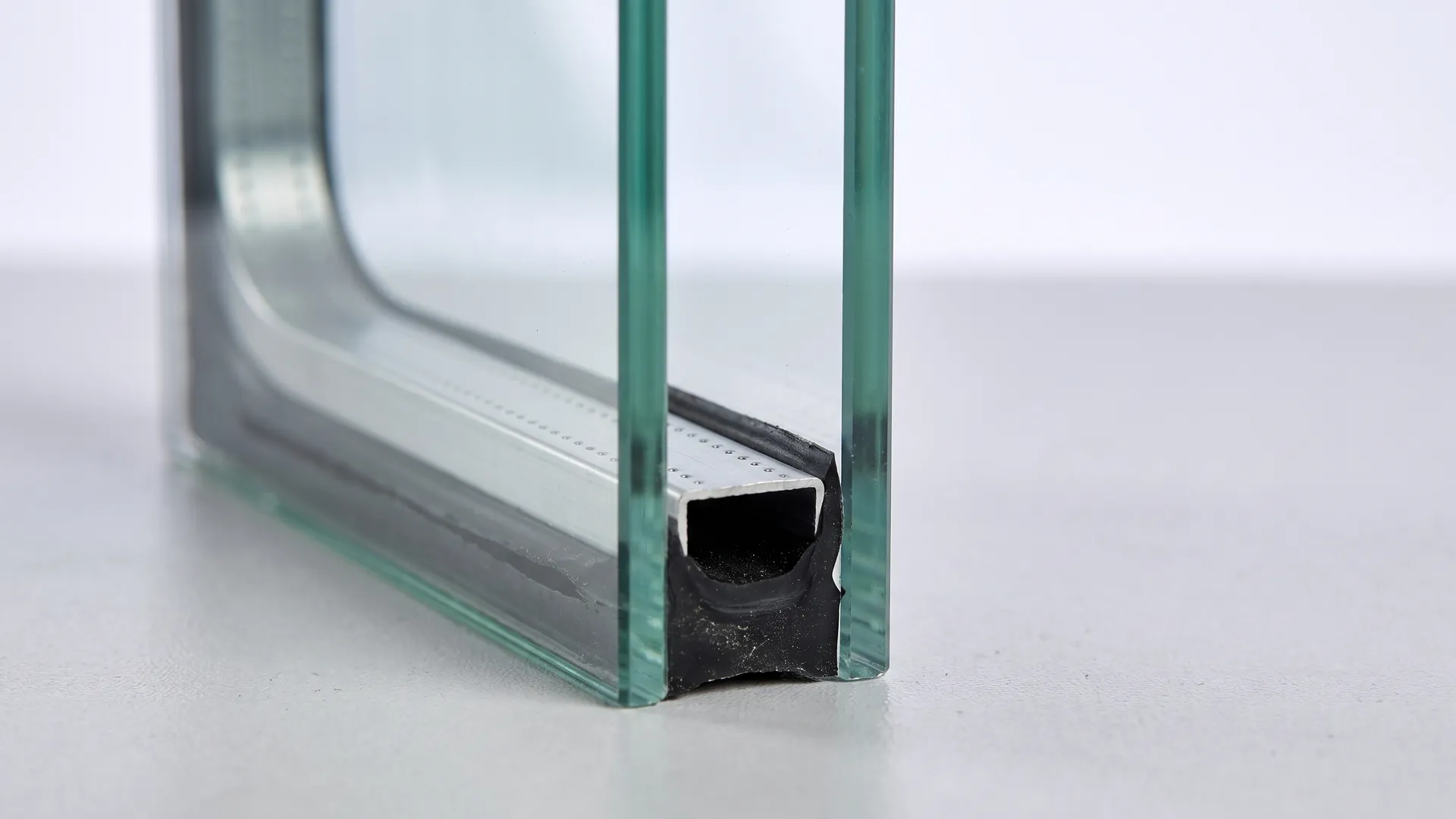
A European systems house sells a drawn family: sections, gaskets, hardware and junction details developed and tested together, with a catalogue behind them and a support chain that still answers years later. That development is in the price, which is what a specification is buying when it names one. A series extruded here in the UAE, or our own line, costs less because it does not carry that catalogue — and in an ordinary opening it does the same job.
Two other things inside the same choice move the figure. A thermal break — the polyamide bar that separates the outer shell of an aluminium profile from the inner one — is what keeps the metal from delivering the afternoon straight into a conditioned room, and a system without it is cheaper for a reason. And slim sightlines cost more than chunky ones, because holding the same pane with less visible metal takes a better-engineered section, not a smaller one.
Finish
Finish looks like a taste decision and prices like a production one. A shade already held in the workshop goes through the coating line with everything else. A colour we do not hold means a dedicated run for your order alone, which costs what a dedicated run costs and also takes its own slot in the programme. A different colour inside and out means the frame goes through twice.
The method matters as much as the shade. Powder coating is a paint layer, available across the RAL range and recoatable later. Anodising is an oxide grown into the metal, with no film that can lift, which is why it is the usual answer within sight of the water — and it prices differently and offers a narrower palette. A wood-effect finish sits at the top of the finishing options because the grain is printed on in a separate process.
Hardware and automation
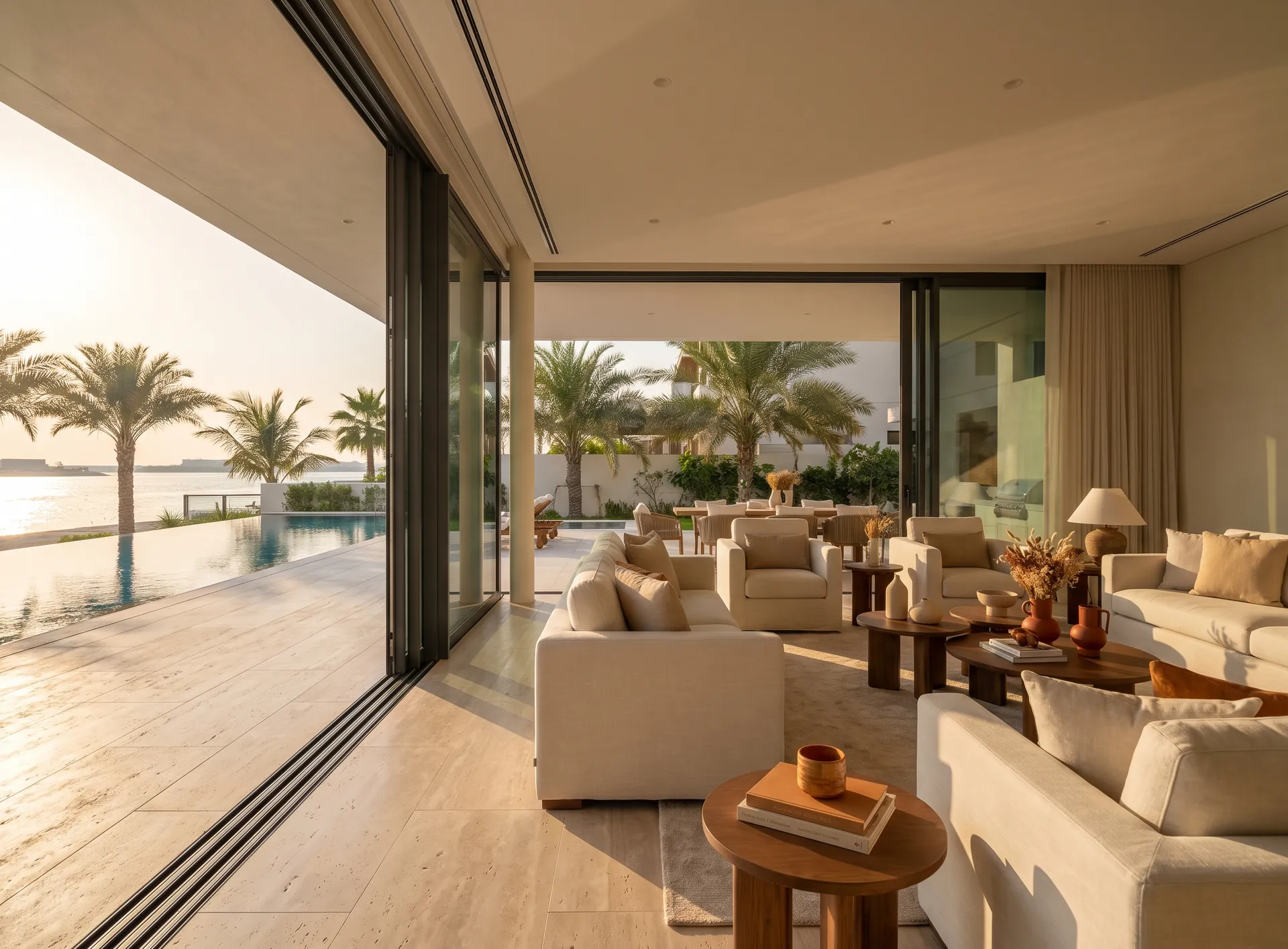
Hardware is priced by what it has to carry and where it has to live. A heavier leaf — thicker glass, laminated glass, a taller sash — needs a hinge set or a roller carriage rated for that weight, so the glass decision quietly changes the hardware line further down the page. Coastal properties push the same parts up a grade again, because a mechanism a few streets from the sea lives in salt-laden air and a bargain finish on it will seize.
Automation is the sharpest step in this whole list. A chain actuator or a motorised drive brings a power feed routed inside the reveal, reinforcement in the sash to take the drive, controls, and often a sensor line for rain or smoke — none of which can be added neatly afterwards. It earns its money on sashes nobody can reach and on openings that must answer to a building system. For a window at arm's length, a good handle does the same job for a fraction of it.
Installation and access
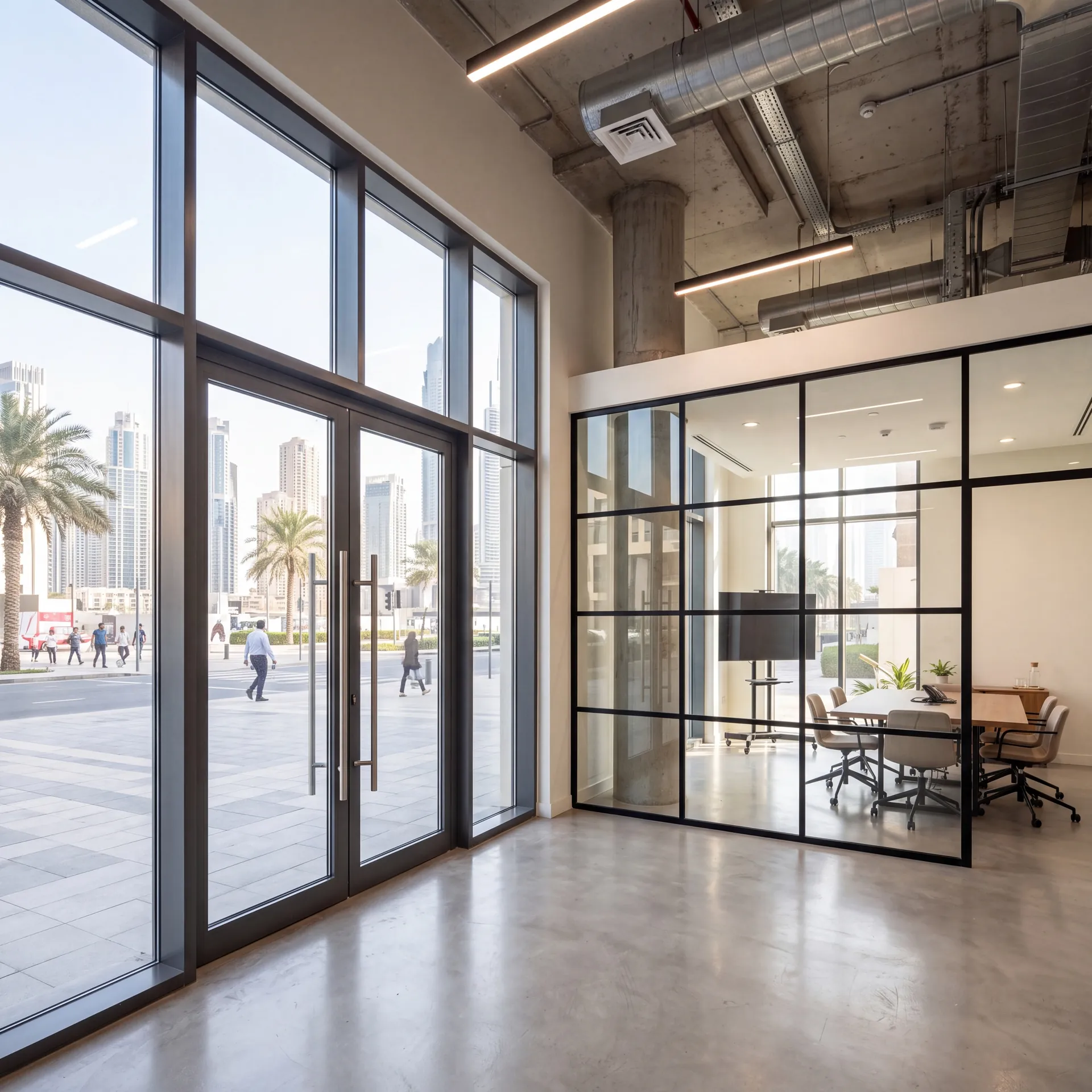
The same window costs different amounts to install depending on where it has to go. On a villa, crews work from the ground or a short scaffold and a panel travels across the plot on a trolley. In a tower the work is bought in slots: an approved method statement, a service lift booked by the hour, lobbies and corridors sheeted, panels sized to the lift car or craned to a balcony, and sometimes rope access for the outside face. In a trading shop or an office, the noisy stages move to a night shift so the unit keeps working.
Two more items live in this part of the quote and are worth asking about explicitly, because they are the usual source of a surprise later. Making good — what happens to a reveal that comes out damaged, and to plaster, paint and tiling around the new frame. And removal: taking the old frames and the packaging off site is a disposal cost somebody is paying, and it should be visible rather than assumed.
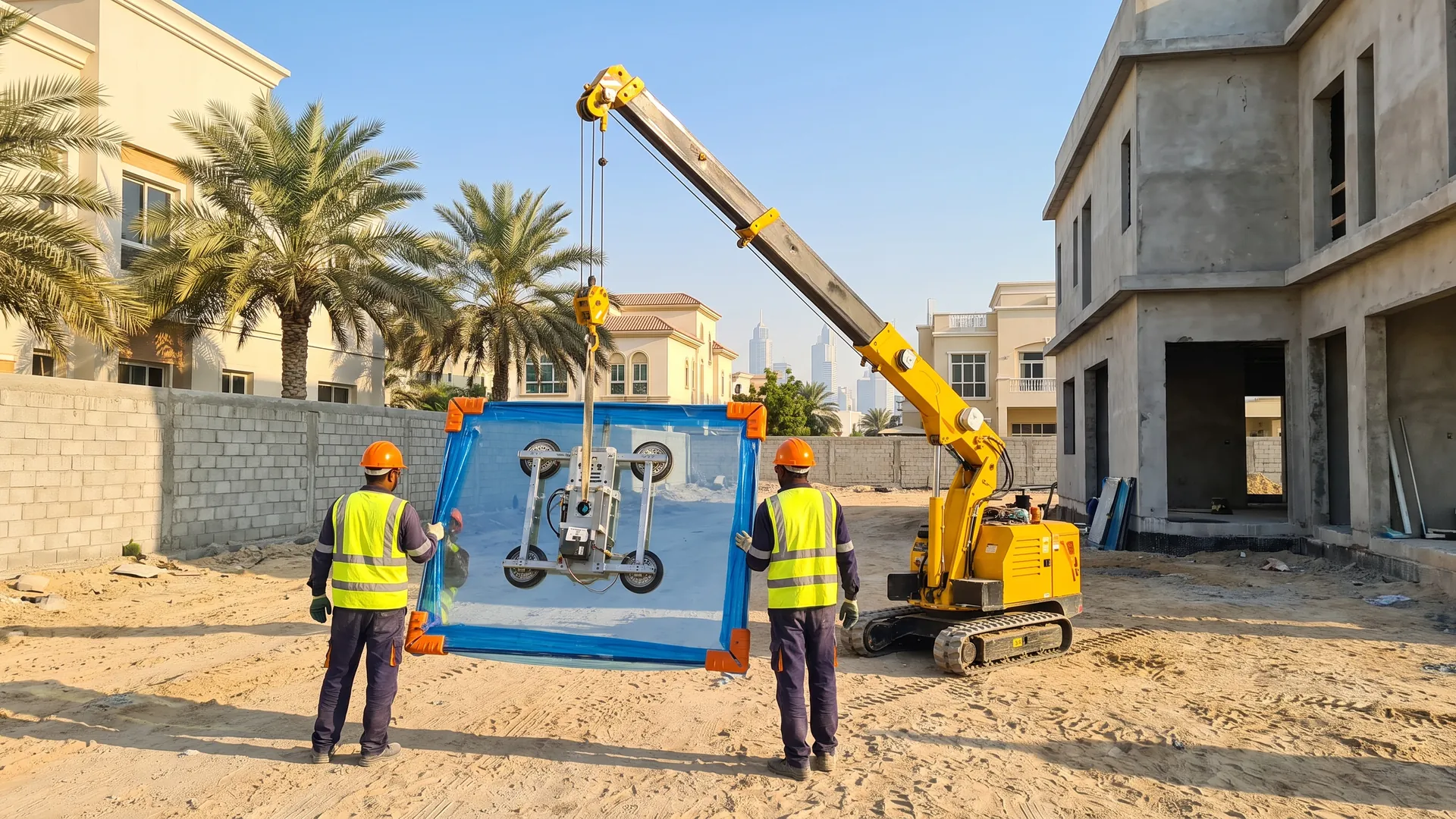
Read a glazing quote as six decisions rather than one number, and it stops being opaque: how much of it opens, what is inside the glass, whose system, which finish, what the hardware has to carry, and how the panels reach the opening. If you want an order of magnitude before you speak to anyone, the cost calculator on our site will give you one from a few answers. If you want a figure that survives contact with your building, that comes from the survey — an engineer with you within 48 hours, measuring the openings and looking at the way in, and it is free.