

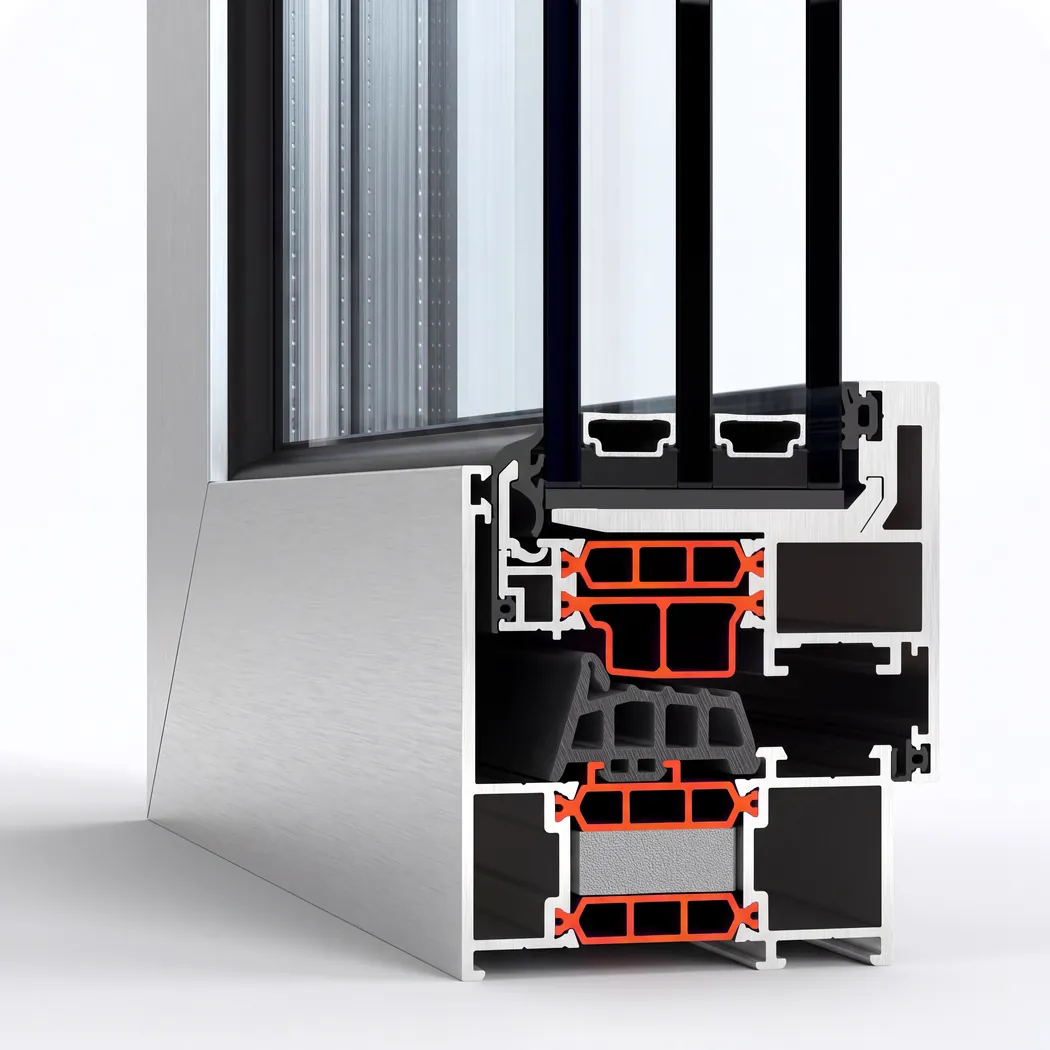
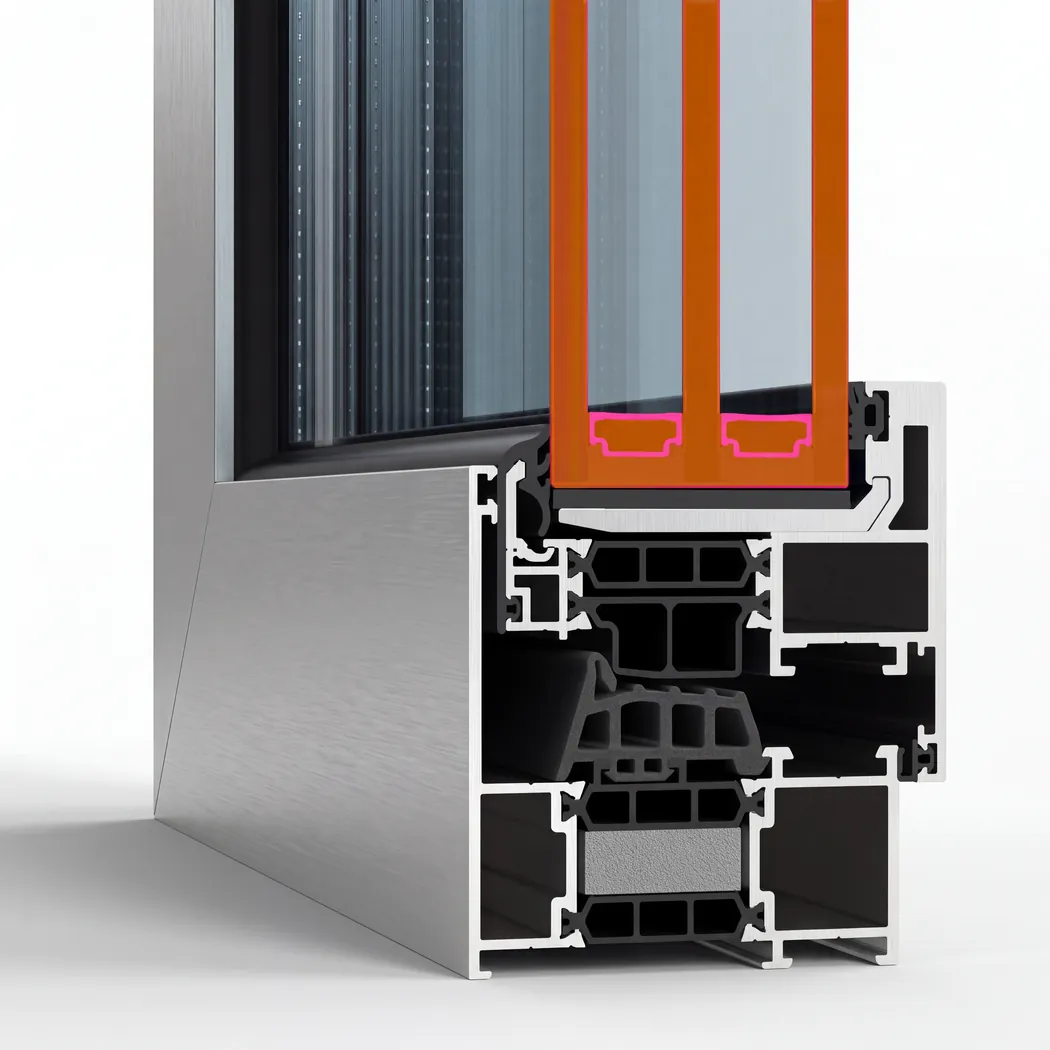
Four different products get grouped under one heading, and they answer entirely different questions. Sorting out which is which removes most of the confusion, and most of the overspending along with it.
What each of them actually does
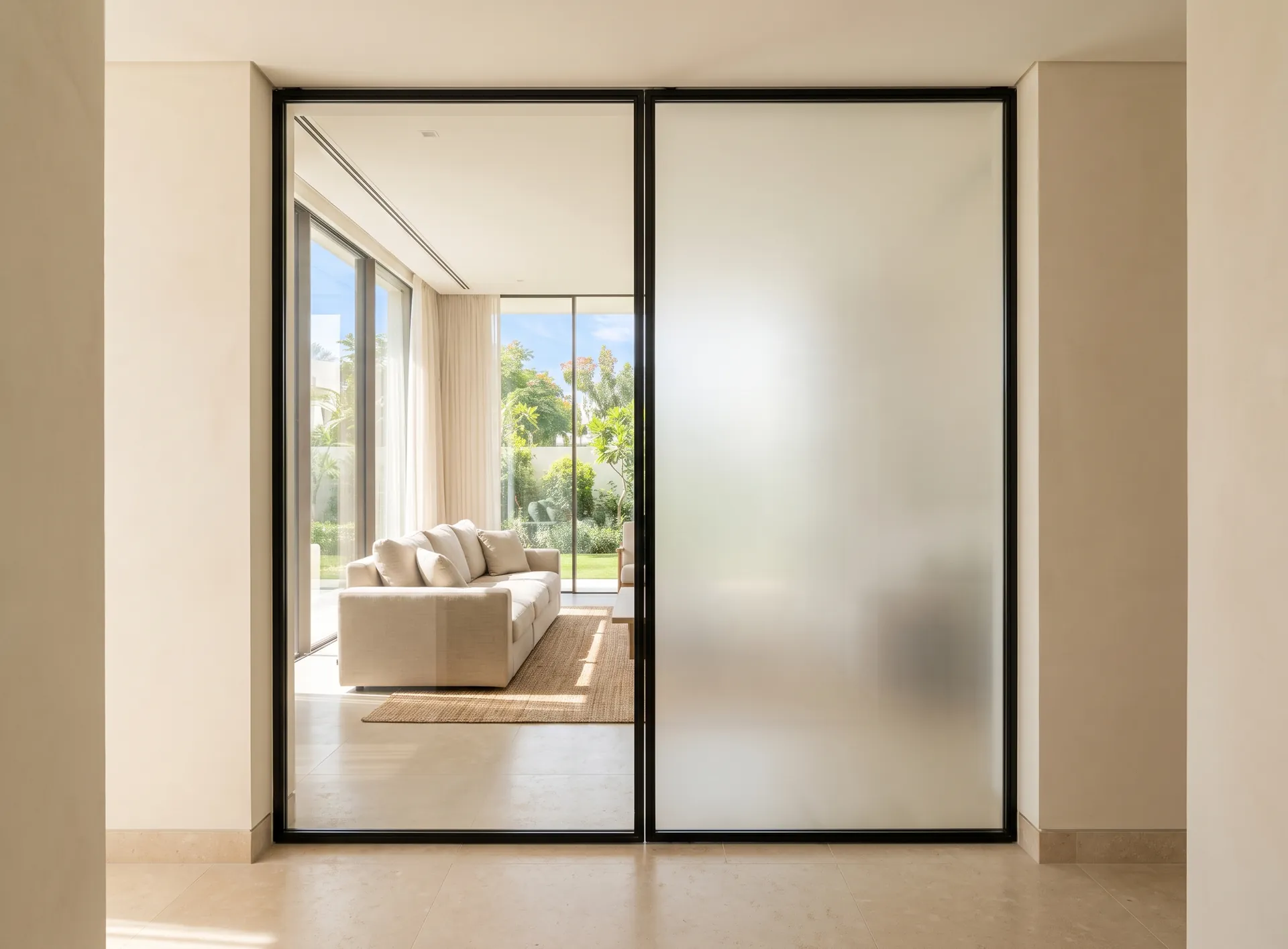
Switchable privacy glass is a laminated pane with an active layer between the sheets. Without power the layer scatters light and the pane reads as opaque white; with power the particles line up and it goes clear. The change is immediate rather than gradual, and it is a privacy device: it controls whether you can be seen through, not how much heat arrives.
Tinting glass works on a different principle. A coating inside the unit darkens when a small voltage is applied, so the pane goes from clear towards a deep tint and back. It changes light and glare, and because it is turning back part of the solar spectrum it changes heat as well. It shifts state gradually rather than at the touch of a switch, and it is a facade product rather than an interior one.
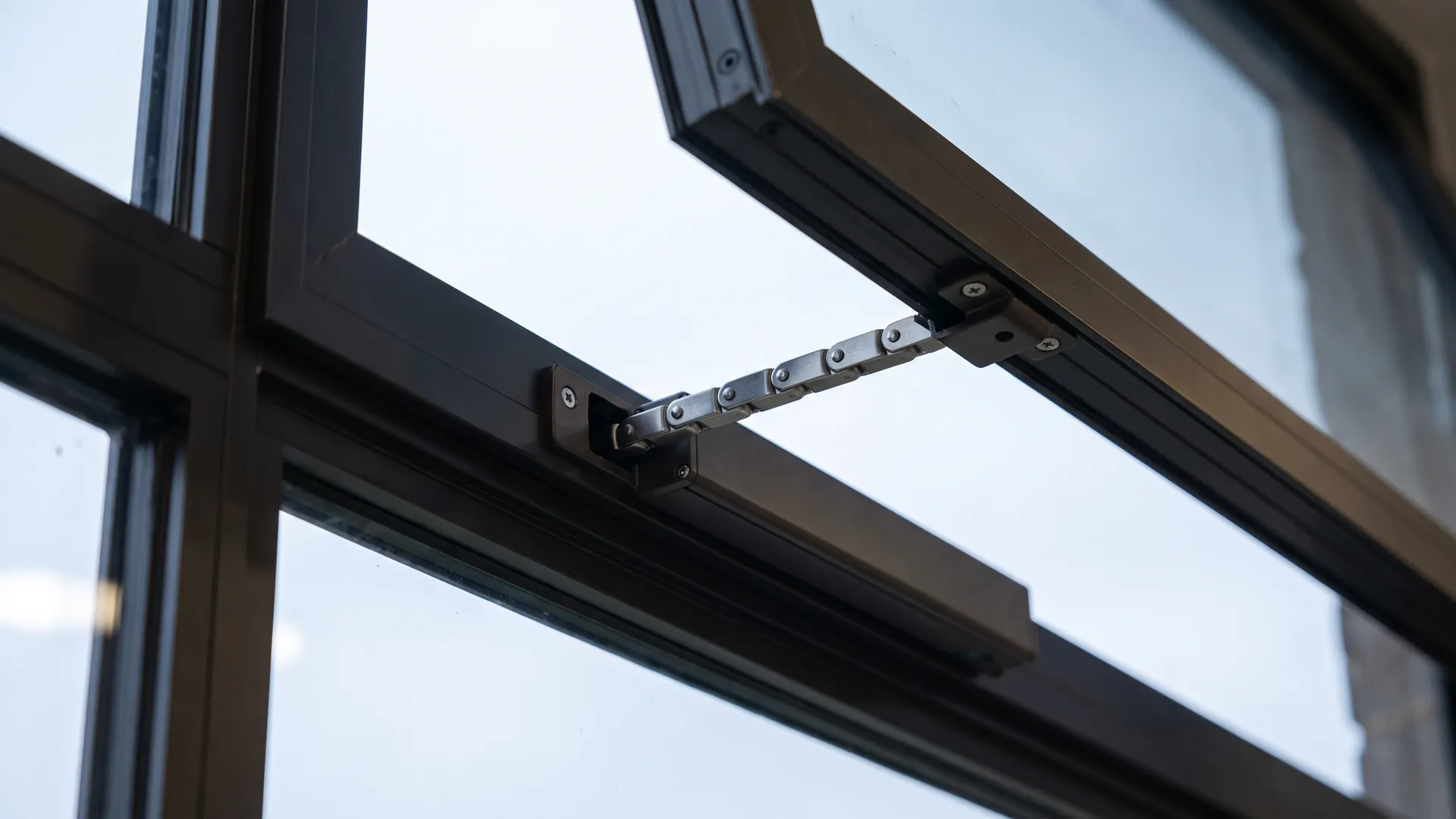
Automation is not glass at all. A chain or rack actuator mounted on the frame pushes a sash open and pulls it shut, on a switch, a timer, a sensor or a signal from the home system. And blinds sealed inside the cavity of a glazing unit are a mechanism living permanently between two panes: never dusty, never cleaned, and never reachable either.
Where automation genuinely earns its cost
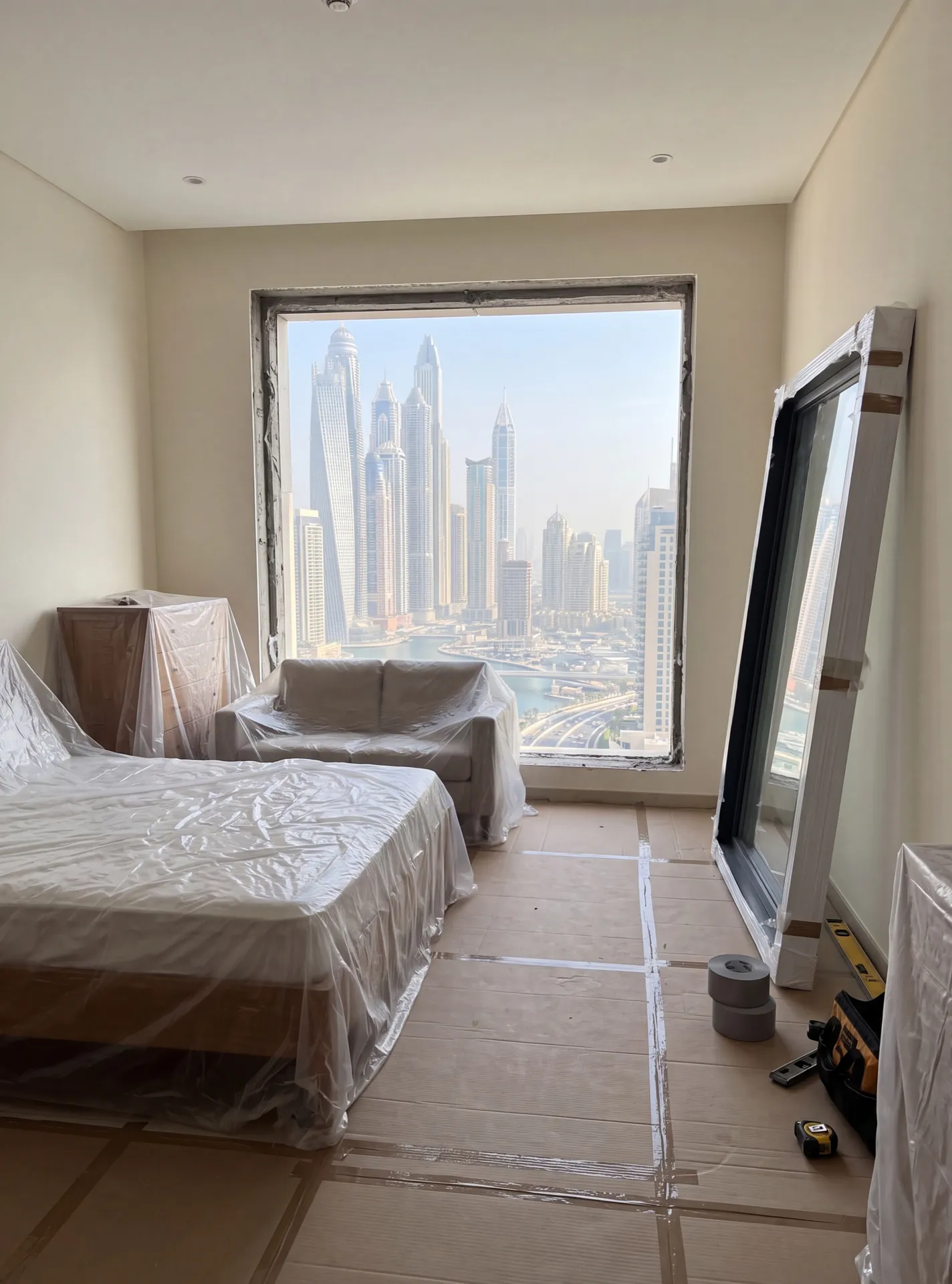
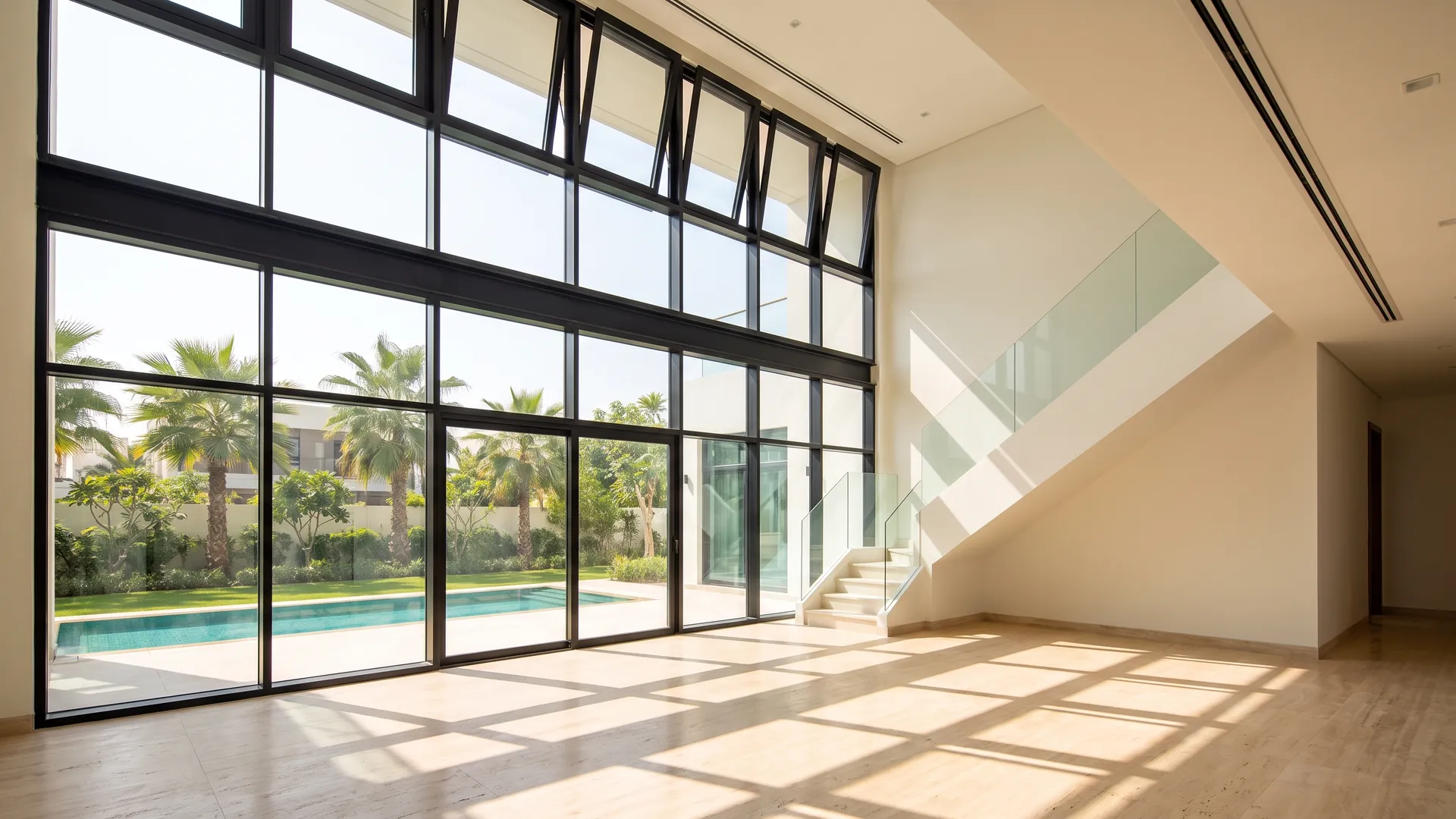
The strongest case is reach. High-level fanlights above a double-height hall, roof glazing, sashes over a stairwell or above a fitted kitchen run — these are openings that in practice never get used, so the ventilation designed into the house is simply not available. A drive turns a decorative opening into a working one, and that is a real gain rather than a convenience.
The second case is closing unattended. A villa empty during the working day, a balcony that faces the weather, or an opening that would flood a stone floor in the first rain of the season all benefit from a sash that shuts itself when a rain or wind sensor says so. In this climate that includes the blowing sand a shamal brings, which does far more damage indoors than the rain does.
Two more cases are worth naming. Some buildings require openings to work as part of a smoke ventilation arrangement, in which case the drive is not optional and is designed with that duty in mind. And accessibility is a straightforward argument: where a household member cannot operate a heavy leaf, a drive is the difference between a window that opens and one that does not.
Where switchable glass is the right answer
Privacy glass earns its place where privacy is needed sometimes and light is needed always, and where a curtain or blind is impractical. An en-suite or shower screen overlooked by a neighbouring building is the classic example: obscured glass is private permanently and dark permanently, while a switchable pane is a window most of the day and a wall for ten minutes.
Internally it does something a blind cannot. A glazed meeting room, a study or a majlis that has to become private on demand keeps its borrowed daylight and its sense of space, and there is no fabric to clean, no track to catch and nothing hanging in a doorway. On glass doors and full-height partitions, where a blind is genuinely awkward, it is often the only tidy answer.
What it does not do is worth stating plainly, because it is regularly sold as though it did. In its opaque state privacy glass scatters light rather than rejecting the sun's heat, so it is not a substitute for a solar-control coating on a hot elevation. If the complaint is that a room gets too hot, the answer lives in the glass build and in shading, not in a switch.
Where it is a premium for nothing
Motorising an opening that anybody can reach from the floor is the most common example. It adds a drive, a cable, a control and a component that will eventually need a technician, in exchange for saving a movement of the arm. In a home that is a preference; in a let unit or a holiday let it is a maintenance liability and a handover conversation at every arrival.
Tinting glass on a facade is a real product with a real effect, but it is often asked to solve a problem that a fixed coating and some shading would solve more cheaply and with nothing to go wrong. It is worth its cost where the same opening genuinely needs to be clear at some times and dark at others — a west-facing living wall with a view that matters in the evening — and less so where the answer is simply that the elevation is too hot all afternoon.
Blinds sealed inside the glazing unit look like a neat solution to dust, and they are, until something in the mechanism fails. At that point the repair is not a blind repair; the sealed unit is the blind, so the whole pane is exchanged. On an accessible window where an ordinary blind would do the job, that is a large amount of risk taken on for tidiness.
All of it has to be decided before anything is made
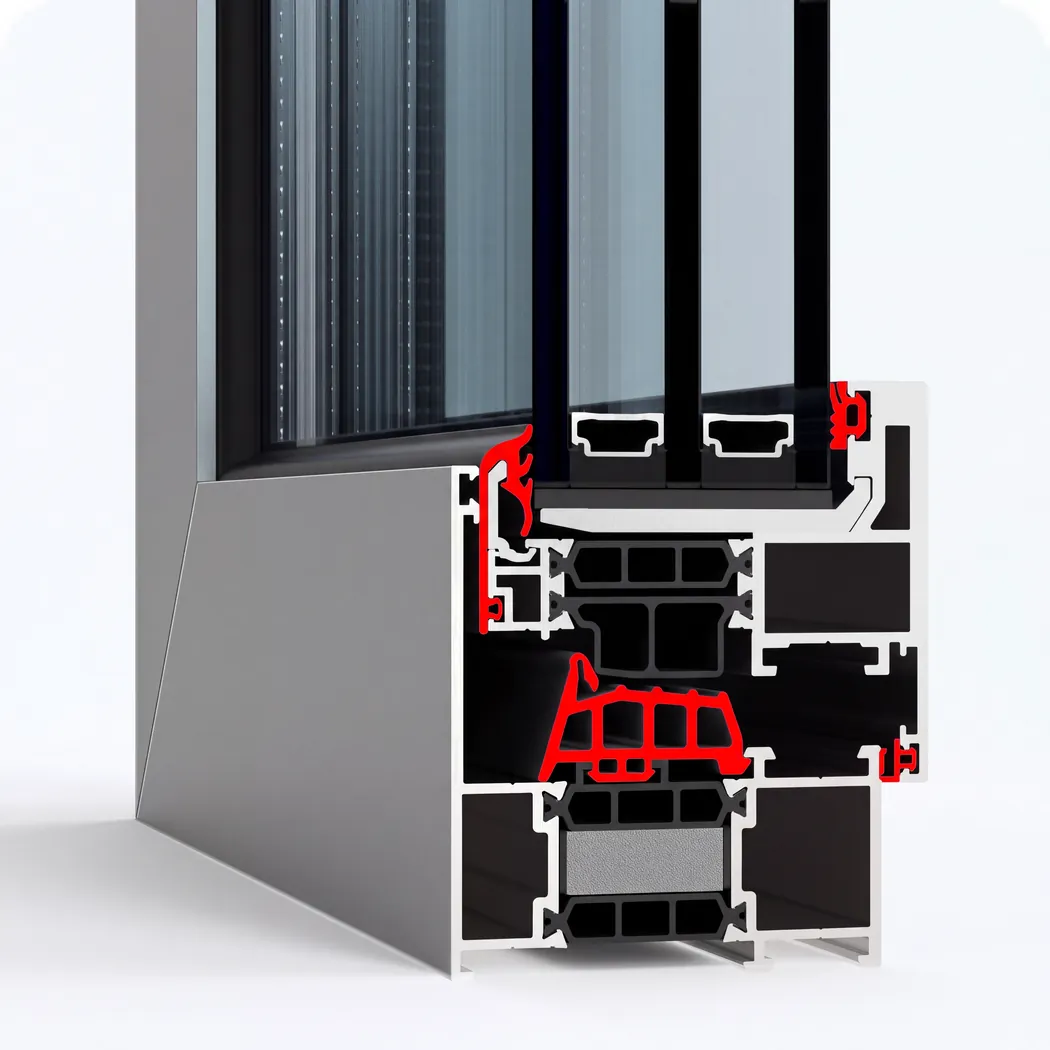
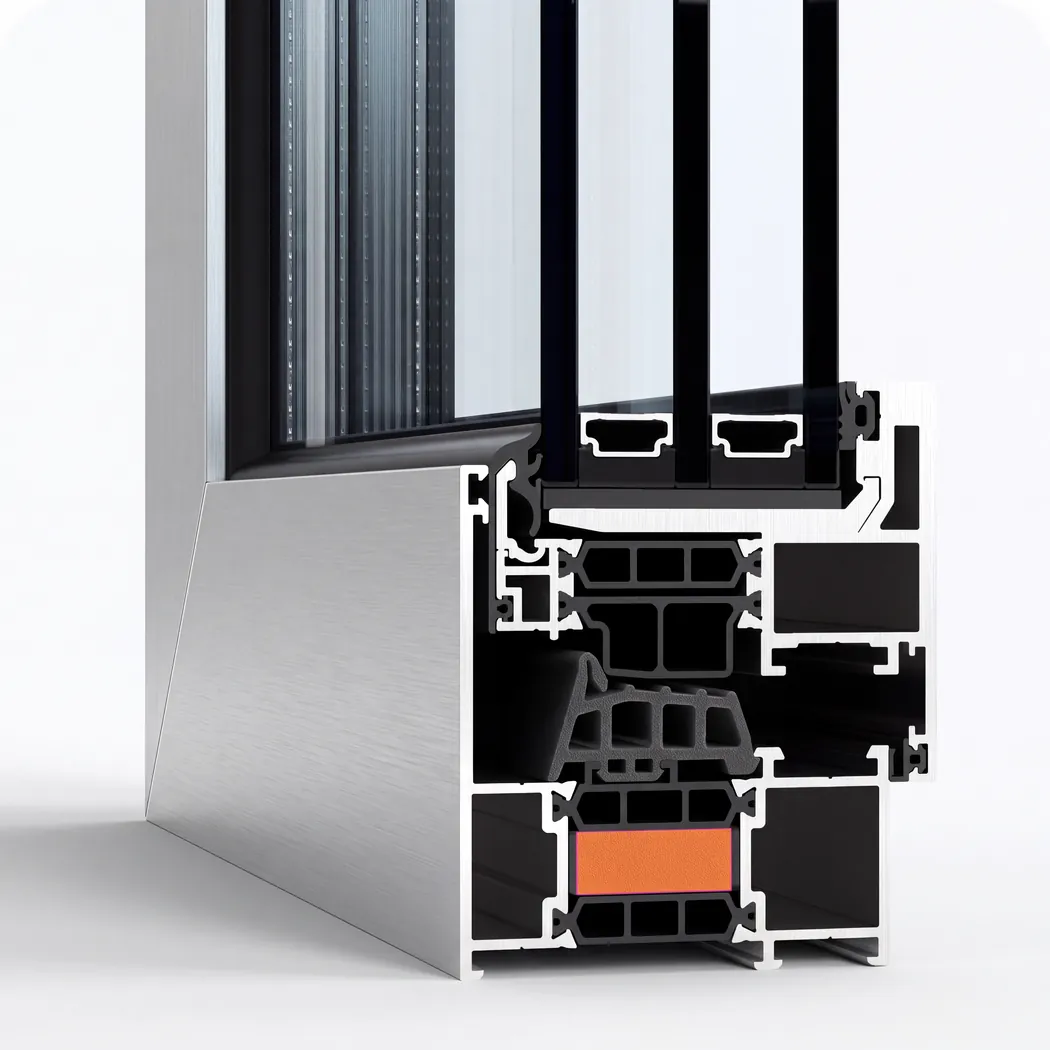
This is the practical heart of the subject. A motorised sash needs power at the frame, which means a cable route inside the reveal, agreed with the electrician while the reveal is open; adding it afterwards means opening the wall a second time. The sash itself is reinforced to carry the drive load, and that reinforcement goes in at the workshop, not onto a finished window.
Switchable and tinting glass carry the same requirement in a different form. Both are powered panes, so every unit needs a discreet electrical connection at its edge and a route from there back to a driver, and both are laminated builds that are heavier and thicker than an ordinary unit — which changes the frame that has to carry them. None of that can be retro-fitted into a frame that was drawn without it.
Three questions belong in the specification before the drawing is approved. How is it controlled: a plain switch, a relay, or a bus into the home system. What happens when the power is off, and can the sash still be opened by hand and the glass still be lived with in its unpowered state. And where do the sensors sit, since a rain sensor in the wrong place is either triggered by nothing or triggered too late.
Living with it afterwards
Every one of these products adds something that can need a specialist rather than a maintenance man. Actuators need their travel and closing force checked and reset, particularly after the first season when the building has moved. Sensors need cleaning, because a dust-covered rain sensor is a decoration. Powered glass depends on a driver and a connection at the edge of the unit, which is not a household repair.
So the questions to ask before ordering are the ownership questions, not the technical ones: who services this in a few years, are the parts obtainable in this country, and what does a single failed unit or a single failed drive cost to put right. A product that is easy to buy and hard to repair is a poor deal on a window, which is a component that stays in the building for a very long time.
The safeguard worth insisting on in every case is manual fallback. Sashes that can still be opened by hand, glass that is acceptable to live with in its default state, and controls that do something sensible when the network is down. Automation should remove effort rather than add a dependency.
Buy automation for openings that cannot be reached or cannot be trusted to close themselves, and switchable glass for privacy that has to come and go where a blind will not work. Do not buy either to solve heat, which belongs to the glass build and to shading, and do not buy them for openings that already work by hand. Whatever you do choose has to be on the drawing before the profile is cut, because the power route, the reinforcement and the thicker laminated pane are all designed in rather than added on — and the last question before ordering is who repairs it in five years.