



Joint sealing at height
Water often comes out well away from where it went in. It slips past a joint high on the elevation, runs down the back of the cladding or along a slab edge, and appears at the first opening that stops it — which is why a wet ceiling can sit a floor or two below the joint responsible for it. The search therefore starts above the stain and works downwards, wetting one joint at a time until the damp is reproduced indoors. What follows is not a smear over the top: the old bead is cut out, the joint is cleaned back to sound material, given a backing rod and primed, and the new sealant is tooled to a shape that can stretch as the building moves. And it goes on dry — a joint that is damp, dusty or hot enough to skin the sealant is a joint you will be looking at again.
- above the stain where tracing starts
- cut out the old sealant
- dry and shaded weather window
What the resealing depends on
-
Higher than the damp
Entry point
Water travels before it shows
-
One joint at a time
Testing
Wetting two proves nothing
-
Cut out, not covered
Old bead
Fresh sealant will not bond to it
-
Rod and primer
Preparation
A bead needs a shape, not a filling
-
Dry, out of the sun
Conditions
Heat skins the surface too early
Let's calculate
the cost of glazing
Get a free calculation for your windows — just leave your number, we'll reply on WhatsApp within 15 minutes.

Why choose aluminium windows?
-
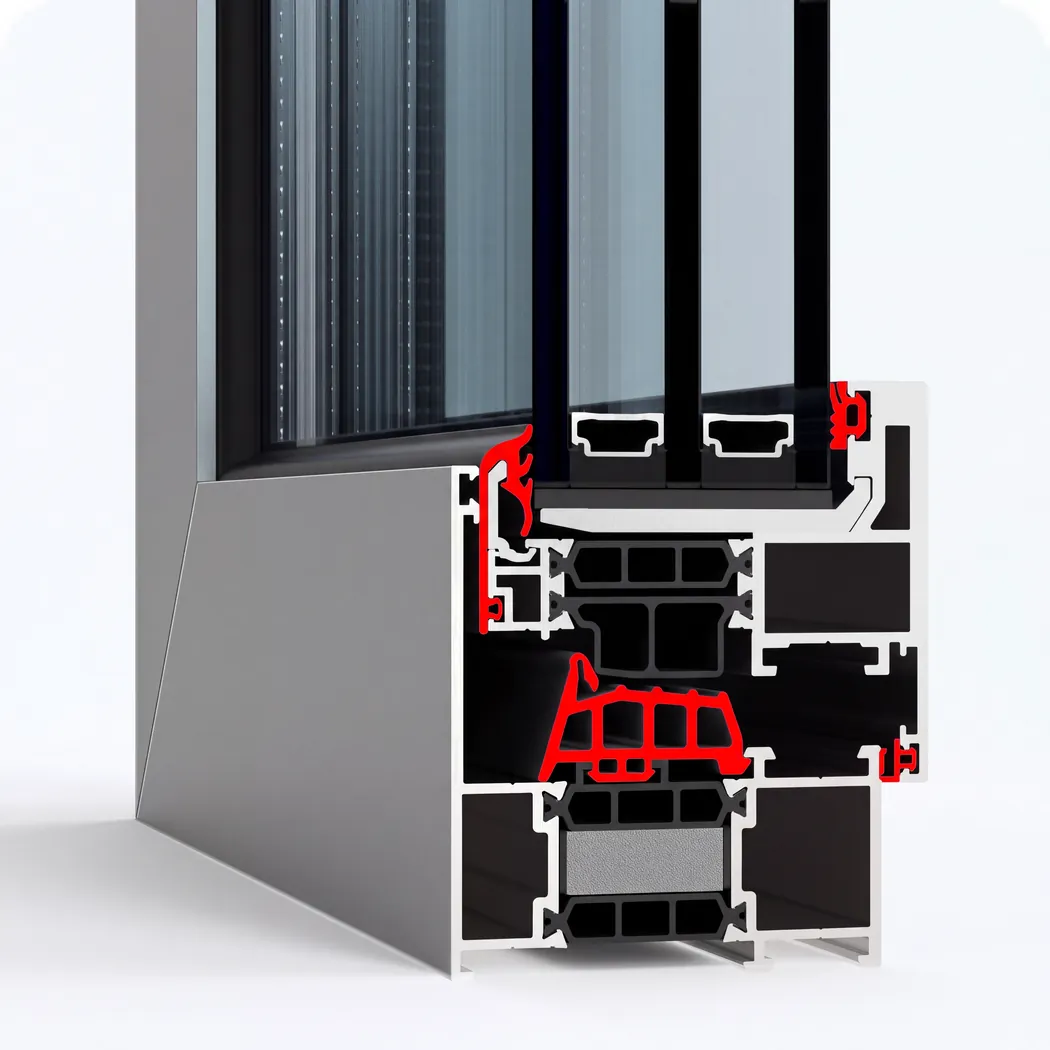
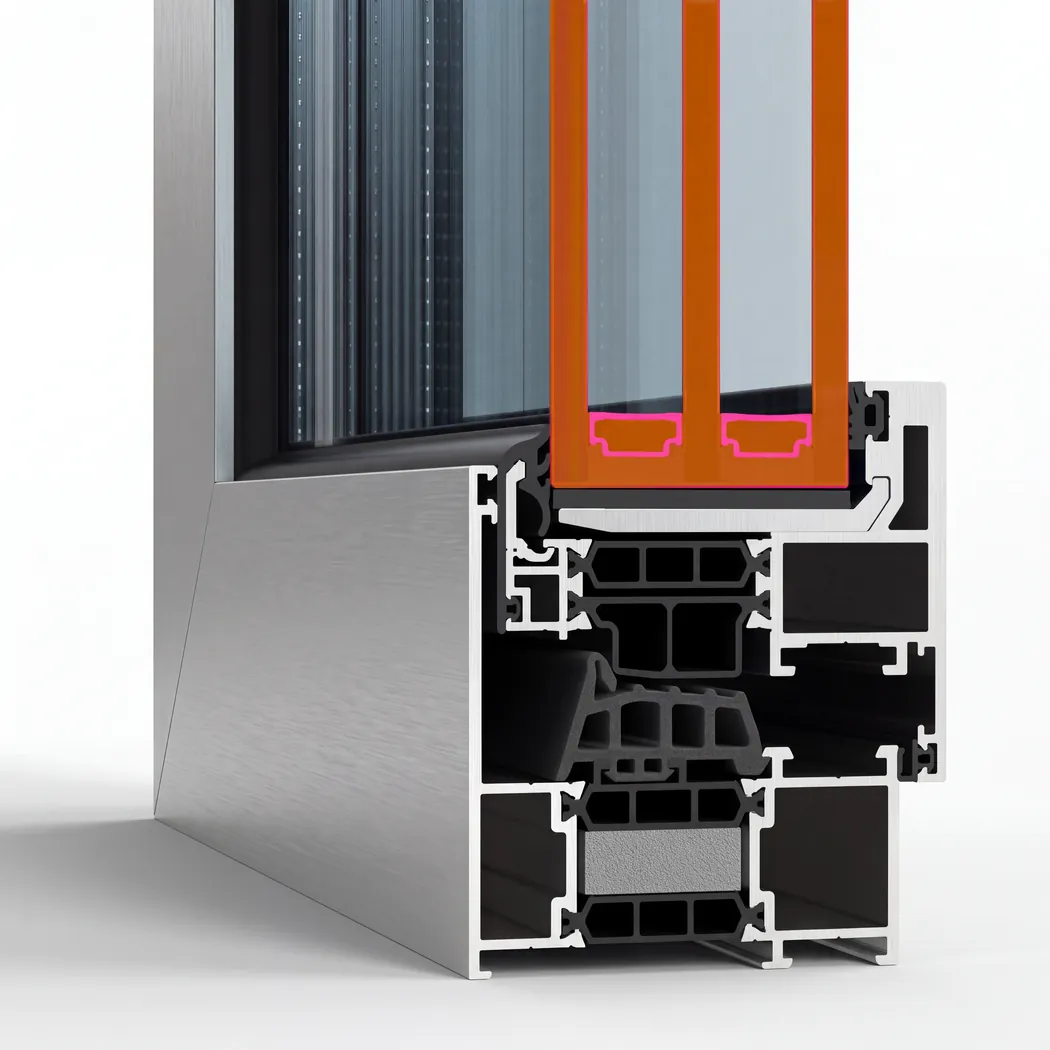
Durable EPDM seals
Three contours of EPDM seals keep the glass off the aluminium and close the gap between sash and frame, so dust, humid salt air and wind-driven rain stay outside.
Learn more -
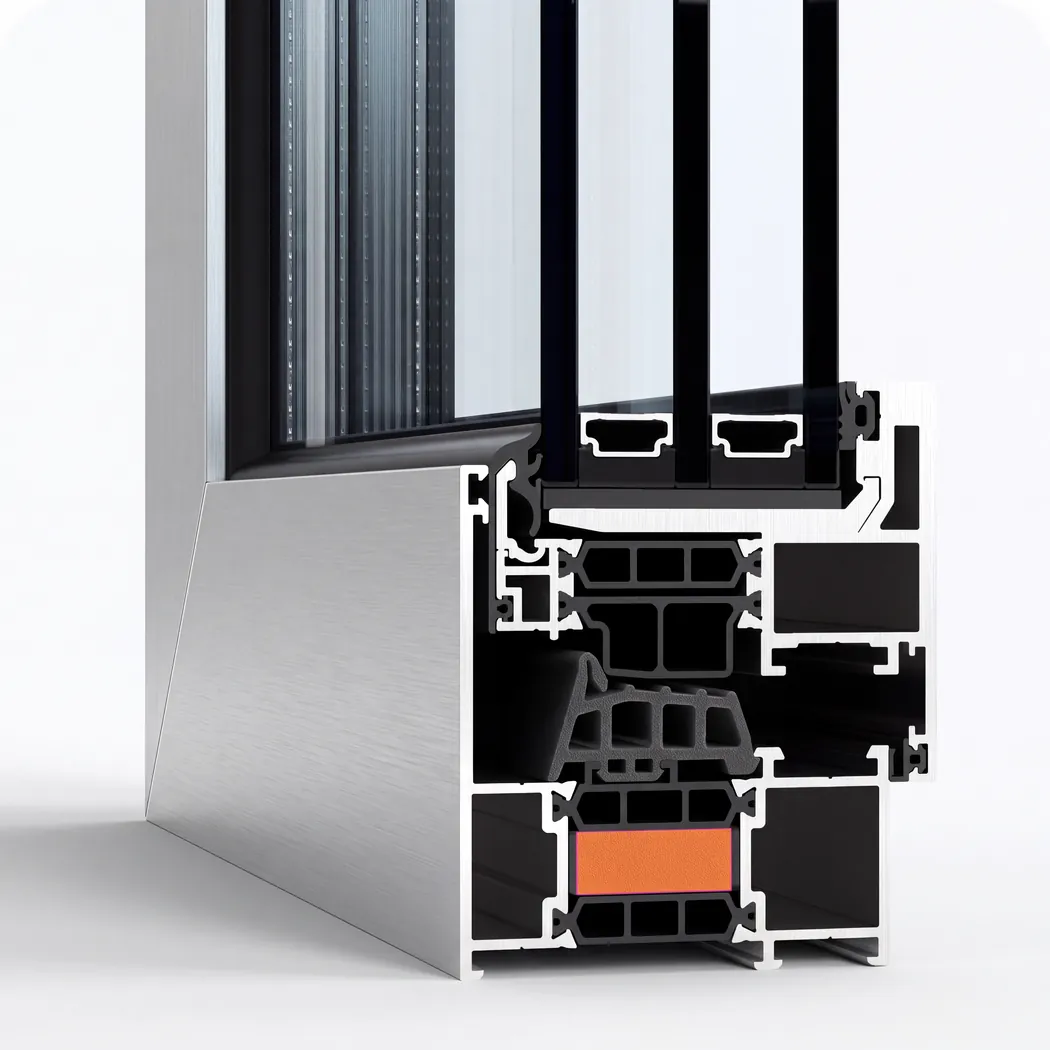
Foamed thermal inserts
Foamed inserts fill the profile chambers and stop air circulating inside them, so less outside heat and street noise passes through the frame into the cooled room.
Learn more -
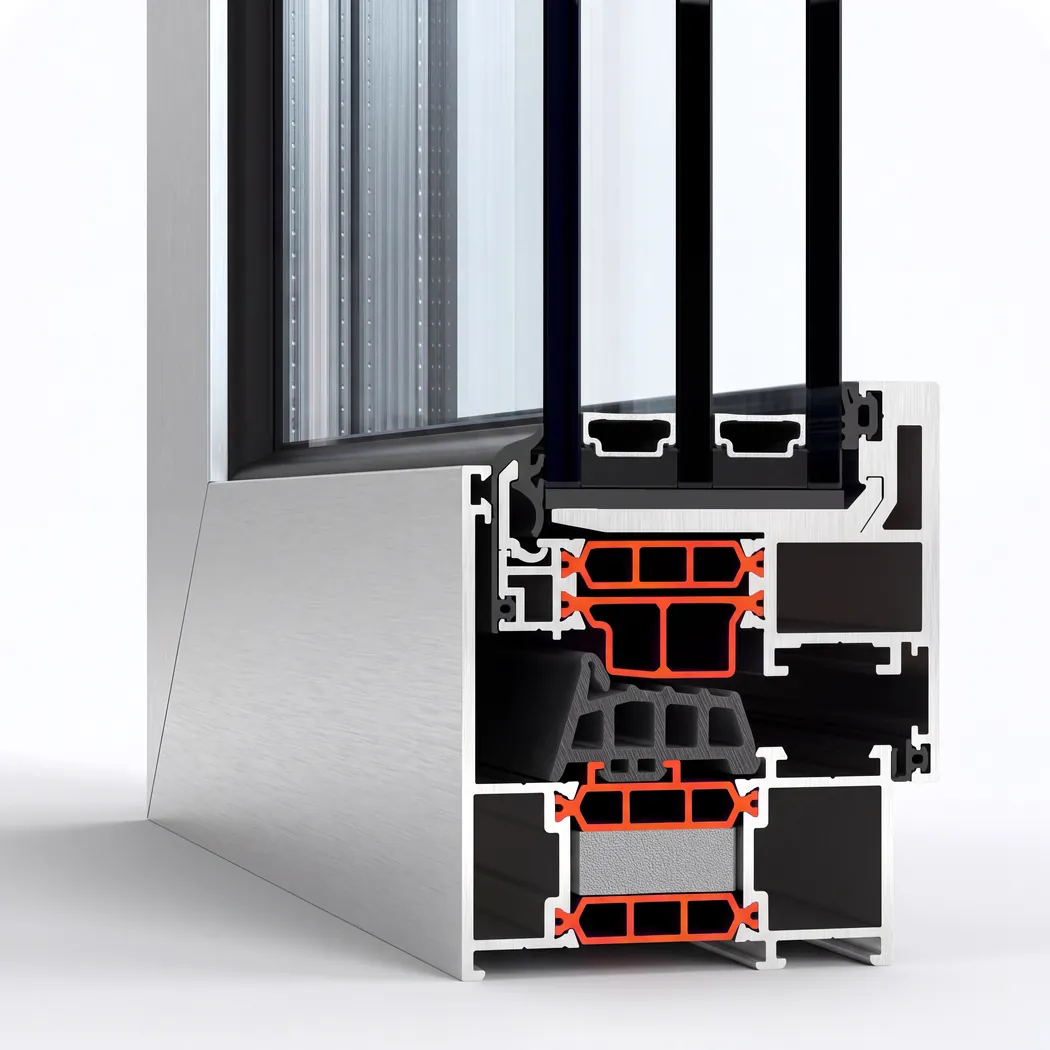
Polyamide thermal breaks
Glass-filled polyamide thermal breaks up to 40 mm wide keep the outer and inner shells apart, so the frame holds its shape and its insulation through a UAE summer.
Learn more -
Energy-efficient double glazing
Double glazing up to 60 mm thick puts a sealed gap of still air or gas between the hot street and the cooled room, so less heat crosses the glass into the room.
Learn more
How a leaking joint is found and made good
- Inside inspected first to fix where water shows The damp patch sets the starting line
- Descent begins above it and works down the elevation Entry always sits higher than exit
- Joints wetted singly while someone watches indoors Two people, one joint, one answer
- Failed joints marked on an elevation drawing A map beats a list of floor numbers
- Old bead cut out and both faces cleaned back Bond fails on dust and cured sealant
- New bead tooled, then re-tested once it has cured Sealant has to set before it is tested
Articles


Aluminium windows of any configuration
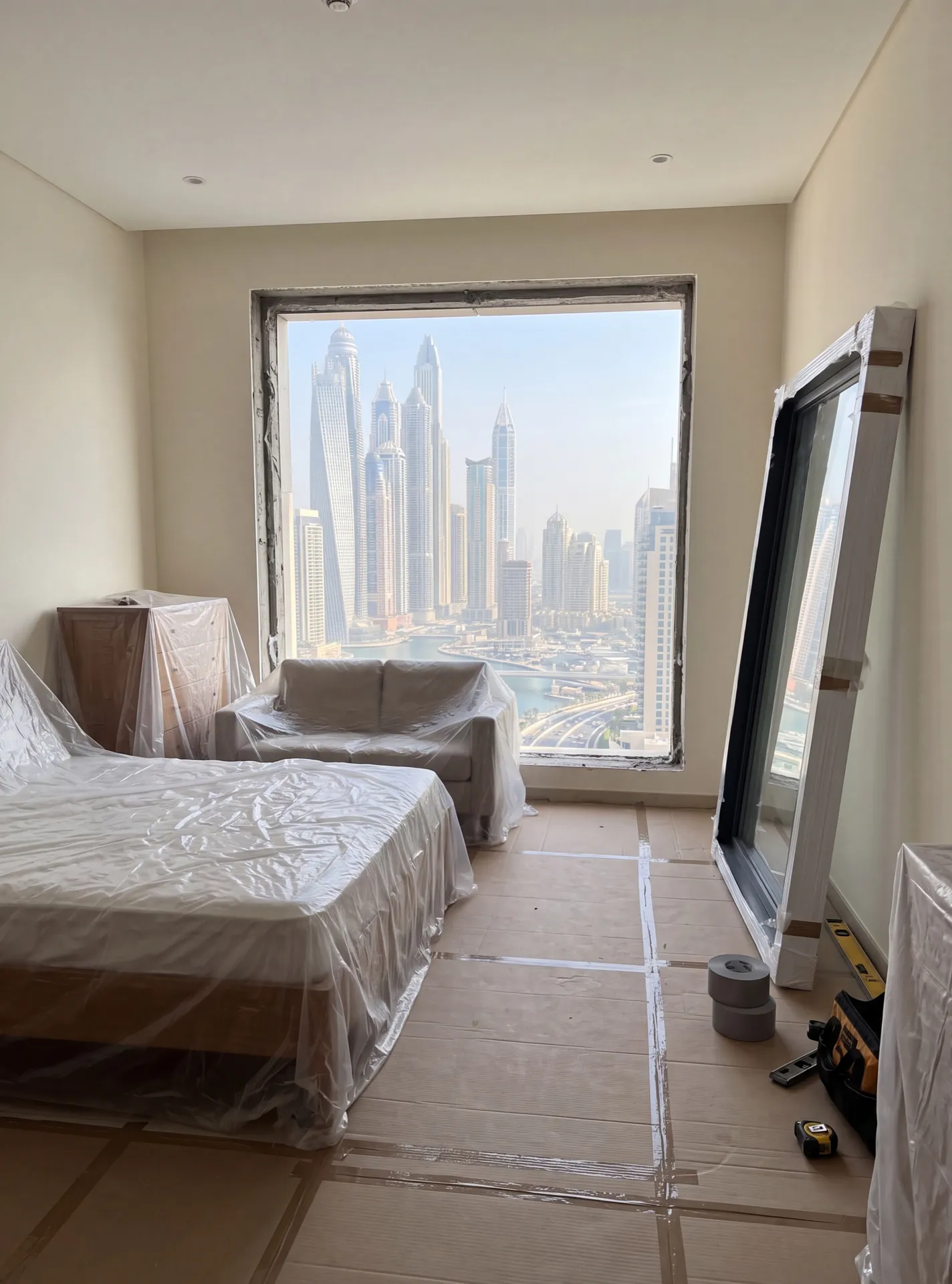
Made to size in our own factory in Dubai — in 3–5 weeks.
We will find convenient opening options:
The honest downside
When resealing the facade will not stop the leak
Not every leak starts in a facade joint. Water can come through the window itself — worn gaskets, a blocked drainage slot in the frame, a sash that no longer closes evenly — or through a roof, a balcony above or a cracked slab edge. Resealing every joint on the elevation will not touch any of those.
Sealant is also a maintenance material, not a permanent one. It lives in sun, heat and dust, and even a properly made joint will need attention again in time; joints of the same age next to a repaired run are usually next in line.
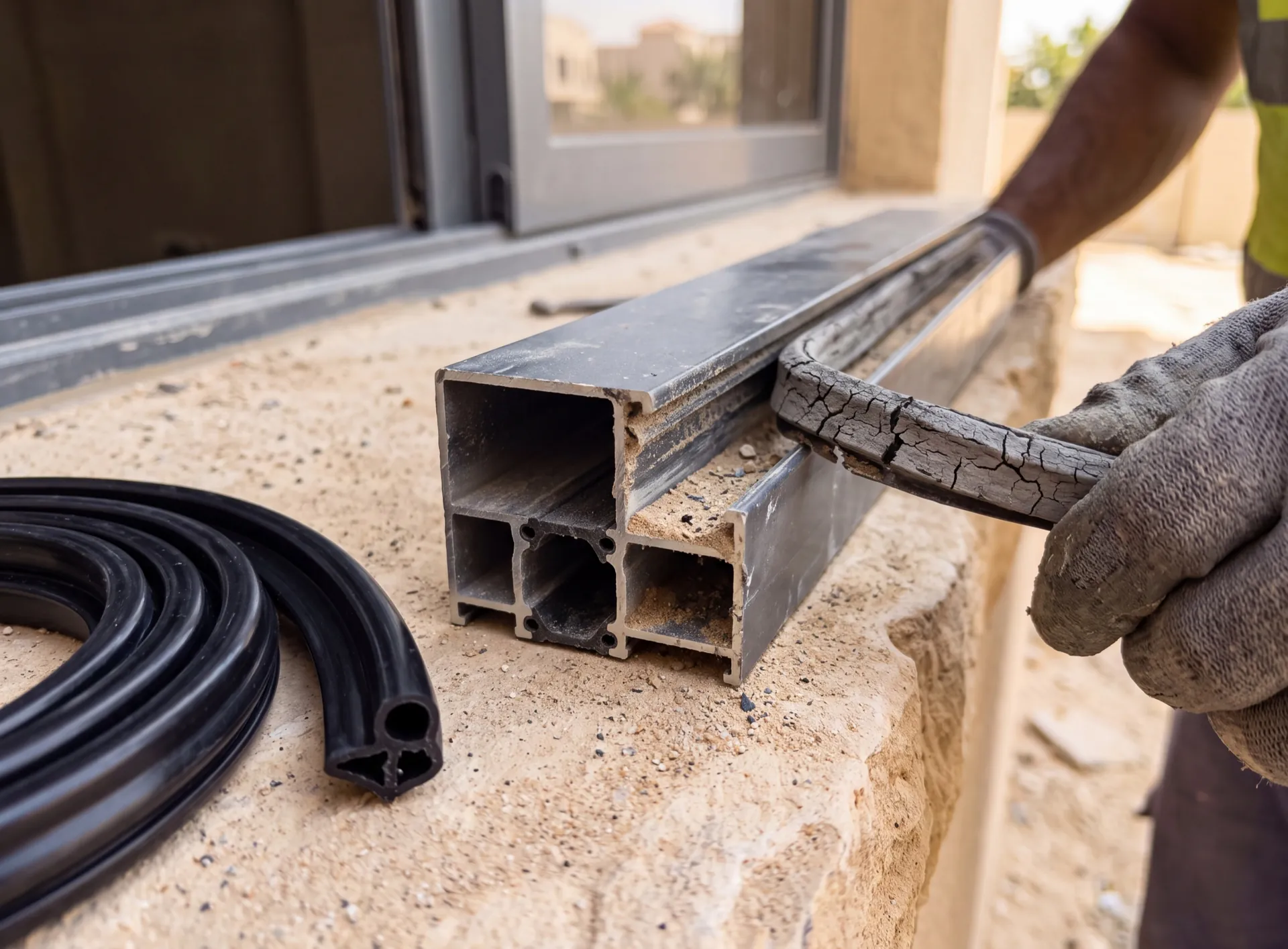
If testing shows water entering at the sash rather than around the frame, replacing the window's gaskets from indoors is the repair that answers it. Rope-access sealing remains the right job when the trail leads to joints between panels, frames and slab edges outside.
 Consider instead
Seal replacement
Consider instead
Seal replacement
Frequently asked questions
Because water moves before it appears. Behind the cladding there is a cavity, and a failed joint lets water into that cavity rather than straight into the room; it then runs down the back of the panels until something stops it — a slab edge, a bracket, the head of a window — and enters there. The gap between the two can be a couple of storeys, and it is seldom directly overhead either, because anything sloping behind the facade carries water sideways first. Starting at the damp patch finds a sound joint and wastes the descent.
It can be applied over it, and it will look right for a season. Sealant works by bonding to two faces and stretching between them, and it bonds only to material that is clean, sound and prepared. An old bead is none of those: cured on the surface, loaded with the dust a sandy climate drives into every joint, and frequently the thing that failed in the first place. Fresh sealant laid on top bonds to a layer that is already letting go, so the repair leaves when the old bead does. Cutting out, cleaning back and priming is the whole job; the gun at the end is the quick part.
In a weather window, which here mostly means avoiding two things. Damp joints cannot be sealed, so the days after rain go to tracing and preparation rather than beads. And a joint in direct sun gets hot enough to skin the sealant before it has been tooled, which leaves something that looks finished and is bonded on one face only — so a west elevation is worked in the morning and an east one later in the day. Wind stops the descent long before it troubles the sealing. The order of elevations follows the sun and the forecast rather than the calendar.
No — different part, different trade, different side of the wall. The gasket in a sash is a rubber section that presses when the window shuts, and it is changed from indoors; that work has its own page in this section. Facade sealing is the wet-applied joint between panels, frames and slab edges on the outside of the building. It never moves for a person, only for the structure, and it is the barrier rain meets first. A window can leak because of either one, which is precisely why the water test comes before anything is opened up.
Related pages
Nearby pages and the rest of the catalogue.
Sections
Company
We are always happy to welcome you at our showroom
Main Office

Dubai — Showroom
The Pinnacle Building, Sheikh Zayed Road, Office 607
Mon–Fri: 9:00 – 18:00
Showroom

Samples to see in person
Profiles, glass units and hardware to see and touch before you choose.
Dubai — Showroom
The Pinnacle Building, Sheikh Zayed Road, Office 607
Get directions 