







Main Office

Dubai — Showroom
The Pinnacle Building, Sheikh Zayed Road, Office 607
Mon–Fri: 9:00 – 18:00
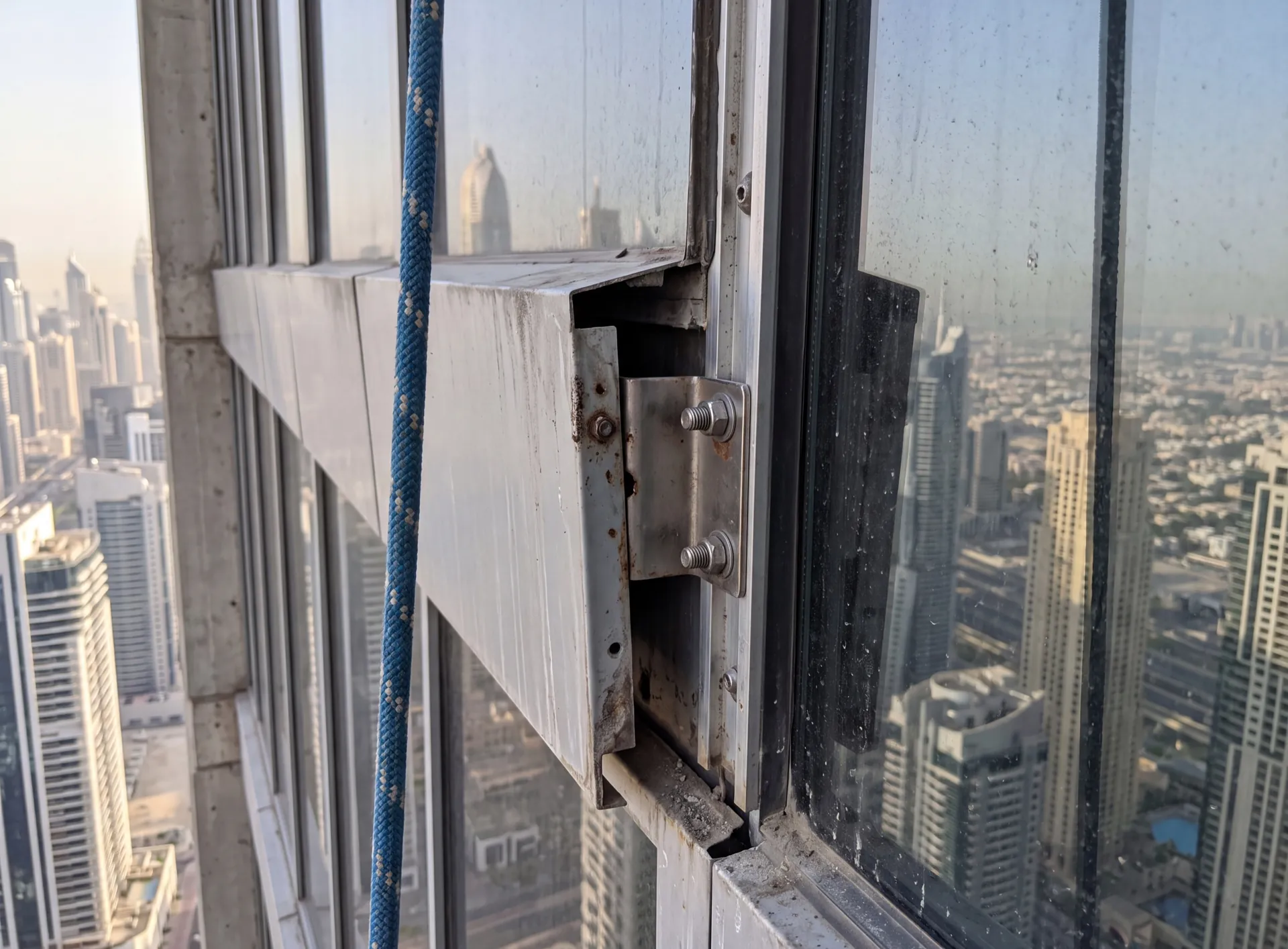
From the pavement you see a stain, a dark line, or a panel sitting proud of its neighbours. None of those is a defect — they are what a defect looks like from far enough away. At arm's length the same three symptoms turn out to be a cladding bracket that has worked loose, a face sheet deformed by something that struck it, or a junction where the facade meets a window and the detail has opened up: three repairs, three different parts, and only one of them urgent. That is why the elevation is inspected from the rope first and repaired second, and why a quotation written from a photograph taken at ground level is a guess wearing a price tag.
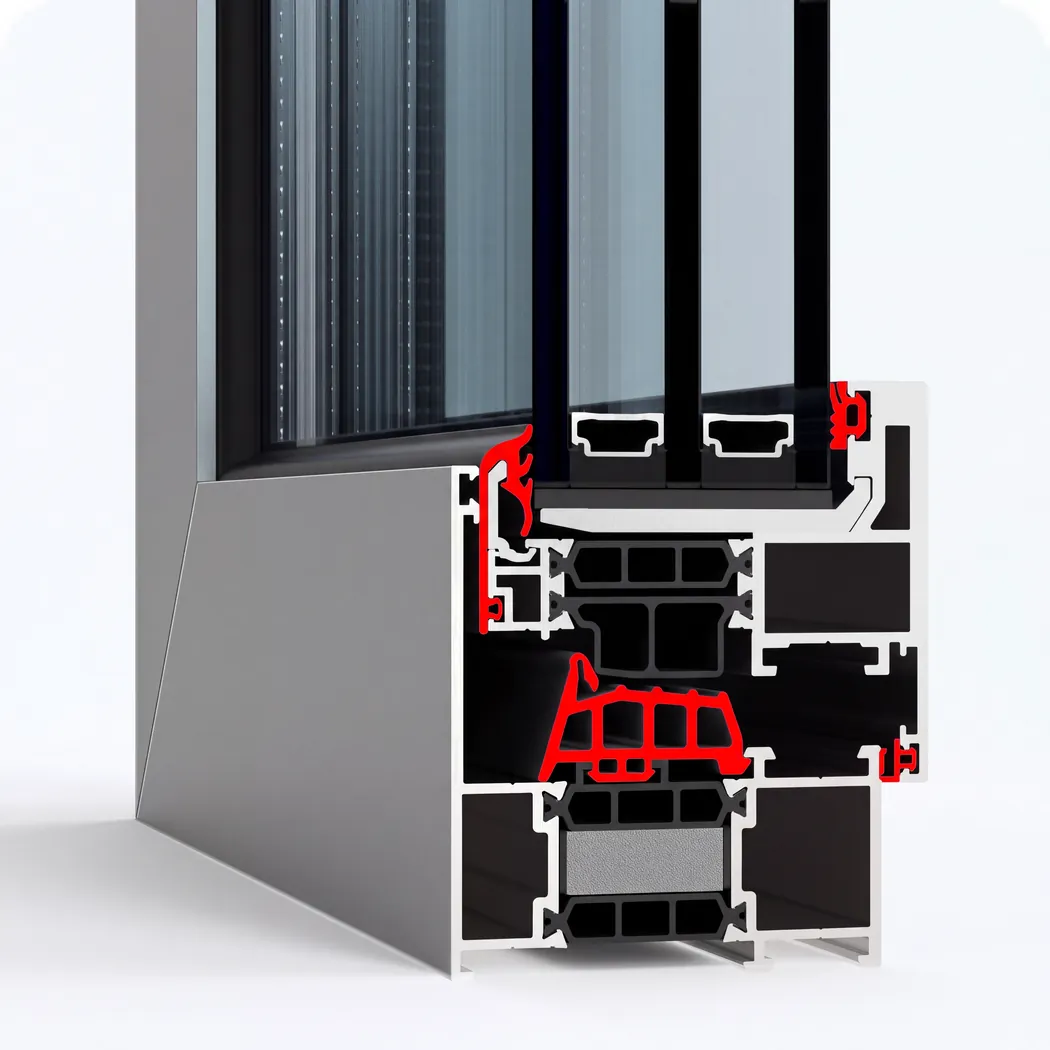
Three contours of EPDM seals keep the glass off the aluminium and close the gap between sash and frame, so dust, humid salt air and wind-driven rain stay outside.
Learn more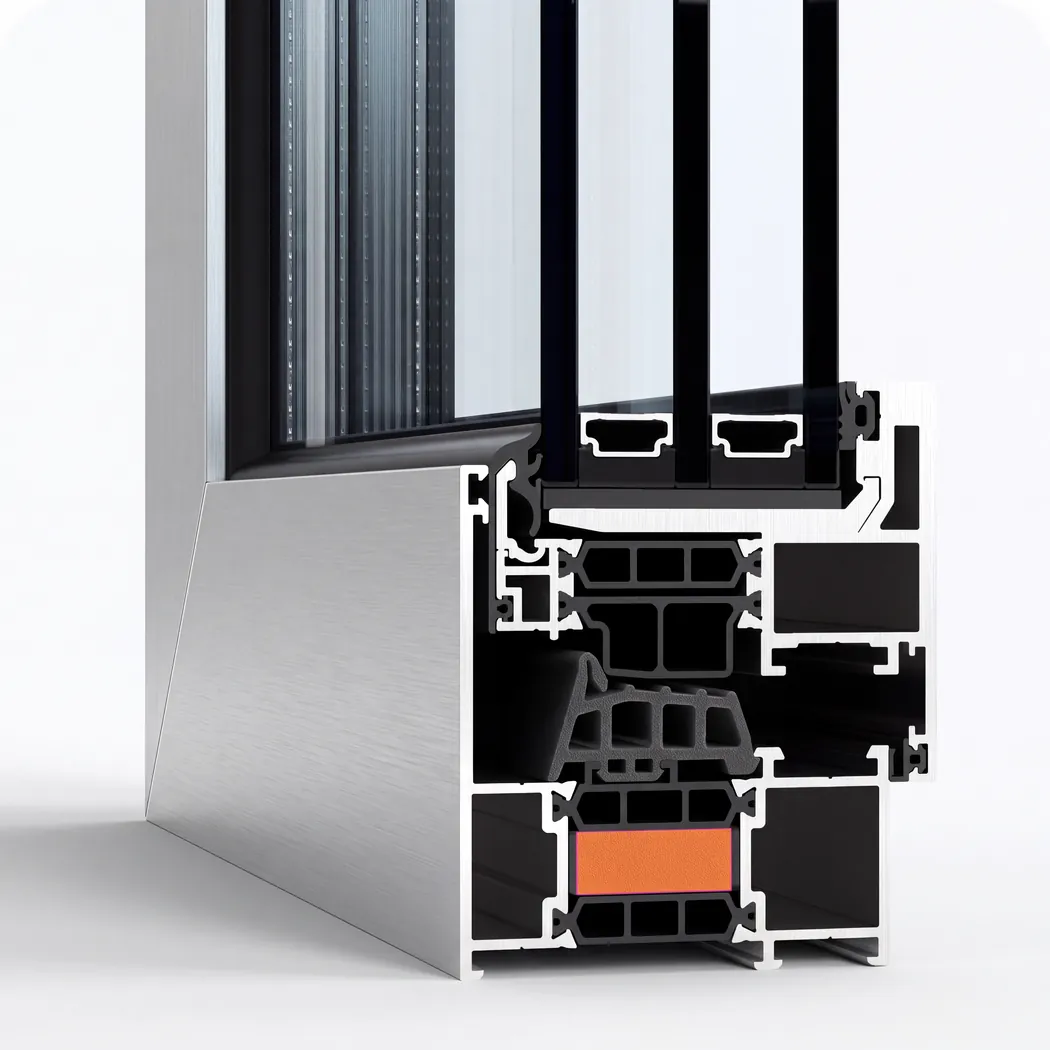
Foamed inserts fill the profile chambers and stop air circulating inside them, so less outside heat and street noise passes through the frame into the cooled room.
Learn more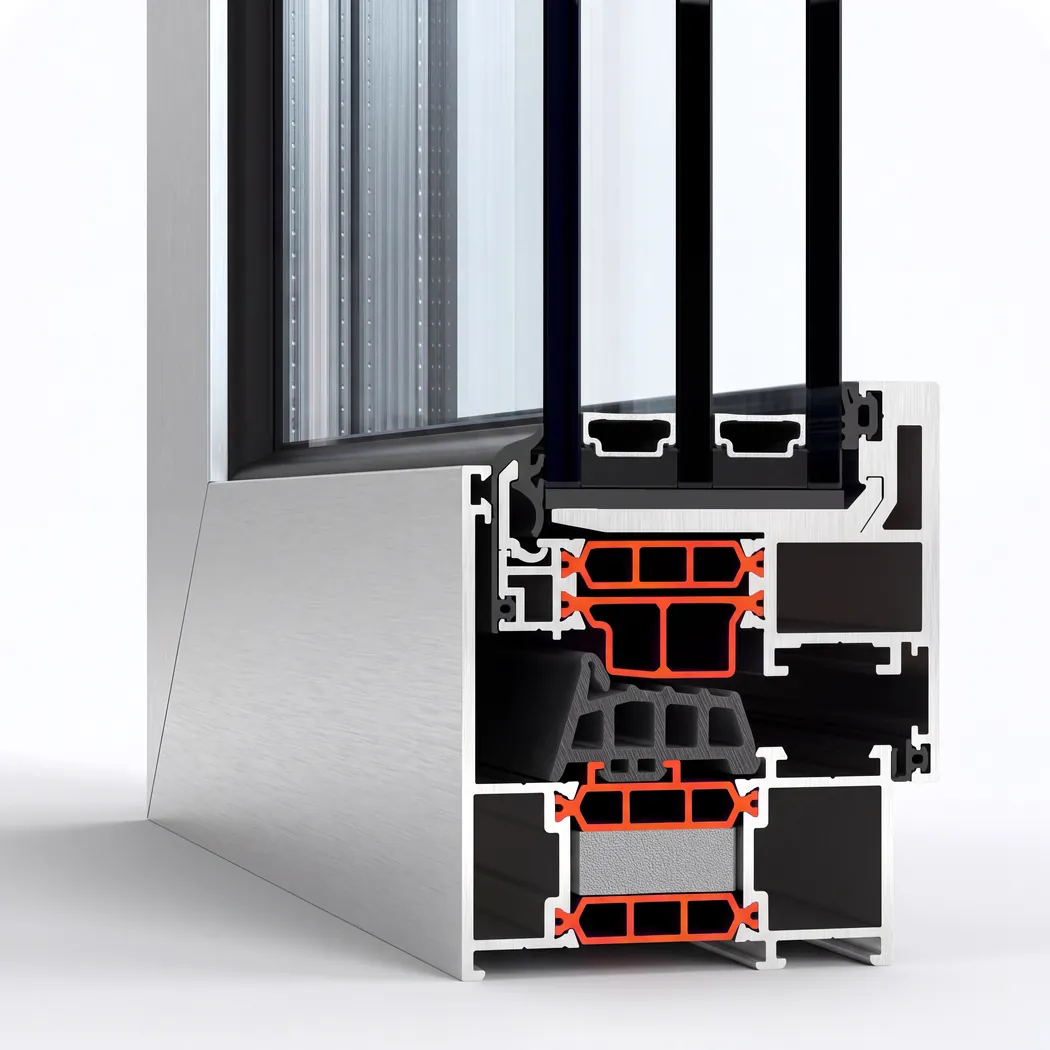
Glass-filled polyamide thermal breaks up to 40 mm wide keep the outer and inner shells apart, so the frame holds its shape and its insulation through a UAE summer.
Learn more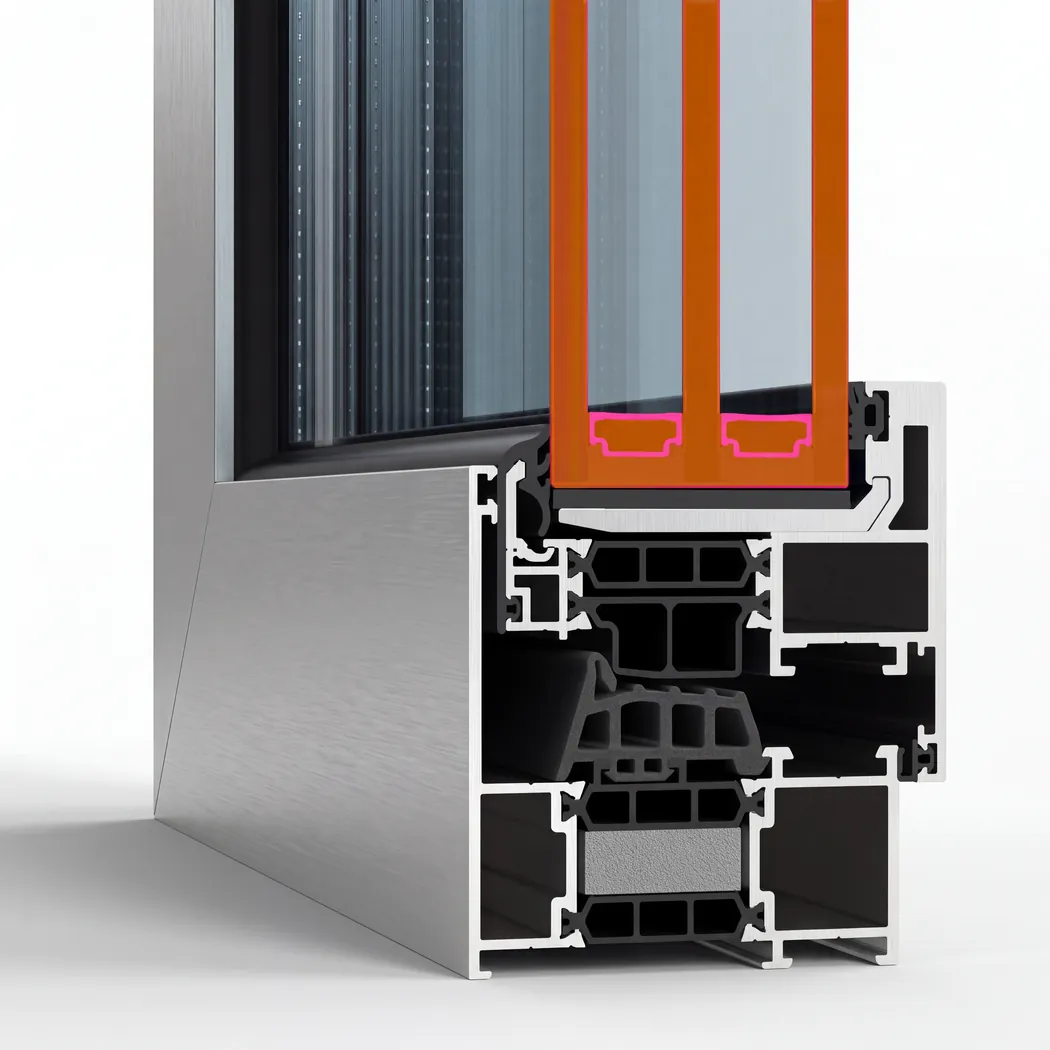
Double glazing up to 60 mm thick puts a sealed gap of still air or gas between the hot street and the cooled room, so less heat crosses the glass into the room.
Learn moreBracket or panel
Defect
One symptom, two different jobs
Close range
Diagnosis
The street shows only the stain
Profile and finish
Parts
A patch has to match what is up there
Item by item
Method
Each defect is priced on its own
Before and after
Record
Same frame, same angle, both times
Get a free calculation for your windows — just leave your number, we'll reply on WhatsApp within 15 minutes.
Pricing
Choose the options — we’ll send the price on WhatsApp
What are we making
Shape and opening
Size
Width and height: 300–6000 mm. Not sure? Clear the fields — we’ll measure at the free survey.
Width under 300 mm — check that it is in millimetres.
Width over 6000 mm — we’ll confirm it at the survey.
Height under 300 mm — check that it is in millimetres.
Height over 6000 mm — we’ll confirm it at the survey.
Enter a whole number of units, 1 or more.
Glazing unit
Extras
Do you need a windowsill?
Do you need a coloured profile?
Do you need installation?
The honest downside
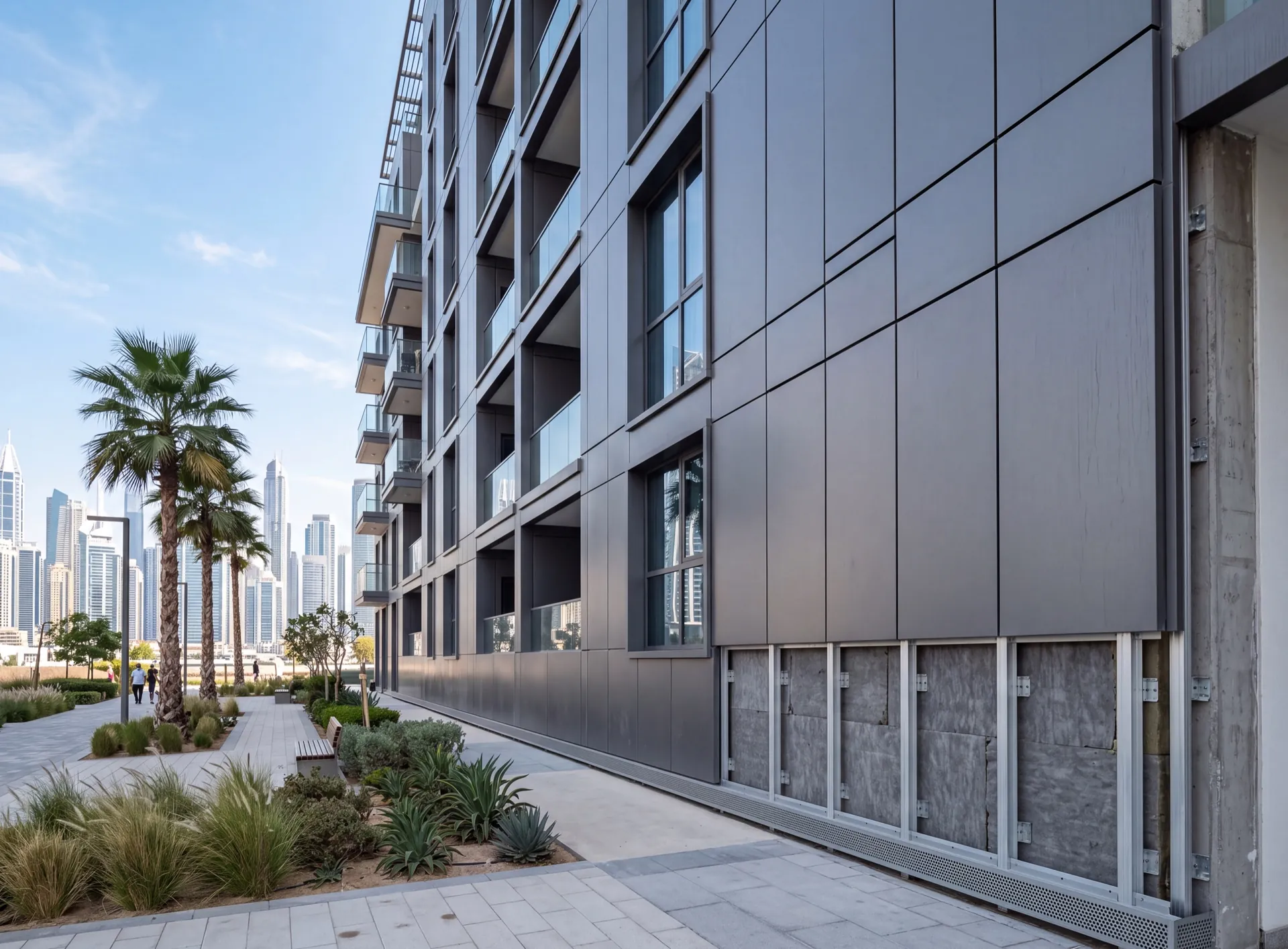
Rope access fixes defects one at a time, and it is the right tool while they are scattered. When every descent finds more loose brackets, chalky panels and opened junctions than the last, the facade is telling you the system is ageing as a whole, and paying for repair after repair ends up costing more than dealing with it once.
The work also depends on the weather and the building's routine. Wind stops a descent, the zone below has to be closed while technicians work over it, and residents see people outside their windows; a long list of repairs spread over many descents keeps all of that going for a long stretch.
When defects recur across a whole elevation, a planned recladding — a ventilated facade on a new subframe — is worth pricing against another round of repairs. Rope access remains the right answer for isolated defects on a facade that is otherwise sound.
 Consider instead
Ventilated facades
Consider instead
Ventilated facades
Nearby pages and the rest of the catalogue.
Sections
Company
The Pinnacle Building, Sheikh Zayed Road, Office 607
Mon–Fri: 9:00 – 18:00

Profiles, glass units and hardware to see and touch before you choose.

Free measurement
Leave your number — we call back to agree a time that suits you.
We reply within 15 minutes during working hours.