






Window automation
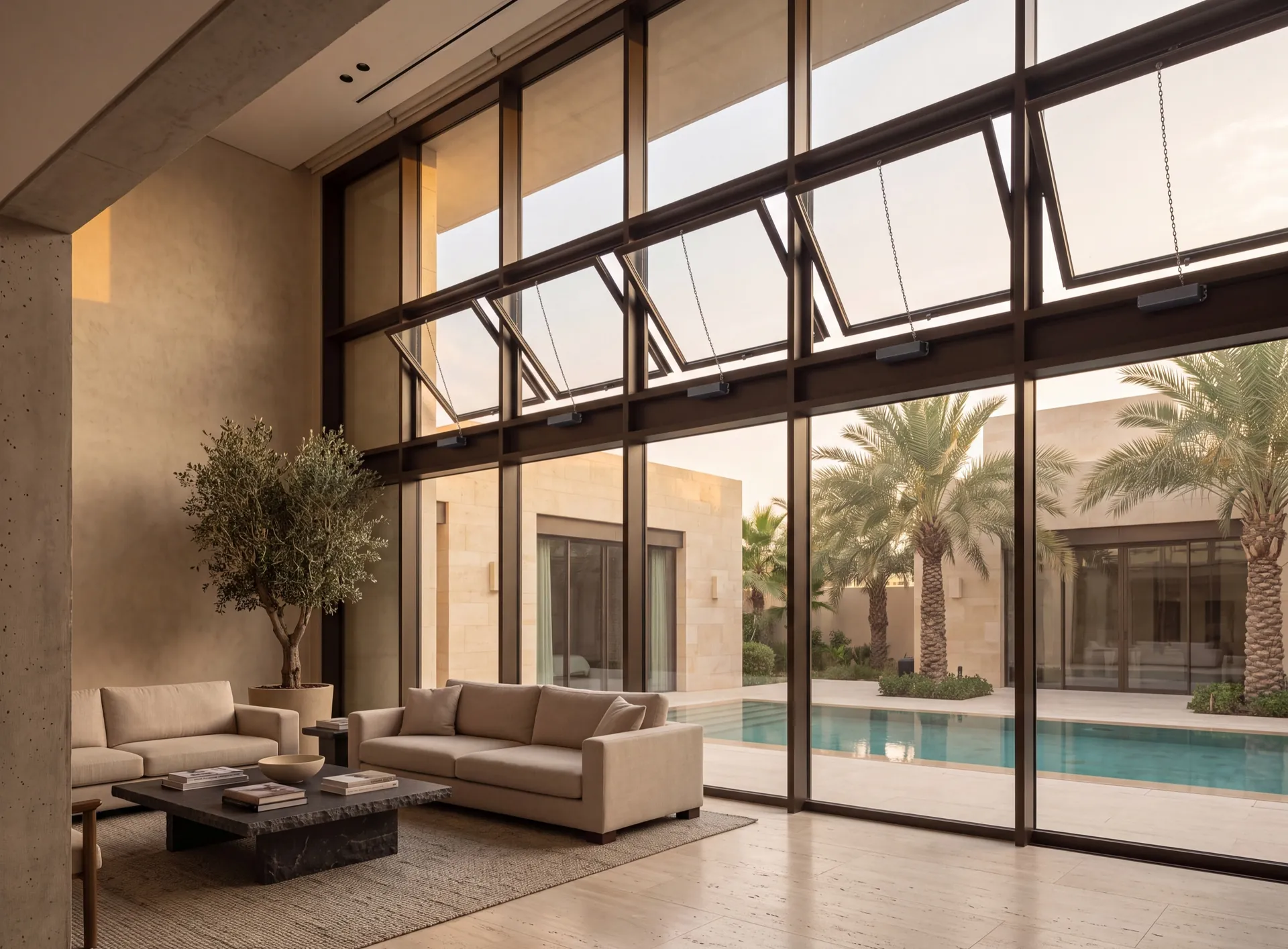
A motorised sash is not a gadget — it is the answer to an opening nobody can reach, or one that cannot be relied on to shut itself. A chain actuator on the frame pushes the leaf open and pulls it back; a rain or wind sensor closes it without anyone being asked. What has to be decided early is the power: the cable run inside the reveal and the reinforcement in the sash are drawn before manufacture, because neither is added neatly afterwards.
- chain or rack actuator type
- rain and wind sensors
- bus or dry contact integration
What an automated opening needs
-
Chain or rack
Actuator
Mounted on frame or sash
-
Inside the reveal
Power feed
Drawn before manufacture
-
Rain and wind
Sensors
Close the sash unprompted
-
Switch, relay or bus
Control
Ties into the home system
-
Reinforced sash
Structure
Carries the drive load
Let's calculate
the cost of glazing
Get a free calculation for your windows — just leave your number, we'll reply on WhatsApp within 15 minutes.

We produce
Curtain walls, structural and semi-structural glazing, ventilated and cassette facades. The system carries its own weight and the wind load of a tall building, and the glass line stays unbroken across the elevation.
Canopies, balustrades, railings and pool fencing, where glass is carried by an aluminium or steel frame. The load goes through the metal, the glass stays transparent.
Frameless glazing, spider systems, skylights and roof lanterns — everything built so the frame disappears and only the glass is read.
Office and glass partitions, sliding and smart-glass systems. They divide a floor without walls: light passes through, noise does not.
Glazed structures with a fire-resistance rating for escape routes and openings between fire compartments.
Priced per project
 Glazed facade
Curtain wall
Glass floors
Stair railings
Glass fences
Glass canopies
Skylights
Glass partitions
Fire-resistant glazing
Glazed facade
Curtain wall
Glass floors
Stair railings
Glass fences
Glass canopies
Skylights
Glass partitions
Fire-resistant glazing
How an automated window is set up
- Openings that genuinely need a drive identified Engineer on site within 48 hours
- Actuator matched to the sash and the opening Top-hung, side-hung or roof glazing
- Cable route agreed with the electrician While the reveal is still open
- Sash reinforced and drive mounted in the factory Not bolted onto a finished window
- Sensors and control tied into the system Rain, wind or a smoke extraction line
- Travel and closing force set on site Then re-checked at handover
Brands we work with
Articles
The honest downside
Before you motorise a window
A chain actuator opens a sash as far as its stroke allows, which is usually a ventilation gap rather than a fully open window. Reaching the outside of the glass for cleaning, or opening wide on a cool evening, still means working the sash by hand, and many drives have to be unhooked first.
It also adds parts that live in the heat and dust at the top of a room or on a roof: a motor, a sensor, a control line. Each needs checking now and then, and a self-closing sash needs its force kept set so it stops on a hand rather than pressing through it.
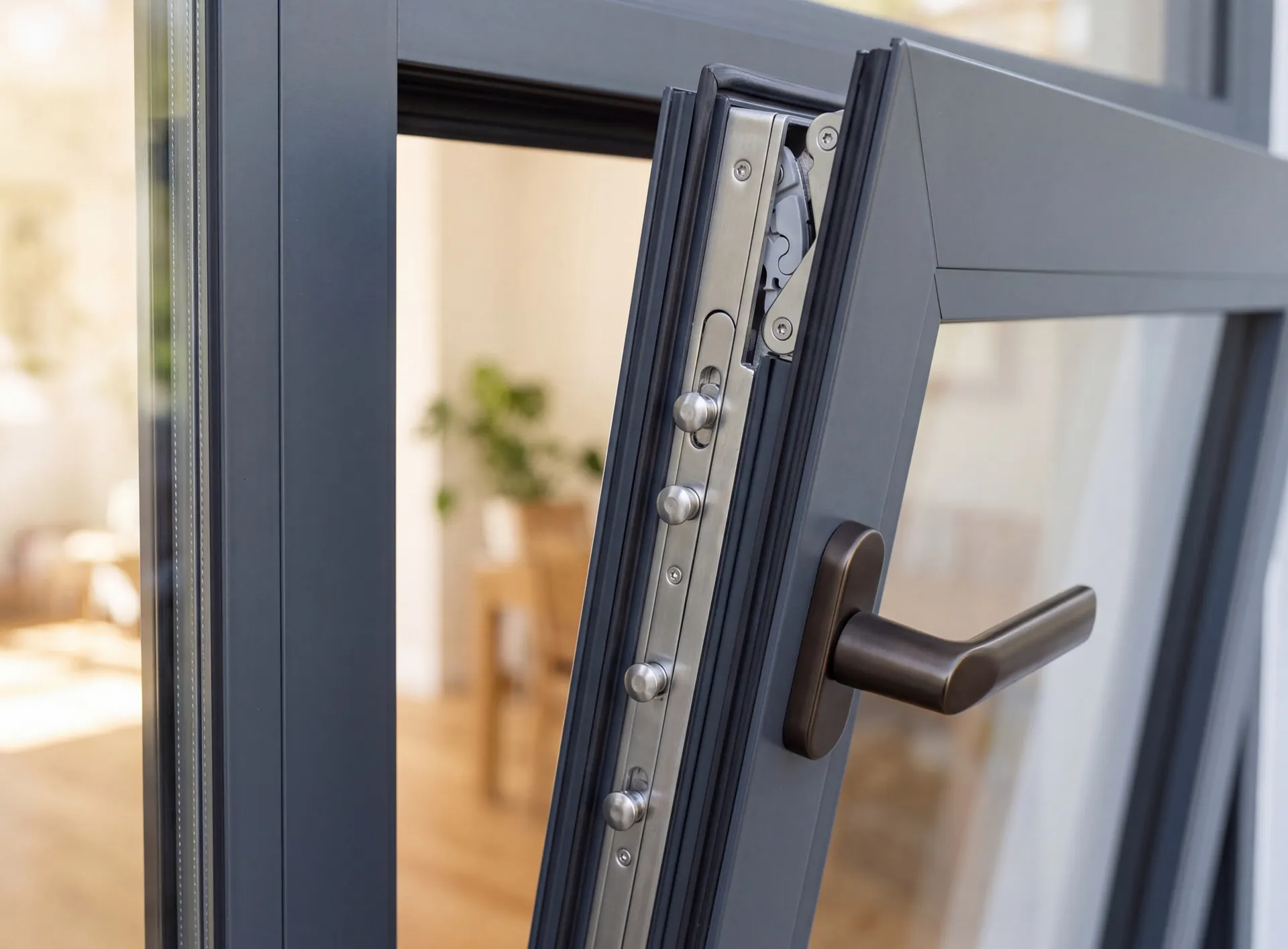
For a window within arm's reach that is opened every day, a well-chosen handle and hinge set does the job for much less. Automation stays the right answer for clerestory sashes, roof lanterns and vents nobody can reach, or openings that must close themselves when the wind rises.
 Consider instead
Handles and hardware
Consider instead
Handles and hardware
Frequently asked questions
Three kinds, in our experience. Sashes out of reach — clerestory glazing over a double-height majlis, stairwell vents, roof lanterns above a courtyard. Sashes that have to answer to something other than a person: a rain sensor on the bedroom window that always gets left open, or an opening tied into a smoke extraction line. And villas where every window is meant to run from one control panel. A window at arm's length is better served by a good handle for a fraction of the cost.
Sometimes, and it is rarely tidy. The drive needs power at the frame, and once the reveal is plastered and the stone is on, that cable is either surface-run or chased back in. The sash may also need reinforcement it was never built with. On windows we manufactured we can usually find a route and will tell you honestly what it will look like — but the cheap moment to decide is at the drawing stage, where it costs a line on a drawing instead of a strip-out.
A wind sensor closes the sash before the gust load reaches it, which is the main argument for fitting one in this country: a shamal arrives faster than anyone gets up to a roof lantern. A rain sensor does the same for the short heavy showers of the cooler months. On power failure a drive holds its position rather than dropping the leaf; where an opening must fail closed or fail open, that is designed in with a backup supply rather than assumed.
In most cases yes, but through your integrator rather than through the window. A drive is commanded either by a dry contact — a switch, a relay, a channel on the automation panel — or over a building bus. We supply the drive, the sensors and everything they need at the window, and agree the tie-in with whoever set up your control system. The one condition is timing: that conversation belongs before the reveal is closed.
Related pages
Nearby pages and the rest of the catalogue.
- Child safety
- Colours and finishes
- Concealed hinges
- Handles and hardware
- Insect screens
- Integrated blinds
- Smart glass
- Window tinting for buildings, not cars
Sections
Company
We are always happy to welcome you at our showroom
Main Office

Dubai — Showroom
The Pinnacle Building, Sheikh Zayed Road, Office 607
Mon–Fri: 9:00 – 18:00
Showroom

Samples to see in person
Profiles, glass units and hardware to see and touch before you choose.
Dubai — Showroom
The Pinnacle Building, Sheikh Zayed Road, Office 607
Get directions 