






Tinted glass
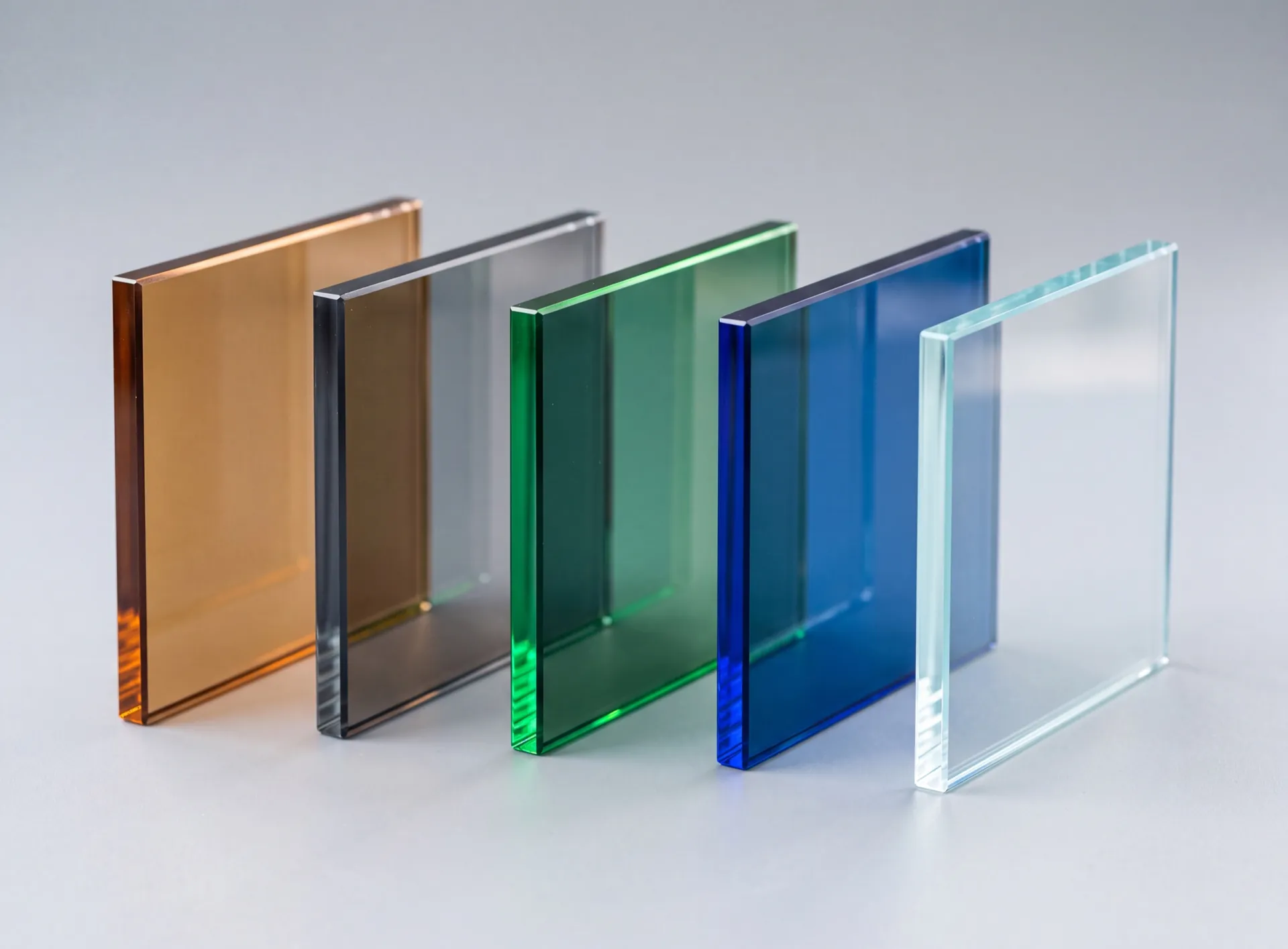
Tinted glass is coloured in the melt: metal oxides go into the float batch, so the bronze, grey, green or blue runs through the whole thickness of the pane and can never be scratched off or worn away. It works by absorbing part of the sunlight rather than reflecting it, which makes it very good at what people usually want it for — taking the hard edge off glare, softening a view into a neighbour's balcony, giving a facade a particular colour. It is a different instrument from a solar-control coating, not a cheaper version of one, and the two can share the same sealed unit.
- in the melt not a film, not a coat
- absorbs rather than reflects
- bronze to blue standard body tints
What a tint decides, and what it does not
-
Through the pane
Colour
Oxides added to the batch
-
Absorption
Mechanism
The pane itself gets hot
-
Softened
Glare
Its strongest suit by far
-
Daylight, by design
What it costs
The view darkens with it
-
Heat-treated
Thermal stress
Partial shade is the risk
Let's calculate
the cost of glazing
Get a free calculation for your windows — just leave your number, we'll reply on WhatsApp within 15 minutes.
We produce
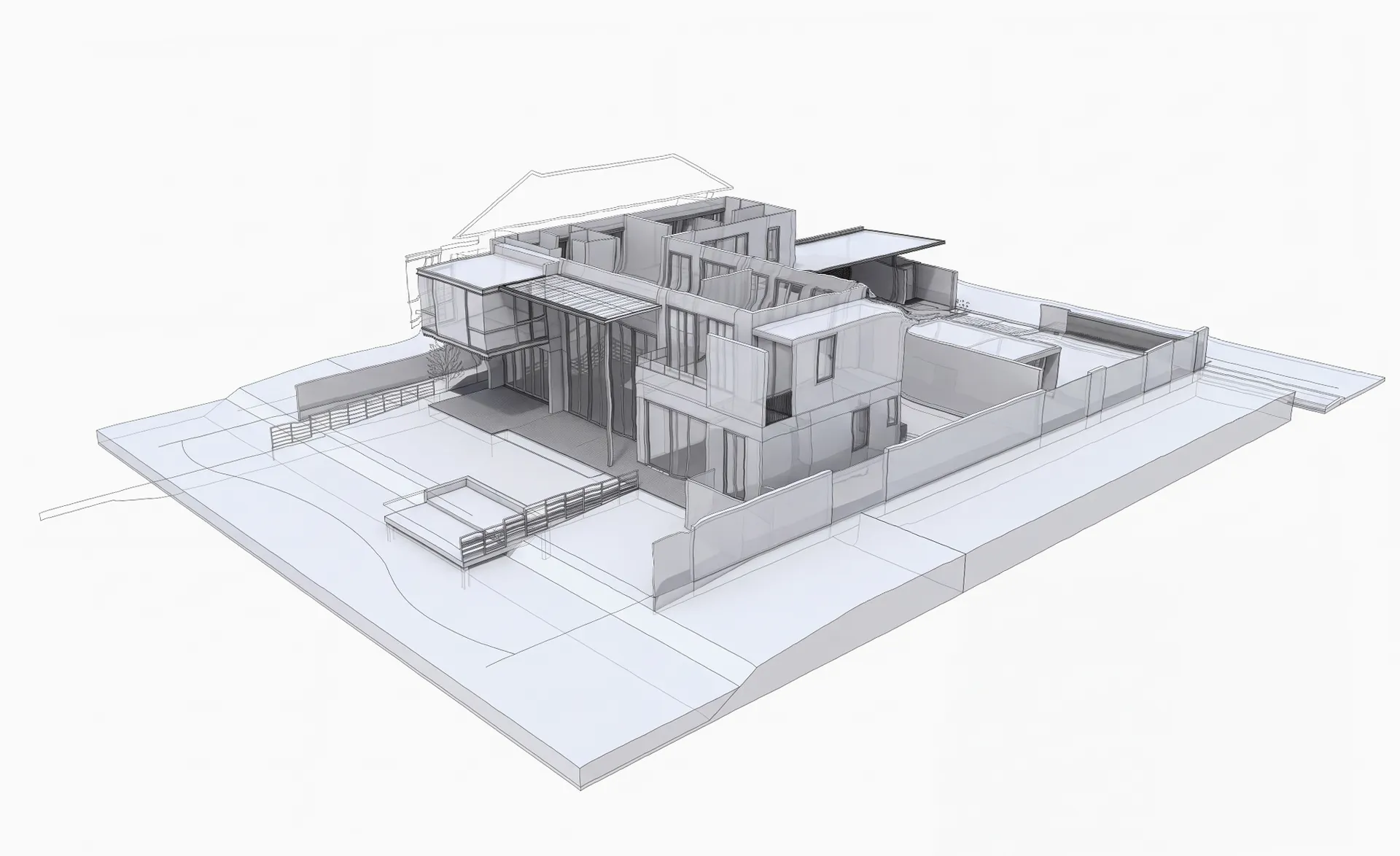
Curtain walls, structural and semi-structural glazing, ventilated and cassette facades. The system carries its own weight and the wind load of a tall building, and the glass line stays unbroken across the elevation.
Canopies, balustrades, railings and pool fencing, where glass is carried by an aluminium or steel frame. The load goes through the metal, the glass stays transparent.
Frameless glazing, spider systems, skylights and roof lanterns — everything built so the frame disappears and only the glass is read.
Office and glass partitions, sliding and smart-glass systems. They divide a floor without walls: light passes through, noise does not.
Glazed structures with a fire-resistance rating for escape routes and openings between fire compartments.
Priced per project
 Glazed facade
Curtain wall
Glass floors
Stair railings
Glass fences
Glass canopies
Skylights
Glass partitions
Fire-resistant glazing
Glazed facade
Curtain wall
Glass floors
Stair railings
Glass fences
Glass canopies
Skylights
Glass partitions
Fire-resistant glazing
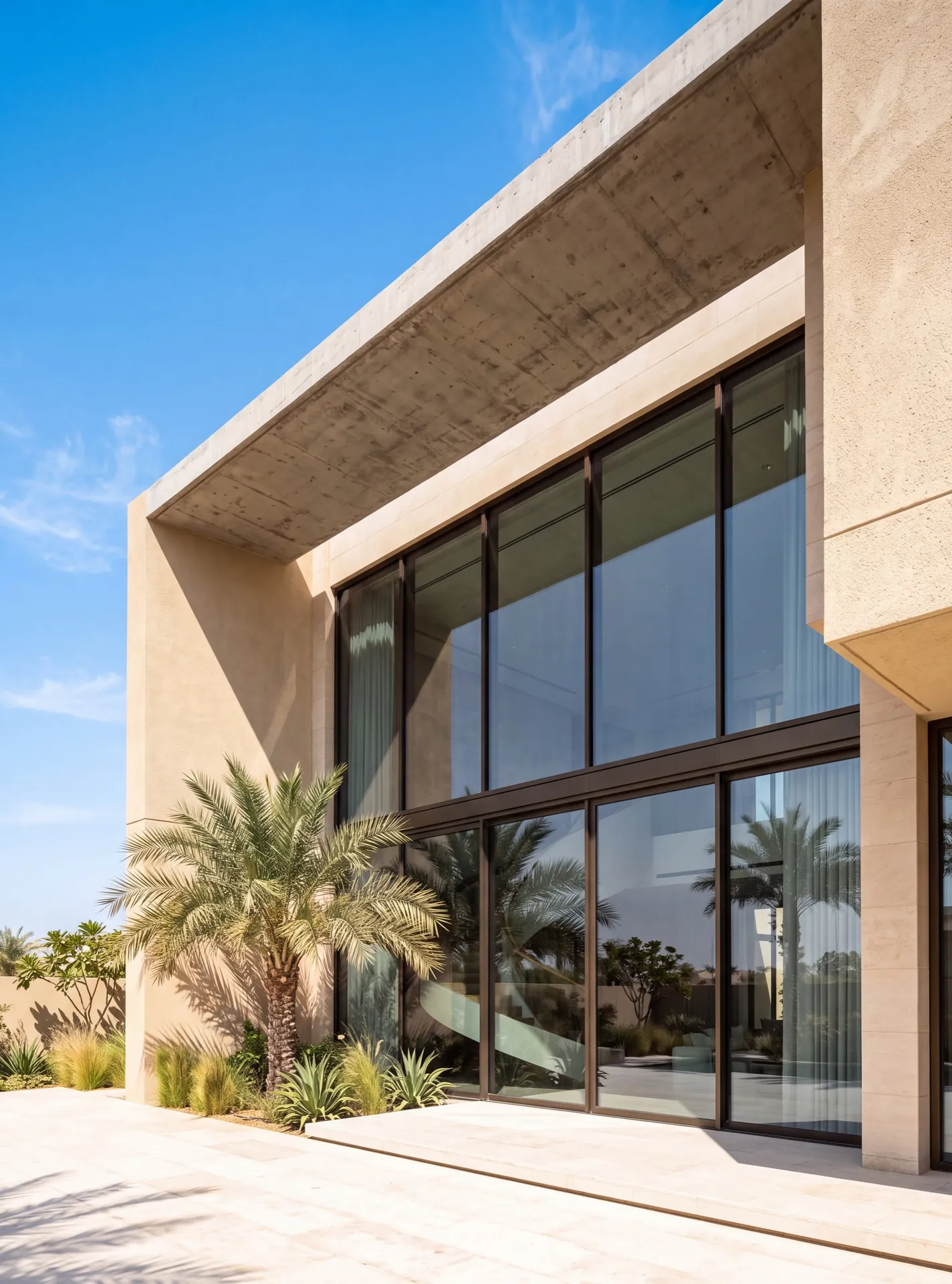
Where a body tint is the right call
- Rooms where glare is the actual complaint Screens, low sun, a white terrace
- Overlooked balconies and ground floors Daylight privacy without a blind
- Facades designed around a colour Bronze and grey read best here
- Paired with a coating in one unit Tinted outer pane, coated cavity face
- Toughened where the pane is partly shaded A hot absorbing sheet needs the margin
- Sample viewed on the building itself A tint looks different at every hour
Brands we work with
Articles
The honest downside
What tinted glass cannot do
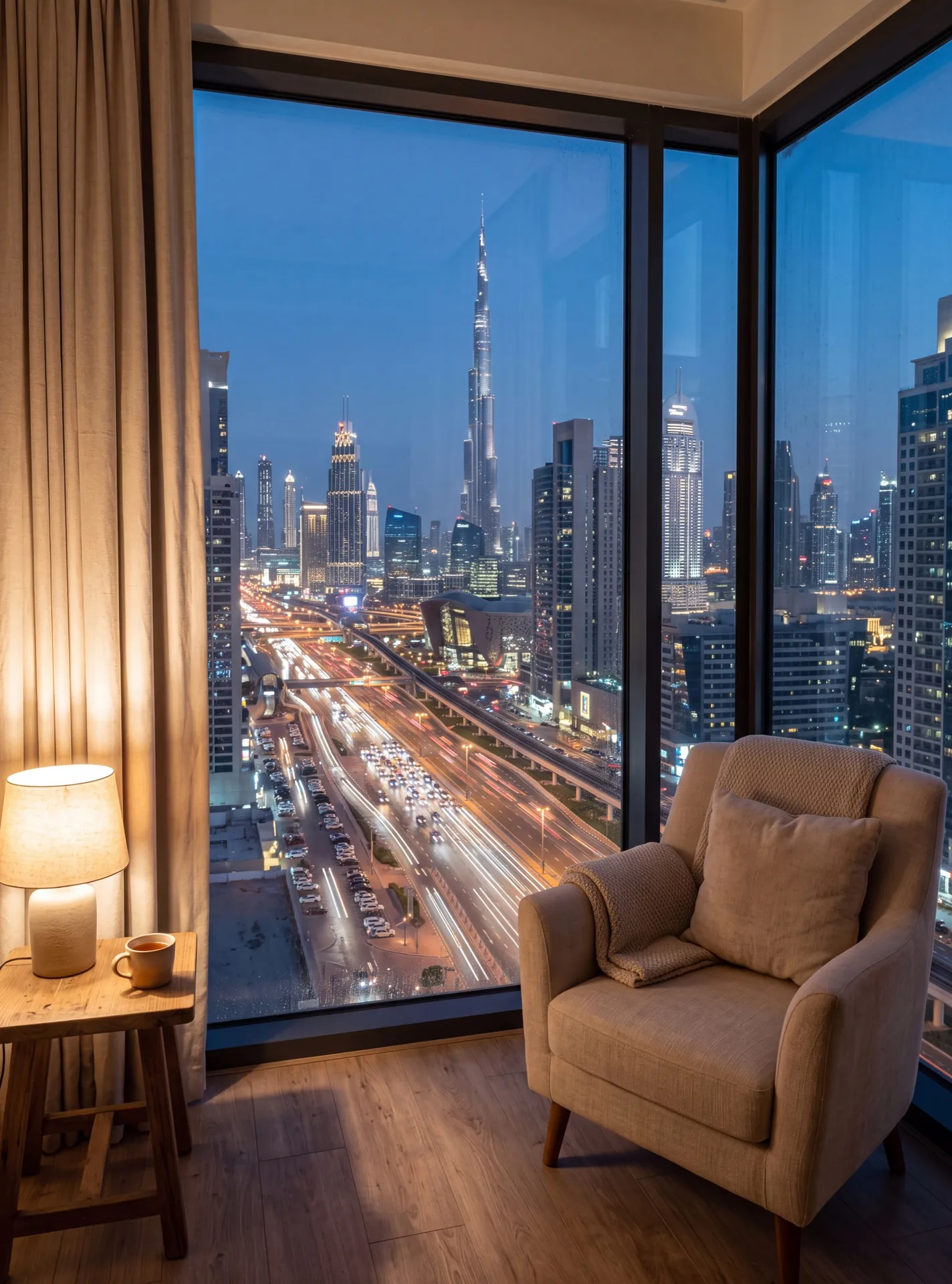
A tint gives privacy only while it is brighter outside than in. After dark, with the lights on, the room is on show through bronze or grey glass much as through clear, so a bedroom or a ground-floor majlis still needs a blind or a curtain.
It is also fixed at one strength. The same shade sits in the pane at noon and at dusk, on a glaring afternoon and on a hazy morning, and it colours everything seen through it — the sea, the sky, the paint and fabrics chosen for the room. Next to clear windows on either side, a tinted facade can also fall under building or community rules on appearance.
Where privacy is needed around the clock, or glare only at certain hours, a blind sealed inside the unit can be adjusted as the day changes. A body tint remains the right choice where the glare is constant or the facade is designed around a colour.
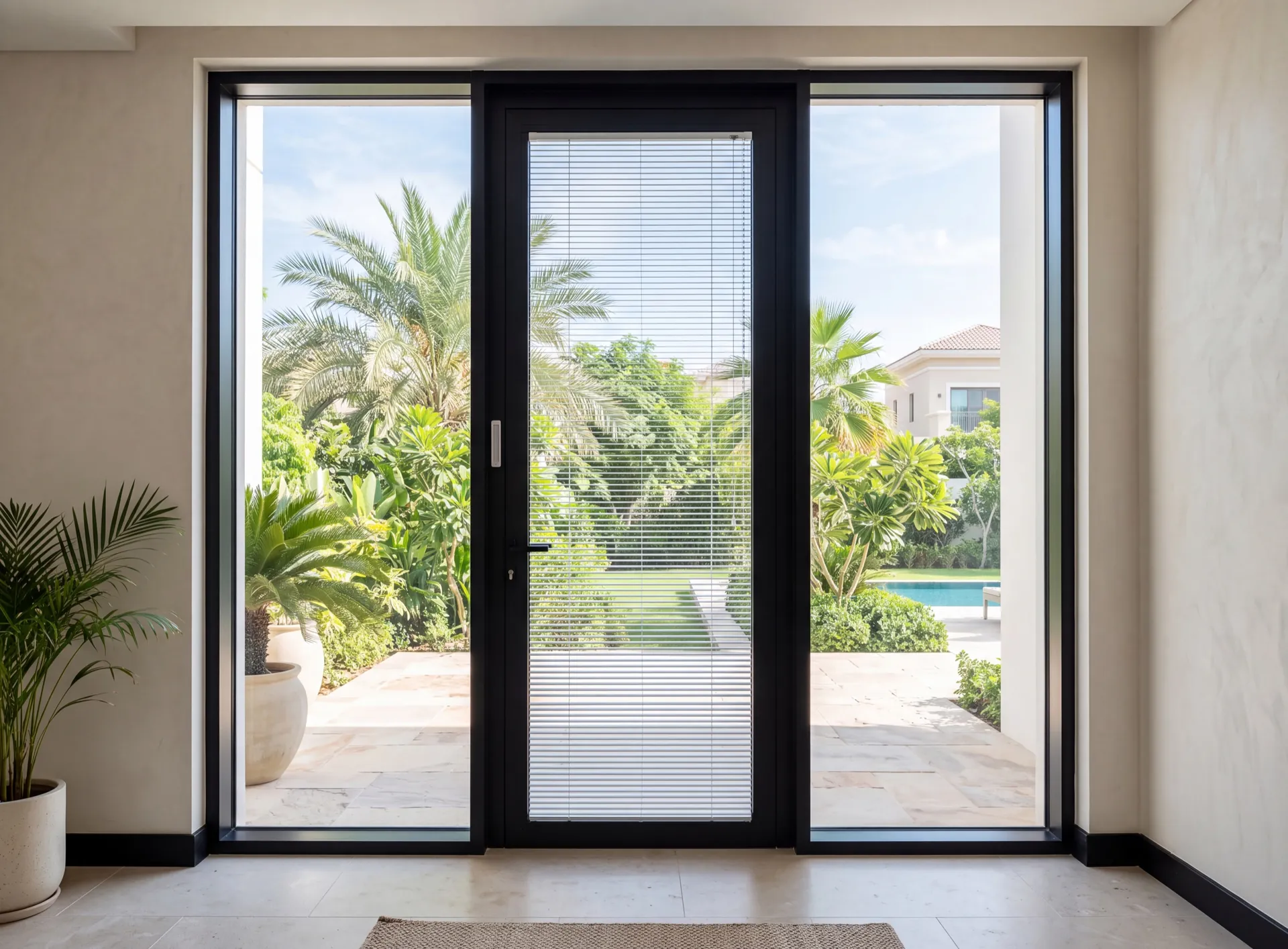 Consider instead
Integrated blinds
Consider instead
Integrated blinds
Frequently asked questions
They answer different questions, so name the complaint first. If it is glare, a view you would rather soften, or a facade colour the architect has drawn, a body tint does that directly and permanently. If it is the room being hot in August, a coating does considerably more, because absorbing sunlight is not the same as turning it away: a tinted pane takes the energy in, gets hot, and then radiates a share of that heat onward indoors. One unit can carry both — a tinted outer pane for the look and the glare, a coating on a cavity face for the heat.
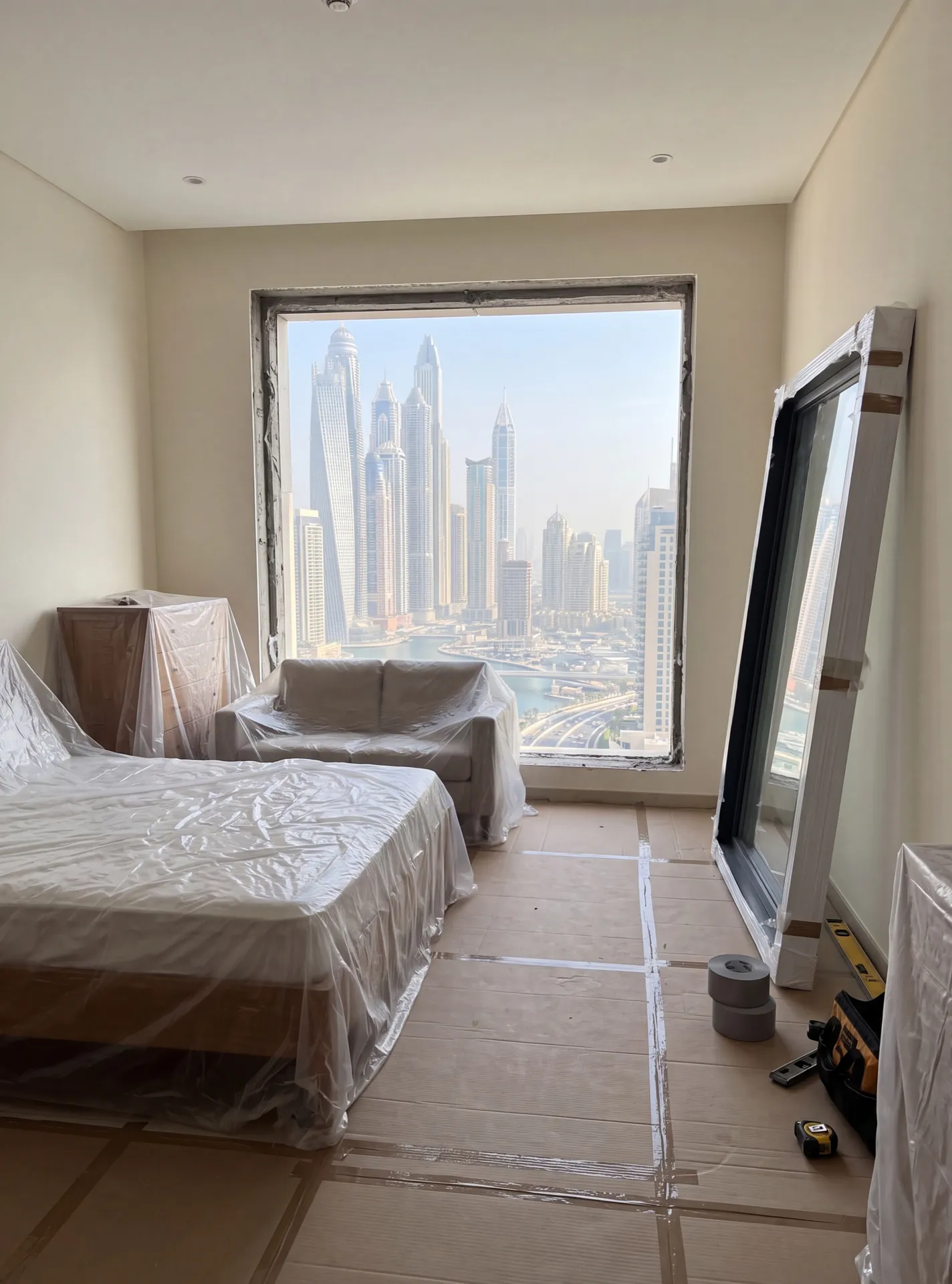
No. Film is a layer stuck onto glass you already own, on the room side, where every cloth and squeegee reaches it and where it eventually lifts at the edges. A body tint is not on the glass at all — it is in it, decided in the furnace when the glass was made, and there is no layer on it to peel or wear off. That also means it cannot be changed later: the pane is the tint, so a change of mind is a change of glass.
It will make it darker, and the strength of the tint is exactly that dial. That is a feature in a west-facing study full of screens and a real loss in a north-facing majlis that was already short of daylight. This is usually where we steer clients towards a selective coating for the heat and a light tint, or none at all, for the look — you get the cooler room without giving up the daylight. Where a deep tint is genuinely wanted, we ask for it to be seen on the building at more than one hour of the day before it is ordered.
Because absorbing sunlight makes the pane hot, and heat that is not spread evenly across a sheet puts it under stress. A tinted pane with its middle in full sun and its edges shaded by a reveal, a balcony or a shading fin has a hot centre pulling against cool edges, and annealed glass can crack under that. Heat-strengthening or toughening raises what the pane can take. Which panes need it comes out of the shading on the elevation, so it belongs in the survey rather than in a warranty conversation afterwards.
Related pages
Nearby pages and the rest of the catalogue.
- Acoustic glass
- Double glazed units
- Laminated security glass
- Low-E glass
- Multifunctional glass
- Self-cleaning glass
- Solar control glass
- Triple glazed units
Sections
Company
We are always happy to welcome you at our showroom
Main Office

Dubai — Showroom
The Pinnacle Building, Sheikh Zayed Road, Office 607
Mon–Fri: 9:00 – 18:00
Showroom

Samples to see in person
Profiles, glass units and hardware to see and touch before you choose.
Dubai — Showroom
The Pinnacle Building, Sheikh Zayed Road, Office 607
Get directions 