


Main Office

Dubai — Showroom
The Pinnacle Building, Sheikh Zayed Road, Office 607
Mon–Fri: 9:00 – 18:00
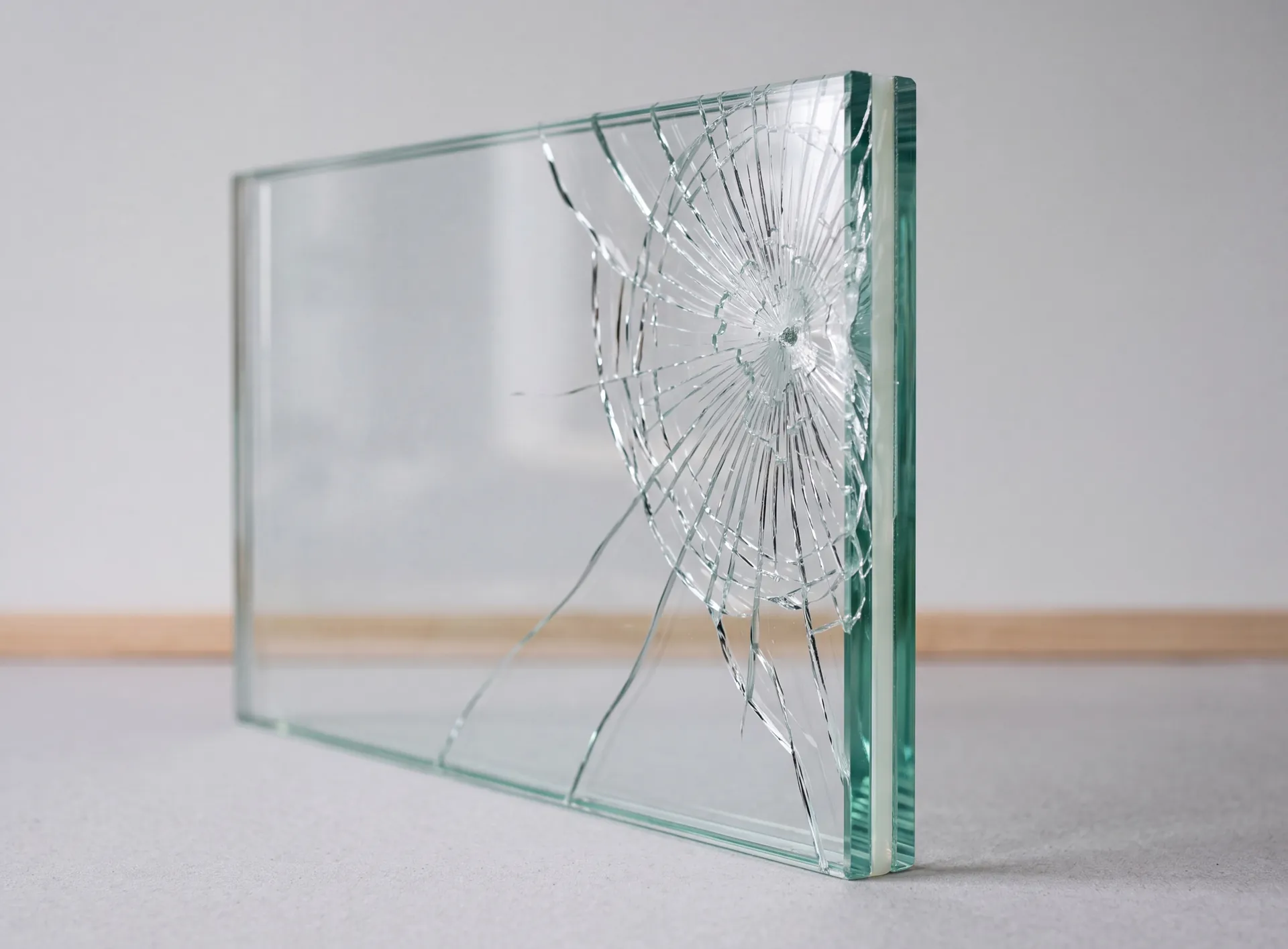
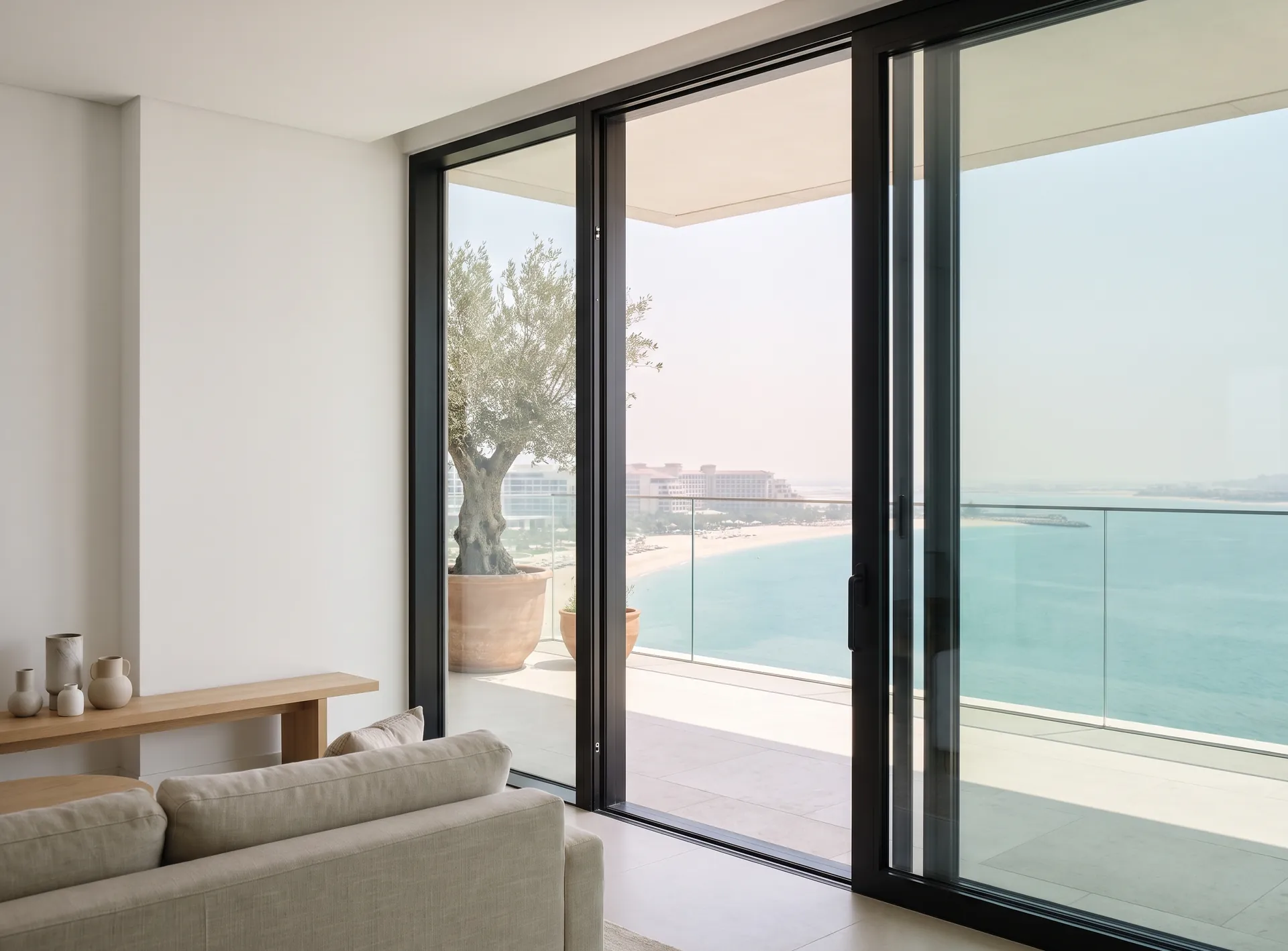
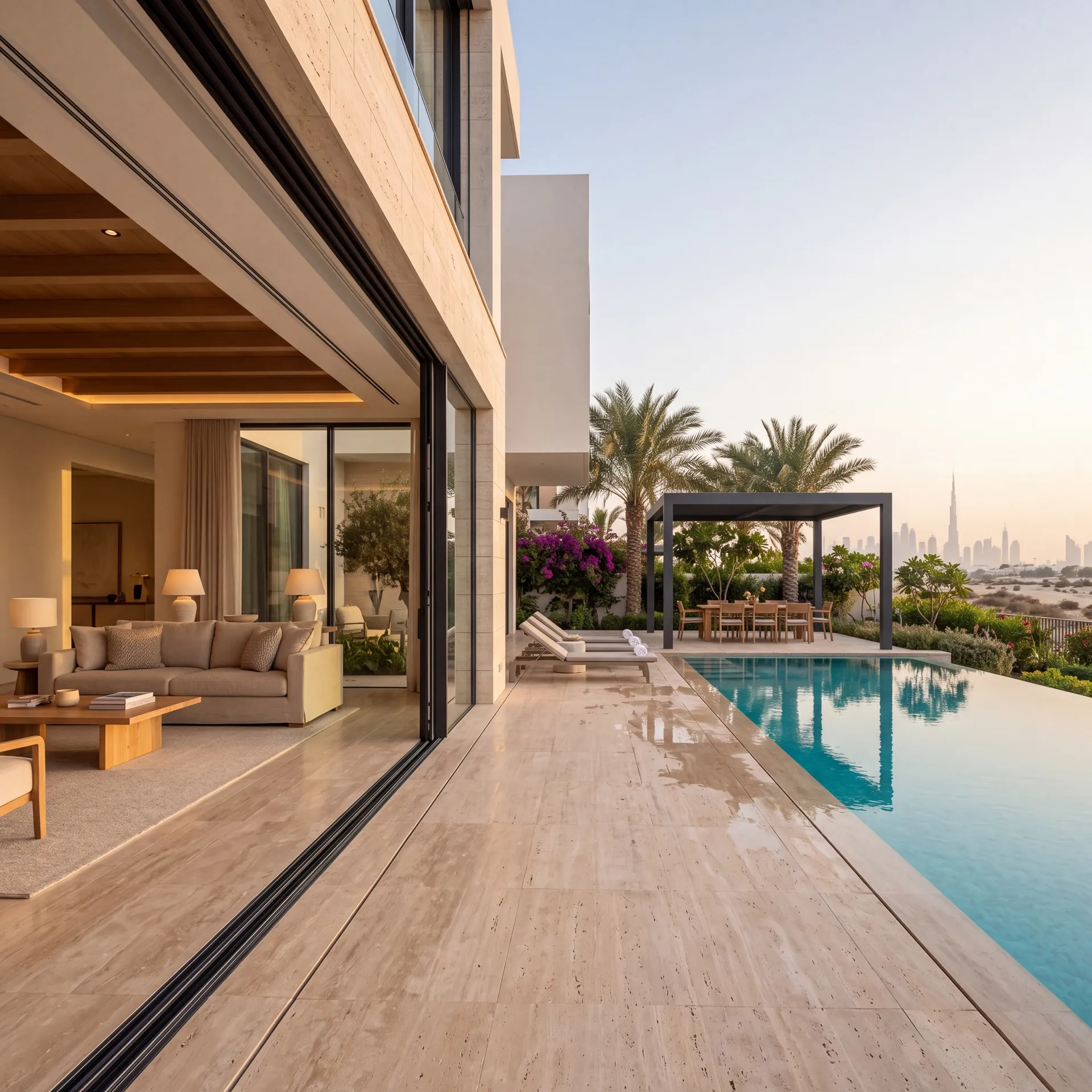
Two plies of glass bonded to a tough transparent interlayer behave as one sheet. Break it and the pane crazes but stays where it was — held to the interlayer instead of leaving the opening as loose pieces. That behaviour is the whole argument for it wherever a person can walk into the glass or fall against it: panes running to the floor, balcony balustrades, pool enclosures and full-glass doors. The same interlayer absorbs most of the ultraviolet as well, so what sits behind it keeps its colour a good deal longer.
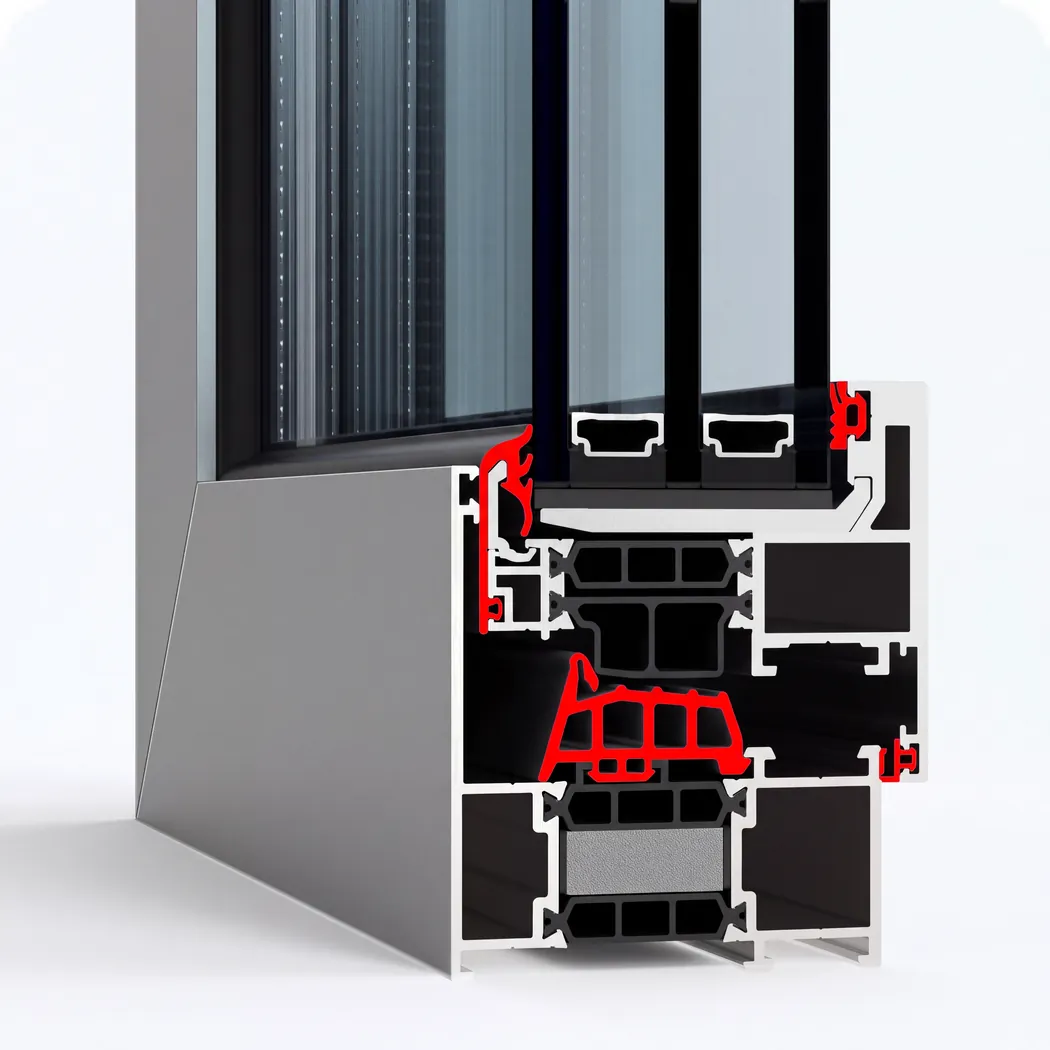
Three contours of EPDM seals keep the glass off the aluminium and close the gap between sash and frame, so dust, humid salt air and wind-driven rain stay outside.
Learn more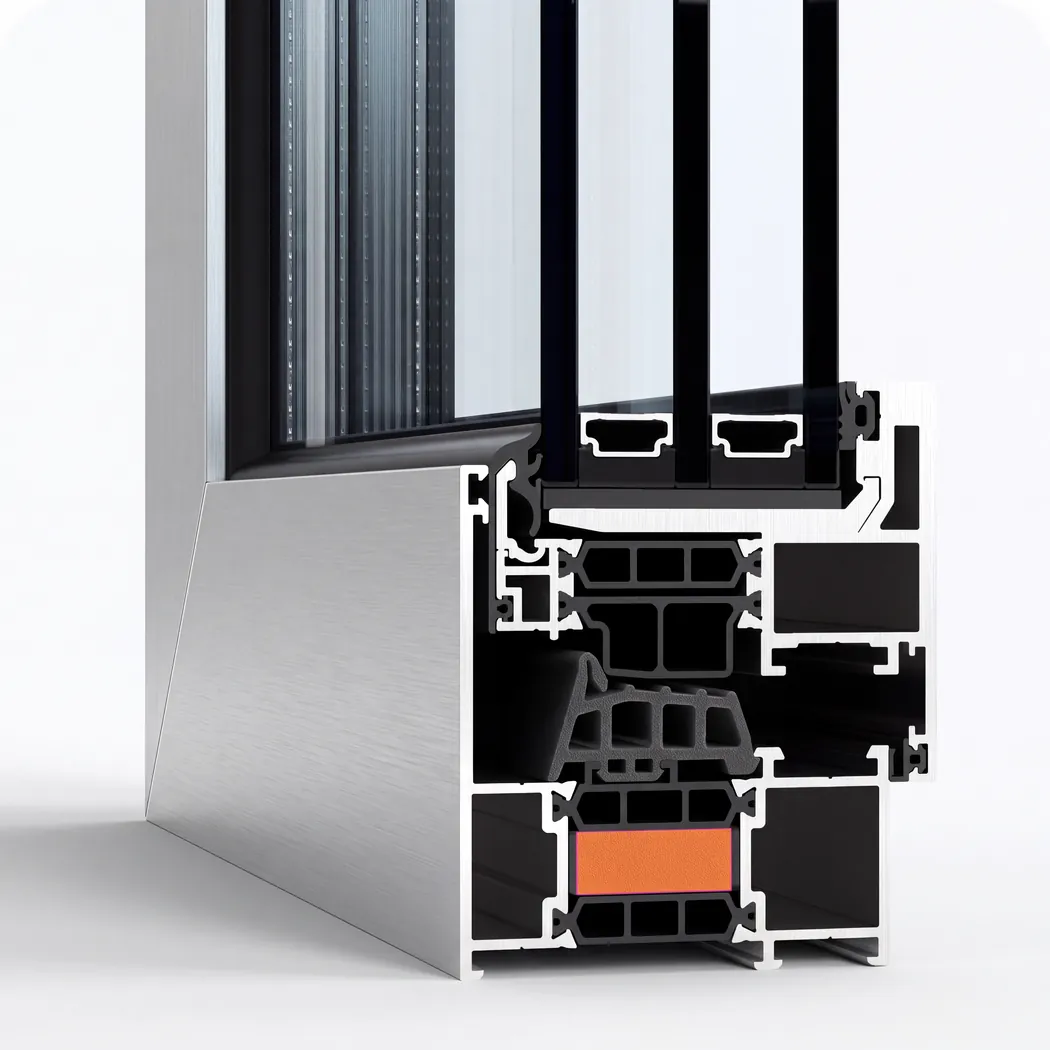
Foamed inserts fill the profile chambers and stop air circulating inside them, so less outside heat and street noise passes through the frame into the cooled room.
Learn more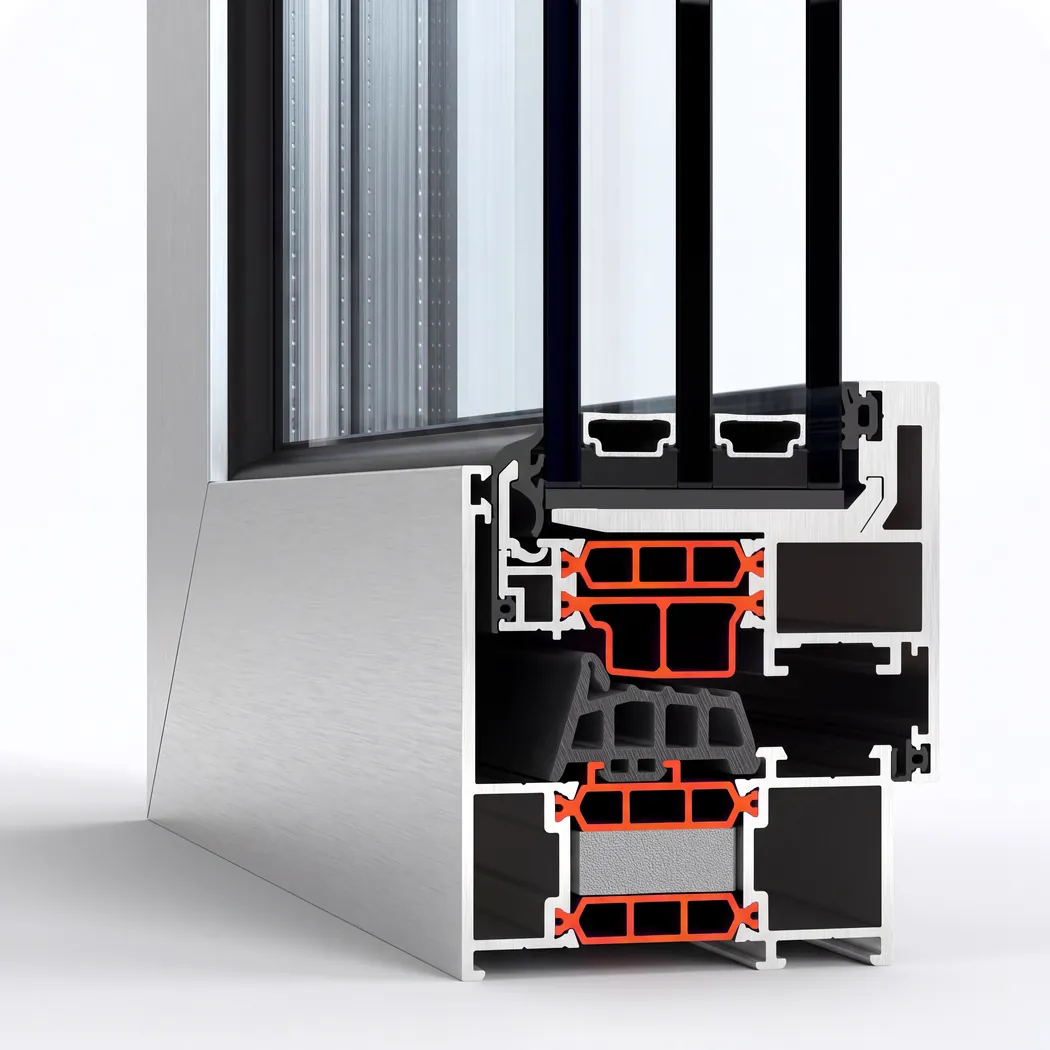
Glass-filled polyamide thermal breaks up to 40 mm wide keep the outer and inner shells apart, so the frame holds its shape and its insulation through a UAE summer.
Learn more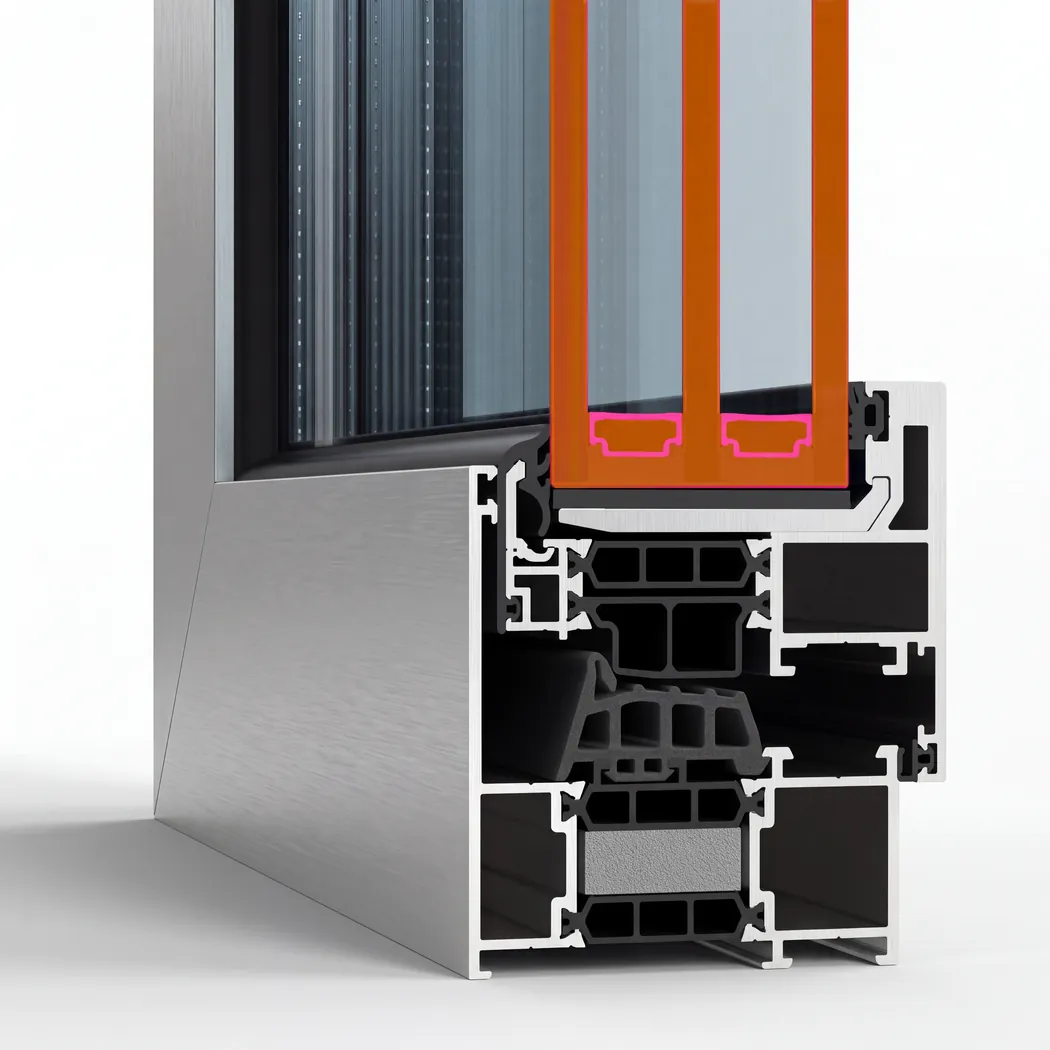
Double glazing up to 60 mm thick puts a sealed gap of still air or gas between the hot street and the cooled room, so less heat crosses the glass into the room.
Learn moreTwo plies or more
Build
Bonded under heat and pressure
Structural
Interlayer
Holds the fragments in place
Toughened or annealed
Plies
Matched to how it is loaded
Clear or opal
Interlayer finish
Privacy without a film
Inside the unit
Combination
Pairs with coated or acoustic panes
Get a free calculation for your windows — just leave your number, we'll reply on WhatsApp within 15 minutes.
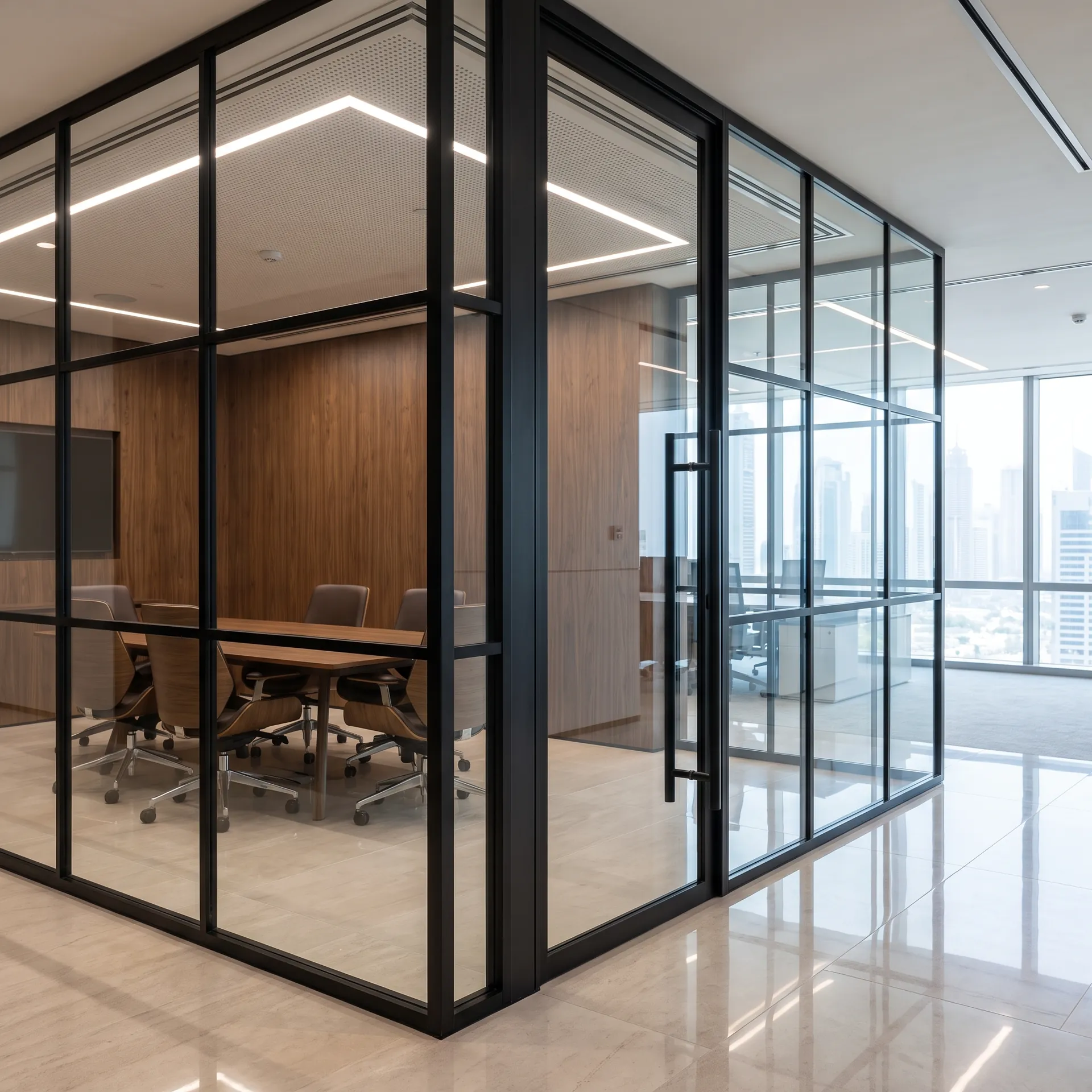
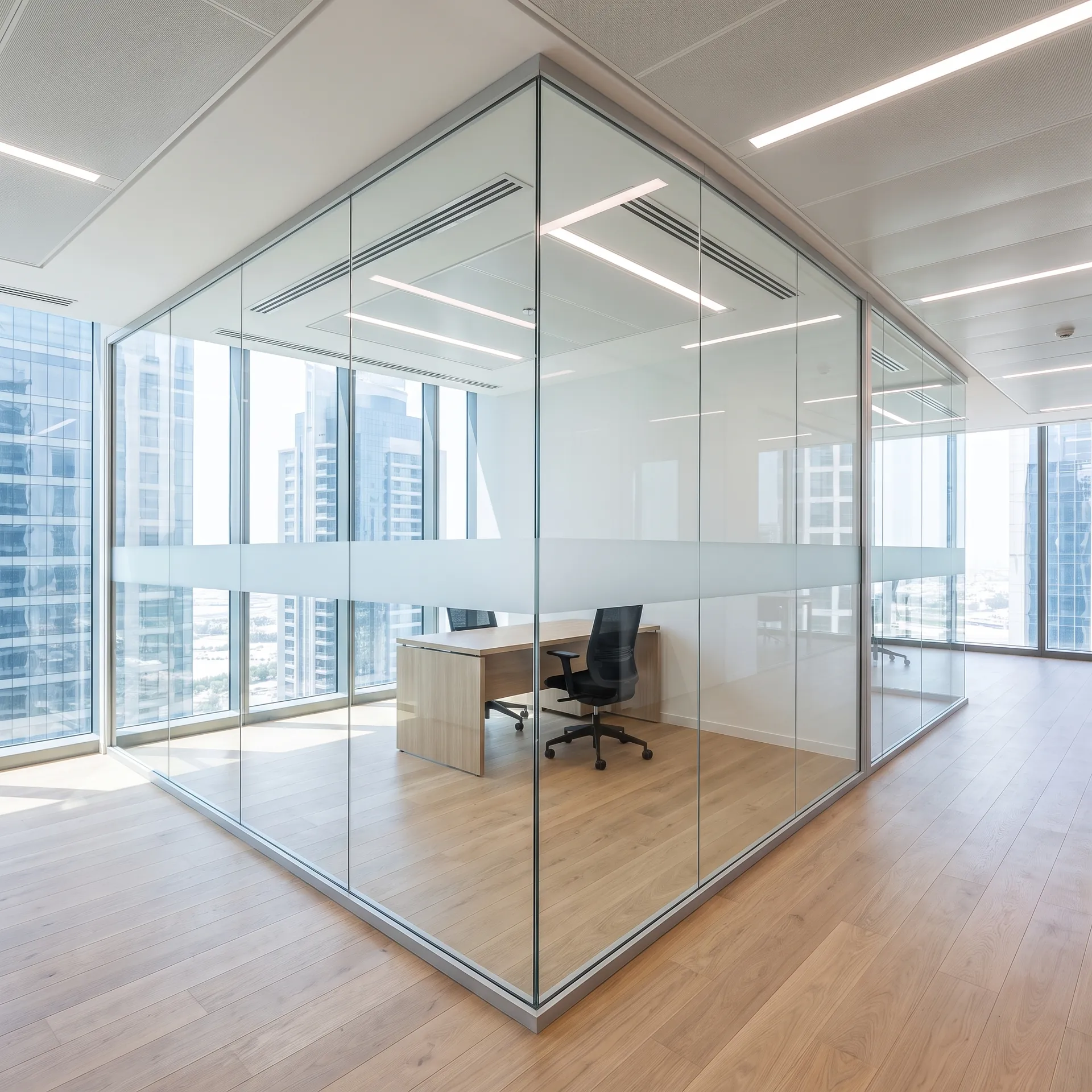
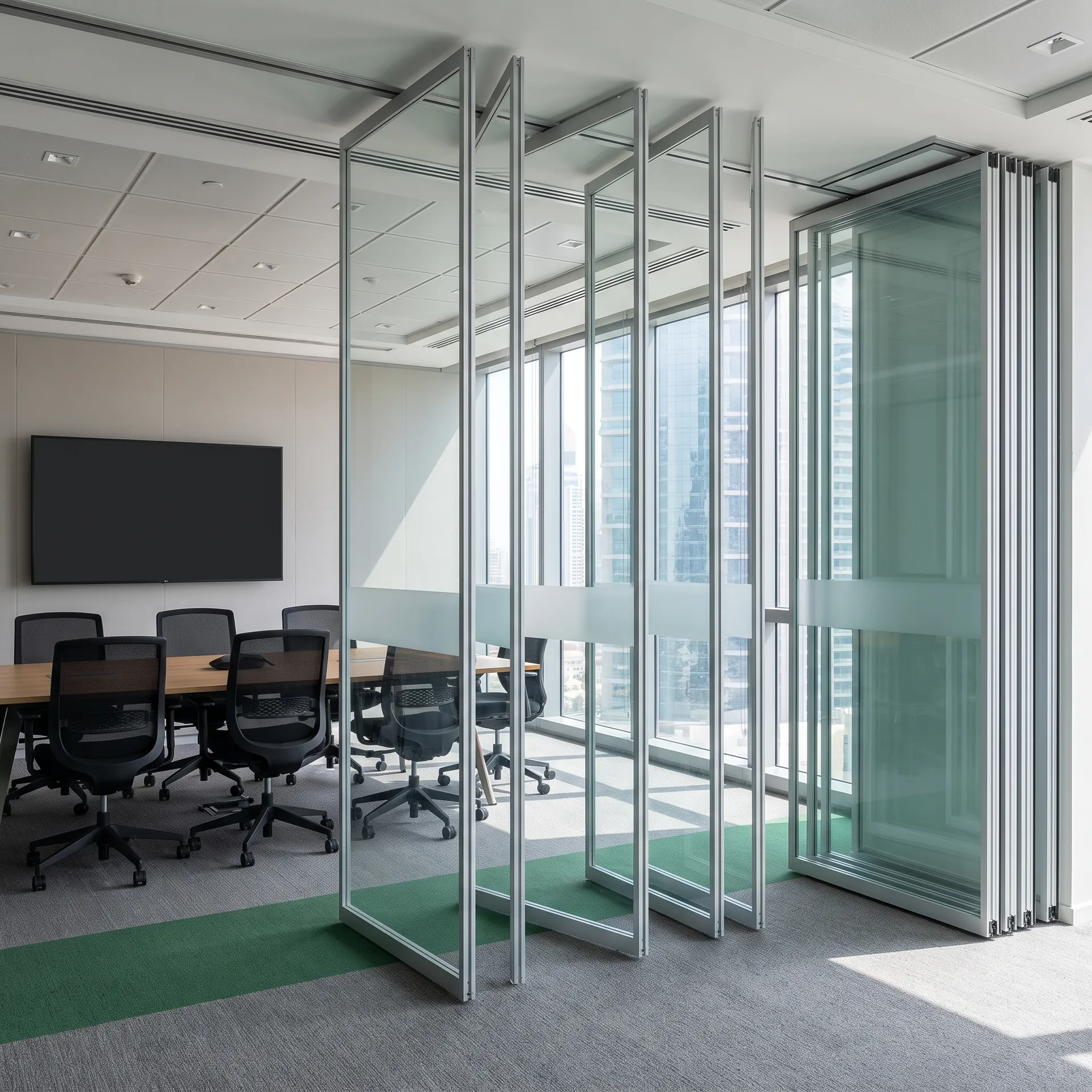
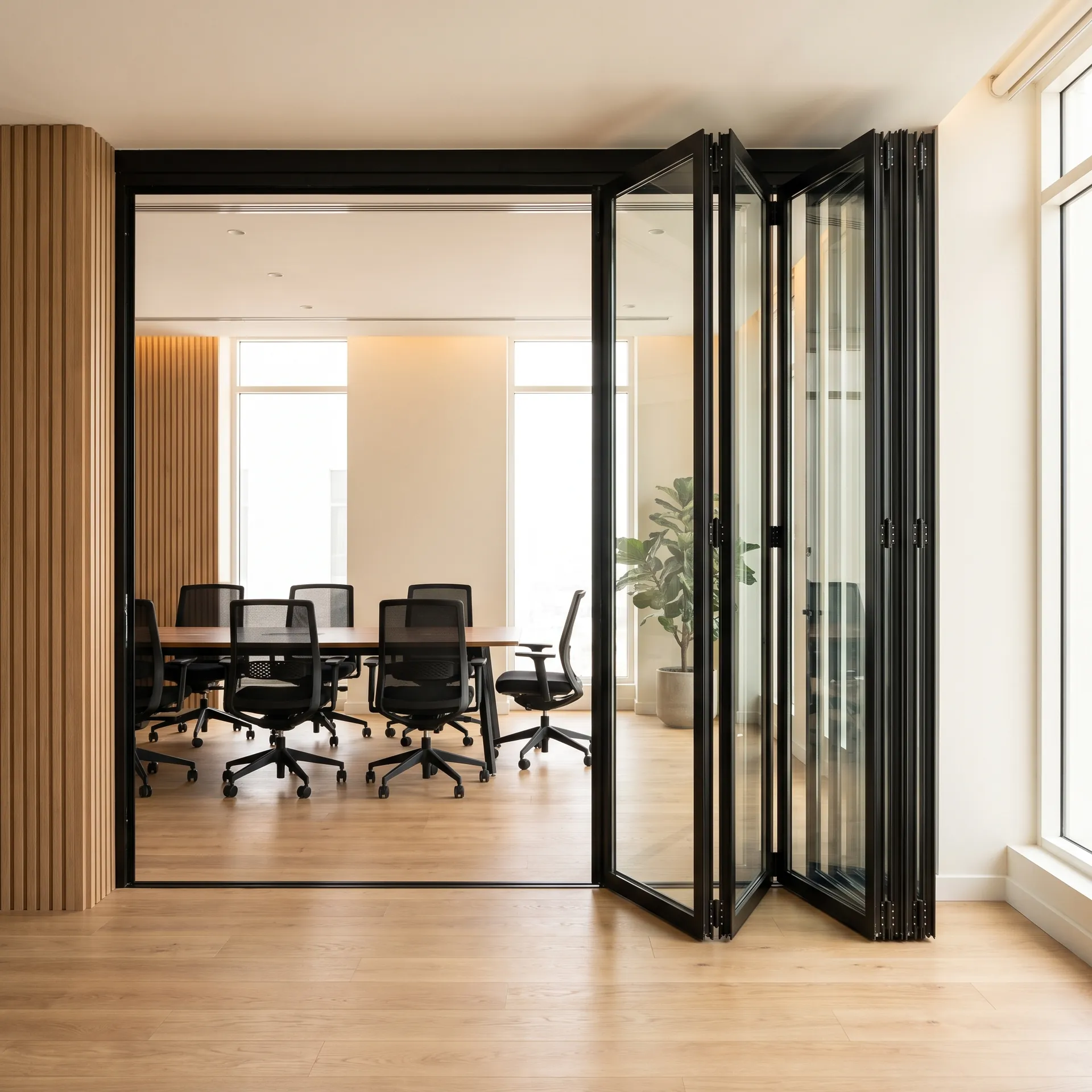
Office partitions made of aluminium profiles are a simple, quick, and cost-effective way to organise efficient zoning within a large space, while maintaining interior unity.
Pricing
Choose the options — we’ll send the price on WhatsApp
What are we making
Shape and opening
Size
Width and height: 300–6000 mm. Not sure? Clear the fields — we’ll measure at the free survey.
Width under 300 mm — check that it is in millimetres.
Width over 6000 mm — we’ll confirm it at the survey.
Height under 300 mm — check that it is in millimetres.
Height over 6000 mm — we’ll confirm it at the survey.
Enter a whole number of units, 1 or more.
Glazing unit
Extras
Do you need a windowsill?
Do you need a coloured profile?
Do you need installation?
The honest downside
Laminated glass is often bought against break-ins, and on its own it rarely delivers that. An intruder seldom attacks the middle of a pane: a sash is levered at the hinge side, a lock is forced, a sliding leaf is lifted off its track. If the frame and the hardware give way first, the glass holding together makes no difference.
Where nobody can reach the glass and no fragment has anywhere to fall, it is a heavier and dearer build than the opening needs. And by a pool or the sea, a frameless panel whose laminated edge stays bare and wet needs the right interlayer and a sealed edge, or that edge can cloud.
When the worry is someone getting in, look at a security window, where frame, locking and glass resist together. Laminated glass stays the right answer wherever a person can fall against the glass or a broken pane must not leave the frame.
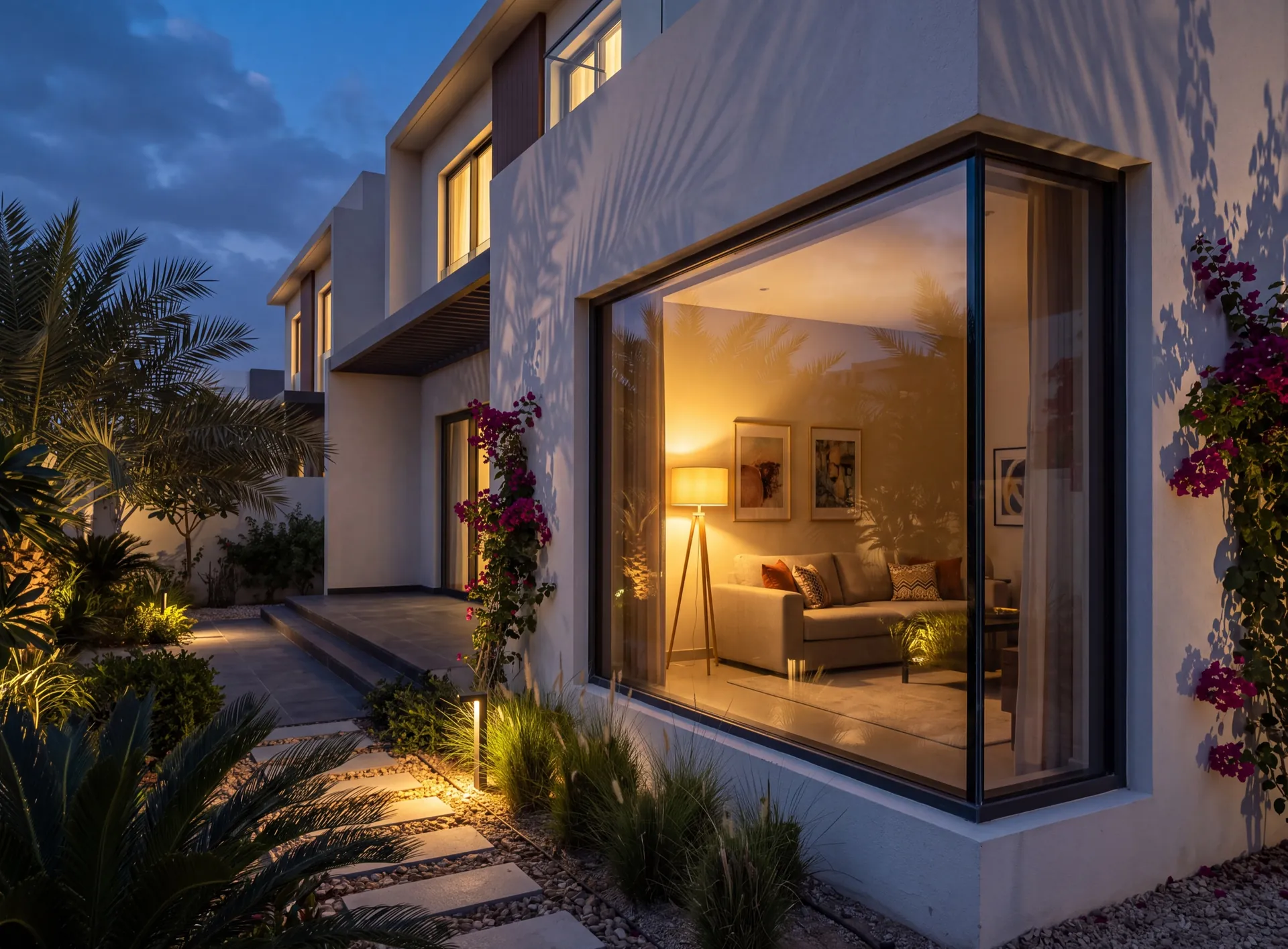 Consider instead
Security windows
Consider instead
Security windows
Nearby pages and the rest of the catalogue.
Sections
Company
The Pinnacle Building, Sheikh Zayed Road, Office 607
Mon–Fri: 9:00 – 18:00

Profiles, glass units and hardware to see and touch before you choose.

Free measurement
Leave your number — we call back to agree a time that suits you.
We reply within 15 minutes during working hours.