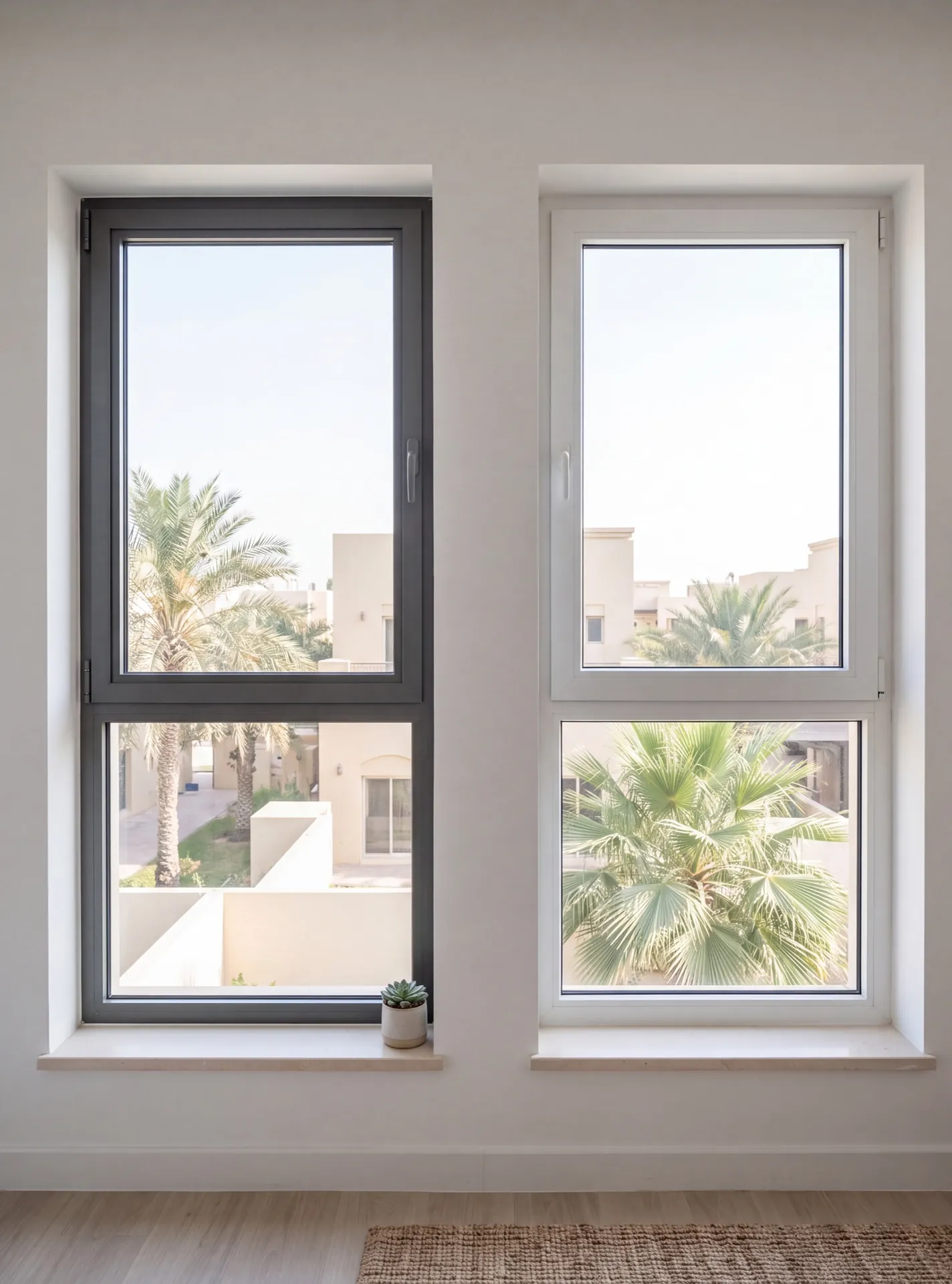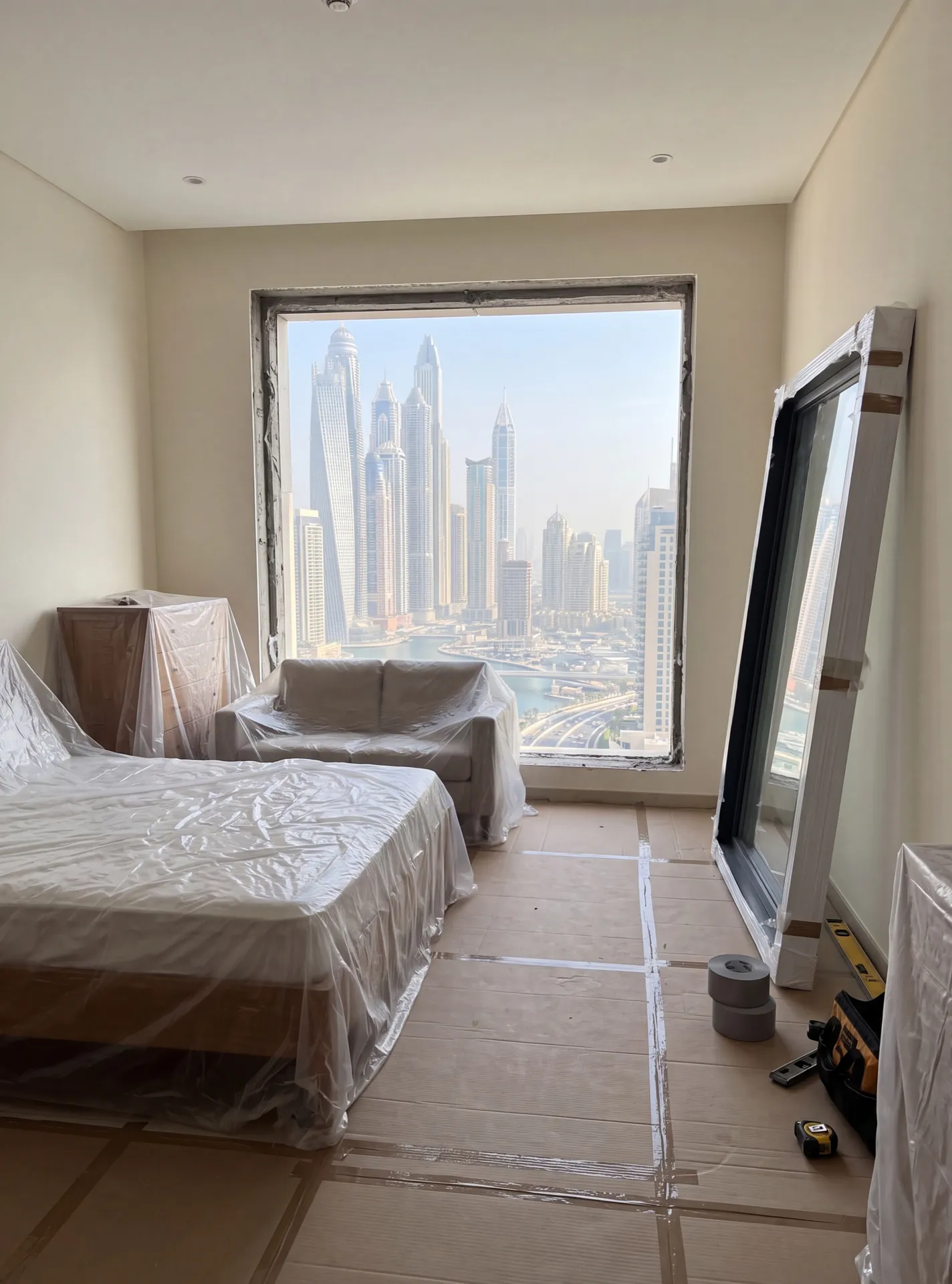





A window is several components with very different lifespans bolted into one opening. Judging it as a single object is what leads people either to replace something sound or to keep patching something that has stopped being repairable. Take it apart in your head first.
Separate the frame from everything attached to it
The aluminium section itself is the longest-lived part of the assembly. What ages around it are the consumables: the sealed glass unit and its edge seal, the gaskets, the rollers and hinges, the handles and locking gear, and the coating on exposed faces. Each of those has its own life, and on this coast each is worn by something different — heat cycling on the seal, grit on the running gear, ultraviolet and salt on the finish.
That is why the honest first question is not how old the windows are but which parts have failed. A twenty-year-old frame with a misted unit and worn rollers is three replaceable items and a sound structure. A newer frame that is corroding through at the fixings, or whose corner joints have opened, is the opposite: the consumables are fine and the thing holding them is not.
The test worth applying to any quote is whether it names components or names age. Age on its own is not a diagnosis, and a proposal to replace everything because the windows are old has skipped the part where somebody looked.
What is almost always a repair
Haze sealed between the panes is a glass job, not a window job. The frame, the hardware and the finish stay exactly where they are and the unit is exchanged, which is why it is one of the most commonly over-sold failures in this business. A cracked or scratched pane is the same conversation.
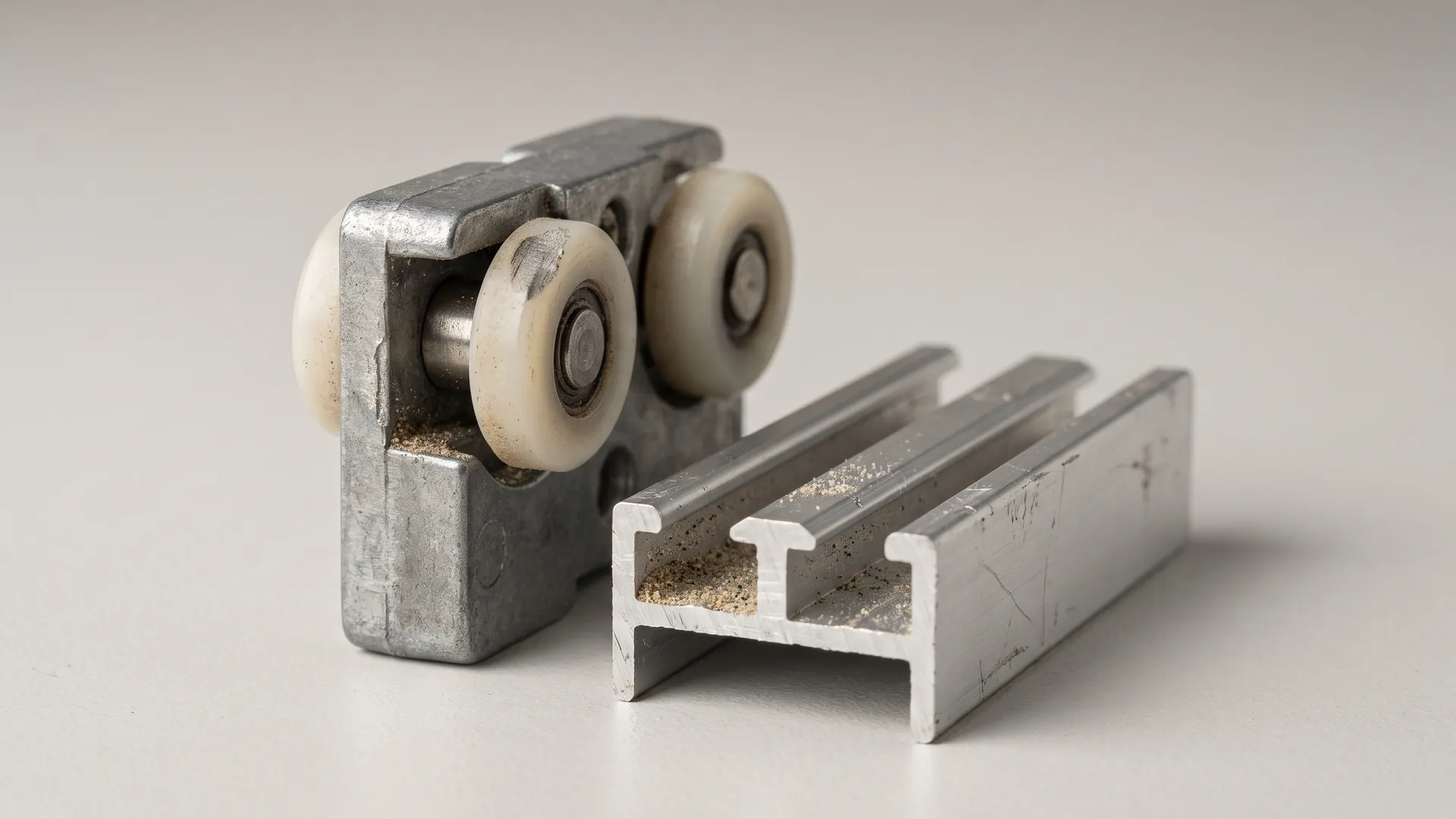
Anything in the moving gear is a repair by default. Rollers worn flat by running over sand, a hinge that has dropped, a lock that no longer engages, a handle that has stripped its fixing, a sash that catches at one corner — these are parts and adjustment. A sliding leaf that has become heavy is nearly always a track full of grit or a worn roller rather than a failing door.
Dust, hot air and noise coming in around a sash usually belong here too. Gaskets harden, shrink back at the corners and are ground flat by blown sand, and once they no longer press evenly the window stops sealing while looking perfectly intact. Replacing gaskets and resetting the closing pressure restores it. So does clearing drainage slots that have silted up, which is a ten-minute job that quietly prevents a much larger one.
What genuinely points to replacement
The clearest case is a frame that cannot do what you now need it to do. An unbroken aluminium profile in a hard-cooled flat carries the chill straight through the metal, so it runs colder than the room, beads up along its length and wets the sill through every humid month. Nothing bolted on afterwards adds a thermal barrier that is not inside the section, so persistent condensation on the frame itself is a replacement argument rather than a maintenance one.
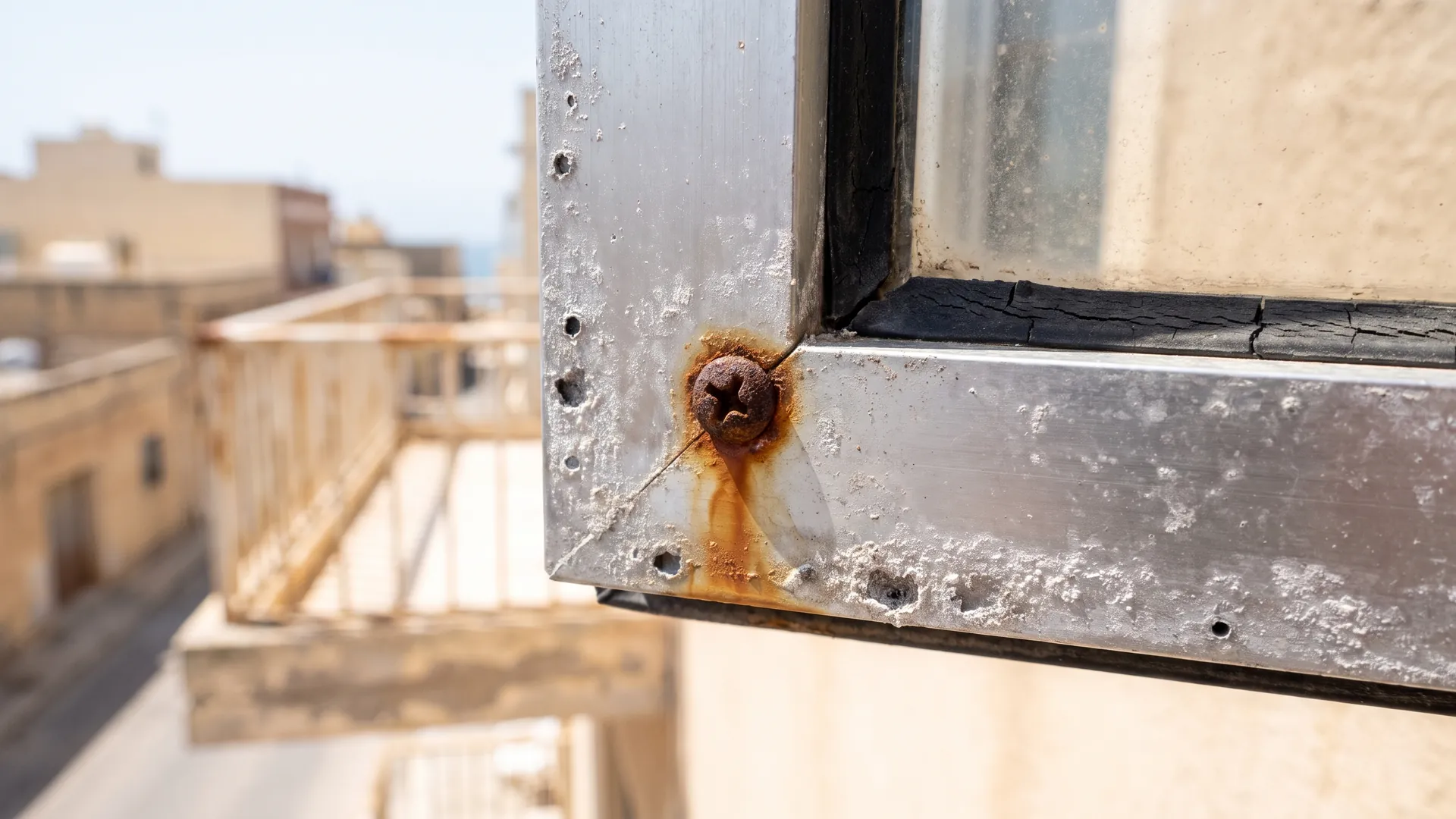
Structural condition is the second. Corrosion that has eaten through the section or destroyed the anchorage, corner joints that have opened so the frame is no longer square, distortion that keeps a sash from closing however it is adjusted, or a reveal so damaged that the frame is no longer properly held — none of those are repaired in place. On a first-line coastal elevation they show up sooner, and they show up around fixings and cut edges rather than in the middle of a face.
Then come the practical dead ends. A system nobody stocks parts for turns every small failure into a hunt, which is a slow, expensive way to keep a window alive. Single glazing cannot be upgraded to a sealed unit in a frame that was never made to take one. And if you want a different arrangement — larger glass, fewer bars, a sash that opens where none does now, better security downstairs — that is a new window by definition, because it is a new drawing.
How to weigh the two without a spreadsheet
Three questions settle most cases. First, how many separate repairs has this window had, and how many are foreseeable in the next couple of years — because repairs are individually cheap and collectively not, and a window on its third visit is telling you something. Second, does the repair fix the thing that actually bothers you: a new sealed unit cures haze but does not make a hot room comfortable, and new gaskets keep dust out but do not quieten a motorway. Third, is the frame sound, since everything else follows from that answer.
The genuine difference is that a repair restores what the window was and a replacement changes what it is. If the complaint is that something has stopped working, repair is usually right and usually much cheaper. If the complaint is that the window has never been good enough — too hot, too loud, too dusty, not secure, condensation every humid season — repairing it returns you to a specification you already dislike.
It is also not one decision for the whole property. Splitting by elevation is often the sensible answer: replace the sunlit or seaward face where the specification is the problem, and service the shaded elevations where the frames are sound and only the consumables are tired. That spends the money where it changes something.
Who to call, and when we will tell you to repair
We service the windows and doors we manufactured and installed — glass units, gaskets, hardware and adjustment — and an engineer can be on site within 48 hours to look at them. Windows fitted by somebody else are the job of windowrepair.ae, the repair company in the same group, which is set up for that work and stocked for the systems common in this country. Sending a glass unit or a roller job there is usually faster and cheaper than treating it as a glazing enquiry.
A survey that ends with a recommendation to repair is a normal outcome, and it is worth saying plainly because the incentive runs the other way. Where the frames are sound and the failures are consumables, replacement is money spent to arrive at a similar window. That is the conversation to expect, and the reason the visit is free and carries no obligation.
What is worth avoiding is the middle path taken by accident: repairing a window you have already decided to replace within the year, or replacing one elevation without recording what was specified so the next one cannot be matched. Decide which side of the line the property is on, do that thing properly, and keep the drawing.
Judge components, not age. Misted units, worn rollers, tired gaskets, broken handles and blocked drainage are repairs, and repairing them is usually the right answer. A frame with no thermal barrier that sweats every humid month, corrosion through the section, opened corners, a system with no parts, or a specification that never suited the elevation — those are replacements, because no repair changes what the window is. If a survey says the frames are sound, take the repair; if it says the specification is the problem, replacing one elevation properly beats patching all of them.