

This is a practical checklist rather than a warning. Dubai Civil Defence and the municipality have run public campaigns on this for years, and building regulations set minimum heights and gap sizes for balustrades. What regulations cannot govern is what gets placed against the barrier afterwards — and that is where most of the risk in a finished home actually sits.
The barrier itself: what makes it climbable
A young child climbs whatever offers a foothold. Horizontal rails are the clearest example: a balustrade with two or three horizontal bars is, from a toddler's point of view, a ladder with the rungs already spaced conveniently. This is why vertical infill is standard practice and why horizontal designs, however attractive in photographs, are the wrong choice in a home with small children.
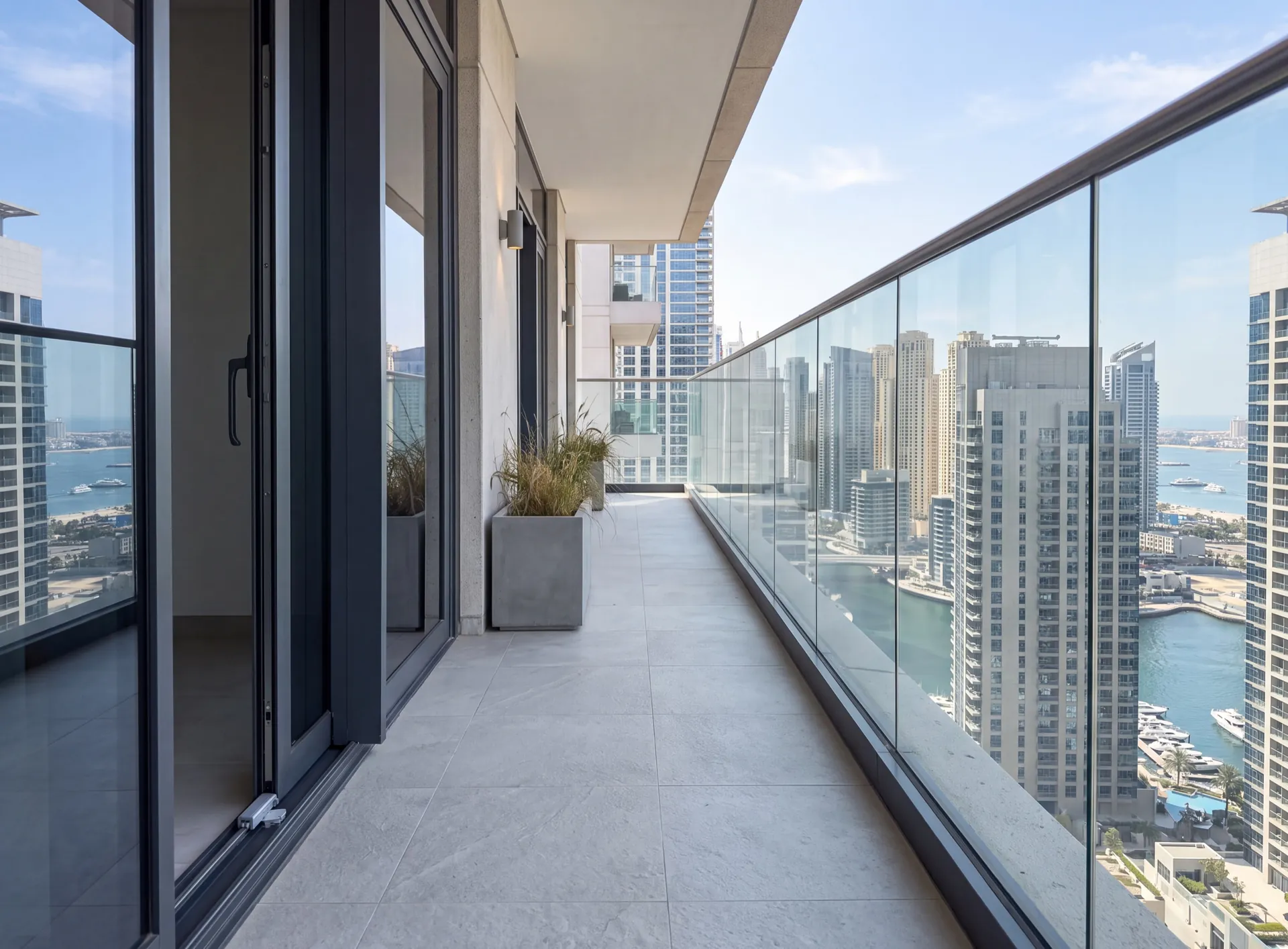
Solid panels — laminated glass or a solid metal sheet — offer nothing to grip at all, which is why a full-height glass balustrade is genuinely one of the safer options here despite being the one people instinctively worry about. Correctly specified balustrade glass is laminated, so it stays in place even if it is ever broken.
Where vertical bars are used, the spacing matters: the requirement exists so a child's head cannot pass through, and it is worth measuring rather than assuming, particularly in an older building or after any alteration.
One more thing to look at: a wide handrail or a decorative ledge at the top of a low wall gives something to pull up on. It is a small detail that changes what a determined three-year-old can reach.
The part that catches people out: furniture
A perfectly compliant balustrade is defeated by a chair pushed against it. So is a storage box, a plant pot on a stand, a folded drying rack, or a low table. The effective height of a barrier is measured from whatever a child can stand on, not from the floor.
This is the single most useful habit to adopt: keep a clear zone along the balustrade and put everything climbable against the wall of the building instead. It costs nothing, it requires no products, and it addresses the mechanism behind most balcony incidents involving young children.
It applies to temporary things too. A delivery box left outside for an afternoon, a stepladder used to change a light and not put away, a cushion pile — the risk is not that these are permanent, but that they are there at the wrong moment.
Doors and windows: restrictors
A balcony that a small child cannot reach unaccompanied is safer than any barrier. Restrictors are the mechanism: a device on the sash that lets the door or window open for ventilation but not far enough for a child to pass, releasable by an adult.
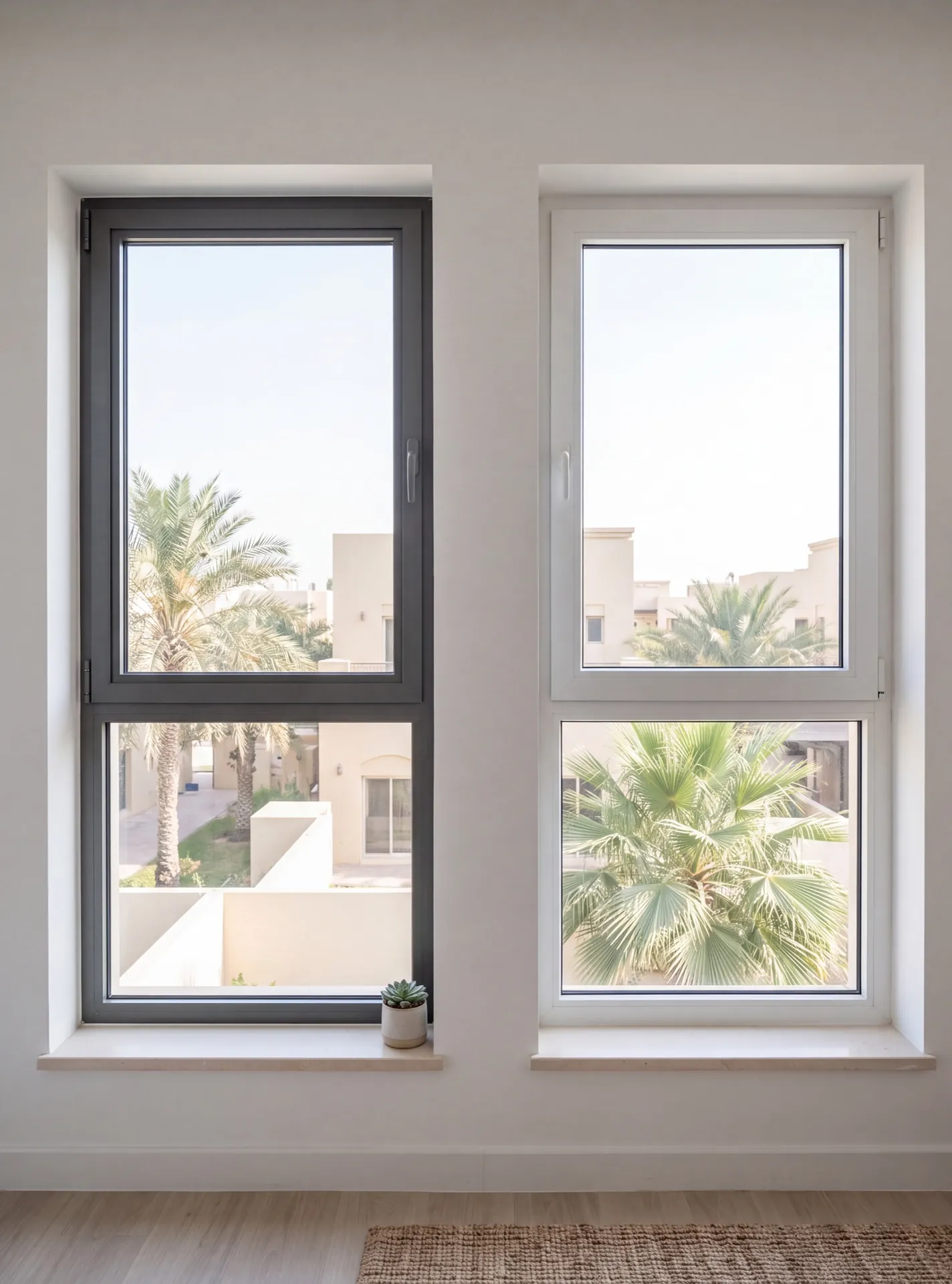
They matter as much on windows as on balcony doors, particularly in a bedroom where a bed or a chest of drawers sits under the window. A window that opens fully at a height a child can reach from furniture is the same problem in a different location.
Look for a restrictor with a key or a deliberate release action rather than a simple catch. And check it works — restrictors fitted at handover are sometimes removed during a paint job or a furniture delivery and never put back.
Insect screens are not a safety device. They are designed to keep insects out, they are held by light clips, and they give way under a child's weight. This is worth stating plainly because a screened window can look reassuring while offering no protection at all.
What a tenant can change, and what needs the landlord
Restrictors, furniture arrangement and removable barriers are generally within a tenant's control and are the highest-value changes anyway. None of them alter the building.
Changing the balustrade itself is a different matter: it is part of the building's facade, and in almost every tower it needs the landlord's and the building management's approval. Some buildings have a standard detail they will permit and others will not allow alterations at all.
If a balustrade is genuinely non-compliant — gaps too wide, a height below the requirement, damage or loose fixings — that is a matter to report to building management rather than to fix privately. It is their obligation, and a private repair to a facade element can create problems of its own.
For an owner rather than a tenant, replacing a horizontal-rail balustrade with a laminated glass or vertical-bar system is a straightforward job once approval is in hand, and it is the permanent version of everything above.
A short checklist
Can anything on the balcony be climbed, including furniture, boxes and planters? Is the barrier free of horizontal rails and wide ledges? Are the gaps narrow enough that a child could not pass through? Is there a working restrictor on the balcony door and on the bedroom windows? Is the door usually kept locked when the balcony is not in use? And has anybody checked the fixings at the base of the balustrade recently, particularly in a seafront building?
None of these require a purchase except the restrictors, and those are inexpensive. The clear zone along the barrier is free and does the most work.
Treat the barrier and its surroundings as one thing. A compliant balustrade with a chair against it is not a safe balcony, and a plain laminated glass panel with a clear zone in front of it and a restrictor on the door is a very safe one.