


Windows for high-rise
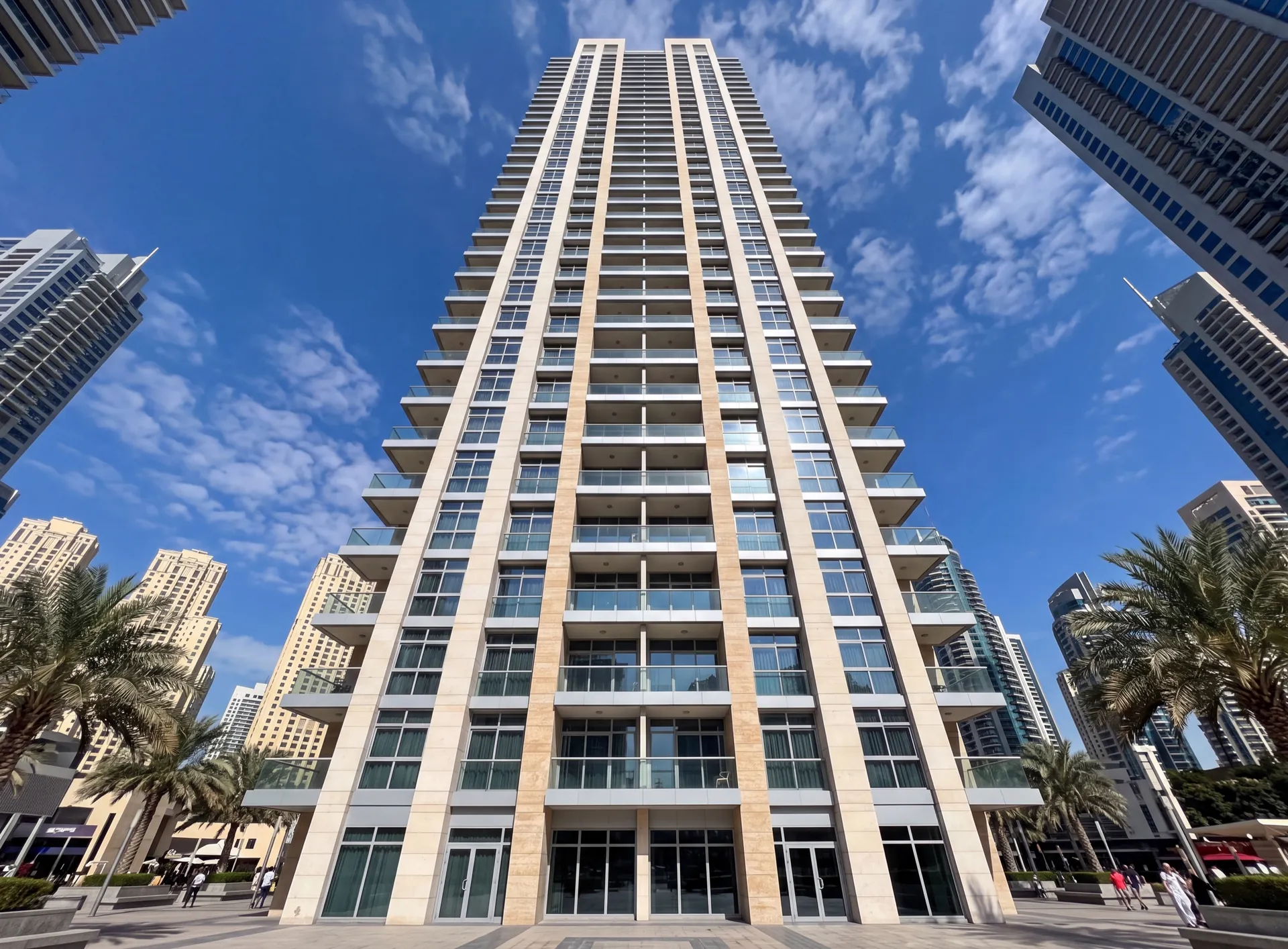
Height changes the engineering rather than the taste. Wind pressure on a frame grows the further up the tower it sits, rain arrives sideways instead of falling, and the pressure difference between a corridor and a room begins to affect how a sash behaves. On top of that sits a safety rule that does not apply to a villa: under the Dubai Building Code an opening sash with a sill below 900 mm must be restricted to a 100 mm opening, because the consequence of a fall is not negotiable. And all of it has to be built to be installed and later serviced from inside, since nothing up there is reachable from a ladder.
- per floor wind calculation
- drained and vented frame chambers
- on opening sashes restrictors
What height adds to the specification
-
Rises with the floor
Wind pressure
Calculated, never assumed
-
Drained chambers
Rain
Water is let out, not held out
-
Into the slab
Fixings
Never into render or infill
-
Limited travel
Restrictor
Released only with a tool
-
From inside
Access
Installation and service alike
Let's calculate
the cost of glazing
Get a free calculation for your windows — just leave your number, we'll reply on WhatsApp within 15 minutes.

We produce
Curtain walls, structural and semi-structural glazing, ventilated and cassette facades. The system carries its own weight and the wind load of a tall building, and the glass line stays unbroken across the elevation.
Canopies, balustrades, railings and pool fencing, where glass is carried by an aluminium or steel frame. The load goes through the metal, the glass stays transparent.
Frameless glazing, spider systems, skylights and roof lanterns — everything built so the frame disappears and only the glass is read.
Office and glass partitions, sliding and smart-glass systems. They divide a floor without walls: light passes through, noise does not.
Glazed structures with a fire-resistance rating for escape routes and openings between fire compartments.
Priced per project
 Glazed facade
Curtain wall
Glass floors
Stair railings
Glass fences
Glass canopies
Skylights
Glass partitions
Fire-resistant glazing
Glazed facade
Curtain wall
Glass floors
Stair railings
Glass fences
Glass canopies
Skylights
Glass partitions
Fire-resistant glazing
How a tower opening is handled
- Structural calculation at your own height Not a figure copied from the podium
- Management approval before mobilising Licence, method statement, crew list
- Anchors set into slab or concrete upstand Blockwork infill is not structure
- Frame drainage and pressure path detailed Driven rain is a pressure problem
- Restrictors specified for opening sashes Required below a 900 mm sill (DBC E.9.4)
- Seals checked and sashes adjusted on the floor Before the crew moves on
Articles
Partitions
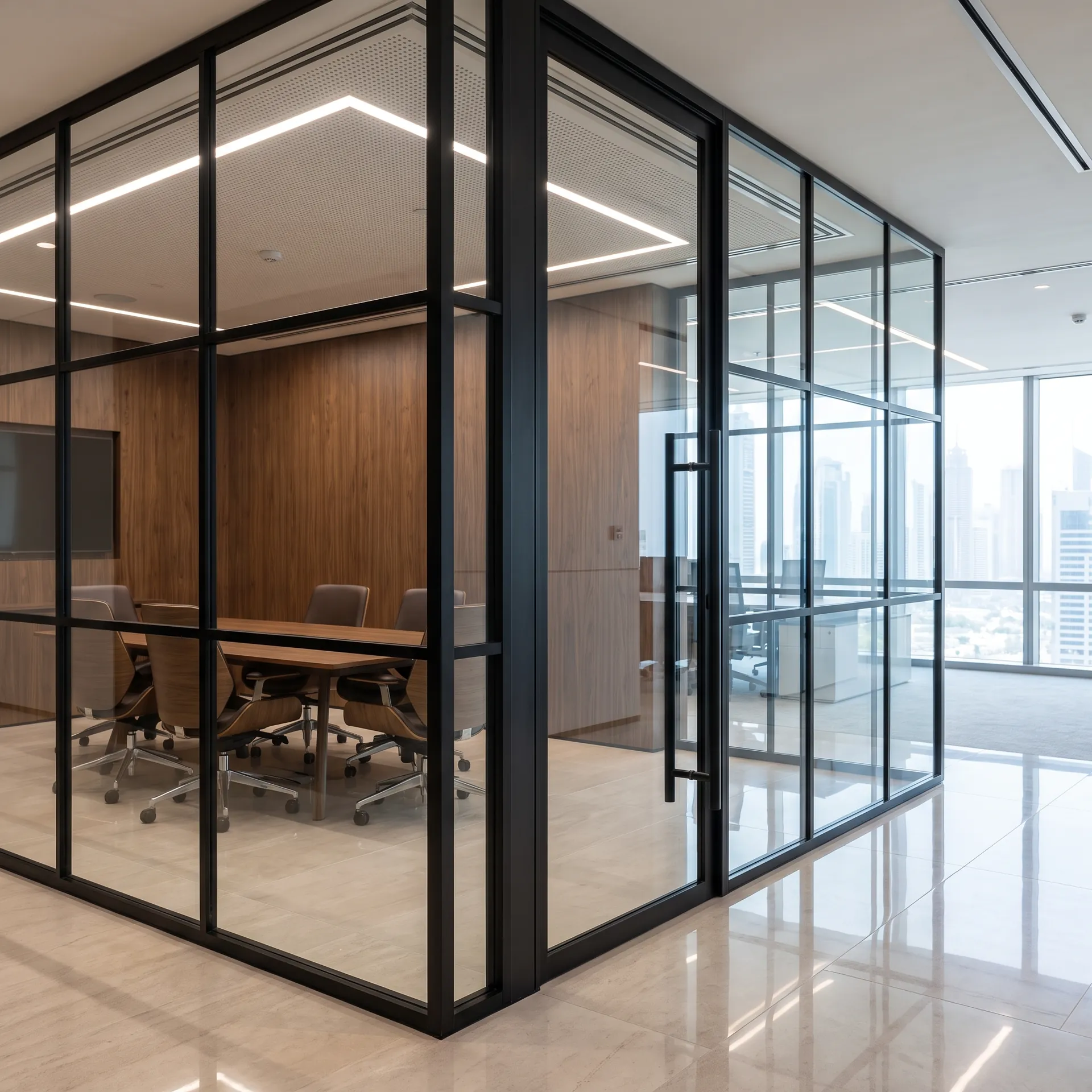
Office partitions made of aluminium profiles are a simple, quick, and cost-effective way to organise efficient zoning within a large space, while maintaining interior unity.
-
Aluminium office partitions with glass
-
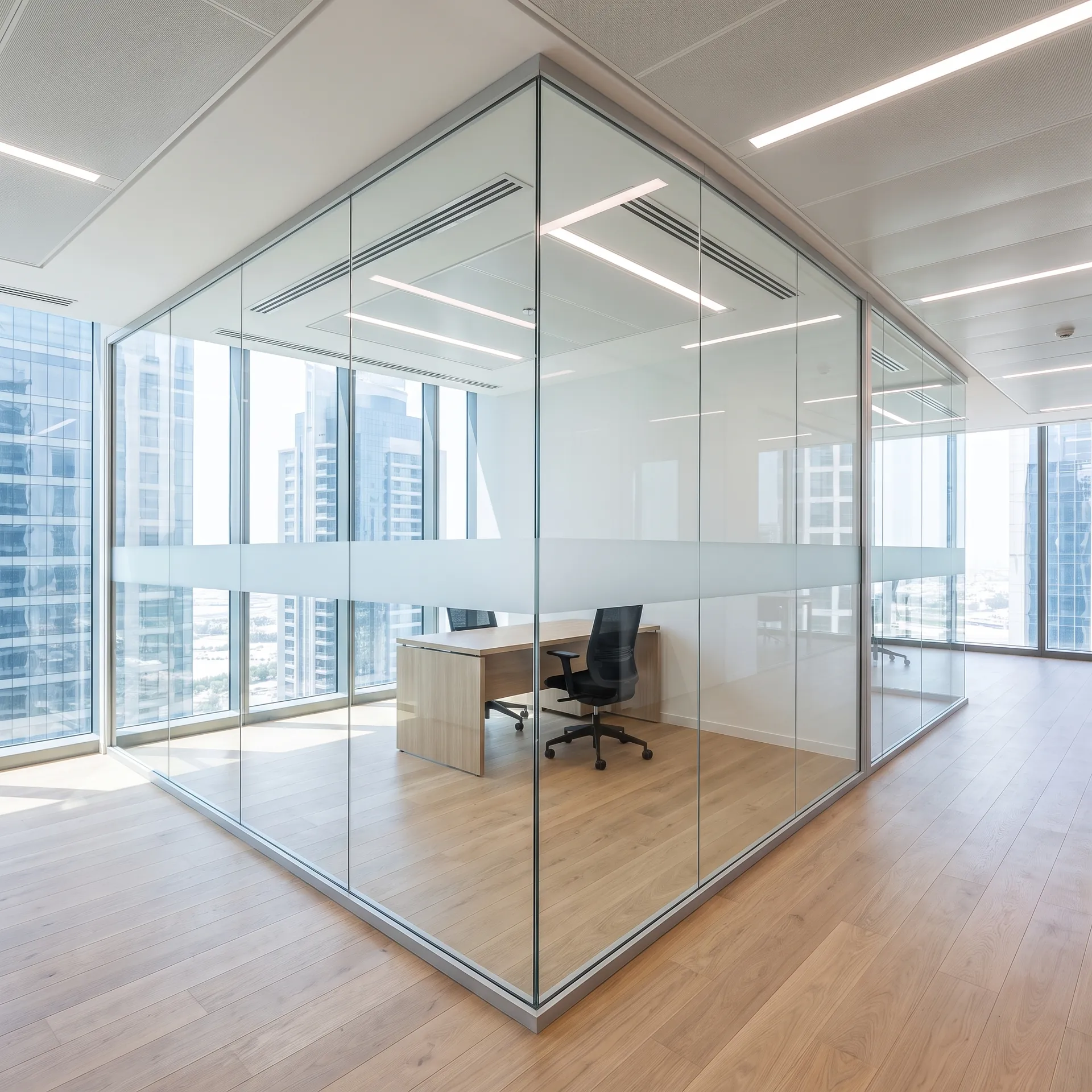
Full-glass office partitions
-
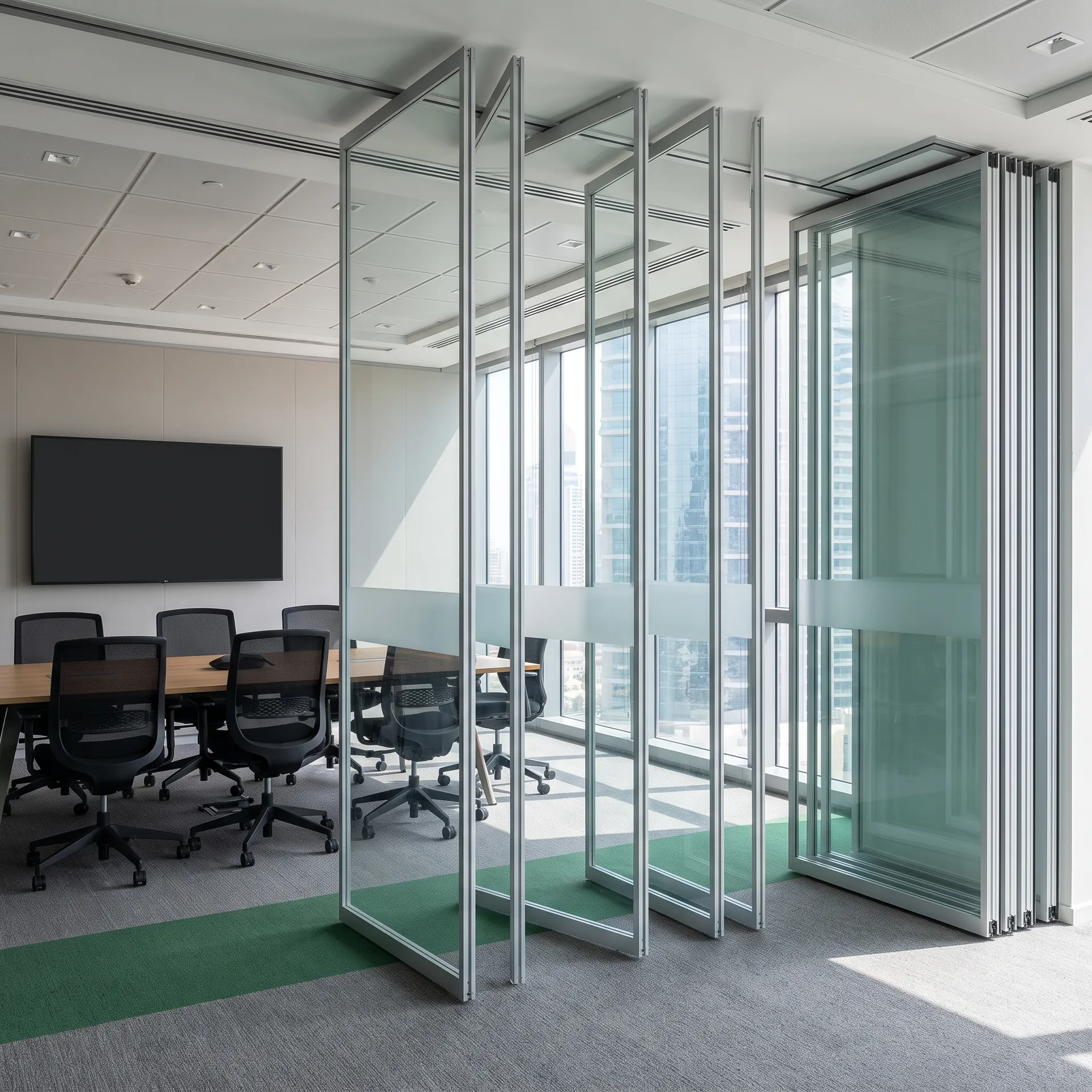
Transformable partitions for the office
-
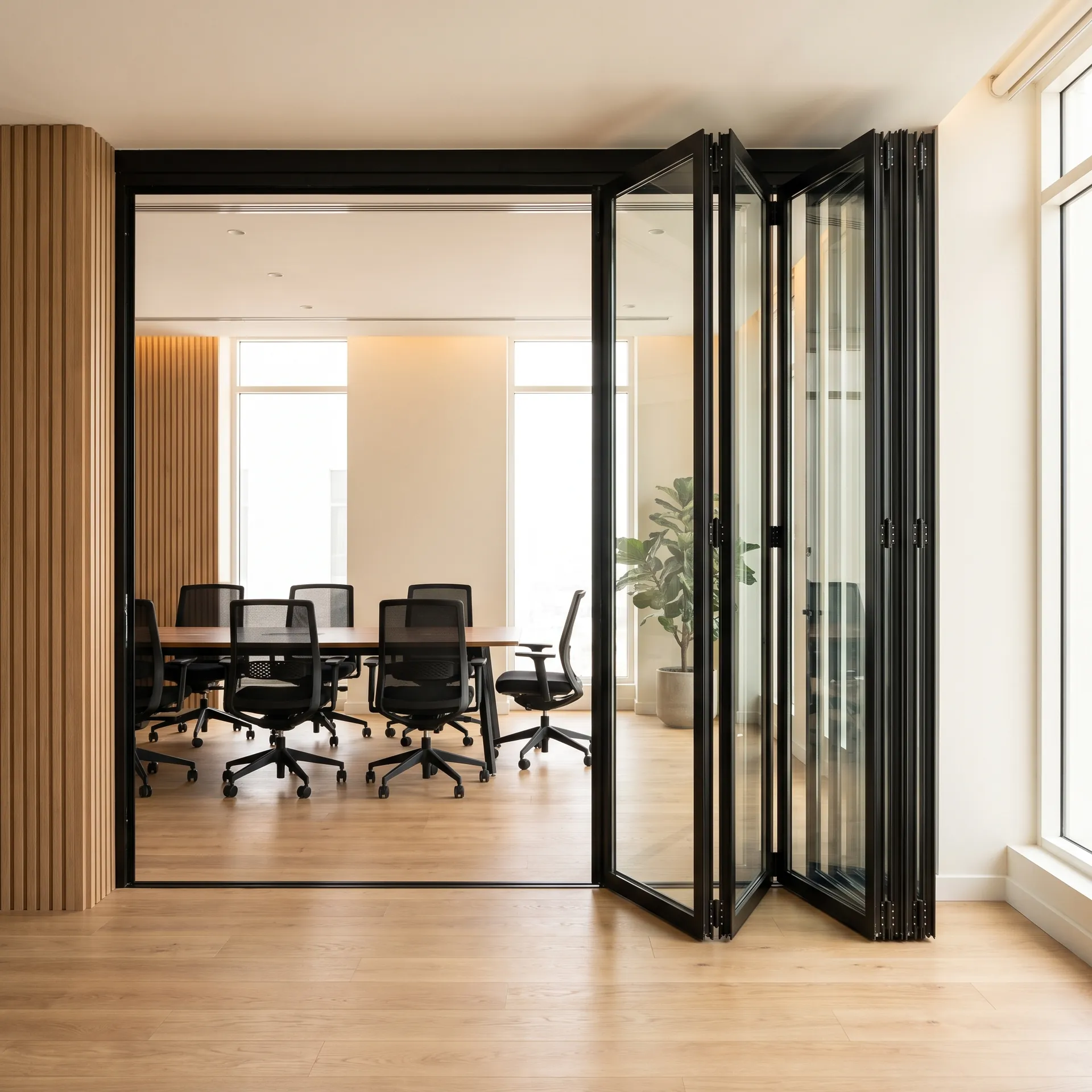
Accordion partitions for the office
The honest downside
When replacing tower windows is not the fix
An opening sash high in a tower should be restricted — which means a tower window does not open wide. If windows are being replaced in the hope of more fresh air, the gain is smaller than it looks, and the room still depends on its air conditioning.
Storm leaks are often misread too. Water that appears around a window does not necessarily come through it: it can enter at a facade joint a floor or two higher and run down behind the cladding to the first opening that stops it — and a new frame in the same opening will not stop that.
Before a tower window is replaced for leaks, the joints above it are worth testing; sealing at height from ropes can be the smaller job. Replacement is the right answer where the frames themselves are failing — sashes out of square, drainage blocked or missing, gaskets gone hard.
 Consider instead
Joint sealing at height
Consider instead
Joint sealing at height
Frequently asked questions
Because it is the load the window is genuinely designed against, and it is not the same at your floor as at the podium. Air moves faster the higher and the more exposed you are, and it presses on the glass and then pulls at it in turn; at a building's corner it does both harder. That calculation decides the glass thickness, whether the frame needs a steel reinforcement inside it, and how many anchors go into the slab. Skipping it is how you get a window that behaves perfectly for a year and then meets its first serious shamal.
Because they were built to hold water out with a seal, and at height that is the wrong strategy. Wind pushes rain against the facade and then pushes it through any gap where the pressure inside is lower, and a single line of seal tends to lose that argument sooner or later. A frame designed for a tower expects water past the first line and gives it somewhere to go: a drained chamber with outlets facing the weather, and a vented cavity so the pressure either side of the inner seal is equal and there is nothing left to drive the water inward. Storm leaks are more often a drainage detail than a broken gasket.
In Dubai, yes, wherever the sill is low. The Dubai Building Code 2021 (E.9.4) requires a window in a building other than a villa either to have its sill at least 900 mm above the floor or to have its opening limited to 100 mm, so below that height a restrictor is a requirement, not a choice. It limits how far a sash travels and releases only deliberately, with a tool or a key. Where the sill is higher the Code does not ask for one, and we still recommend it on opening sashes; sill heights are checked at the survey.
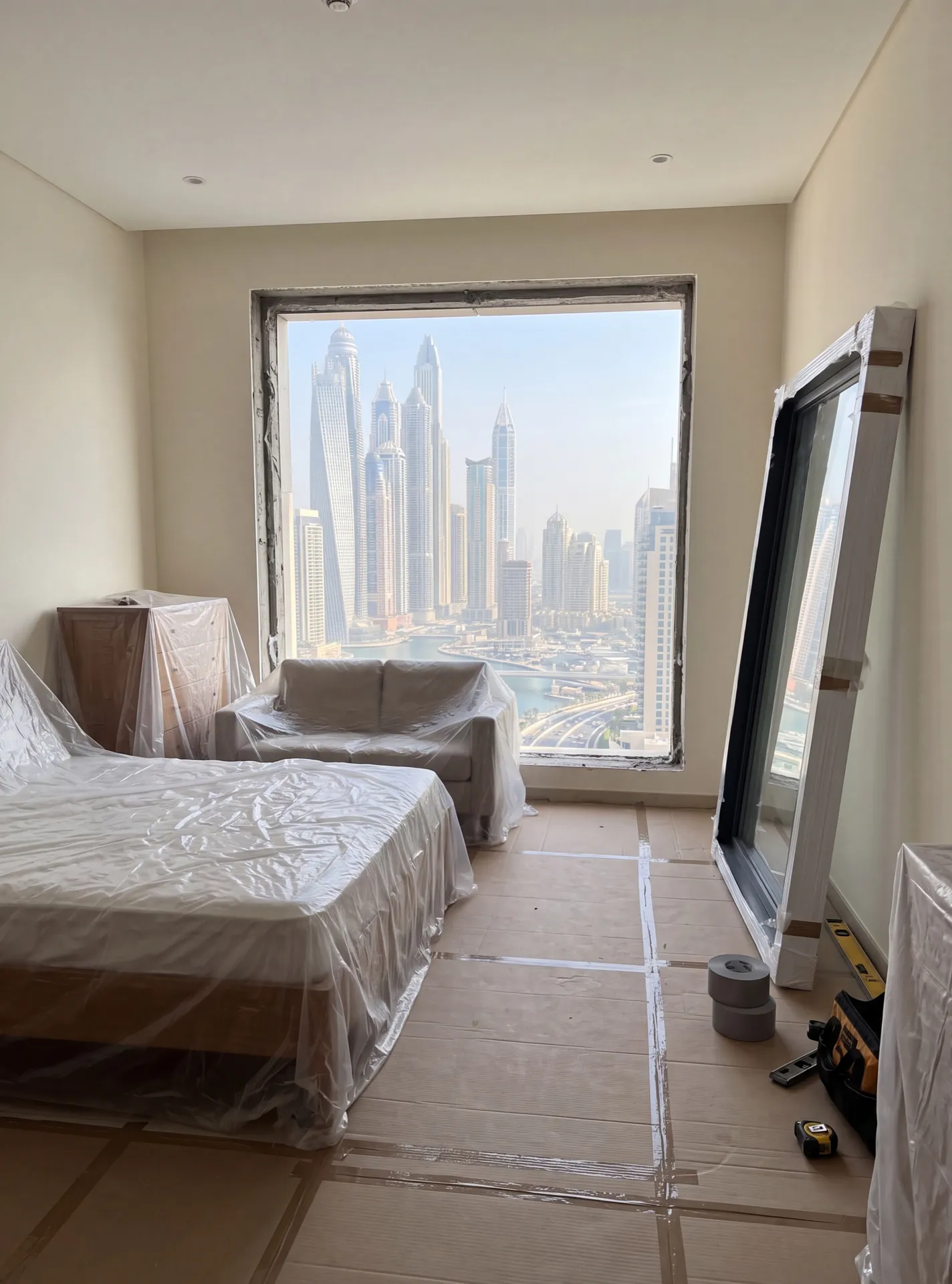
That is precisely why the work is designed from the inside. Frames come up in the service lift in pieces sized to the car, the old unit is cut out into the room, and the debris goes back down the same way — no platform, no drop zone, no permit to close a pavement. It also means one flat can be done in isolation while the tower carries on around it, which is the difference between a job the management approves and one it turns down.
Related pages
Nearby pages and the rest of the catalogue.
- Aluminium-wood windows
- Arched windows
- Bay windows
- Casement windows
- Corner windows
- Custom shapes
- Double-panel windows
- Energy efficient windows
- Fire-rated windows
- Fixed windows
- Floor-to-ceiling windows
- Folding windows
Sections
Company
We are always happy to welcome you at our showroom
Main Office

Dubai — Showroom
The Pinnacle Building, Sheikh Zayed Road, Office 607
Mon–Fri: 9:00 – 18:00
Showroom

Samples to see in person
Profiles, glass units and hardware to see and touch before you choose.
Dubai — Showroom
The Pinnacle Building, Sheikh Zayed Road, Office 607
Get directions 