

The short answer: a smart pergola is one with motorised roof blades, a controller, and usually a sensor or two that make decisions without you. It can angle the blades to follow the sun, close the roof when rain starts, open it when the wind gets up, and take instructions from a handset, a phone or a voice assistant. What follows is which of those is genuinely useful on a Dubai terrace and which is a line item you can drop.
The motor: what it is actually driving
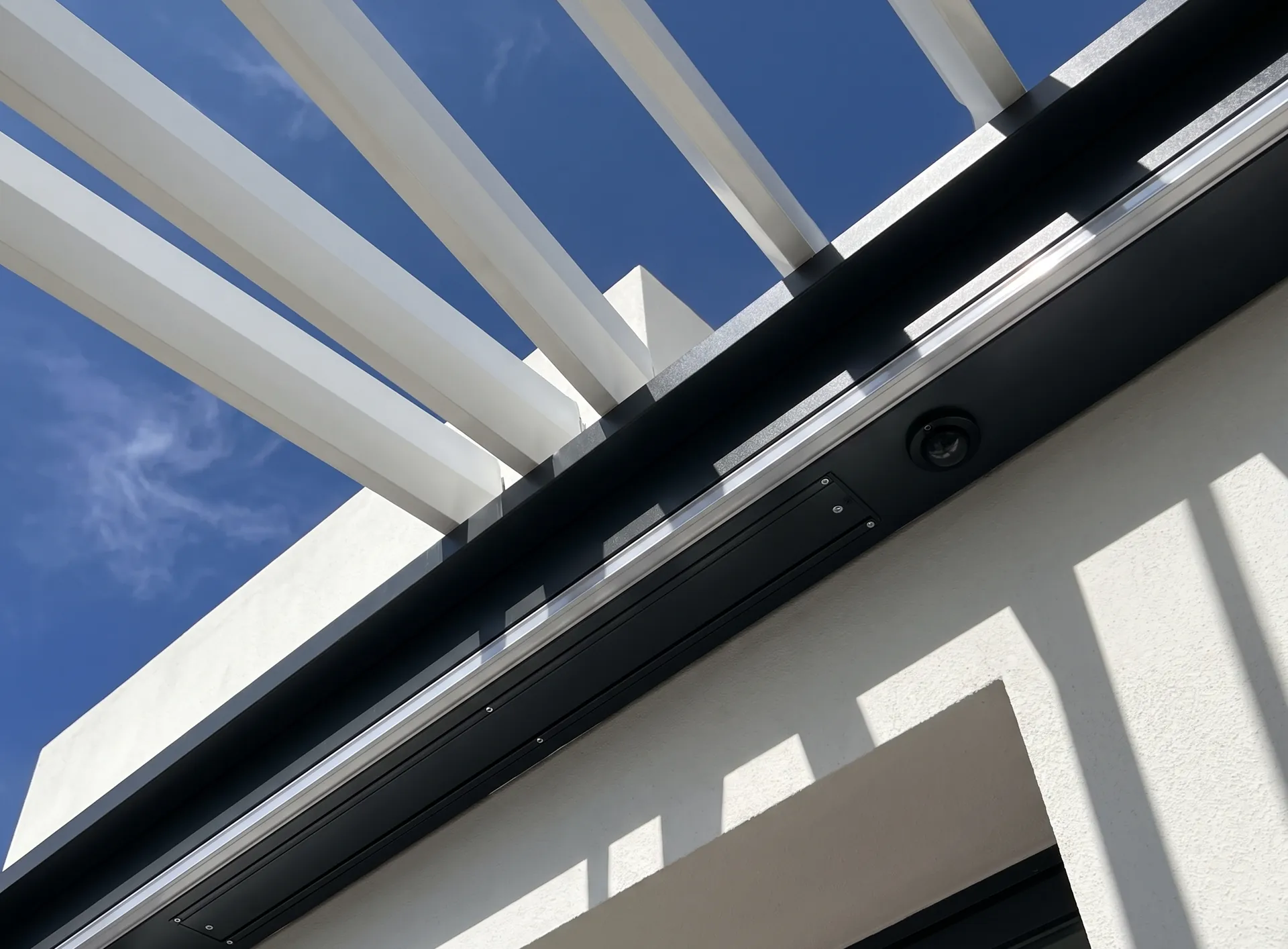
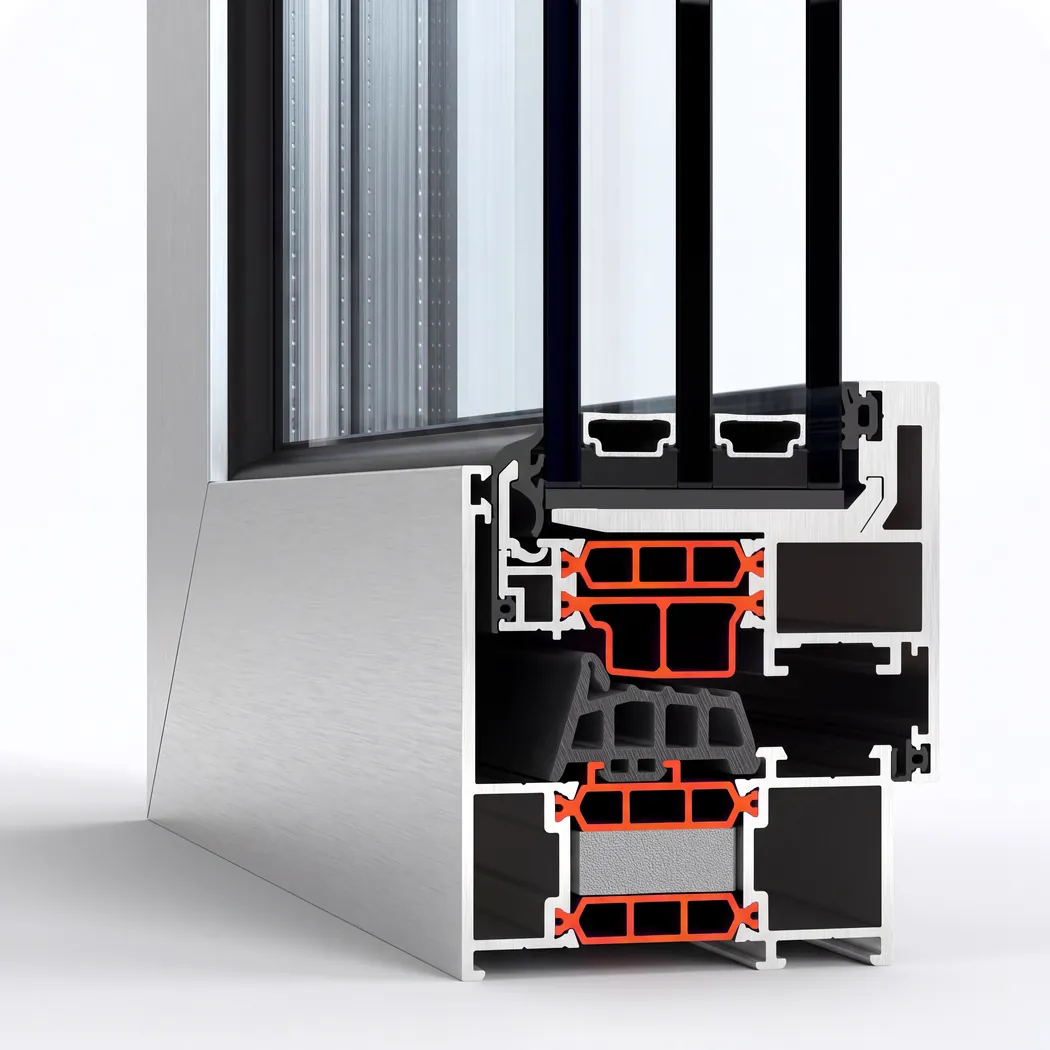
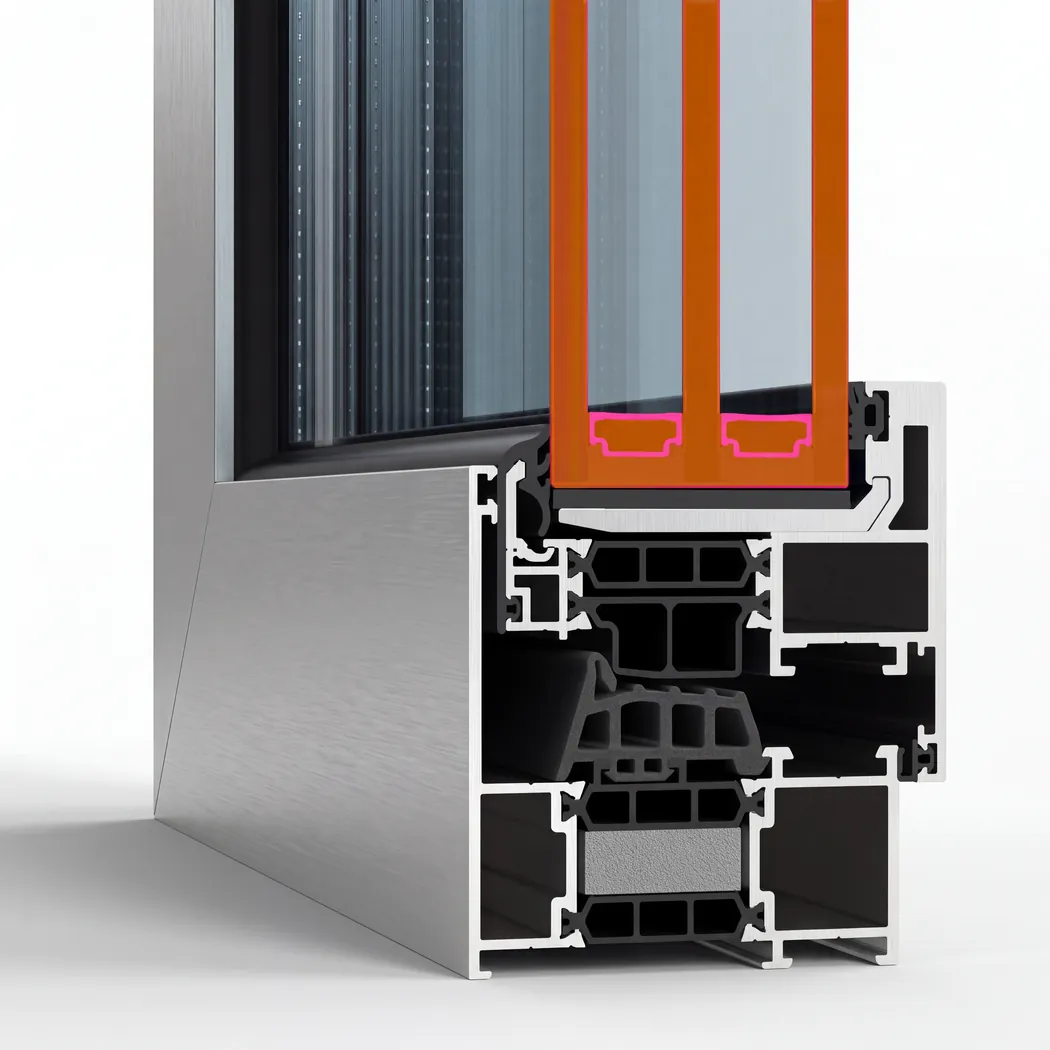
In a louvered roof, every blade is a section carried on bearings at both ends and linked to its neighbours by a common drive bar. One motor turns that bar, and the whole roof rotates together. The motor itself is unremarkable; what matters is the linkage, because that is what has to keep the blades parallel enough to close cleanly after years of heat cycling.
There are two common drives. A linear actuator pushes the bar directly and is simple and strong. A tubular motor turns a shaft and is quieter and tidier to conceal inside the frame. Either is fine; the question to ask a supplier is not which motor but how the roof behaves when one blade meets resistance, because that is where a cheap linkage bends.
Power has to reach the frame, which means a cable route decided before the posts go up. Retrofitting power to a finished pergola on a finished terrace is the sort of job that costs more in paving than in electrics.
Sensors: the wind one is the important one
The rain sensor is the feature everyone asks about, and it is genuinely pleasant: a few drops land on the sensor, the roof closes on its own, and the cushions stay dry while you are out. In a climate with this little rain, though, it is a convenience rather than a protection.
The wind sensor is the one that earns its money. A closed louvered roof in a strong gust is a solid surface catching the full load; opening the blades lets the wind through and takes the pressure off the frame. A sensor that opens the roof automatically when wind exceeds a set threshold is protecting the structure, and on an exposed terrace it is the single most defensible item in the automation list.
If a budget only stretches to one sensor here, buy the wind one. It is the reverse of the order most people expect, and it follows from the weather actually being sunny and windy rather than wet.
Control: handset, app, voice, or the house system
A handset is included with almost every system and is the thing that gets used. It is instant, it works when the internet does not, and it lives on the outdoor table. Do not let anyone talk you out of one because the app exists.
The app adds remote operation and scheduling — closing the roof at a set hour, opening it in the morning, checking from indoors. This is where the roof stops being a manual object and starts behaving like part of the house, and it is worth having if the terrace is used at predictable times.
Voice assistants and home-system integration are the top layer. They are convenient and they are also the part most likely to age badly, because they depend on a manufacturer's cloud service continuing to exist and to be supported. Specify them if you use that ecosystem already; do not let them be the reason for choosing one pergola over another.
Sun tracking, and whether it is worth it
Some systems can angle the blades through the day so the terrace stays shaded as the sun moves, either on a timer or by following a calculated sun position. On a west-facing terrace this converts an unusable late afternoon into a usable one without anybody touching a control, which is a real gain.
On a terrace that is shaded by the building for half the day anyway, it is a feature that runs quietly and changes little. This is the point where the honest advice is to look at the orientation before the brochure: the value of tracking is decided by which way the terrace faces, not by how the feature is described.
What to install now even if you decide later
Automation added at build time is cheaper and neater than automation retrofitted, but the decision does not have to be made in full on day one. What does have to be done on day one is the invisible part: the cable route through the posts, a suitable supply at the right point, and a frame specified as motor-compatible.
The same applies to lighting and heaters. Running the conduit while the terrace is open costs very little; lifting paving in two years to add a cable costs a great deal. If in doubt, run the route and cap it.
One last piece of realism: everything with a motor needs occasional attention, and this climate is hard on outdoor electronics. Ask what the drive components are rated for, whether the control unit sits somewhere shaded, and how a blade is replaced if one is damaged. A system that cannot answer the last question is one to be careful with.
Buy the motor and the wind sensor first, the app if the terrace runs to a schedule, and the voice control only if you already live in that ecosystem. Whatever you decide, run the cable while the terrace is open — that is the choice that cannot be undone cheaply.