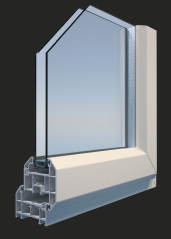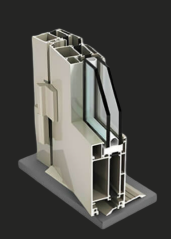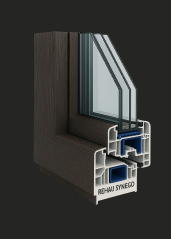


Deceuninck is at heart a uPVC house, and Legend is one of the plastic systems its Turkish arm makes for windows and doors. We fabricate Deceuninck profiles to the manufacturer's specification at our Dubai factory and install them ourselves.
Where uPVC is the sensible answer
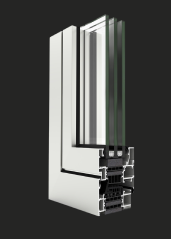
Plastic conducts far less heat than metal, so a uPVC frame does not need a thermal break to stay cool on the room side. With six chambers in an 80 mm frame and three gaskets including a centre seal, Legend is built for rooms where quiet and a well-sealed frame count: bedrooms near a road, bathrooms, staff rooms, a home office. For villa and townhouse windows of ordinary size it is also the economical way to glaze many openings at once.
What its figures do in heat and dust
Uf 0.92 W/m²K is a frame value, and a low one; on a sunny elevation the glass decides the rest, and the choice of 24, 30, 36, 44 or 52 mm units leaves room for solar-control and laminated build-ups. The centre gasket adds a sealing line in the middle of the section, the one that keeps fine dust and wind-driven sand away from the hardware.
Heat is also the limit to respect. uPVC expands more than aluminium as it warms, which is why we keep Legend to white or light finishes on sun-facing walls and to sashes of moderate size. A pale frame simply does not get as hot in the afternoon as a dark one.
Legend or the Decalu aluminium windows
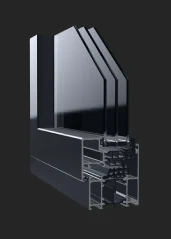
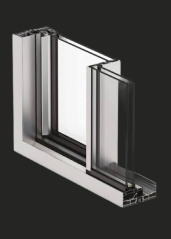
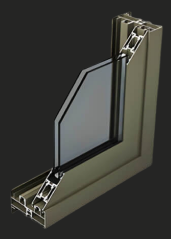
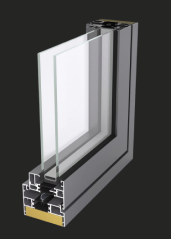
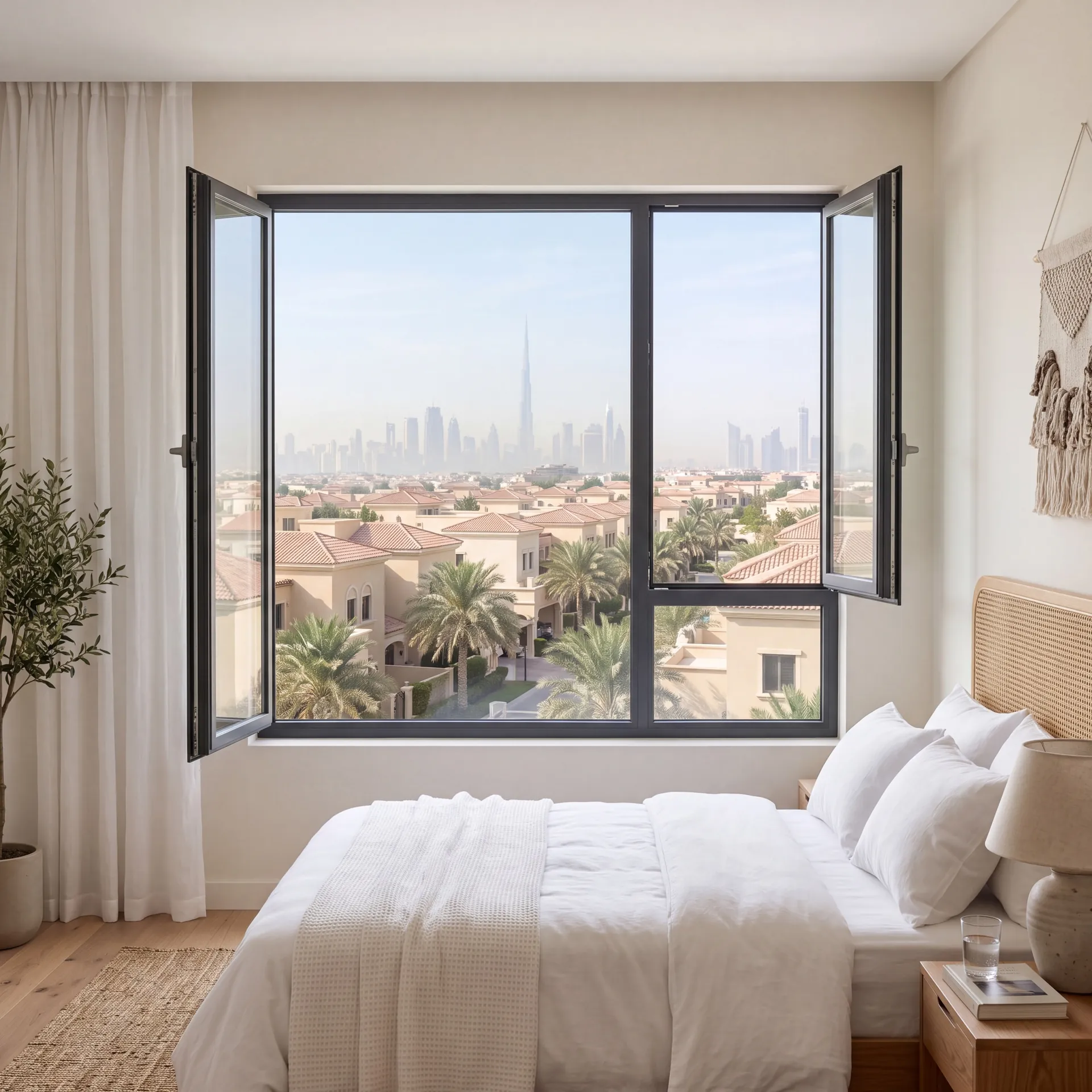
Decalu88 Standard is the aluminium counterpart within the same group: an 88 mm frame with a flat exterior, casement or tilt-and-turn, a U-value from 1.1 W/m²K double-glazed and from 0.86 triple, wind resistance class C5. Aluminium stays straight on wider sashes and takes dark finishes in full sun; Legend is the warmer, quieter and more economical frame for ordinary windows. Many villas end up with both — uPVC in the bedrooms, aluminium on the big elevation.
Legend is a sound uPVC choice for ordinary villa and apartment windows where warmth, quiet and budget matter, and the wrong one where the glass gets big or the finish gets dark.