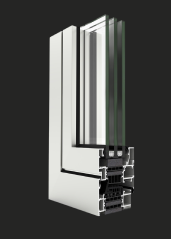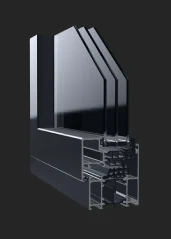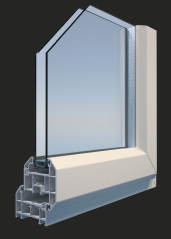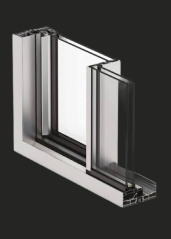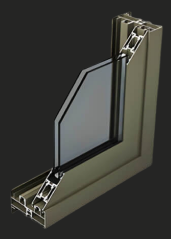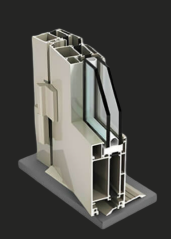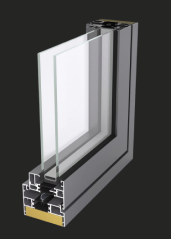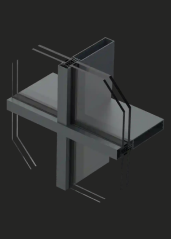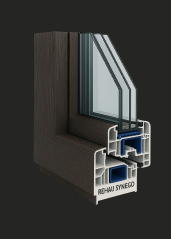


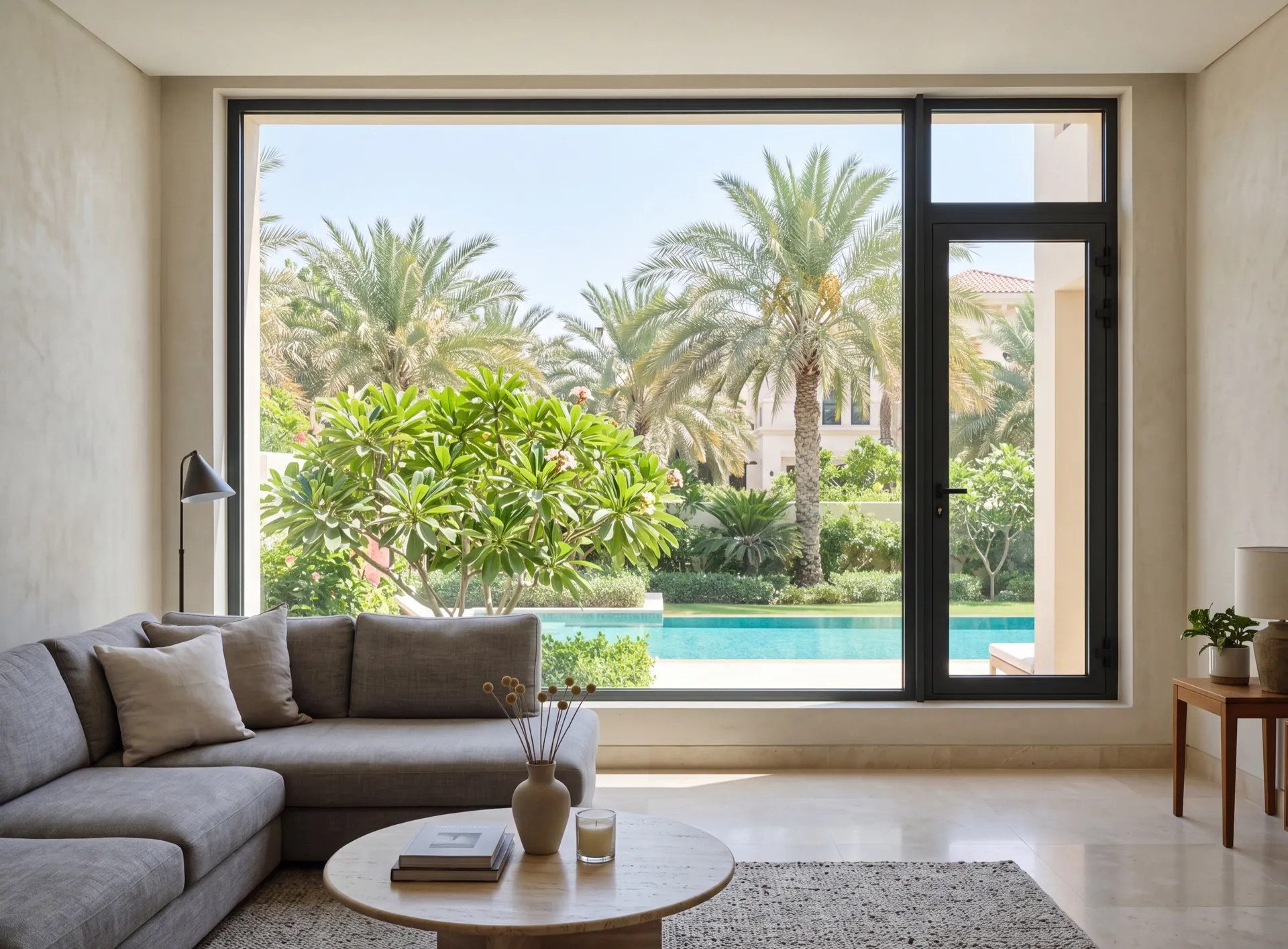
A flush casement removes the step between sash and frame that ordinary windows show, and this one does it on an 88 mm aluminium section. We fabricate Deceuninck profiles to the manufacturer's specification at our Dubai factory and install them ourselves.
Where a flush sash earns its place
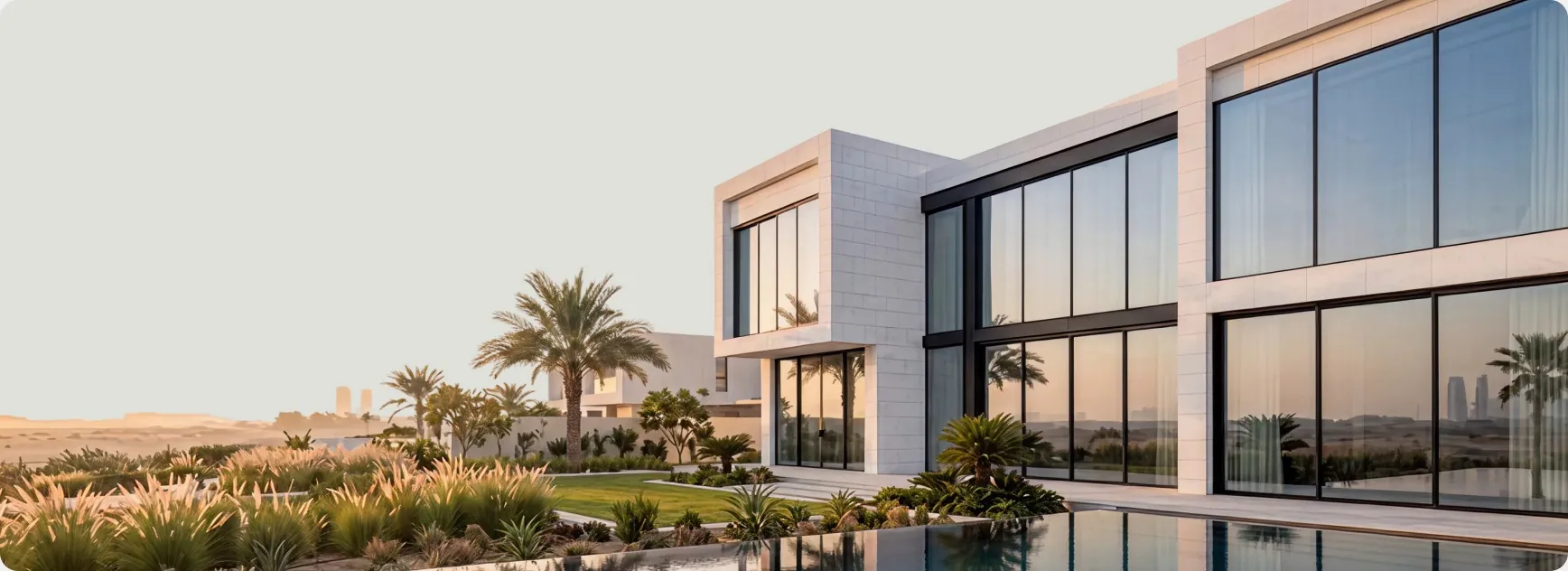
Contemporary villas where the window is part of the architecture: a run of tall, narrow casements along a stair, a bedroom elevation over the garden, a study where the frame should disappear into a plastered reveal. With nothing standing proud of the frame, the window keeps a clean line from the street and from the room. The glazing range of 12 to 52 mm leaves room for a thick laminated or acoustic unit, and a sash weight of up to 180 kg lets a tall, heavy pane stay in one piece.
Heat, sand and salt air
Deceuninck publishes a U-value from 0.8 W/m²K with triple glazing and 1.2 W/m²K with double, without saying whether it is a window or a frame figure, so treat it as a headline rather than a result for your opening. In a Dubai summer the useful reading is simple: the lower the number, the less outside heat the window passes to the air conditioning.
Concealed drainage and locking matter here as well. There are no slots on the face to collect sand after a dusty day, and the locking sits inside the section instead of on it. Near the sea the finish is still chosen for the distance from the water — a flush profile does not change what salt air does to a coating.
Flush Casement or Standard
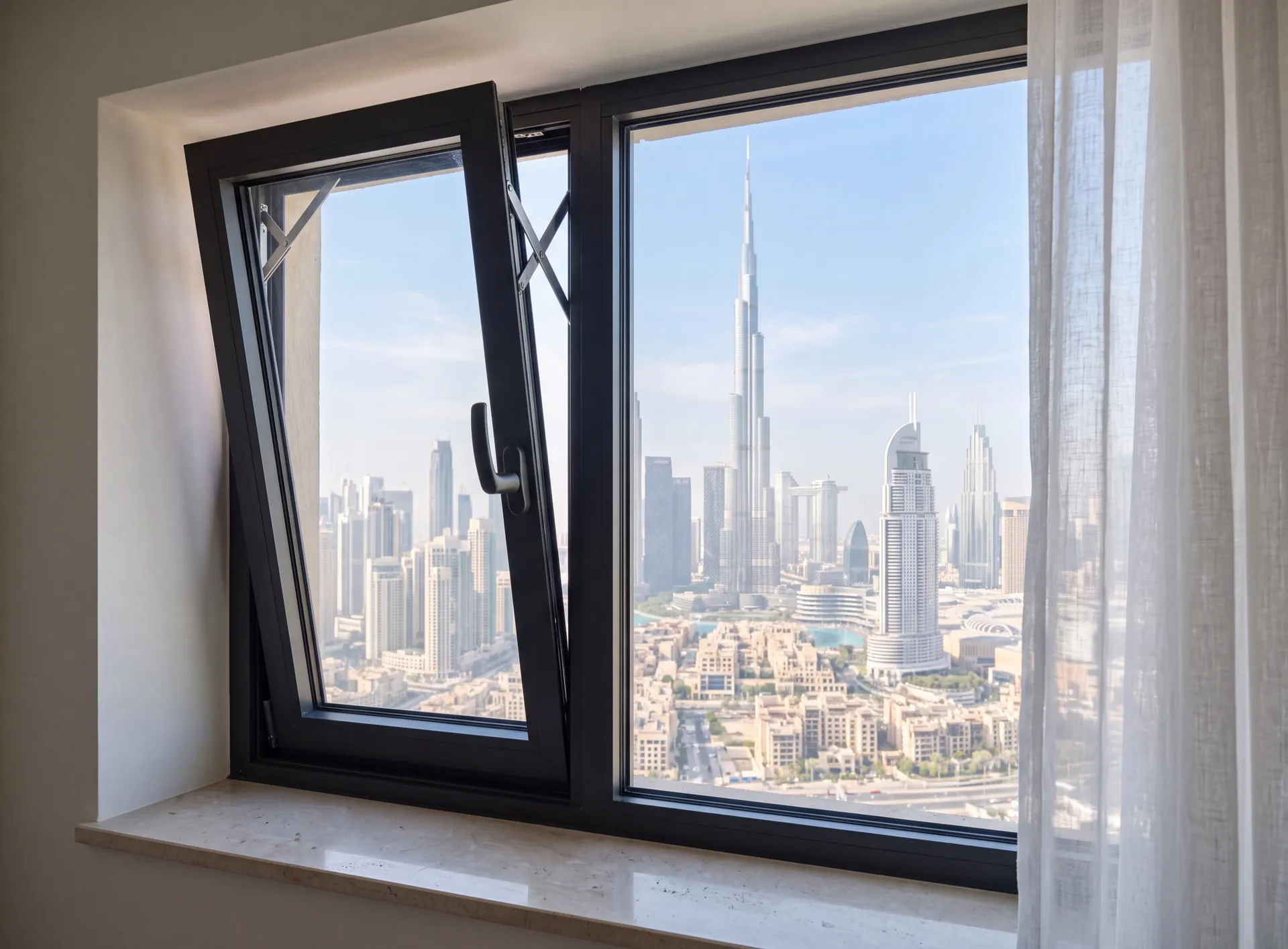
Decalu88 Standard has the same 88 mm depth and a flat exterior, adds a tilt-and-turn version, and is published at a U-value from 1.1 W/m²K double-glazed and from 0.86 triple-glazed. Flush Casement is casement only, but its sash is flush on both faces, not just outside. If the room needs a tilted sash for night air, choose Standard; if the elevation is the point, choose Flush Casement.
Decalu88 Flush Casement is the Decalu window to pick when the frame should disappear into the wall and a side-hung sash is all the opening needs.