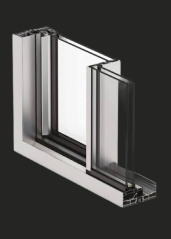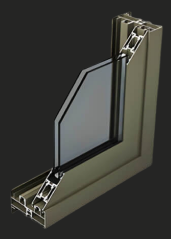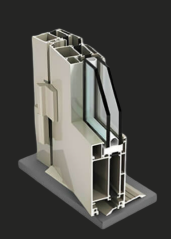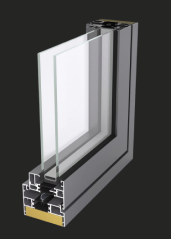


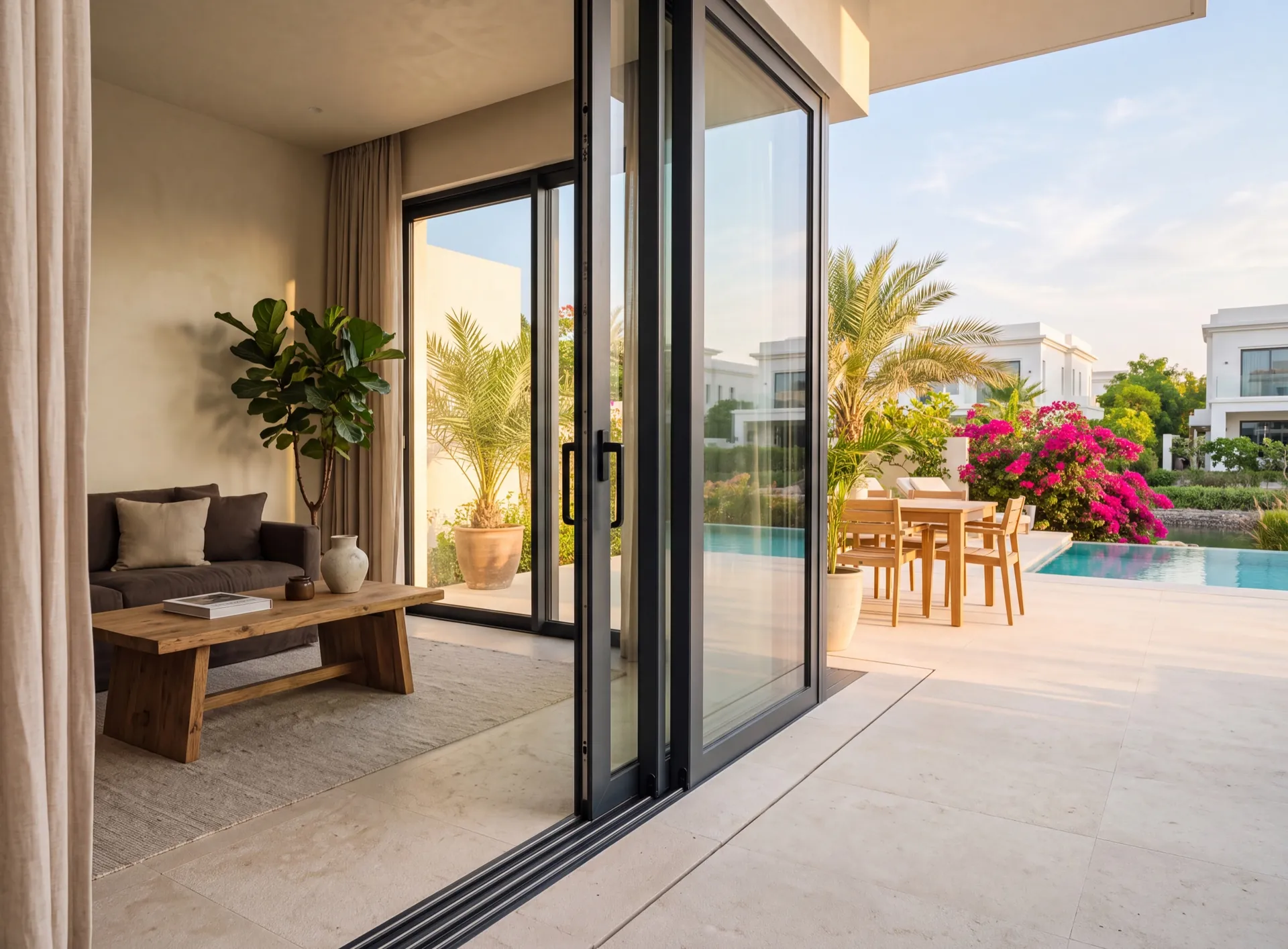
Sliding doors are how most apartment balconies open, and HS76 is Deceuninck's plastic answer for them. We fabricate Deceuninck profiles to the manufacturer's specification at our Dubai factory and install them ourselves.
Where HS76 fits
Balcony doors in apartments, a townhouse kitchen onto a small garden, a bedroom onto a terrace — sliding openings of everyday size where the door is used several times a day and the frame should not add heat to the room. The optional low aluminium threshold matters here: it keeps the step low where children and cleaning trolleys cross it, and aluminium stands up to foot traffic at the one point everyone steps on.
Chambers, glass and the UAE sun
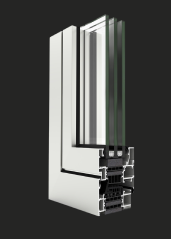
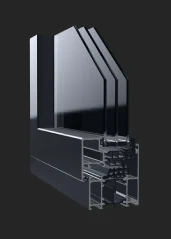
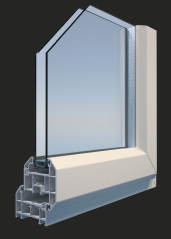
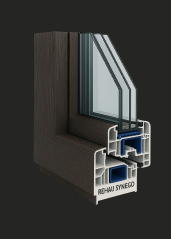
Eight chambers in the frame and four in the sash break up the path heat takes through the profile, and Uf 1.2 W/m²K is the published frame result. Glazing thicknesses of 4, 20, 24, 30, 36 and 43 mm run from a plain pane for an enclosed space to an insulated unit with solar control for a sunny balcony.
The limits are the ones every plastic door has here. uPVC grows with heat, so we keep HS76 in white or light finishes on sun-facing walls and do not push panel sizes. On a sea-facing balcony the plastic itself does not corrode, which is a real advantage, but the hardware and threshold still need salt and sand rinsed off from time to time.
HS76 or Decalu163
Decalu163 is the aluminium lift-and-slide in the same group: a 163 mm frame, up to 400 kg per sash and a U-value from 1.23 W/m²K double-glazed and from 0.85 triple-glazed. It is the door for large, heavy glass and dark finishes in full sun. HS76 is the lighter, more economical door for ordinary balcony and garden openings. The deciding questions are size and sun: moderate and pale — HS76; big, heavy or dark — Decalu163.
HS76 is a sensible uPVC sliding door for everyday balcony and garden openings, especially with the low aluminium threshold, and not the door for a glass wall.